 Sudden Valley Siding
 Building Exteriors for a Wet, Salt-Touched Corner of Whatcom County
Homes around Edgemoor and Sudden Valley sit in one of the more demanding climates on the west side of Washington for exterior materials. You've got proximity to saltwater air drifting in off Bellingham Bay, a rainy season that stretches most of the year with wind-driven storms rather than gentle straight-down rain, and enough tree cover and shade on many lots to keep siding damp long after a storm has passed. None of that is unusual for Whatcom County. But it does mean the siding, roofing, windows, and decking on a house here are working harder than the same materials would on a house in a drier, sunnier part of the state.
We work on homes throughout this area and see the same patterns over and over: paint failing early on the weather-facing walls, moss creeping up from the bottom courses of siding on shaded north sides, trim rotting at joints where water collects, and caulk lines that gave up years before the siding itself did. Most of this isn't bad luck — it's a mismatch between the material and the environment it was asked to survive in.
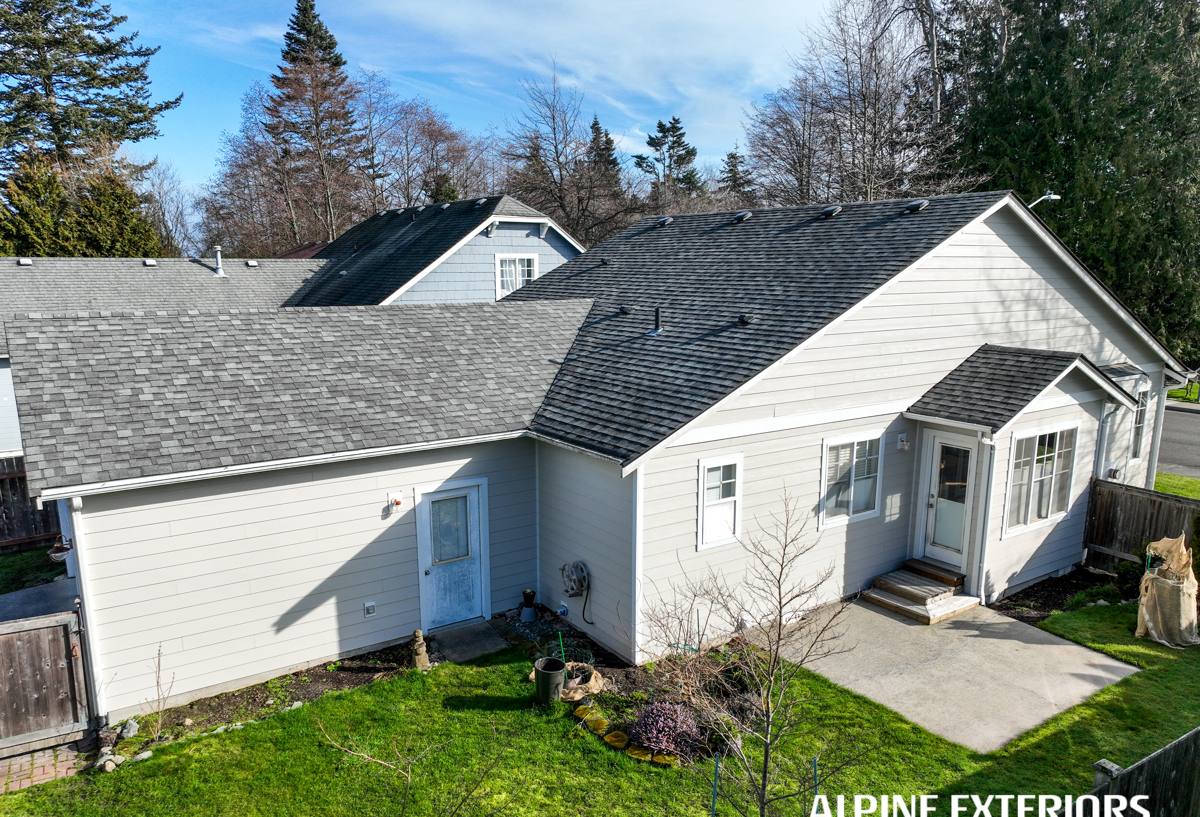
What Salt Air, Driving Rain, and Moss Actually Do to a House
Salt Air and Metal Components
You don't have to be right on the water to feel the effects of salt-laden air. It travels on wind, settles on surfaces, and accelerates corrosion on fasteners, flashing, and any exposed metal trim. Over years, corroded fasteners can loosen siding panels and compromise the seal at penetrations like light fixtures, hose bibs, and vents — which is exactly where water gets behind a wall system and starts causing damage nobody can see from the outside.
Driving Rain and Wall Assemblies
Wind-driven rain doesn't just fall on a wall, it gets pushed into every seam, lap, and gap that isn't properly detailed. A siding product's water resistance is only as good as its installation — how laps are shingled, how flashing is integrated at windows and doors, and how the whole assembly is designed to shed water rather than trap it. On exposed or elevated sites, this matters even more, because there's less windbreak to slow the rain down before it hits the wall.
Moss, Shade, and Slow-Drying Walls
Wooded lots with mature trees are common in and around this area, and they bring real benefits — privacy, shade, character. They also mean some walls, especially north- and east-facing ones, stay damp far longer after a rain than a wall in full sun would. That extended moisture window is exactly what moss, algae, and mildew need to take hold. On the wrong siding material, that translates into ongoing cleaning, early paint failure, or in worse cases, moisture intrusion at the surface level.
Why We Install Only James Hardie Fiber Cement Siding
We made a decision as a company to install one siding product: James Hardie fiber cement. We don't install vinyl, LP SmartSide, Cemplank, Allura, primed spruce, or cedar. That's not a marketing angle — it's a standard we set because of what we've seen these products do, and not do, in exactly the kind of climate Edgemoor and Sudden Valley sit in.
Fiber cement is not organic material, so it doesn't feed moss, algae, or mildew the way wood-based siding does, and it doesn't swell or delaminate when it takes on moisture the way engineered wood products can if a seam or cut edge isn't sealed correctly. It's also non-combustible, which matters more each year given wildfire smoke and ember exposure across the Pacific Northwest, even in areas that aren't classic wildfire zones. James Hardie's ColorPlus factory finish is baked on under controlled conditions rather than field-applied, which gives it a more consistent, longer-lasting bond than site-painted siding — fewer touch-ups, less risk of the finish failing at the exact spots where water collects.
Here's how the honest trade-offs stack up for the materials commonly used in this region:
| Material | Moisture Behavior | Maintenance | Fire Rating | Finish Longevity |
|---|---|---|---|---|
| James Hardie Fiber Cement | Does not rot or swell; engineered for wet climates | Low — occasional wash | Non-combustible | Factory ColorPlus, long warranty |
| Vinyl | Can warp, crack in cold snaps, trap moisture behind panels | Low but limited repair options | Combustible, can melt/deform near heat | Color molded in but fades over time |
| LP SmartSide / Engineered Wood | Wood-based; vulnerable at cut edges and unsealed seams | Moderate — edge sealing critical | Combustible | Field or factory finish, moisture-sensitive |
| Cedar | Natural material; absorbs moisture, prone to rot without upkeep | High — regular staining/sealing | Combustible | Requires recurring refinishing |
Every one of these products has legitimate uses and a place in the market. Our decision is simply that we don't want our name on a wall that we know is going to fight this climate for its whole life. Fiber cement gives homeowners here fewer surprises, and that's what we're selling — not just siding, but fewer callbacks and less worry.
How We Detail Siding Installation for This Climate
Flashing and Drainage First
Before a single piece of siding goes up, the flashing and water-management layer behind it is what actually keeps a house dry. That means proper window and door flashing, correctly lapped house wrap, and a drainage plane that lets any moisture that does get behind the siding find its way back out instead of sitting against the sheathing. In a climate with this much sustained rain, this step matters more than the siding product itself.
Fastening and Lap Details for Wind-Driven Rain
James Hardie's HZ5 product line is engineered specifically for climates like the Pacific Northwest — wetter, more freeze-thaw exposure, more wind — as opposed to the HZ10 line built for hot, humid Southeast conditions. We fasten according to Hardie's specifications for exposure and wind zone, keep proper gaps at butt joints and trim, and caulk only where Hardie's install guide calls for it rather than relying on caulk to compensate for a bad joint.
Trim, Corners, and the Details That Fail First
Most siding failures we see start at trim, not the field of the wall — corner boards, window casings, and the bottom termination near grade or a deck ledger. We pay close attention to these transition points because they're where water concentrates and where a rushed install shows up years later as rot or staining.
Roofing, Windows, and Decks: The Rest of the Exterior Envelope
Siding doesn't work in isolation. We handle roofing, windows, and decks because they all interact with the same water-management system as the siding, and a weak link in any one of them undermines the rest.
- Roofing: Proper flashing at valleys, chimneys, and wall intersections keeps water from running down behind siding at the roofline — one of the most common sources of hidden rot in this region.
- Windows: Correctly flashed window openings, integrated with the siding's drainage plane, are one of the biggest factors in whether a wall stays dry over the long term.
- Decks: Ledger boards and deck-to-house connections are a frequent moisture entry point if not flashed and separated from the siding correctly, especially on shaded or partially covered decks that stay damp longer.
Looking at these systems together, rather than treating siding as a standalone project, is a big part of why homes we work on hold up better over time.
What a Full Exterior Project Looks Like
Most projects start with a walk-around assessment — looking at the current siding, trim, roofline, window flashing, and any deck connections, and being honest about what's failing versus what's just cosmetic. From there we scope the work, whether that's a full siding replacement, a re-side paired with roofing or window work, or a more targeted repair. We'll tell you plainly if a full replacement isn't the right call yet, and we'll tell you just as plainly when patch repairs are throwing good money after bad.
A Practical Maintenance Checklist for This Area
- Rinse siding annually, focusing on shaded, north-facing walls where moss and algae take hold fastest
- Trim back vegetation and tree limbs that keep walls damp or in constant shade
- Inspect caulk lines at windows, doors, and trim joints each fall before the wet season sets in
- Check gutters and downspouts for clogs that push water back toward the wall assembly
- Look at deck ledger connections and any siding near grade for early signs of staining or softness
- Have flashing at roof-to-wall transitions checked periodically, especially after major storms
Why a Local Crew Matters
A crew that works in Whatcom County day in and day out knows how this climate behaves differently from a generic install spec. We know which walls in this area take the worst of the wind-driven rain, which lots stay shaded and damp longest, and how salt air factors into fastener and flashing choices. That local knowledge shows up in the small decisions made on a job site — the ones that don't appear on a proposal but determine whether a siding job is still performing well fifteen or twenty years from now.
If you're weighing a siding project, or want a second opinion on roofing, windows, or a deck connection near Edgemoor or Sudden Valley, we're happy to take a look and give you a straight, no-pressure estimate — no obligation, just an honest read on where things stand.