 Sudden Valley Siding
 Why Board & Batten Suits This Part of Whatcom County
Board and batten has become one of the most requested siding styles in the Edgemoor area, and it's not just a design trend. The vertical lines read well against the wooded lots and lake-adjacent terrain common around Sudden Valley, and the style pairs naturally with the mix of craftsman, modern farmhouse, and lake-cabin architecture found on this side of the county. But style is only half the equation. Board and batten is also a functional siding profile, and how well it performs over the next 30 years depends almost entirely on the materials underneath the battens and the skill of the crew installing them.
We install board and batten exclusively in James Hardie fiber cement. We don't offer it in vinyl, LP SmartSide, primed spruce, or cedar. That's not a marketing position — it's a standard we hold because of what this specific siding style demands and what this specific climate does to lesser materials over time.
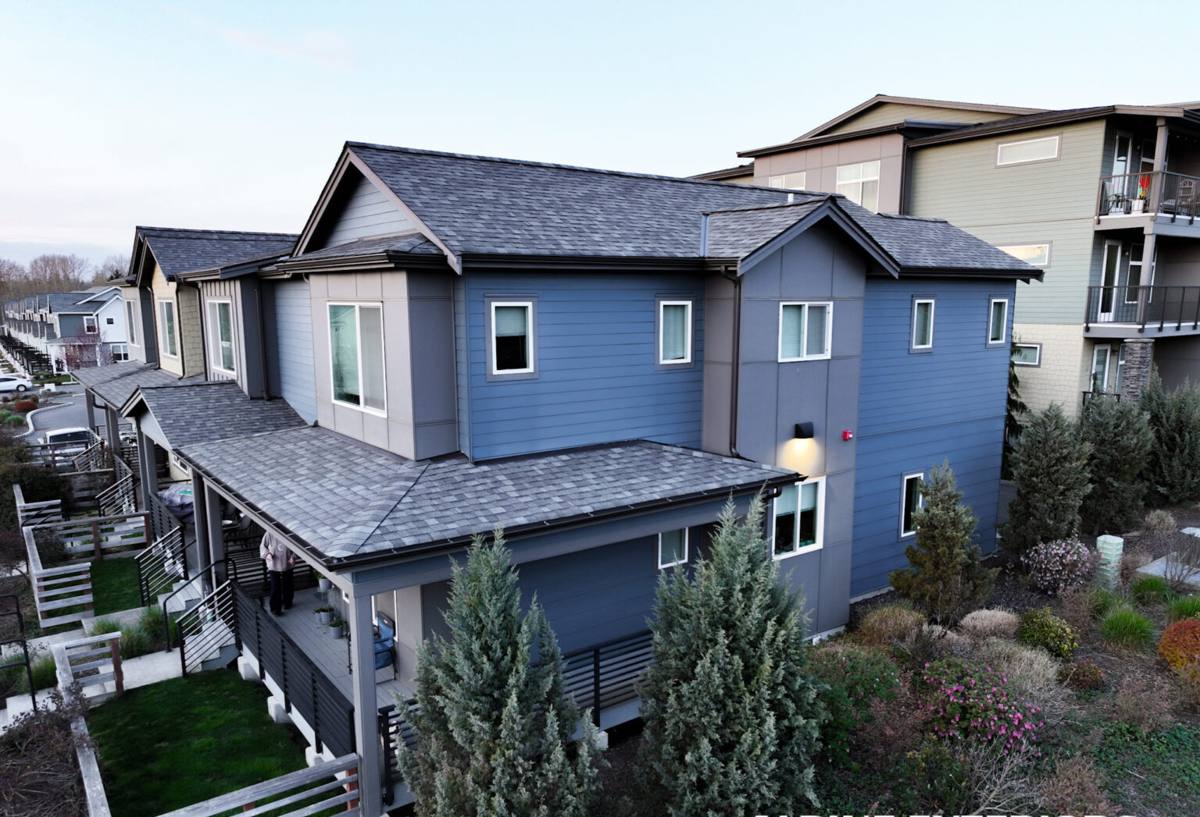
The Climate Challenge: Salt Air, Driving Rain, and a Long Moss Season
Homes around Sudden Valley and the greater Bellingham/Whatcom County area deal with a climate that is harder on exterior siding than most homeowners realize. Three factors matter most for board and batten specifically:
Driving, Wind-Driven Rain
Board and batten has more vertical seams and more fastener penetrations per square foot than lap siding. Every batten strip is another opportunity for water to find a path behind the cladding if the install isn't done correctly. In a region where rain regularly comes in sideways off exposure and elevation changes near the lake and surrounding hills, a board and batten system has to be built to shed water outward, not just look good doing it.
A Long Moss and Algae Season
Whatcom County's tree cover, humidity, and extended damp season create ideal conditions for moss, algae, and mildew growth on north-facing and shaded elevations — which describes a lot of the wooded lots in and around Sudden Valley and Edgemoor. Siding that absorbs moisture, or wood-based products that swell and hold water at the surface, gives moss something to grip onto. Siding that stays dimensionally stable and sheds moisture resists it far longer.
Salt Air and Airborne Moisture
Proximity to Puget Sound and the broader marine climate means airborne salt and moisture exposure is a real factor for exterior materials across this region, not just directly on the waterfront. Combined with driving rain, it accelerates corrosion of poor-quality fasteners and breaks down finishes that aren't engineered for damp marine air.
None of these factors are unique to one street or one subdivision — they're regional. But board and batten, because of its seam count and vertical water path, is one of the profiles most affected by them when it's installed with the wrong product or the wrong technique.
What a Correct Board & Batten Install Actually Involves
A lot of siding failures blamed on "bad weather" are actually installation failures that weather simply exposed. For board and batten specifically, the details that matter most are:
- A drainage plane behind the cladding — house wrap or building paper, lapped correctly, so any water that gets past the battens has somewhere to go besides your sheathing.
- Furring strips or a rain screen gap in higher-exposure applications, so the panel and battens aren't sitting flush against a wet wall assembly.
- Correct batten spacing and fastening — battens need to land on framing or blocking, with fastener patterns that match the manufacturer's engineering, not just "close enough."
- Proper flashing at every horizontal interruption — window heads, roof-to-wall transitions, deck ledgers, and the bottom starter course are where most real-world leaks originate.
- Factory-finished panels so the cut edges and battens carry a consistent, sealed finish rather than relying on field-applied paint to do all the work.
Skip any one of these and you can still end up with a board and batten wall that looks correct on install day and fails quietly behind the surface within a few winters — especially in a climate that gets as much sustained damp weather as this one does.
James Hardie Board & Batten: What We Actually Install
We use James Hardie's engineered fiber cement systems for board and batten, typically through either Hardie Panel with Hardie Trim battens, or the Hardie Artisan collection where a more refined, tighter-reveal look is wanted. Both are manufactured in the HZ5 formulation designed for the Pacific Northwest's wet climate zone, and both come through ColorPlus Technology — a factory-baked finish that's substantially more consistent and durable than field-applied paint on wood-based sidings.
Fiber cement doesn't swell, cup, or absorb water the way wood-based panels do, which directly addresses the moss and moisture problems described above. It's also non-combustible, which matters in a state where wildfire smoke and ember exposure have become a real seasonal consideration even outside fire-prone zones. And it carries a strong, transferable manufacturer warranty — something that matters if a home in this area changes hands, which is common around a recreational community like Sudden Valley.
Why We Don't Offer Alternatives for This Profile
Vinyl board and batten exists, but it's a thin, flexible product that telegraphs every wall imperfection and becomes brittle in cold snaps — a real consideration during Whatcom County's occasional hard freezes. Primed spruce and cedar board and batten can look beautiful on day one, but wood is exactly the material that struggles most with the moss, rot, and moisture cycling this climate produces, and it demands a repainting and caulking schedule most homeowners underestimate. LP SmartSide and similar engineered wood products perform better than raw lumber but are still wood-strand based, meaning they're more sensitive to sustained moisture exposure at cut edges and seams than fiber cement. Given how many seams a board and batten wall has, we don't think that trade-off makes sense for homes here — which is why we standardized on Hardie for this profile specifically.
Material Comparison for Board & Batten in This Climate
| Material | Moisture Behavior | Moss/Algae Resistance | Finish Durability | Typical Lifespan Here |
|---|---|---|---|---|
| James Hardie Fiber Cement | Dimensionally stable, doesn't swell | High — non-absorbent surface | Factory ColorPlus finish, long-lasting | 30+ years to spec |
| Cedar | Absorbs/releases moisture, prone to cupping | Low — needs regular treatment | Field-applied, needs recoating | 15-25 years with upkeep |
| Primed Spruce | Poor once primer/paint fails at seams | Low | Field-applied, shortest cycle | 10-20 years |
| Vinyl Board & Batten | Doesn't absorb, but can trap moisture behind it | Moderate | Color molded-in but fades, brittle in cold | 20-30 years, appearance fades sooner |
| LP SmartSide | Engineered wood strand, better than raw lumber but seam-sensitive | Moderate | Factory finish, shorter warranty terms typical | 20-30 years |
Our Process for Edgemoor and Sudden Valley Homes
Because we already work regularly in this part of Whatcom County, we know what a pre-install inspection here tends to turn up: sheathing that's held moisture behind old siding on shaded, tree-covered elevations, flashing that was never installed correctly the first time, and trim details that don't match the home's actual water exposure. Our process is built around catching that before the new siding goes up, not after.
- On-site assessment — we look at every elevation individually, since a home near the lake or under heavy tree cover often needs different detailing on its north/shaded side than its sun-exposed side.
- Tear-off and substrate check — old siding comes off and we inspect sheathing for rot or trapped moisture before anything new goes on.
- House wrap and flashing correction — we don't install over compromised drainage planes; damaged wrap and poor flashing get fixed as part of the job, not treated as an upsell.
- Panel and batten installation to Hardie spec — correct fastener spacing, batten layout, and gapping for the region's moisture and temperature swings.
- Final detail pass — caulking, trim, and paint touch-up at cut edges so the finish is sealed and consistent.
Keeping Board & Batten Looking Right in a Damp, Wooded Climate
Even the right material benefits from a little seasonal attention, especially on shaded lots near mature trees:
- Rinse off moss and algae buildup on shaded elevations once or twice a year with a soft wash — avoid high-pressure washing directly at seams and battens.
- Keep gutters clear so overflow doesn't run down the wall face during heavy rain events.
- Trim back branches and vegetation that keep a wall section shaded and damp longer than the rest of the house.
- Check caulking at trim and window returns every couple of years — this is the first place a seal can open up under repeated wet/dry cycling.
- Have any impact damage or cracked panels repaired promptly rather than left, since an open panel edge is the fastest way for moisture to get behind fiber cement.
Why Hiring a Crew That Already Works This Area Matters
Board and batten installation quality varies enormously between crews, and the mistakes aren't usually visible until years later. A crew that already works in and around Sudden Valley and Edgemoor has seen how homes here actually weather — which elevations take the worst of the driving rain, which lots hold moisture longest under tree cover, and where flashing details tend to get skipped on production-grade installs. That local pattern recognition is what keeps a board and batten wall performing a decade in, not just on install day.
If you're weighing board and batten for a home in the Edgemoor or Sudden Valley area, we're glad to walk your property, point out what your specific elevations and exposure actually need, and give you a straightforward, no-pressure estimate.