 Sudden Valley Siding
 Alger's Climate Is Harder on a House Than Most People Think
Alger sits along the I-5 corridor between Bellingham and Mount Vernon, close enough to Samish Bay and the greater Puget Sound shoreline that salt-laden air is a daily fact of life, not an occasional nuisance. Add in the marine layer that rolls off the water most mornings, the tree cover that shades whole sides of a house for months at a time, and a rainy season that stretches from October into May, and you've got a climate that quietly works against ordinary building materials year-round. Homeowners who move here from drier parts of the country are often surprised at how fast an exterior can start showing wear if it wasn't built for this specific combination of moisture, salt, and shade.
None of this means Alger is a bad place to own a home — it's a beautiful part of Skagit County for exactly the reasons that make siding decisions harder. Water views, big evergreens, and proximity to the bay all come with a maintenance bill attached. The question isn't whether your siding will be tested. It's whether it was chosen and installed with that testing in mind.
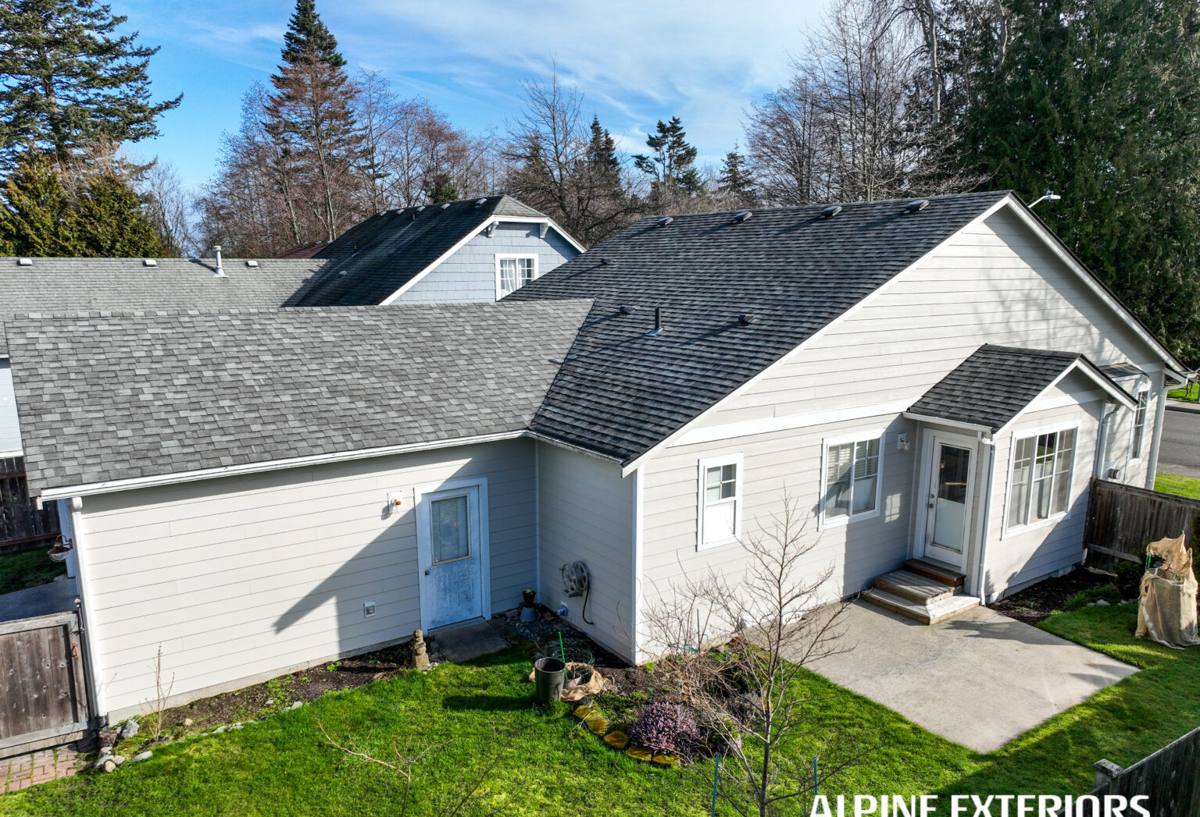
Salt Air and Corrosion
Salt air doesn't just affect houses sitting right on the water. Prevailing winds carry fine salt particles well inland, and they settle on every exterior surface — siding, trim, fasteners, flashing. Over years, that salt exposure accelerates corrosion in metal components and breaks down finishes that weren't engineered to resist it. Paint films chalk and fade faster. Caulk joints dry out and crack sooner. Untreated or lightly coated fasteners can bleed rust streaks down a wall long before the siding itself would otherwise need attention.
This is one of the reasons fastener selection and flashing details matter as much as the siding material itself. A product that looks identical to a competitor's on the day it's installed can perform very differently five or ten years in, once salt has had time to work on the seams, the edges, and the metal that holds everything together.
A Long Moss Season
Western Washington in general grows moss well, and shaded, moisture-heavy communities like Alger grow it especially well. Moss and algae need three things to establish on a wall: moisture, organic debris to root in, and time without direct sun to dry out. Alger's tree cover and marine humidity supply all three for a good part of the year.
Moss isn't just cosmetic. Where it takes hold, it holds moisture against the siding surface longer than bare material would, which can accelerate whatever underlying degradation a product is prone to. On some siding materials that means swelling or delamination. On others it mostly means more frequent washing to keep the surface from looking neglected. Either way, a siding choice that resists moss anchoring — and a finish that doesn't give algae organic material to feed on — saves real maintenance effort over the life of the house.
Driving Rain and Moisture Management
Rain in this part of Washington rarely falls straight down. Wind off the bay and through the valley pushes it sideways, which means siding, trim, and window flashing take on water at angles that a fair-weather installation wouldn't anticipate. Driving rain finds every gap in a lap joint, every under-caulked penetration, and every place where house wrap wasn't lapped correctly behind the cladding.
Good siding performance in Alger comes down to two things working together: a material that doesn't absorb and swell when it gets wet repeatedly, and an installation that manages water with proper flashing, drainage planes, and clearances — not just caulk covering up a shortcut. We treat the water management details as part of the job, not an afterthought, because in this climate they determine whether the wall assembly behind the siding stays dry for decades or slowly rots from the inside.
Why We Only Install James Hardie Fiber Cement
We made a decision a long time ago to stop installing several common siding products — vinyl, LP SmartSide, Cemplank, Allura, and primed wood species like spruce or cedar — not because those products have no merit, but because we didn't think they held up to the specific demands of this climate as well as we wanted to stand behind. Each of them has real trade-offs worth understanding: vinyl can warp and fade in sun and doesn't resist impact well; engineered wood products need diligent edge-sealing and moisture management to avoid swelling; primed wood siding needs a repaint cycle that a lot of homeowners underestimate; fiber cement alternatives to Hardie vary in formulation and factory finish quality.
James Hardie fiber cement is non-combustible, dimensionally stable in wet-dry cycles, and available in HardiePlank, HardiePanel, and HardieShingle profiles engineered for different exposure conditions. Hardie's ColorPlus factory finish is baked on and warranted separately from the substrate, which matters directly for a salt-air, high-moss environment — a factory finish resists fading and moss adhesion better than field-applied paint, and it doesn't require the repaint cycle that wood siding does. Hardie's HZ5 product line is formulated for cold, wet climates like ours, and the company backs it with a transferable limited warranty that stays with the house if you sell.
We're not going to tell you every other product will fail — plenty of houses around here have vinyl or wood siding that's holding up fine. What we can tell you is that after years of doing exterior work in this specific climate, Hardie is what we're willing to put our name behind, and it's the only siding system we install.
What We Actually Do for Alger Homes
Siding
Full siding replacement, repair of storm or moisture damage, and re-siding after roof or window work that's opened up a wall. We install lap siding, panel siding, and shingle-style Hardie products, matched to the architecture of the house and the exposure of each elevation — a wall facing the prevailing wind and rain gets more attention to flashing and clearance detail than a sheltered wall.
Roofing
Roofs take the first hit from driving rain and wind, and a roof that's underperforming will eventually show up as moisture problems in the siding and trim below it. We handle roof replacement and repair with an eye toward how the roofline sheds water onto the walls — kick-out flashing at roof-wall intersections, proper gutter integration, and ice-and-water protection where it's needed.
Windows
Window replacement is often where the worst hidden water damage gets discovered, since old flashing details around openings are a common failure point in older homes. We install and flash windows to shed water correctly into the drainage plane behind the siding, not just seal the surface with caulk.
Decks
Decks in this climate deal with the same moss, moisture, and shade issues as siding, plus foot traffic and structural load. We build and repair decks with materials and fastening details suited to sustained damp conditions, and we pay attention to how the deck ties into the house so it isn't creating a water path into the wall behind it.
Why a Local Crew Matters Here
Alger isn't a big market, and it doesn't need to be for local knowledge to matter. A crew that works this stretch of Skagit and Whatcom County regularly knows which elevations on a typical lot catch the worst of the wind-driven rain, how fast moss reestablishes on a north-facing wall under tree cover, and what the salt exposure actually does to fasteners and trim over a five- or ten-year span — not from a manual, but from having gone back to fix work that wasn't done with those conditions in mind. That kind of pattern recognition is hard to get from a crew that's only in the area occasionally.
It also means someone answers the phone if a warranty question comes up years down the road, and that the crew showing up to your house has a reputation in the community to protect, not just a job to finish.
What Correct Installation Actually Involves
A lot of siding problems in this region trace back to installation shortcuts rather than the material itself. Correct Hardie installation follows the manufacturer's specifications closely, and in a climate like Alger's, a few details matter more than usual:
- Proper clearance between siding and grade, decks, or roof lines so water can't wick up into the board
- Correctly lapped and integrated house wrap or weather-resistive barrier behind the siding
- Rain-screen or drainage gap detailing on exposures that take the worst wind-driven rain
- Stainless or coated fasteners set to Hardie's specified depth and spacing, to resist the corrosive effects of salt air
- Factory-cut and factory-sealed edges used wherever possible, with field cuts back-primed per Hardie's instructions
- Flashing at every window, door, and penetration that directs water out and away from the wall assembly
Skipping any one of these doesn't usually cause a visible problem on day one — it shows up years later as moisture intrusion, premature finish failure, or rot in the sheathing behind the siding, at which point the fix is far more expensive than doing it right the first time.
What Drives the Cost of a Siding Project in Alger
| Factor | Why It Matters Here |
|---|---|
| Number of exposed elevations | Sides facing prevailing wind and rain often need extra flashing and clearance detail, adding labor |
| Existing wall condition | Hidden moisture or rot found once old siding is removed adds sheathing repair before new siding goes on |
| Siding profile chosen | Lap, panel, and shingle-style Hardie products differ in material cost and install time |
| Trim and detail work | Homes with more window and door openings, corners, and architectural detail take longer to flash and finish correctly |
| Access and site conditions | Tree cover, slope, and limited access common on wooded Alger lots can affect staging and scaffolding needs |
| Tear-off vs. overlay | Full tear-off of old siding costs more up front but lets us inspect and fix the wall assembly underneath |
We won't quote a number without seeing the house, but these are the variables that actually move the price — and they're the same variables that determine how well the finished job performs against this area's rain and salt exposure.
A Simple Maintenance Checklist for Homes in This Area
- Rinse siding and trim once or twice a year to remove salt residue and organic buildup before moss can anchor
- Keep gutters clear so overflow doesn't run down the siding face during heavy rain
- Trim back tree limbs and brush that keep a wall shaded and damp longer than necessary
- Inspect caulk joints around windows, doors, and trim annually and recaulk where it's cracked or gapped
- Watch for rust streaking near fasteners or metal flashing, which can signal a corrosion issue worth addressing early
- After major storms, do a visual check for loose boards, damaged flashing, or new moss growth in shaded corners
Ready for a Straight Answer About Your House
Every house in Alger sits a little differently — some catch more wind, some sit deeper under tree cover, some are closer to the water than others — and that affects what your exterior actually needs. We'd rather walk your property and give you a straight assessment than guess from a distance. If you're dealing with aging siding, water damage, or just want to know where your house stands, we offer a free, no-pressure estimate — fill out the form below and we'll take a look.