 Sudden Valley Siding
 Deming sits along the Nooksack River corridor east of Bellingham, in the shadow of the foothills that climb toward Mount Baker. It's a mix of wooded acreage, riverside properties, and small farms, and homes here deal with a different set of pressures than a house sitting closer to the water in Bellingham Bay or Sudden Valley. Between the tree cover, the humidity that settles into low-lying ground near the river, and the sheer number of wet months on the calendar, exterior materials in Deming get tested constantly. We work throughout Whatcom County, and Deming is one of the areas where we see, year after year, exactly which siding products hold up and which ones start showing problems within a decade.
What Deming's Climate Does to a Home's Exterior
Whatcom County's marine climate means Deming gets a long wet season, typically October through May, with persistent overcast skies and low-intensity rain that can last for days. Add the river valley's tendency to hold humidity and morning fog longer than more exposed areas, and you get conditions that are close to ideal for moss, algae, and mildew growth on anything with wood content or a porous surface. Homes tucked under fir and cedar canopy — common on the larger lots out this way — get even less direct sun to dry things out between storms.
The combination of shade, moisture, and organic debris (needles, leaves, pollen) settling on siding surfaces is what drives moss season here longer than in more open, sun-exposed neighborhoods. It's also why the siding material itself matters as much as the workmanship. A product that swells, delaminates, or absorbs water at the seams is going to lose that fight in a Deming location faster than it would somewhere drier.
Salt Air and Driving Rain Still Matter Inland
Deming is inland from the coast, but Whatcom County as a whole still sees salt-laden air moving in off the Strait of Georgia and Bellingham Bay, especially during winter storm systems with strong westerly winds. Combined with driving rain that gets pushed sideways into wall assemblies, this creates a slow, cumulative corrosion and moisture-intrusion risk for fasteners, trim, and any siding product with weak seams or exposed edges. It's a slower process than what a beachfront home deals with, but over 15-20 years it adds up, particularly on the weather-facing sides of a house.
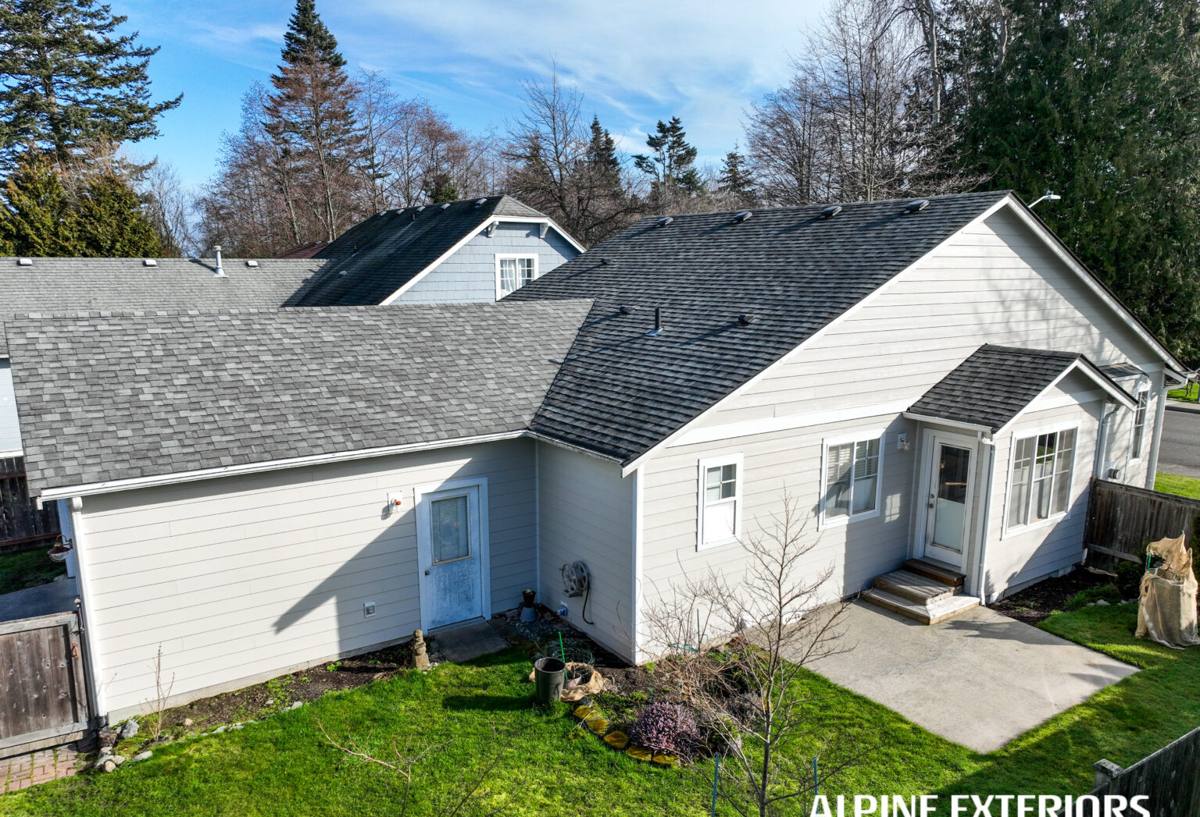
Why We Only Install James Hardie Fiber Cement
We made a decision a while back to stop installing several products that are common in this region — vinyl, LP SmartSide, Cemplank, Allura, and primed wood siding like spruce or cedar lap. That wasn't a marketing decision. It came from watching how these materials actually perform on homes in Whatcom County's specific climate, including plenty of houses around Deming, over the years.
- Vinyl siding can warp or buckle with temperature swings and doesn't hold up well against sustained moisture at seams and J-channels; it also isn't fire-resistant, which matters more each year given regional wildfire smoke and ember exposure concerns.
- LP SmartSide is an engineered wood product — it performs reasonably when installation is flawless and maintenance is consistent, but any breach in the factory coating (a nail pop, a scrape, an unsealed cut edge) gives moisture a path into the wood fiber core, and swelling follows.
- Cemplank and Allura are fiber cement competitors to Hardie. They're not bad products on paper, but we've found their factory finishes and long-term warranty support don't match what Hardie offers, and consistency of supply and color-matching for repairs has been a real headache.
- Primed spruce or cedar looks great on day one but demands a repainting and caulking schedule that most homeowners can't keep up with — and in a climate like Deming's, gaps in that maintenance show up as rot within a handful of years.
James Hardie fiber cement is non-combustible, dimensionally stable across wet and dry cycles, and comes with a factory-applied ColorPlus finish that's baked on rather than field-painted. That finish is what actually resists the fading, peeling, and moss staining that plague painted wood and lower-grade composites in this climate. Hardie's HZ5 product line in particular is engineered for climates with heavy moisture exposure, which fits Deming's rain and humidity profile well.
What Correct Installation Looks Like
Fiber cement only performs as advertised when it's installed to Hardie's specifications — proper clearance from grade and roof lines, correct fastener spacing and type, sealed and flashed penetrations, and factory-finished cut edges treated with Hardie's touch-up product rather than left exposed. We follow those specs on every job, because the difference between a Hardie installation that lasts 30-plus years and one that fails early almost always traces back to installation shortcuts, not the material itself.
Siding, Roofing, Windows, and Decks — One Crew, One Standard
Most homes need more than one exterior system addressed at some point, and in Deming's climate these systems interact. A roof that's shedding water poorly onto the wall below accelerates siding wear. Windows with failed flashing feed moisture behind the cladding regardless of how good the siding itself is. Decks exposed to the same moss and moisture cycle need their own maintenance rhythm.
We handle all four — siding, roofing, windows, and decks — so we're looking at the whole envelope of the house rather than one component in isolation. That matters most on older Deming properties where the roof, trim, and siding were all installed decades apart and don't necessarily work together as a system anymore.
Typical Deming Exterior Project Scope
| Service | Common Trigger in Deming | What We Check |
|---|---|---|
| Siding replacement | Moss staining, soft spots, delamination on wood or composite siding | Sheathing condition, moisture readings, trim and flashing detail |
| Roofing | Moss buildup, granule loss, valley leaks after heavy rain | Underlayment condition, flashing at walls and penetrations |
| Windows | Fogging between panes, drafts, rot at sill or casing | Flashing integration with siding, sill pan condition |
| Decks | Slippery moss growth, soft or splitting boards, ledger rot | Ledger board attachment, joist condition, drainage |
Signs a Deming Home May Need Exterior Attention
- Persistent moss or green algae staining that returns within weeks of cleaning
- Soft, spongy, or bubbling siding panels, especially on the north or shaded side of the house
- Visible gaps or cracking at siding seams and trim joints
- Paint that's peeling or chalking faster than expected for its age
- Water stains or discoloration on interior walls near exterior corners
- Fastener heads showing through the siding surface (a common issue with lower-grade composite panels)
Working in Deming: Access, Terrain, and Scheduling
Deming properties tend to run larger than in-town lots, with longer driveways, more tree cover close to the structure, and in some cases septic systems or wells that affect where equipment and materials can stage. We plan around that during estimates rather than after a crew shows up and finds out the driveway won't clear a trailer. Tree cover close to the house also means we pay attention to gutter and drainage conditions during the estimate, since clogged gutters and poor grading compound the moisture problems this climate already creates.
Because the wet season here runs long, we try to schedule exterior work during the drier stretches when possible, but fiber cement installation is far less weather-sensitive than wood siding or exposed painting work, which is another practical advantage in a place like Deming where a fully dry week isn't guaranteed even in summer.
Why a Local Crew Matters Here
A contractor based elsewhere in the county who occasionally takes a Deming job doesn't necessarily know that river-valley humidity sits differently than it does five miles away, or that certain lots hold moisture in the soil longer into summer. We work this area regularly enough to know what moss growth patterns actually indicate versus what's cosmetic, and we price and plan jobs with the realistic conditions of this specific part of Whatcom County in mind — not a generic regional average.
That local familiarity also shows up in smaller ways: knowing which color finishes actually resist the algae staining common here, understanding realistic timelines given fall and spring weather patterns, and being straightforward about what maintenance a homeowner will and won't need to do once the job is finished.
What to Expect From an Estimate
- An on-site walk-around to assess current siding, roofing, window, and deck condition
- Moisture and damage checks at vulnerable points — corners, penetrations, grade-level trim
- A written scope explaining what's needed now versus what can wait
- Straightforward product recommendations, explained in plain terms — including why we'd steer you away from certain materials given your home's exposure
- A clear, itemized estimate with no pressure to sign on the spot
If you're noticing moss buildup, soft siding, or drafts around your windows at your Deming property, we're happy to take a look. The estimate is free, there's no obligation, and you'll get a straight answer about what your home actually needs — use the form below to get started.