 Sudden Valley Siding
 The Siding You See Isn't the Whole Story
When siding starts to look tired — a soft spot near a window, a stain that won't scrub off, boards that feel spongy under a thumb — most homeowners assume the problem is cosmetic. It rarely is. Siding is a system, not a surface. What you're looking at is the outermost layer of a wall assembly that includes house wrap, sheathing, framing, and insulation, all of which depend on that outer layer doing its job of shedding water. When siding fails, the damage almost always started behind it, weeks or months before it showed up on the outside.
In Sudden Valley and the rest of Whatcom County, that lag between "something is wrong" and "you can see it" tends to be longer than homeowners expect. The marine climate here — salt air drifting in off Lake Whatcom and the nearby Sound, driving rain that comes sideways in a stiff westerly, and a moss season that can stretch from October through May — creates ideal conditions for slow, hidden deterioration. This page walks through what's actually happening behind failing siding, why our climate makes it worse, and what to watch for before a cosmetic issue becomes a structural one.
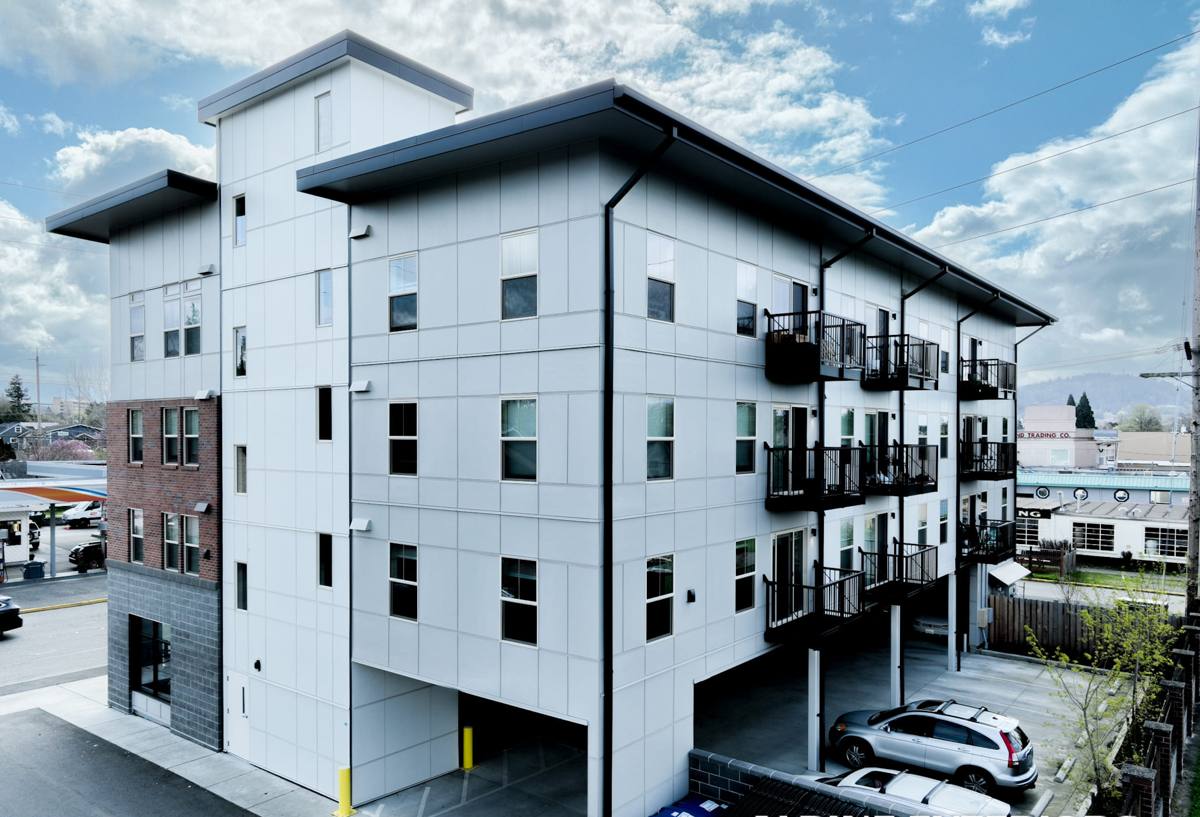
How Siding Actually Fails
It's Rarely the Material Itself
Most siding failure isn't a product defect — it's a moisture management failure. Every siding material, whether it's wood, vinyl, fiber cement, or engineered wood, is designed to work as part of a drainage system. Water is supposed to hit the surface, run down, and exit at the bottom without ever reaching the sheathing or framing. When that system breaks down — from a failed caulk joint, a missing flashing detail, or a material that absorbs water instead of shedding it — moisture gets behind the cladding and stays there.
The Hidden Timeline
Once moisture is trapped behind siding, the damage follows a fairly predictable path:
- Weeks 1-4: Sheathing and framing absorb moisture; no visible change from outside
- Months 1-6: Wood-based sheathing begins to soften; mold and mildew can establish in wall cavities
- 6 months-2 years: Rot sets into framing members; siding may begin to bow, stain, or feel soft at seams
- 2+ years: Structural repair becomes necessary, not just siding replacement
By the time a homeowner notices a visible problem, the hidden damage is often well into that second or third stage. This is why we tell people not to wait for obvious signs before having siding evaluated.
Why Whatcom County's Climate Accelerates the Problem
Salt Air and Metal Fasteners
Sudden Valley sits close enough to Lake Whatcom and the broader Puget Sound air pattern that salt-laden moisture is a real factor, not just a coastal talking point. Salt air accelerates corrosion on fasteners, flashing, and any exposed metal trim. Once a fastener corrodes, it loses its grip, and a loose fastener means a gap — and a gap means a direct path for water behind the siding.
Driving Rain
This region doesn't just get a lot of rain — it gets rain pushed sideways by wind off the water, which behaves very differently than a straight vertical downpour. Driving rain finds horizontal laps, unsealed butt joints, and window trim details that would stay dry in a calmer climate. Siding systems and installation details that work fine in low-wind regions can underperform here specifically because of that wind-driven component.
The Long Moss Season
Moss and algae don't just make siding look neglected — they hold moisture against the surface for extended periods, well past the point where the siding itself would have dried out naturally. In Sudden Valley's shaded, tree-lined lots, moss season can run seven or eight months out of the year. Constant moisture contact softens caulk, degrades paint films, and — on porous or absorbent materials — can contribute to swelling and eventual decay at the surface level, which then compromises the material's ability to shed water at all.
Where Failure Typically Starts
| Location | Why It's Vulnerable | What to Watch For |
|---|---|---|
| Bottom edge of siding, near grade | Splash-back moisture, slower drying, ground contact risk | Discoloration, softness, visible gaps at foundation line |
| Window and door trim | Butt joints and caulk lines are the first seals to fail | Cracked caulk, staining below corners, paint peeling at trim edges |
| Roof-to-wall intersections | Flashing details are complex and easy to install incorrectly | Staining in a vertical line below the roofline |
| Deck ledger and porch attachment points | Penetrations through the siding for structural connections | Soft decking-adjacent wall sections, visible gaps |
| North and shaded elevations | Slower drying time, heavier moss and algae growth | Persistent green or black staining, spongy texture |
Signs You're Looking at Hidden Damage, Not a Cosmetic Issue
Some warning signs are easy to dismiss as normal aging. Others are a clear signal that moisture has already gotten behind the cladding:
- Siding that flexes or feels soft when pressed, especially near seams or the bottom edge
- Paint that bubbles, peels, or won't hold no matter how often it's redone in the same spot
- Interior drywall or trim near exterior walls that shows staining, especially after storms
- A musty smell in a room with no obvious source
- Visible warping, cupping, or separation at siding joints
- Persistent moss or algae growth that returns quickly after cleaning
- Nail heads or fastener lines showing rust streaks
Any one of these on its own might be minor. Two or more in the same area is worth having looked at before it's addressed only as a paint or cleaning job.
Why Material Choice Matters for What Happens "Behind" the Siding
Different siding materials respond to trapped moisture very differently, and that difference matters more in a climate like ours than it does in drier regions. Wood-based products — including engineered wood siding and primed spruce or cedar — are cellulose-based, meaning they can absorb and hold water if the protective coating is compromised, which accelerates decay both in the siding itself and in whatever it's fastened to. Vinyl siding doesn't absorb water the same way, but it also doesn't stop water from reaching the wall behind it — it's designed to shed rain, not seal a wall, and it can trap moisture against sheathing if not installed and vented correctly.
This is a core reason we standardized our installations on James Hardie fiber cement siding rather than continuing to offer engineered wood, vinyl, or unfinished wood options. Fiber cement is not organic material, so it does not feed rot or mold the way wood-based products can, and it holds up structurally even in prolonged wet conditions, which matters a great deal given how long our moss season runs. Hardie's HZ5 product line is specifically engineered for the kind of wind-driven rain and moisture exposure that's typical in Pacific Northwest coastal and lake-adjacent communities like Sudden Valley. The factory-applied ColorPlus finish also removes a major point of failure — field-applied paint and caulk joints that degrade faster than the substrate underneath them.
We're honest that fiber cement isn't magic — it still depends on correct installation, proper flashing, and adequate clearance from grade and roof lines to perform the way it's designed to. No siding material overcomes a bad installation detail. But when the material itself is inert and doesn't decay from trapped moisture, the margin for error on those details gets meaningfully wider, and the consequences of a small installation flaw are far less severe than they'd be with a moisture-absorbent product.
What a Proper Inspection Actually Checks
A surface-level look at siding tells you very little about what's happening behind it. A thorough evaluation should include:
- Probing suspect areas (soft spots, staining, seams) to check for give or sponginess
- Checking flashing at every roof-to-wall transition and window/door head
- Inspecting caulk joints for cracking, shrinkage, or separation
- Looking at grade clearance — siding sitting too close to soil or hardscape traps moisture
- Checking for proper weep and drainage paths at the base of the wall
- Reviewing interior wall surfaces near exterior walls for secondary evidence
If a contractor's "inspection" consists of standing on the ground and looking at the wall from ten feet away, it isn't a real inspection — it's a guess.
What to Do If You Suspect a Problem
Don't Just Repaint or Caulk Over It
Fresh paint or a bead of caulk over a soft or stained area might buy a season of curb appeal, but it does nothing for moisture that's already behind the wall — and it can actually make the problem harder to diagnose later because it hides the visual cue you were relying on.
Get a Second Opinion When the Diagnosis Is "Full Replacement"
Sometimes full siding replacement genuinely is the right call — especially once rot has reached framing members. But the extent of damage should be based on actual probing and, where needed, removing a section of siding to look directly at the sheathing, not a drive-by estimate.
Address the Cause, Not Just the Symptom
If siding failed because of a flashing detail, grading issue, or gutter problem, replacing the siding without fixing that underlying cause just restarts the same failure clock. A good contractor will tell you what caused the failure, not just what it'll cost to cover it back up.
A Word on Timing in This Climate
Because Whatcom County's wet season runs long and our moss season overlaps most of it, minor siding issues here don't get a long dry stretch to "air out" the way they might in a drier climate. A small gap or soft spot found in early fall, left alone, will likely have several more months of near-constant moisture exposure before conditions dry out again. That's a meaningful reason to act on early warning signs rather than waiting for a dry season to deal with it — by the time things dry out, the damage has usually had months to worsen.
If you're seeing any of the warning signs above, or you'd simply like an honest evaluation of what's really going on with your siding, we're happy to take a look. We offer free, no-pressure estimates for Sudden Valley homeowners — including a real inspection, not a guess from the curb.