 Sudden Valley Siding
 Silver Beach sits in a part of Whatcom County where the exterior of a house does real work every single day. Between the damp air coming off the water, the long stretch of grey, wet months, and the shade thrown by mature evergreens on so many lots, the siding, roofing, and trim on a Silver Beach home face a tougher year-round test than they would in a drier inland climate. We work throughout this area, including nearby Sudden Valley, and we've built our approach around exactly these conditions.
What Silver Beach Homes Are Up Against
This is a marine-influenced climate, and that shapes almost everything about how an exterior ages here. Moisture is the constant variable — not just rain volume, but how long a surface stays wet after the rain stops. Salt-tinged air near the water accelerates corrosion on fasteners, flashing, and unprotected metal. Add in tree cover that keeps roofs and north-facing walls shaded and damp longer than sun-exposed ones, and you get a recipe for the three problems we see most often on service calls in this part of the county: moss and algae growth, moisture intrusion at poorly sealed joints, and premature paint or coating failure on materials that weren't built for sustained dampness.
None of this means a house here is destined for problems. It means the materials and installation details matter more than they would somewhere drier. A siding product that performs fine in Eastern Washington can struggle on a shaded, water-adjacent lot in Whatcom County if it wasn't designed with this kind of climate in mind.
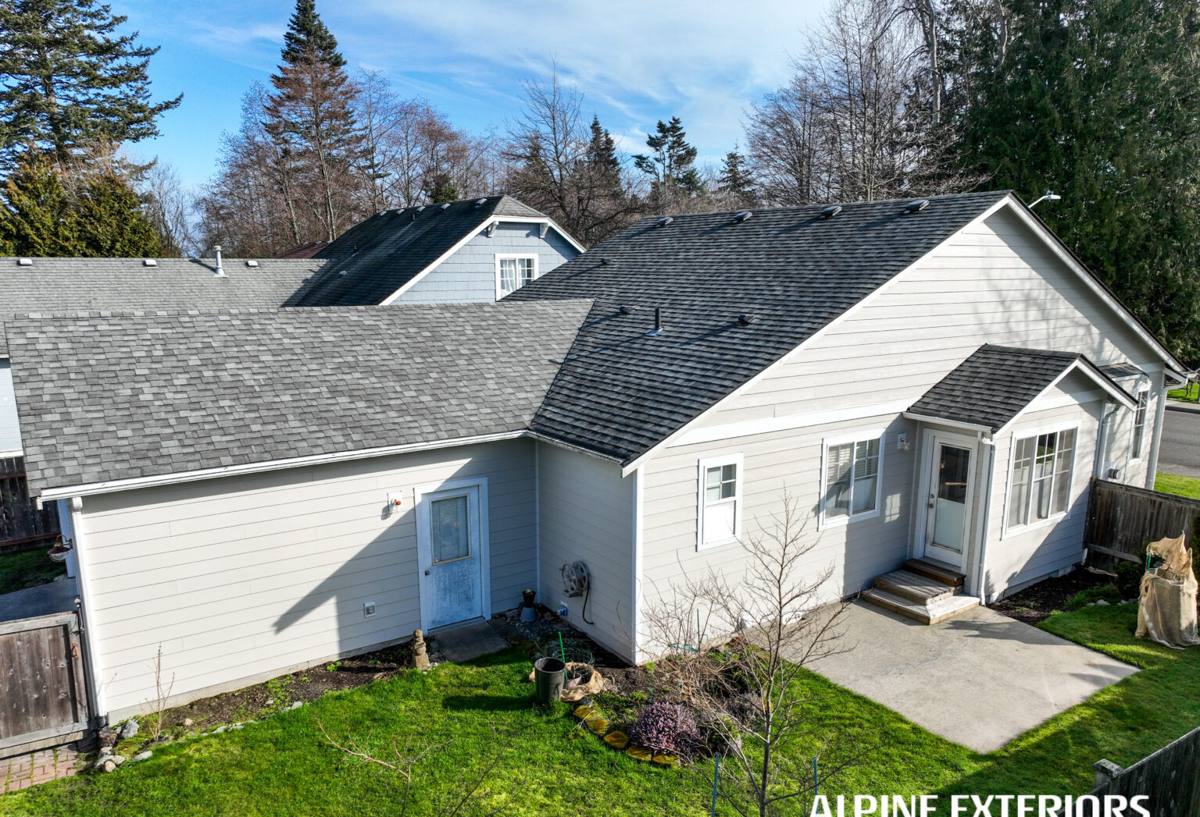
Why Moss Season Isn't Just a Roofing Problem
Homeowners here are used to thinking about moss in terms of the roof, and that's fair — moss on asphalt shingles traps moisture against the roof deck and shortens the life of the roofing system. But moss and algae don't stop at the roofline. They colonize siding too, especially on shaded elevations and anywhere water sheets down from a roof valley or gutter overflow. On porous or wood-based siding, trapped moisture under a moss or algae film can lead to soft spots, coating failure, and eventually rot. On fiber cement siding with a factory-applied finish, that same growth is mostly a surface issue that rinses off without damaging the substrate underneath. That distinction — cosmetic versus structural — is a big part of why we standardized on the material we did.
How We Handle Roofing in This Climate
For roofing, we focus on the details that actually determine how a roof performs through a wet Whatcom County winter: proper underlayment, correctly lapped flashing at every valley and penetration, ventilation that lets the attic and roof deck dry out between storms, and gutter and drip-edge details that move water away from the fascia and siding instead of letting it wick back in. A roof that's watertight on a dry day but poorly detailed at the flashing will still leak during a sustained atmospheric river event — and this area gets those.
Why We Only Install James Hardie Fiber Cement Siding
We install James Hardie fiber cement siding exclusively. We don't install vinyl, LP SmartSide (or other engineered wood products), Cemplank, Allura, or primed or raw cedar. That's not a marketing position — it's a standard we hold to because of what we've seen these products do, and not do, in exactly this kind of climate over time.
- Vinyl siding is affordable and low-maintenance in the sense that it doesn't need repainting, but it's a thin plastic product that expands and contracts with temperature swings, can warp or crack in impact, and its seams and J-channels give moisture more places to work its way behind the cladding over years of driving rain.
- Engineered wood siding (LP SmartSide and similar) uses treated wood strand technology that resists moisture better than old-style hardboard, but it's still a wood-based product at its core. In a climate with this much sustained dampness and shade, any breach in the factory coating or field-cut edge sealant creates an entry point for moisture, and wood-based products are simply more vulnerable to swelling and rot once water gets in than a cement-based product is.
- Cemplank and Allura are both fiber cement products, and fiber cement as a category is the right call for this region. Where they differ from what we install is in finish system, engineering for regional climate zones, and warranty structure — details covered in the next section.
- Primed or raw cedar is a beautiful traditional material, but it requires disciplined, recurring maintenance — restaining or repainting on a schedule, careful caulking, and vigilance about end grain — to hold up against year-round moisture. Miss a maintenance cycle in a climate like this one and cedar can deteriorate quickly.
James Hardie fiber cement is engineered from cement, sand, and cellulose fiber. It doesn't absorb water the way wood-based products can, it won't warp or crack from moisture cycling the way vinyl can under stress, and it's non-combustible, which matters increasingly to insurers and homeowners alike. Hardie also builds region-specific HZ5 formulations engineered for the freeze-thaw and moisture patterns of climates like the Pacific Northwest, which is a level of climate-specific engineering the other products in this comparison don't offer in the same way.
ColorPlus Factory Finish
Most of the siding we install uses Hardie's ColorPlus finish — a coating baked onto the board at the factory under controlled conditions, rather than field-applied paint. In a climate where field-applied paint has to cure and bond correctly despite ambient moisture, a factory finish removes a major variable. It also carries its own finish warranty separate from the product warranty, and it resists the fading and chipping that field-painted siding is more prone to.
Comparing Siding Options for a Silver Beach Property
| Material | Moisture Behavior in This Climate | Maintenance Burden | Combustibility |
|---|---|---|---|
| James Hardie Fiber Cement | Does not absorb/swell; factory finish sheds moss and algae easily | Low — occasional rinse, no repainting for the life of ColorPlus finish | Non-combustible |
| Vinyl | Won't rot, but seams and channels allow moisture behind panels; can warp with heat/cold cycling | Low, but limited repair options if damaged | Combustible |
| Engineered Wood (LP SmartSide) | Wood-based core vulnerable at cut edges and coating breaches | Moderate — coating and caulking need periodic inspection | Combustible |
| Primed/Raw Cedar | Absorbs moisture readily without disciplined upkeep | High — recurring staining/painting on a strict schedule | Combustible |
Windows: The Other Side of Moisture Control
Siding and roofing get most of the attention, but windows are where a lot of long-term water damage actually starts, especially around old or poorly flashed openings. In a climate with this much sustained rainfall, correct window flashing — integrated properly with the weather-resistive barrier and the new siding — is not optional. When we replace windows as part of a siding project, we treat the window opening as a system: proper pan flashing at the sill, head flashing that sheds water outward, and sealant details that won't fail after a few freeze-thaw cycles. We also talk with homeowners about energy performance, since older single-pane or early dual-pane windows lose a lot of heat during Whatcom County's long heating season.
Decks in a Wet, Shaded Climate
Deck framing and surface materials take a similar beating from sustained moisture, especially on shaded lots common around Silver Beach and Sudden Valley. Ledger board attachment, joist protection, and drainage under the deck surface all matter more here than they would in a dry climate. We build and repair decks with the same moisture-first mindset we bring to siding and roofing — proper flashing at the house connection, corrosion-resistant fasteners, and material choices that won't trap water against structural framing.
Why a Local Crew Matters Here
A crew that mostly works drier inland climates can install a product correctly on paper and still miss the details that matter in a place like this — how far to hold a starter strip off a stone or concrete foundation, how much end-gap to leave for board movement, where caulk should and shouldn't be used on a Hardie install, how aggressively to flash a valley that's going to see moss and needle debris every fall. Whatcom County's marine climate rewards installers who've done this work here repeatedly, not just installers who've read the manufacturer's manual once.
What to Ask Any Contractor Bidding Your Silver Beach Project
- Are you manufacturer-certified to install the siding product you're proposing, and can you explain that certification?
- What's your specific plan for flashing and moisture management at this house's roof-to-wall and window details?
- Will you provide the manufacturer's written warranty, and is it transferable if I sell the home?
- How do you handle existing moisture or rot damage discovered once old siding or roofing comes off?
- Can you walk me through why you'd recommend one siding material over another for this specific lot and its sun/shade exposure?
What Working With Us Looks Like
We start with an honest look at the house — where moisture has already caused problems, how much shade and moss exposure each elevation gets, and what condition the sheathing and framing are in once old material comes off. From there we walk through material and design options, explain why we recommend what we recommend, and give a clear, written scope before any work begins. We don't upsell products we don't believe in, and we don't install anything we wouldn't put on our own homes in this climate.
If you're weighing a siding, roofing, window, or deck project for a home in Silver Beach or the surrounding Sudden Valley area, we're happy to take a look and walk you through your options. Reach out for a free, no-pressure estimate using the form below.