 Sudden Valley Siding
 Fairhaven's Exterior Climate Is Its Own Challenge
Fairhaven sits close to Bellingham Bay, which means homes here deal with a combination of exterior stressors that inland Whatcom County neighborhoods simply don't see as intensely. Salt-laden air off the water, driving rain that comes in sideways during winter storms, and long stretches of shade and dampness that keep moss and algae established on siding and roofing nearly year-round. Any one of these on its own is manageable. Together, they wear down exterior materials faster than most homeowners expect, especially on the north- and west-facing walls that stay wet the longest.
We work throughout Sudden Valley and the surrounding Whatcom County area, and Fairhaven is one of the neighborhoods where we see the clearest case for choosing exterior materials deliberately rather than defaulting to whatever's cheapest or most common. This page walks through what that climate actually does to a home's exterior, and how we approach siding, roofing, windows, and decks for houses in this kind of environment.
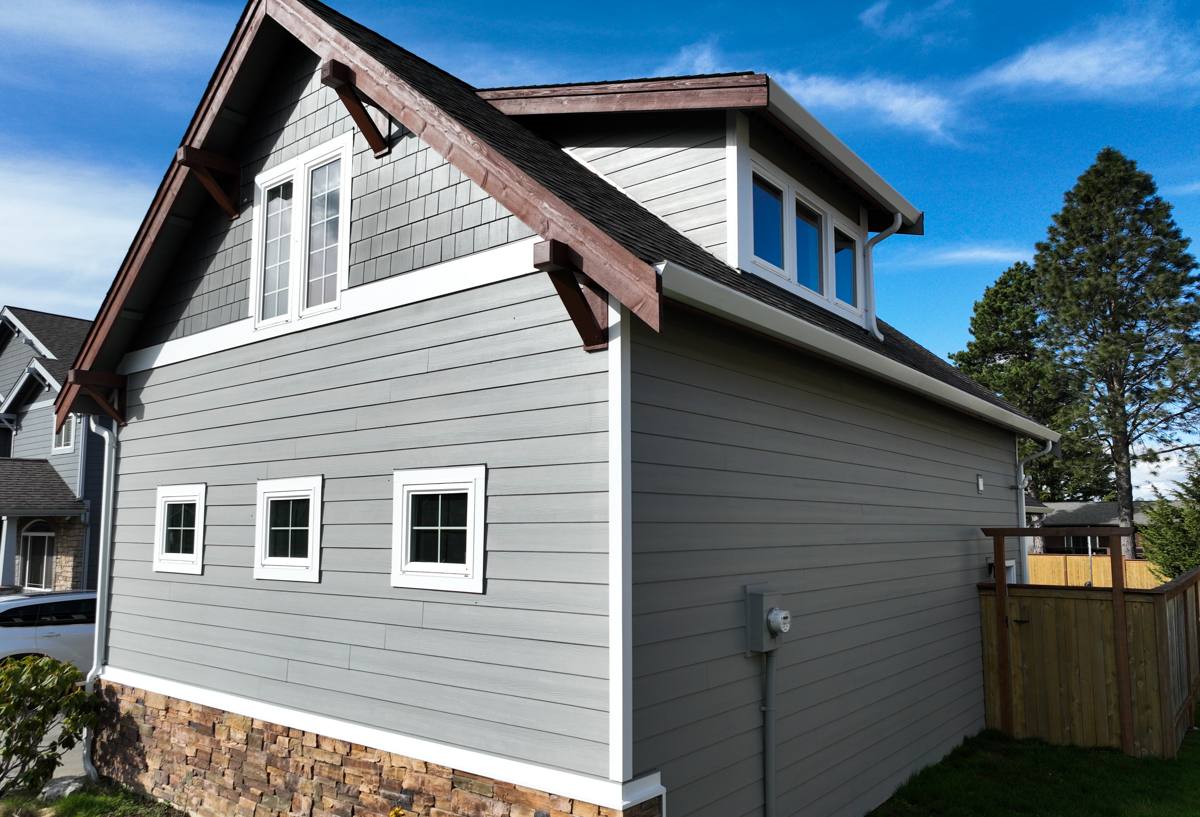
What Salt Air Does to a Home Over Time
Proximity to saltwater doesn't just mean occasional salty air on a windy day. It means a slow, constant exposure that accelerates corrosion on anything metal and degrades certain siding and trim materials faster than the same products would wear inland. Fasteners, flashing, gutter hardware, and painted wood trim all take the brunt of it.
Where Salt Exposure Shows Up First
- Corrosion on exposed nail heads, screws, and metal flashing, especially where the finish has been scratched or wasn't rated for coastal exposure
- Premature paint failure on wood trim and fascia, particularly on walls that face prevailing wind off the water
- Pitting and dulling on lower-grade vinyl siding, which can become brittle and chalky faster near salt air
- Accelerated rust on hose bibs, light fixtures, and other exterior hardware if it isn't rated for marine-adjacent environments
The fix isn't complicated, but it does require using materials and fasteners actually suited to the exposure rather than standard-grade products that were never tested for it. That's a decision made at the time of installation — it's much harder and more expensive to correct after the fact.
Driving Rain and Water Management
Western Washington gets a lot of rain, but the kind of rain that does real damage to a home isn't the gentle, straight-down kind — it's wind-driven rain that hits siding at an angle and gets pushed up under laps, around window trim, and into any gap in the water-resistive barrier. Fairhaven's exposure to weather coming off the bay means this style of rain event is common, not occasional.
Why Installation Detail Matters More Here
Siding material choice matters, but how it's installed matters just as much, if not more, in a driving-rain environment. Proper flashing at windows and doors, correct lap spacing, sealed penetrations, and a continuous water-resistive barrier behind the siding are what actually keep water out of the wall assembly. A high-quality siding product installed with shortcuts will still let water in. A modest product installed correctly will outperform it. We install to manufacturer spec every time, not because it's required, but because in this climate the margin for error is smaller than it is elsewhere.
The Long Moss Season
Shaded lots, persistent moisture, and mild temperatures make Fairhaven and the broader Sudden Valley area prime territory for moss and algae growth on roofs and siding. Moss doesn't just look bad — on a roof, it lifts shingles and holds moisture against the roofing material, shortening its life. On siding, algae staining and moss growth in seams or behind poorly sealed trim can trap moisture against the substrate.
Practical Moss Management
- Keep gutters clear so water isn't backing up and staying against fascia and roof edges
- Trim back overhanging branches where practical to reduce shade and let siding and roofing dry out between rain events
- Choose siding and roofing products with factory-applied finishes that resist algae growth better than bare or field-painted materials
- Have roofing and siding inspected periodically rather than waiting until moss growth is heavy and visible from the street
Moss removal itself should be done carefully — pressure washing at the wrong angle or pressure can force water behind siding laps or under shingles, which causes more damage than the moss was doing.
Why We Only Install James Hardie Fiber Cement Siding
We get asked fairly often why we don't offer vinyl, LP SmartSide, cedar, primed spruce, or other fiber cement brands like Cemplank or Allura. The honest answer is that after years of installing and repairing siding in this climate, James Hardie is the product we've found holds up most consistently against the specific combination of salt air, driving rain, and sustained moisture that homes in this area deal with.
What the Alternatives Get Right — and Where They Fall Short Here
Vinyl siding is inexpensive and low-maintenance in mild climates, but it can become brittle with age and doesn't handle impact or wind-driven rain intrusion as well as fiber cement. It also isn't the product we'd choose for a home that needs to shed water aggressively at every seam. LP SmartSide is a genuinely engineered wood product with real strengths, but as an engineered wood, it's more dependent on unbroken paint film and sealed edges to keep moisture out over the long term — a bigger liability in a high-moisture coastal-influenced climate than in a drier one. Cedar and primed spruce are attractive but wood-based, meaning they need consistent maintenance — repainting, resealing, moss and mildew treatment — to perform in a wet climate, and that maintenance burden only grows the closer a home sits to the bay.
Other fiber cement brands aren't a bad category of product, but we've standardized on Hardie specifically because of its climate-engineered HZ product lines (built for exactly this kind of Pacific Northwest exposure), its factory-applied ColorPlus finish that resists fading and doesn't require field painting, its non-combustible composition, and a warranty structure that's proven to be reliable when we back it with correct installation. Standardizing on one product also means our crews install it constantly — there's no learning curve on a job, no guessing at manufacturer spec, and no mixed experience level across a project.
Comparing Siding Options for a Coastal-Influenced Climate
| Material | Moisture Resistance | Salt Air Durability | Maintenance | Typical Lifespan |
|---|---|---|---|---|
| James Hardie Fiber Cement | Strong when installed to spec | Good, especially with proper fasteners | Low — factory finish, no repainting cycle | 30+ years with correct install |
| Vinyl | Moderate — seams can allow intrusion | Can become brittle/chalky over time | Low, but limited repair options | 20-30 years, shorter near salt air |
| LP SmartSide (Engineered Wood) | Dependent on intact paint/sealant | Moderate, needs diligent maintenance | Moderate — paint and seam upkeep | 20-30 years with upkeep |
| Cedar / Primed Spruce | Weak without consistent maintenance | Weak — prone to moisture and moss issues | High — regular repainting/sealing | 15-25 years with diligent care |
Roofing, Windows, and Decks in the Same Climate
Siding doesn't work in isolation — a home's exterior performs as a system. In Fairhaven's climate, that system needs to work together to shed water and resist moss and salt exposure at every point.
Roofing
Roofs in this area take the brunt of moss growth and wind-driven rain. Proper underlayment, flashing at valleys and penetrations, and moss-resistant roofing materials all matter more here than in a drier, less shaded region.
Windows
Window flashing and integration with the siding water-resistive barrier is one of the most common failure points we find on older homes near the water. Replacement windows need to be flashed correctly into the wall assembly, not just caulked around the edges — caulk alone doesn't hold up to years of driving rain.
Decks
Decks near the bay deal with the same moisture and moss exposure as siding and roofing, plus direct weather exposure with no wall to block wind-driven rain. Fastener corrosion resistance and proper drainage beneath the deck surface both matter more here than in a sheltered inland yard.
Why a Local Crew Matters
A contractor based in Sudden Valley and working regularly throughout Whatcom County sees this climate's effects on homes constantly — not as an occasional job type, but as the normal condition we build for. That matters for a few practical reasons: we know which details actually need extra attention in this environment (flashing, fastener selection, moss-resistant product choices), we're not learning a coastal climate on your project, and we're available locally if a warranty question or follow-up comes up down the road. A crew unfamiliar with this kind of exposure may install correctly for a drier climate and still leave a home vulnerable to the specific conditions Fairhaven sees.
What to Look for in a Contractor for This Climate
- Manufacturer training or certification on the specific siding product being installed
- A clear explanation of how they handle flashing and water management at windows, doors, and seams
- Use of fasteners and hardware rated for coastal or high-moisture exposure, not just standard-grade materials
- Willingness to explain trade-offs between siding materials honestly, rather than pushing whatever they stock
- Local references and a physical presence in the area, not just a service radius on a website
- A written warranty that covers both materials and workmanship, with terms you actually understand
Getting Started
If you're weighing a siding, roofing, window, or deck project for a home in Fairhaven, we're happy to take a look and talk through what your specific home is dealing with — its exposure, its age, its current materials — before recommending anything. We offer free, no-pressure estimates, and there's a form below to get one scheduled.