 Sudden Valley Siding
 Exterior Work for Geneva Homes, Built Around Lake Whatcom's Climate
Geneva sits along the north end of Lake Whatcom, tucked into the wooded, hilly terrain that separates it from Bellingham and the rest of Whatcom County. It's a quieter corner of the area, but the climate doesn't treat it any more gently than anywhere else in this part of the Pacific Northwest. Homes here deal with a long wet season, tree cover that keeps shady sides of a house damp for days after a storm, and the kind of marine-influenced air that moves through this whole region and settles moisture into anything that isn't built to shed it.
We do siding, roofing, windows, and decks, and we've worked on homes throughout the Sudden Valley and Lake Whatcom area. The exterior systems that hold up best here aren't necessarily the ones that look best in a showroom — they're the ones engineered for repeated wetting and drying, shade, and years of moss pressure without breaking down.
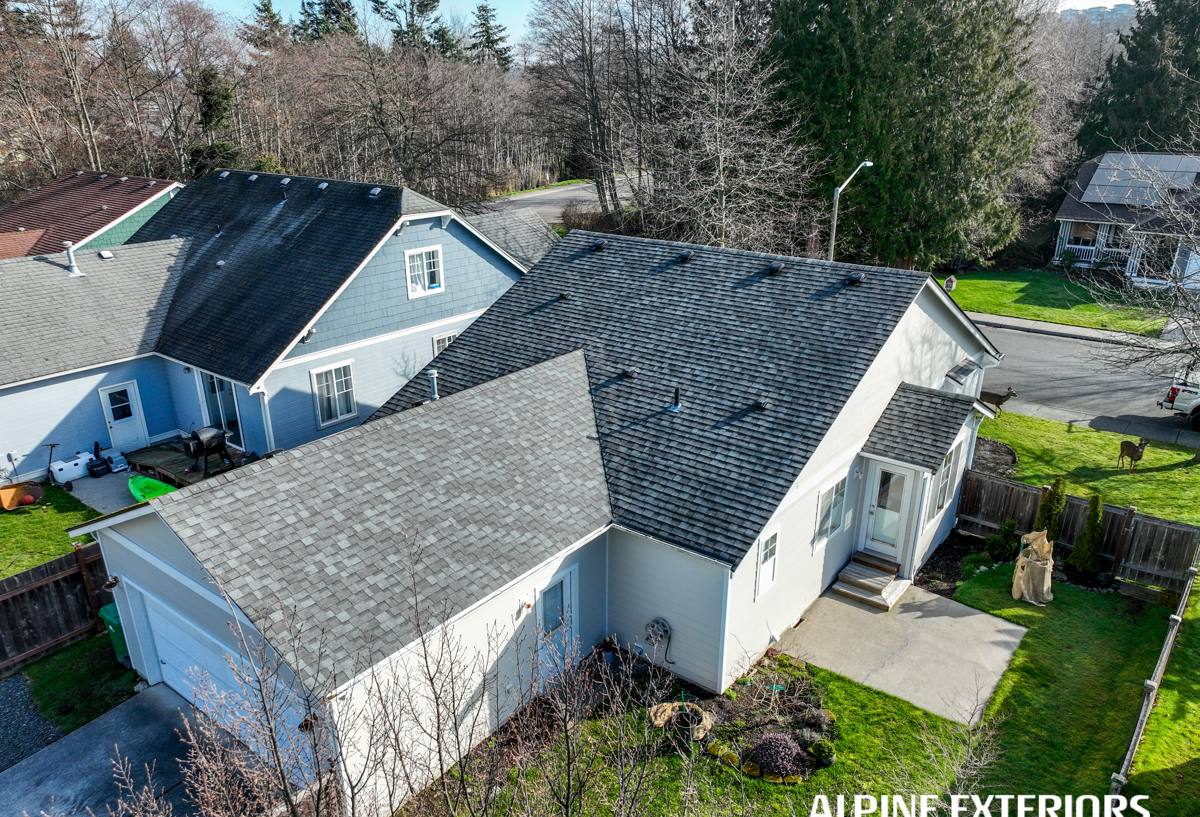
What Geneva's Setting Does to a House Over Time
Being close to the water and surrounded by trees is part of what makes this area appealing, but it also creates a specific set of exterior challenges:
Driving Rain and Prolonged Dampness
Whatcom County gets a lot of rain, and a good share of it comes in sideways during fall and winter storms. On a lakeside or wooded lot, wind can drive that rain against siding at odd angles, and tree cover slows down drying afterward. Surfaces that stay damp longer are surfaces where rot, mildew, and coating failure start earlier than they would on a more exposed, sun-drenched lot.
Marine Air and Humidity
The moisture-laden marine air that moves through Whatcom County reaches inland communities like Geneva as elevated humidity and near-constant dampness for much of the year, even without a storm actively passing through. Materials that absorb water — wood trim, some composite products, certain paints — swell, shrink, and eventually crack or delaminate under that cycle.
A Long Moss Season
Shaded, tree-lined lots near the lake are close to ideal growing conditions for moss and algae. Once it takes hold on a roof or on siding, it holds moisture against the surface, which accelerates whatever decay process is already underway. Homes with a lot of tree cover, north-facing walls, or roof valleys that don't get much sun tend to see moss show up first and worst.
Why We Only Install James Hardie Siding
We made a decision as a company to install one siding system: James Hardie fiber cement. We don't install vinyl, LP SmartSide, or primed wood siding, and that's a deliberate call based on what actually holds up in a climate like this one, not a sales preference.
Fiber cement is cement, sand, and cellulose fiber, pressed and cured into a dense, stable board. It doesn't absorb water the way wood-based products do, so it doesn't swell, warp, or rot from repeated wetting. It's also non-combustible, which matters as wildfire risk has become a bigger consideration across Washington in recent years, even in wetter western counties. James Hardie's HZ5 product line is engineered specifically for climates like the Pacific Northwest's, with a moisture and freeze-thaw profile suited to exactly the conditions Geneva sees most winters.
The ColorPlus factory finish is another piece of why we standardized on this product. It's baked on in a controlled setting rather than field-applied, so it resists fading, chipping, and the kind of early wear you get when paint goes on wood siding in damp, marine-air conditions. It comes with a longer finish warranty than field-applied paint typically gets, and the product itself carries a strong transferable warranty when installed to Hardie's specifications — which matters if you sell the house down the road.
None of this means other siding products are junk. Vinyl is inexpensive and low-maintenance in the right setting; wood has a look some homeowners want badly enough to accept the upkeep. But for a wooded, damp, moss-prone lot near Lake Whatcom, we don't think those trade-offs make sense, and we'd rather install one product well than offer several we don't fully stand behind.
Roofing, Windows, and Decks in the Same Climate
Roofing
A roof in Geneva does more work than a roof in a drier part of the state. Moss control, proper ventilation, and correctly detailed flashing around valleys and penetrations matter more here because the roof rarely gets a long stretch to fully dry out. We look at ventilation and moss-prone areas as part of any roofing job, not just the shingles themselves.
Windows
Window failures in this climate are usually about the seal and flashing, not the glass. Poorly flashed window openings let driving rain track behind the trim and into the wall assembly, which can cause damage you don't see until it's significant. When we replace windows, we pay close attention to flashing and integration with the surrounding siding — a good window installed with poor flashing detail will still leak.
Decks
Lakeside living usually means outdoor living, and a deck near Lake Whatcom takes on a lot of shade, moisture, and moss the same way siding and roofing do. Material choice, proper drainage beneath the deck surface, and fasteners rated for wet conditions all affect how long a deck actually lasts before boards start cupping or hardware starts to fail.
Cost Factors for Exterior Work in This Area
Every home is different, but these are the variables that most often move the price on siding, roofing, window, and deck projects in the Geneva and Lake Whatcom area:
| Factor | Why It Matters Here |
|---|---|
| Tree cover and access | Wooded lots often mean tighter staging area and more careful equipment placement |
| Existing moisture damage | Hidden rot behind old siding or trim adds repair scope once walls are opened up |
| Home size and wall complexity | Dormers, gables, and multiple roof planes add labor and material cuts |
| Moss and algae remediation | Heavily shaded roofs or walls may need treatment before or during the project |
| Product line and finish | Hardie panel vs. lap siding, and ColorPlus color selection, affect material cost |
| Site conditions near the lake | Slope, drainage, and staging space on lakeside lots can affect scheduling and setup |
Signs Your Home's Exterior Needs Attention
Homeowners in this area often notice these signs long before a full failure — catching them early keeps a repair from becoming a rebuild:
- Moss or dark streaking building up on siding, especially on shaded or north-facing walls
- Soft or spongy spots when you press on wood trim, fascia, or siding
- Paint that's peeling, bubbling, or chalking faster than it used to
- Gaps or cracking around window and door trim
- Roof valleys or low-slope sections holding moss or standing debris
- Deck boards that stay damp long after rain stops, or fasteners showing rust
- Musty smell or visible staining on an interior wall that backs up to an exterior wall
Why a Local Crew Matters for a Home Like Yours
A crew that works throughout Whatcom County sees the same conditions repeatedly — how differently a lakeside, tree-covered lot in Geneva behaves compared to an open lot closer to Bellingham's downtown core, and how that changes where moisture and moss problems tend to show up first on a given house. That's not something you can pick up from a manual; it comes from doing the work here, season after season.
It also means straightforward scheduling and follow-up. We're not traveling in from out of the area for a single job, and if a question comes up after the work is done, we're not hard to reach.
How We Approach a Geneva Project
We start with a walk-around of the home to look at siding, trim, roofing, windows, and decking together, since problems in one area often start with a failure in another — a leaking window, for instance, can cause siding and trim damage that looks unrelated at first glance. From there we give you a straightforward assessment of what needs attention now, what can be monitored, and what your options are, including honest trade-offs between repair and replacement.
If siding replacement is part of the conversation, we'll walk you through the James Hardie product lines, ColorPlus color options, and what correct installation involves — proper flashing, clearances, and fastening to spec, since fiber cement performs the way it's supposed to only when it's installed correctly.
If you're noticing moss buildup, aging siding, a roof that's due, or windows that don't seal like they used to, we're glad to take a look and put together a free, no-pressure estimate. There's a form below to get started.