 Sudden Valley Siding
 Geneva's Climate Puts Real Stress on Exterior Siding
Geneva sits close enough to Lake Whatcom and the surrounding tree cover that homes here deal with a specific combination of punishment: salt-tinged air moving up from the coast, long stretches of driving rain off the water, and shaded, damp conditions that keep moss and algae active for most of the year. Any one of these on its own is manageable. Together, over enough winters, they find every weak point in a siding system — a poorly lapped seam, a fastener that missed the stud, a coat of paint that was never meant to hold up outdoors this long.
We install fiber cement siding in the Sudden Valley area regularly enough to know which failure patterns show up here first: caulk-dependent seams that open up and let water track behind the cladding, wood and wood-composite products that hold moisture against the sheathing in shaded yards, and factory or field paint finishes that chalk and fade faster than advertised once they're facing this much rain. A fiber cement job done right in Geneva has to answer all three of those problems, not just look good on installation day.
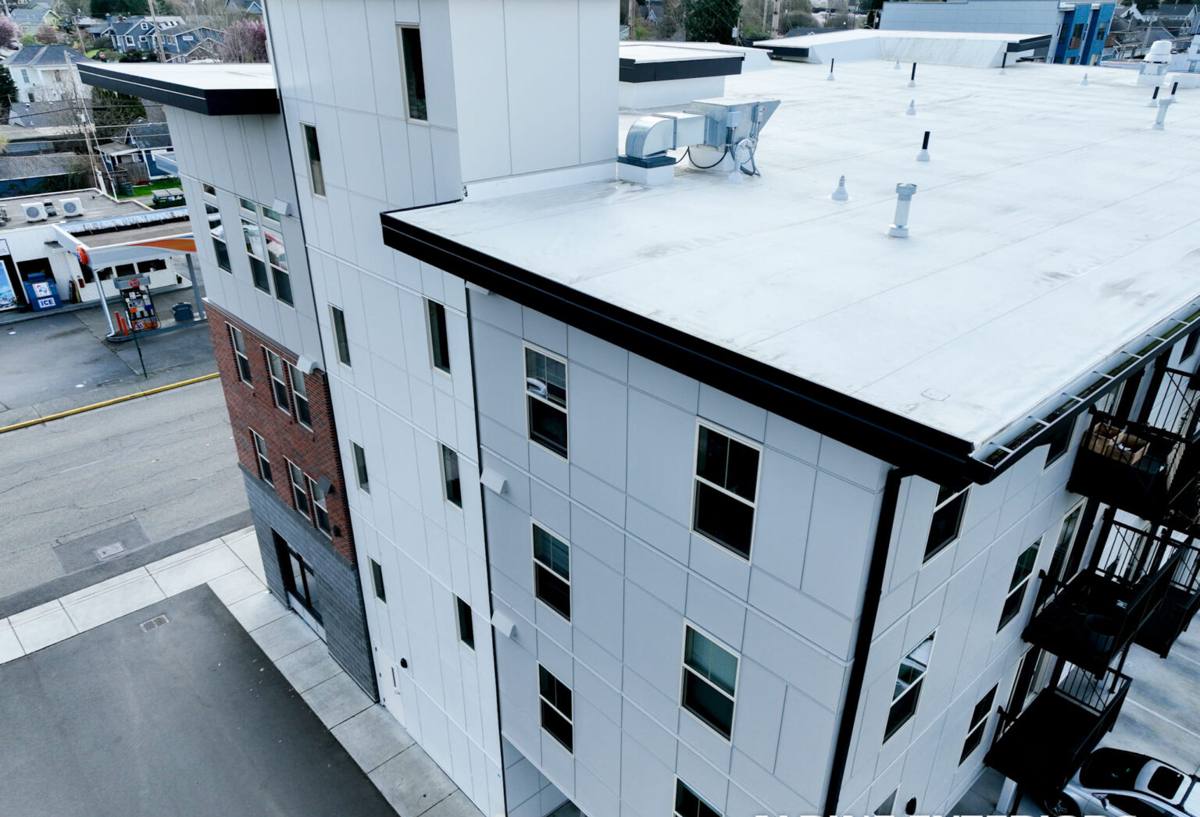
Why Fiber Cement Is the Right Material for This Neighborhood
Fiber cement is cement, sand, and cellulose fiber pressed and cured into a dense, dimensionally stable board. It doesn't swell and shrink with moisture the way wood-based products do, it doesn't feed mold or insects, and it's non-combustible — a real consideration for homes near the trees around Sudden Valley. For Geneva specifically, the properties that matter most are moisture stability and finish durability. A board that doesn't move much with humidity keeps its paint film intact longer, and a factory-baked finish holds color and resists mildew far better than anything applied on site.
We install James Hardie fiber cement exclusively — not as a sales pitch, but because we've made a professional decision not to install products that ask homeowners to take on more long-term maintenance risk than they should. Hardie's HZ5 product line is engineered specifically for the freeze-thaw, high-moisture conditions common in the Pacific Northwest, and its ColorPlus factory finish is baked on with a process a field-applied paint job simply can't replicate.
Where Other Products Fall Short Here
- Vinyl flexes and can warp in temperature swings, and its seams rely on overlap rather than a sealed system — moisture finds a way behind it over time.
- Primed wood or cedar looks great new but needs repainting and caulk maintenance on a cycle that's hard to keep up with in a wet, shaded lot.
- LP SmartSide and similar wood-strand composites perform reasonably when detailed perfectly, but any breach in the factory coating lets moisture into the substrate, and repairs are visible.
- Off-brand fiber cement (Cemplank, Allura, and similar) is chemically similar to Hardie but generally lacks the same depth of climate-specific engineering, factory finish warranty, and regional installer support we rely on.
What a Correct Fiber Cement Installation Actually Involves
The board itself is only part of the system. Most siding failures we're called to diagnose — anywhere in Whatcom County, not just Geneva — trace back to installation shortcuts, not the material. A correct job includes:
- A continuous weather-resistive barrier behind the siding, lapped correctly with no gaps at penetrations
- Proper flashing at every window, door, and roofline intersection, installed before the siding goes on — not caulked over after
- Correct fastener type, spacing, and embedment per the manufacturer's installation guide, not just "close enough"
- Minimum clearance from the siding's bottom edge to grade, decks, and roof lines so water can't wick up into the board
- Factory-mitered or properly caulked joints at corners and butt seams, sized for the product's expansion tolerances
- Ventilation gaps and rainscreen detailing where the wall assembly calls for it, especially on shaded north- and west-facing walls common around the lake
Skip any one of these and you get a wall that looks fine for a year or two, then starts showing streaking, soft spots, or paint failure right where the shortcut was taken. Fiber cement is forgiving of a lot of things, but it is not forgiving of trapped moisture.
Fiber Cement vs. Other Common Siding Materials
| Material | Moisture Behavior | Finish Durability | Fire Resistance | Typical Maintenance |
|---|---|---|---|---|
| James Hardie Fiber Cement | Dimensionally stable, engineered for wet climates | Factory-baked ColorPlus finish, long color hold | Non-combustible | Occasional wash, repaint on decades-long cycle |
| Vinyl | Doesn't absorb water, but seams can trap moisture behind panels | Can fade and become brittle over time | Combustible, can deform near heat | Low, but panels crack and can't be spot-repaired cleanly |
| Primed Wood / Cedar | Absorbs moisture, prone to swelling and rot | Field-applied paint fails faster | Combustible | Frequent repainting and caulking |
| Wood-Strand Composite (e.g. LP SmartSide) | Resists moisture while coating is intact; vulnerable once breached | Factory coating, but repairs show | Combustible, treated for ignition resistance | Moderate; watch cut edges and fastener points closely |
How the Project Works, Start to Finish
1. On-Site Assessment
We look at your home's exposure — how much direct rain and shade each wall gets, the condition of the existing wall assembly, and any signs of past moisture intrusion. This is what determines flashing details and whether the sheathing underneath needs attention before new siding goes on.
2. Product and Color Selection
We walk you through the relevant Hardie panel and plank profiles and ColorPlus color options, matched to what actually suits the home and holds up in this climate — not just what looks good on a sample chip.
3. Tear-Off and Sheathing Check
Old siding comes off and we inspect the sheathing underneath. Any rot or water damage gets addressed before the new weather barrier goes up — covering a problem is worse than finding it.
4. Weather Barrier, Flashing, and Installation
Barrier, flashing, and siding go on per the manufacturer's specifications, with attention to every penetration, corner, and clearance point described above.
5. Final Walkthrough
We go over the finished job with you, confirm caulking and trim details are clean, and make sure you know what little maintenance the system does need going forward.
What Maintenance Looks Like After Installation
Fiber cement is low-maintenance, not no-maintenance. In a moss-prone area like Geneva, the most useful habit is an annual look at north- and west-facing walls and anywhere siding sits close to shrubs or tree cover — those are the spots moss and algae take hold first. A soft wash with a garden hose and mild cleaner, done once or twice a year, keeps growth from building up. Beyond that, check caulked joints periodically and keep gutters clear so water isn't sheeting down the wall face during heavy rain.
Why a Local, Fiber-Cement-Only Crew Matters in Geneva
Fiber cement is unforgiving of generic installation. A crew that mostly installs vinyl or wood and does fiber cement occasionally is more likely to miss the manufacturer-specific fastening, clearance, and flashing details that keep the product performing over decades. We install James Hardie exclusively, which means our crews aren't relearning a different product's rules on every job — they know exactly how these boards need to be cut, fastened, and flashed, and they know which walls in this area take the worst weather and need the most attention to detail.
Familiarity with the neighborhood itself helps too: knowing which lots sit in heavier shade off the lake, which exposures catch the worst of the driving rain, and how salt air in the mix affects fastener and flashing choices over the fastener choices over time.
Before You Hire: A Practical Checklist
- Ask what siding brand and product line they install, and whether it's the only one they use
- Ask to see their approach to flashing at windows and rooflines before assuming it's "standard"
- Confirm they'll inspect and address sheathing condition during tear-off, not just cover it up
- Ask how they handle clearance at grade, decks, and roof-to-wall intersections
- Get a clear, written scope — materials, prep work, and warranty coverage, not just a total price
Cost Factors Worth Understanding
Every home is different, so we won't quote a number without seeing the site, but the main cost drivers on a Geneva fiber cement project are typically the amount of tear-off and sheathing repair needed, the home's wall complexity (corners, trim, window count), the plank or panel profile chosen, and access. A straightforward wall costs less than one with extensive rot repair or elaborate trim work — which is exactly why the on-site assessment comes before any real number.
If you're weighing siding options for a home in Geneva or elsewhere around Sudden Valley, we're happy to take a look and give you a straightforward, no-pressure estimate — just fill out the form below.