 Sudden Valley Siding
 If you've been pricing out siding for a home in Sudden Valley or anywhere else around Lake Whatcom, you've probably run across Allura fiber cement as one of the options on a contractor's quote sheet. It's a legitimate fiber cement product, and on paper it looks like it should be a straightforward alternative to James Hardie. We get asked about it often enough that we think homeowners deserve a straight answer: we don't install Allura, and this page explains exactly why, without pretending the product is something it isn't.
This isn't a takedown. Allura fiber cement is manufactured to real industry standards and plenty of contractors work with it successfully. Our position is narrower and more practical: after years of installing and standing behind siding in this specific climate — salt air off the lake and the Sound, driving rain off the water, and a moss season that runs long into the year — we made a call about which product we're willing to put our name on. Here's the reasoning.
What Allura Gets Right
Allura fiber cement is a cellulose-reinforced cement board, the same basic category as James Hardie. That means it shares the core advantages of fiber cement over wood, vinyl, or engineered wood products:
- It's non-combustible, which matters for insurance rates and wildfire-adjacent building codes in Washington.
- It doesn't rot the way untreated wood or primed spruce does.
- It holds paint and factory finishes better than vinyl, which expands and contracts with temperature swings.
- It's resistant to pests — no woodpeckers, no carpenter ants working through the substrate.
If you're comparing fiber cement broadly against vinyl or wood siding, Allura is a step up in durability, and we're not going to tell a homeowner otherwise. The category is sound. Our concerns are specific to this manufacturer's product line, warranty structure, and how it performs once it's actually on a wall in this part of Washington.
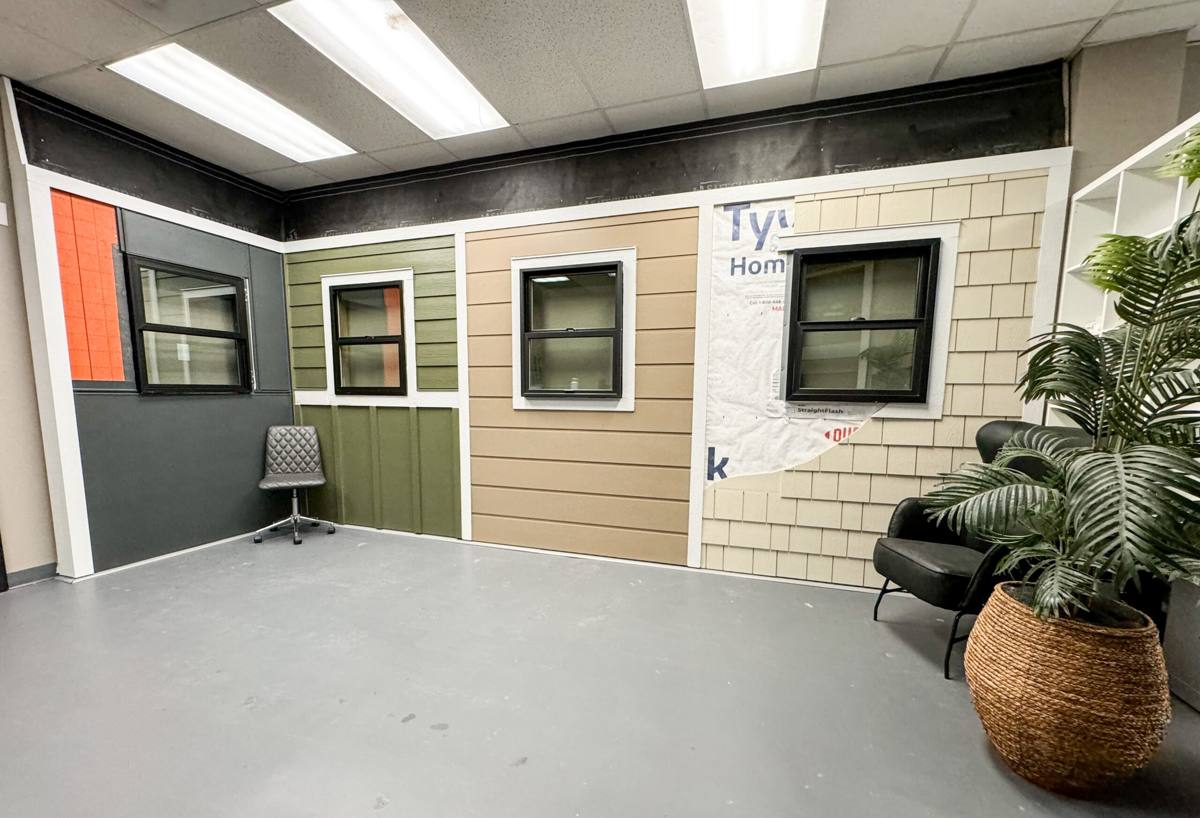
Where the Trade-Offs Show Up
Moisture Management in a Wet Climate
Whatcom County doesn't get hurricane-force storms, but it gets something arguably harder on siding over time: sustained, low-intensity moisture. Months of drizzle, fog off Lake Whatcom, and driving rain during winter storms mean siding here spends a huge share of the year damp. Fiber cement products vary in how their factory finish and edge treatment handle that kind of prolonged moisture exposure, and that variance is exactly where we've seen the gap between manufacturers matter most — not in a single storm, but in year eight or year twelve when a marginal edge seal or coating starts to let moisture in at the joints.
Factory Finish Consistency
James Hardie's ColorPlus finish is baked on in a controlled factory process with a specific multi-coat system and a matching touch-up and caulk program engineered for it. Allura offers factory-finished options too, but the finish systems, warranty terms, and available color-matched accessories aren't identical, and in our experience the consistency of the factory finish — how evenly it cures, how it ages, how well it resists fading in the kind of long gray-to-bright seasonal light swings we get here — has been less predictable panel to panel and batch to batch.
Installation Sensitivity
Fiber cement in general is less forgiving than vinyl during installation — it has to be cut, fastened, and gapped correctly or you introduce moisture paths that won't show up as a problem for years. We've found that Hardie's installation specs, fastening patterns, and local rep support are more thoroughly documented and more consistently enforced across installers than what we've encountered with Allura. That matters a lot when the failure mode of a mistake is a water problem behind the wall that nobody sees until siding comes off for a remodel.
Warranty Structure
On paper, warranty lengths across fiber cement brands can look similar. The difference is in the transferability terms, what's prorated versus fully covered, and how straightforward the claims process actually is if something does go wrong. We've found Hardie's warranty terms and the backing infrastructure behind them (the network of dealers, the documentation, the claims process) to be more homeowner-friendly in practice, which matters more the longer you own the house.
Allura vs. James Hardie: A Practical Comparison
| Factor | Allura Fiber Cement | James Hardie |
|---|---|---|
| Core material | Cellulose-reinforced cement board | Cellulose-reinforced cement board (HardieZone-engineered) |
| Climate engineering | General product line | HZ5 formulation specific to Pacific Northwest wet/freeze cycles |
| Factory finish | Factory-finish options available, less consistent in our experience | ColorPlus baked-on finish with matched caulk/touch-up system |
| Fire resistance | Non-combustible | Non-combustible |
| Local installer support | Less dealer/rep infrastructure in this region | Established regional dealer and rep network |
| Warranty transferability | Varies by product line | Non-prorated, transferable warranty terms |
Why Regional Climate Matters More Than the Spec Sheet
A siding product can meet every national code requirement and still perform differently depending on where it's installed. Sudden Valley sits right on Lake Whatcom, which means homes here deal with a specific combination of lake moisture, seasonal fog, and the broader marine air pushing in from the Sound. Add in a moss and algae season that runs long compared to drier parts of the state, and you've got a climate that's genuinely tough on any exterior cladding — siding here is wet more often than it's dry for a good chunk of the year.
That's why we care less about how a product performs in a lab or in a dry-climate installation and more about how it holds up under the specific stress this region puts on a wall: sustained dampness, biological growth pressure from moss and algae, and UV cycling between long gray stretches and bright summer light. James Hardie's HZ5 product line was engineered with exactly this kind of moisture profile in mind, and that regional engineering is a meaningful part of why we standardized on it.
What "We Don't Install It" Actually Means
To be clear about our position: we're not claiming Allura siding will fail on your house, and we're not making claims about defects or lawsuits. What we're saying is that after weighing the finish consistency, installation documentation, regional climate engineering, and warranty backing, we decided we'd rather stand behind one product we know thoroughly and trust completely than offer a menu of fiber cement options and hope each one performs equally well over twenty or thirty years in this climate.
If another contractor installs Allura for you, that doesn't mean you made a bad decision — it means they made a different call than we did. We just don't think it's honest to sell you a product because it's on the truck when we have real reservations about how it performs here long-term.
What We Install Instead
We install James Hardie fiber cement exclusively, specifically the HZ5 product line engineered for Pacific Northwest conditions. A few reasons this is where we landed:
- ColorPlus factory finish with a matched caulk and touch-up system, reducing the chance of visible seams or fading mismatches over time.
- HZ5 formulation designed around the wet, moderate-freeze climate that defines Whatcom County winters.
- A strong, non-prorated, transferable warranty that holds up if you sell the house before the coverage period ends.
- An established regional supply and support network, so replacement panels and color matches are actually available years down the road.
None of that makes Hardie magic — it still has to be installed correctly, with the right fastening pattern, flashing, and gapping, or any fiber cement product can develop moisture problems. But it's the product we trust enough to put our name behind, house after house, in a climate that doesn't forgive shortcuts.
Questions Worth Asking Any Siding Contractor
Whether you go with us or someone else, here's a short checklist worth running through before you sign a siding contract:
- Which specific product line and climate zone rating are they quoting — not just "fiber cement," but the actual HZ or equivalent designation?
- Is the finish factory-applied or field-painted, and what does the warranty say about each?
- What's their documented fastening and flashing detail for this climate, and will they show it to you in writing?
- Is the warranty transferable to a future buyer, and is it prorated after a certain number of years?
- Do they have a track record installing this specific product in Whatcom County conditions, not just generally?
A contractor who can answer all five clearly, without hedging, is one worth trusting with a project this size.
If you're weighing siding options for a home in Sudden Valley or anywhere around Whatcom County, we're happy to walk through what we saw on your specific house and give you a straight answer — including whether Hardie is genuinely the right call for your situation. Reach out for a free, no-pressure estimate using the form below.