 Sudden Valley Siding
 Why Vinyl Siding Comes Up in Almost Every Conversation
If you've priced out a siding job in Whatcom County, vinyl has probably come up — usually as the budget option. It's the most common siding material sold in the U.S., it's inexpensive relative to other choices, and there are contractors in this region who install nothing else. Before we explain why we don't install it, it's worth being straight about why it's popular in the first place: low upfront cost, wide availability, and a reputation for being "maintenance-free" that isn't entirely wrong, just incomplete.
This page isn't an attack on vinyl or the people who sell it. It's an explanation of the trade-offs we weighed before deciding to build our business around James Hardie fiber cement instead, and why those trade-offs matter more here on the shores of Lake Whatcom than they might in a drier, calmer climate.
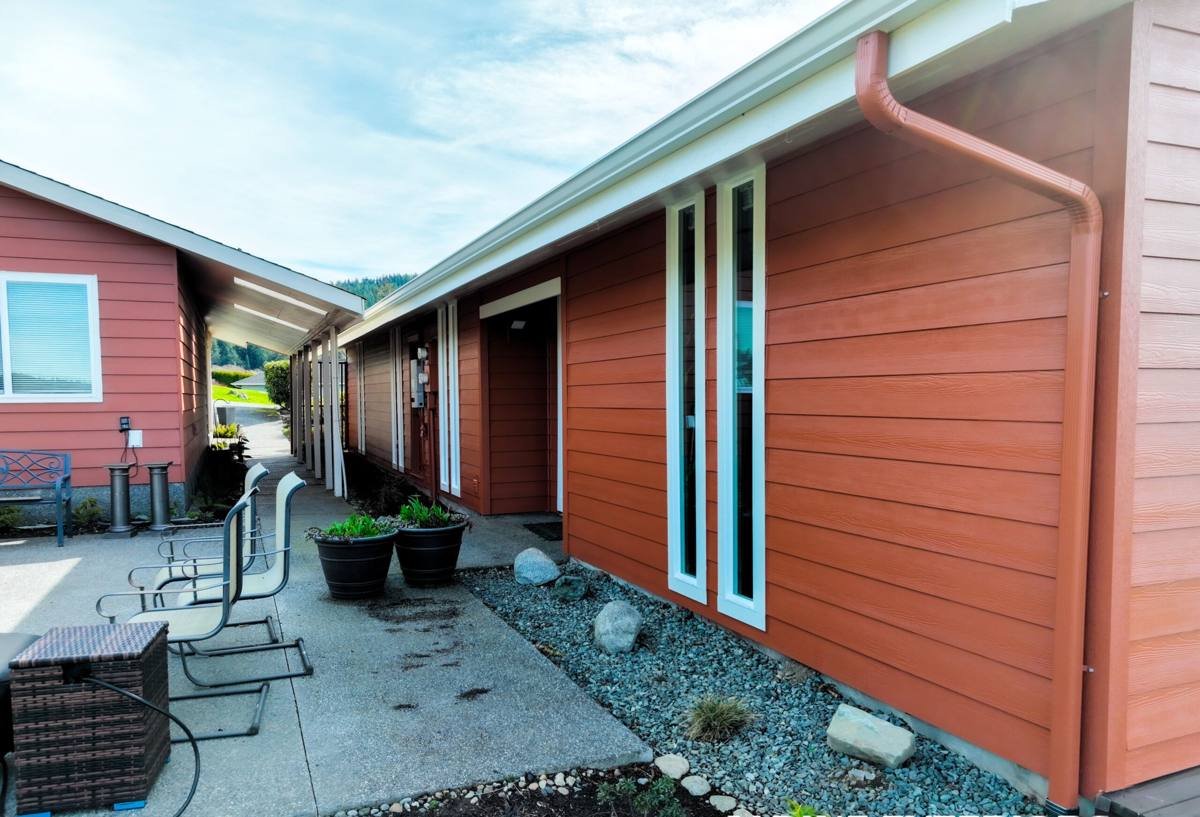
What Vinyl Siding Actually Is
Vinyl siding is extruded PVC (polyvinyl chloride) formed into interlocking panels, usually with a lap profile that mimics painted wood clapboard. Color is mixed into the material rather than applied as a surface coating, which is genuinely one of its strong points — there's no paint layer to peel. Panels hang on the wall in a way that allows them to expand and contract with temperature, rather than being fastened rigidly like wood or fiber cement.
That last detail — the way vinyl is designed to move — is the root of almost every trade-off on this page. It's not a flaw in the product; it's a fundamental part of how vinyl works, and it shapes everything from how it's installed to how it holds up over decades.
What Vinyl Gets Right
- Low material cost — typically the least expensive siding option per square foot, materials and labor combined.
- No repainting — color runs through the panel, so a scratch doesn't expose bare substrate the way it does on wood.
- Fast installation — lightweight panels go up quickly, which keeps labor costs down.
- Reasonably water-resistant surface — the panel face itself doesn't absorb water like wood or untreated fiber cement.
Those are real advantages, and for some homeowners and some budgets, they're the deciding factor. We're not going to pretend otherwise.
Where Sudden Valley's Climate Puts Pressure on Vinyl
Sudden Valley sits right on Lake Whatcom, and homes here deal with a specific combination of weather that's harder on siding than most people expect: salt-tinged marine air moving in off the Strait, long stretches of driving, wind-blown rain, and a moss season that can run most of the year on shaded, north-facing walls. Vinyl handles some of this fine and struggles with the rest.
Salt Air and UV Exposure
Vinyl doesn't rust, but it does fade. PVC pigment breaks down under years of UV exposure, and homes with more sun-exposed elevations — south and west walls especially — often show a visible color shift between panels that saw more sun and panels that were shaded by trees or overhangs. Salt-laden marine air can accelerate this breakdown slightly and also tends to leave a fine film on siding that shows up more on darker vinyl colors, which is part of why darker vinyl has historically been avoided or heavily warranted separately by manufacturers.
Driving Rain and Wind Load
Whatcom County storms don't just bring rain straight down — they push it sideways into walls, especially on homes with less tree cover or open lake-facing exposure. Vinyl panels are designed to shed water down and away, but they're not a sealed water barrier; they rely on the water-resistive barrier (house wrap) behind them to do the real work. In sustained wind-driven rain, water can work its way behind panels at seams, corners, and around penetrations like hose bibs and light fixtures. Vinyl itself doesn't rot from this, but whatever is behind it can, if the underlying wrap and flashing details weren't done correctly.
Moss and Organic Growth
Shaded, damp walls around Lake Whatcom grow moss and algae readily, and vinyl's slightly textured surface gives organic growth something to hold onto over time. It's cleanable with a soft wash, but on a heavily shaded elevation it can return within a season or two, and pressure washing vinyl aggressively risks driving water behind the panels or cracking aged, brittle material.
Installation Sensitivity — the Part Homeowners Rarely Hear About
Because vinyl panels expand and contract significantly with temperature — more than wood, and far more than fiber cement — correct installation depends on nailing technique that a lot of crews get wrong. Nails need to sit in the center of the nailing slot, driven straight and left slightly loose rather than snugged tight, so the panel can slide as it expands and contracts. Overdriven or off-center nails restrict that movement.
The practical result of a too-tight installation shows up years later, not on install day: panels that buckle, bow, or ripple as temperatures swing through a Whatcom County summer-to-winter range. It's a slow failure, which makes it easy for a rushed installer to hand off a wavy job that only becomes obvious after the crew is long gone.
What's Actually Happening Behind the Panels
Vinyl siding is not a waterproof skin — it's a rain screen that manages bulk water while relying on the wall assembly behind it (house wrap, flashing, proper laps) to handle the rest. That's a reasonable system when installed to spec. The risk is that vinyl's low material and labor cost sometimes attracts lower-bid installation practices where the unglamorous parts — flashing at windows, kick-out flashing at roof-wall intersections, proper overlap at butt joints — get shortchanged because they don't affect how the job looks on day one.
Because vinyl doesn't show water damage on its own surface, a wall that's taking on moisture behind the panels can go unnoticed for years. By the time it shows up as soft trim, a musty smell, or sheathing damage during a remodel, the repair is often far more expensive than the siding job would have been.
Cost and Lifespan, Side by Side
| Factor | Vinyl Siding | James Hardie Fiber Cement |
|---|---|---|
| Typical material cost | Lowest of common siding options | Mid-range, higher than vinyl |
| Installed lifespan (correct install) | 20–30 years, shorter with heavy sun/salt exposure | 30–50+ years, factory-backed finish warranty |
| Color stability | Fades over time, especially darker colors | ColorPlus factory finish resists fading |
| Fire behavior | Combustible plastic; can melt or deform near heat sources | Non-combustible fiber cement |
| Impact resistance | Can crack in cold weather or from impact | Resistant to impact, denting, and pests |
| Repainting needed | No, but fading is permanent once it starts | Not for the life of the ColorPlus finish; can be painted later if desired |
The numbers above are general ranges, not quotes — actual costs depend on your home's size, elevation complexity, and trim details. But the pattern holds across the industry: vinyl wins on day-one price, and fiber cement wins on cost-per-year-of-service when you account for how long each one actually lasts before it needs replacing.
Warranty Structure — Read the Fine Print
Vinyl warranties often look impressive on paper — some are labeled "lifetime" — but they're frequently prorated, meaning the payout shrinks the longer you've owned the siding, and they can be voided by damage from impact, fading beyond a certain threshold, or improper installation, which is hard for a homeowner to prove either way years later. Coverage is also often tied to the original purchaser and doesn't transfer cleanly to a new owner if you sell.
James Hardie's warranty structure, by contrast, is non-prorated for a defined term and is transferable to a subsequent homeowner, which matters both for your own protection and for resale.
Why We Standardized on James Hardie
We made a decision, as a company, to install only James Hardie fiber cement siding — no vinyl, no LP SmartSide, no primed wood. That's a narrower offering than a lot of contractors give you, and we think that's the point. Fiber cement is non-combustible, holds its shape and color far longer in this region's UV and salt exposure, and doesn't rely on loose-fit panel movement to survive temperature swings. The HZ5 product line Hardie engineers for the Pacific Northwest is built specifically around the moisture and freeze-thaw conditions we get around Lake Whatcom.
None of that makes vinyl a bad product for every homeowner in every situation. It means that when we stand behind a siding job with our name on it, we want the material underneath to be one we're confident will still look right in twenty-five years, not one that depends on a crew getting the small details exactly right and staying that way.
What to Ask Before You Choose a Siding Material
- Ask what's actually behind the siding — house wrap type, flashing details at windows and roof lines, and how seams are lapped.
- Ask how the warranty is structured — prorated or not, and whether it transfers if you sell the home.
- Ask how the material performs specifically in wind-driven rain and shaded, moss-prone walls, not just general marketing claims.
- Ask for the manufacturer's climate-specific product line for Western Washington, if one exists.
- Get the cost-per-year comparison, not just the upfront bid — divide total cost by expected lifespan for an apples-to-apples number.
If you're weighing siding options for a home in Sudden Valley or elsewhere around Lake Whatcom, we're happy to walk your specific walls with you, point out where sun, wind, and moisture are working against your current siding, and give you a straight answer about what we'd recommend — no pressure, no sales script. Reach out for a free estimate using the form below.