 Sudden Valley Siding
 What Ferndale Homes Are Up Against
Ferndale sits close enough to the water and the marine air moving in off Bellingham Bay that homes here deal with a different set of pressures than siding built for a dry climate ever has to handle. Salt-tinged air, long stretches of driving rain through fall and winter, and a moss season that can run for months all work on exterior materials in ways that are easy to underestimate until you're the one paying for a premature repaint or a rot repair. None of this is unusual for Whatcom County — it's just the cost of living somewhere green and close to Puget Sound. The question is whether the siding on your house was actually engineered for it, or just happens to be what was cheapest to install at the time.
Salt air is corrosive to fasteners and hard on any finish that isn't formulated to resist it. Constant moisture keeps wood-based and wood-adjacent products damp for longer stretches, which is exactly the condition that lets rot and fungal growth get a foothold. And moss doesn't just grow on roofs — it colonizes shaded siding, retains water against the surface, and can quietly work paint and caulking loose over a few seasons. A siding system that isn't built with this combination in mind will show its age faster here than it would somewhere drier and less coastal.
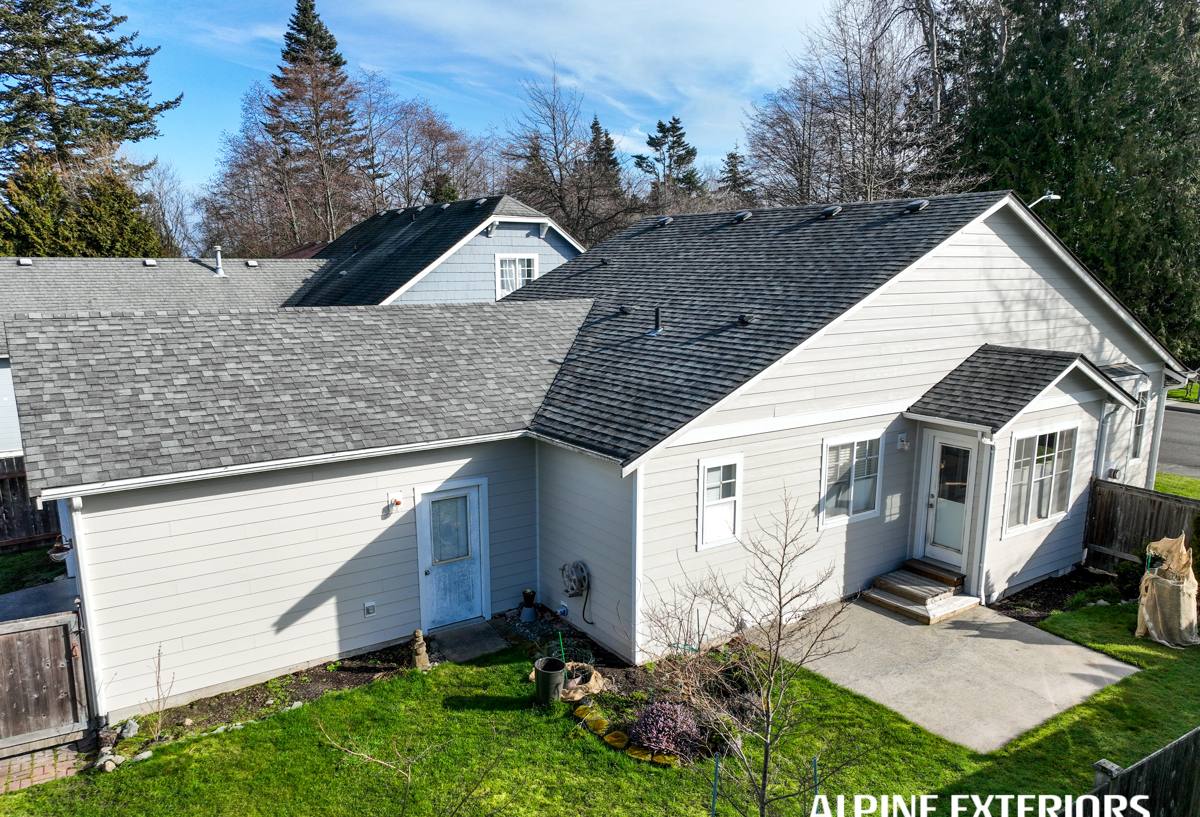
Why We Standardized on James Hardie Fiber Cement
We install James Hardie fiber cement siding exclusively. That's not a marketing position — it's a decision we made after years of seeing how different siding materials actually hold up in this climate, not just how they perform on paper. Hardie's HZ product lines are climate-engineered, meaning the formulation and installation specs are matched to the moisture and temperature conditions of the region they're sold into. For western Washington, that means a product designed to handle sustained damp weather without the swelling, warping, or moisture absorption that plagues wood-based sidings.
Fiber cement is also non-combustible, which matters more each year as wildfire smoke and dry spells become a bigger part of the Pacific Northwest summer, even in a normally wet region like Whatcom County. And the factory-applied ColorPlus finish is baked on under controlled conditions, which gives it far better resistance to fading, chipping, and moisture intrusion than a field-applied paint job — a real advantage when your siding is going to spend a good chunk of the year wet.
What We Don't Install, and Why
We get asked fairly often about LP SmartSide, vinyl, Cemplank, Allura, primed spruce, and cedar. Each of those has legitimate uses and each has real fans. Our reasoning for standardizing on Hardie isn't that the alternatives are bad products — it's that after weighing moisture behavior, long-term maintenance burden, installation sensitivity, and warranty structure, Hardie consistently came out ahead for the conditions homes face here. Wood-based products like cedar and primed spruce need more diligent upkeep to keep moisture out of end cuts and seams. Vinyl can look and perform fine for years but doesn't offer the same fire resistance or factory-finish durability. We'd rather install one product exceptionally well than spread ourselves across several and get mediocre at all of them.
Our Services in the Ferndale Area
Siding is our specialty, but most homes need more than one exterior system addressed at once, so we also handle roofing, windows, and decks for Ferndale-area homeowners. Treating the exterior as one connected system rather than four separate jobs matters more than people expect — flashing details, water management, and trim all have to work together, and a mismatch between systems is one of the most common ways moisture problems start.
- Siding replacement and repair — full re-siding with James Hardie fiber cement, plus repair of localized damage where a full replacement isn't needed yet
- Roofing — replacement and repair, with attention to how roof edges, flashing, and gutters interact with the siding below them
- Windows — replacement windows installed with proper flashing integration so the siding project around them doesn't get undermined by a leaky window opening
- Decks — built and repaired to hold up to the same wet-climate demands as the rest of the exterior
Why Correct Installation Matters as Much as the Product
Even the best siding material fails early if it's installed wrong. Fiber cement in particular is sensitive to installation details — proper clearance from grade and roof lines, correct fastener placement and spacing, properly lapped and caulked joints, and flashing that actually sheds water instead of trapping it against the wall. In a climate like Ferndale's, where wood surfaces can stay damp for days after a storm, a small installation shortcut becomes a much bigger problem than it would in a drier region.
This is also where a lot of the value in James Hardie's warranty actually lives. Hardie's transferable warranty is meaningful, but manufacturer warranties on any siding product typically require installation to spec — cut corners during installation and you can undermine coverage you're counting on. We install to Hardie's published specifications as a baseline, not an aspiration.
Signs Your Current Siding Needs Attention
- Visible moss or algae buildup on siding surfaces, especially on shaded north- or west-facing walls
- Paint that's peeling, bubbling, or chalking rather than just fading evenly
- Soft spots, or a wood-like give when you press on the siding near the bottom courses or around window trim
- Gaps opening up at seams, corners, or where siding meets trim and window frames
- Visible warping, cupping, or boards that no longer sit flat against the wall
- Rising utility bills that can't be explained by anything else, which can point to compromised insulation behind failing siding
Comparing Siding Options for a Coastal Whatcom County Home
| Material | Moisture Performance | Maintenance | Fire Resistance | Typical Finish Life |
|---|---|---|---|---|
| James Hardie fiber cement | Engineered for wet climates; resists swelling and rot | Low — occasional wash, no repainting for years with ColorPlus | Non-combustible | Long-lasting factory finish, often 15+ years before touch-up |
| Cedar / primed spruce | Absorbs moisture; needs diligent sealing at cuts and seams | High — regular refinishing and inspection | Combustible | Field-applied finish, shorter intervals between recoats |
| Vinyl | Sheds water but can trap moisture behind panels if not detailed correctly | Low, but prone to cracking and fading over time | Combustible, can deform under heat | Color built into material but fades unevenly over time |
| LP SmartSide / other engineered wood | Better than raw wood but still wood-based and moisture-sensitive at cut edges | Moderate — edge sealing and monitoring required | Combustible | Factory finish varies by product line |
What Affects the Cost of a Project
Every Ferndale property is a little different, and we won't quote a number without seeing the house, but a few factors consistently drive cost on siding, roofing, window, and deck projects in this area.
| Factor | Why It Matters |
|---|---|
| Home size and wall complexity | More corners, dormers, and trim details mean more labor and material cuts |
| Extent of existing damage | Rot or moisture damage behind old siding has to be repaired before new siding goes on |
| Siding profile and color | Lap width, shingle-style panels, and specialty ColorPlus colors carry different material costs |
| Access and site conditions | Steep grades, mature landscaping, or tight lot lines can add labor time |
| Scope bundling | Combining siding with roofing, windows, or decks can improve scheduling efficiency versus separate projects |
Why It Helps to Work With a Local Crew
A crew that works this part of Whatcom County regularly knows what the weather actually does to a house here, not just what a spec sheet says. That shows up in small decisions — how much clearance to leave at grade given the rainfall this area gets, how to detail flashing around windows so driving rain off the water doesn't find its way in, and which north-facing walls are going to need extra attention to moss and moisture over time. It also means someone who can show up for warranty questions or follow-up without a long drive being part of the equation.
A Simple Maintenance Timeline for Hardie Siding
- Twice a year: rinse siding to clear pollen, salt residue, and early moss growth before it takes hold
- Annually: inspect caulking at seams, corners, and window trim; touch up as needed
- Every few years: check fastener heads and any areas prone to shade and moisture for early moss or algae
- As needed: address any physical damage promptly rather than letting a small impact turn into a moisture entry point
If your Ferndale-area home is due for new siding, or you're weighing options for a roof, windows, or a deck alongside it, we're happy to take a look and walk you through what we see — no pressure, no obligation. A free estimate is the easiest way to find out what your project would actually involve.