 Sudden Valley Siding
 Board & Batten Siding, Built for Ferndale's Weather
Board and batten is one of the most requested siding styles we install in Whatcom County, and Ferndale homeowners have good reason to like it. The vertical board-and-gap-strip pattern reads as clean, modern farmhouse, or classic Pacific Northwest depending on trim and color choice, and it works on everything from a full exterior to an accent gable or porch feature. But the look is only half the story. Ferndale sits close enough to the water and open farmland that homes here take a steady beating from salt-laden air, wind-driven rain, and a moss season that can run most of the year. A board and batten job that isn't specified and installed correctly for this exact environment will show problems within a few winters — not decades down the road.
This page is about doing board and batten right for this specific area: what the climate actually does to vertical siding, what a correct installation looks like from the ground up, and why our crew installs James Hardie fiber cement exclusively rather than the wood, engineered wood, or vinyl versions of this same style.
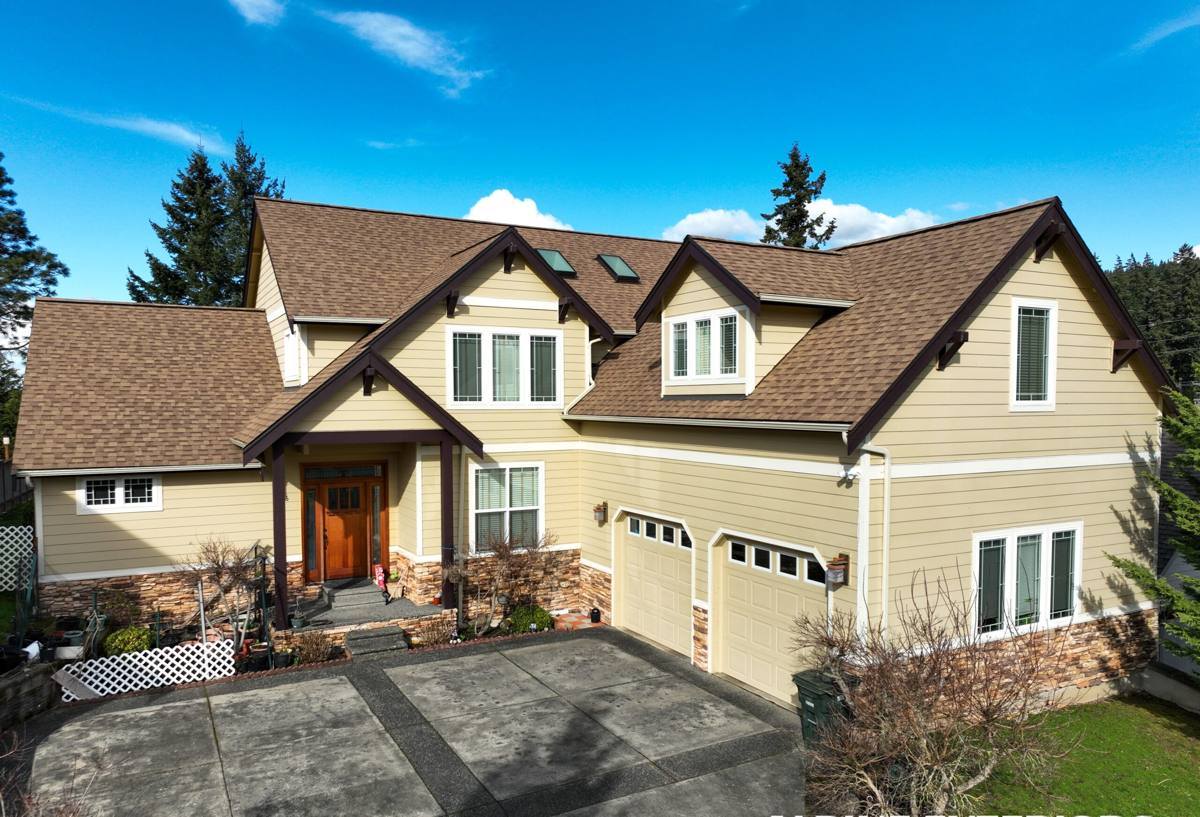
Why Ferndale's Climate Is Tougher on Siding Than It Looks
Ferndale doesn't get the dramatic weather of other parts of the country, and that's exactly why siding problems here sneak up on homeowners. There's no single storm that causes damage — it's the cumulative, year-round exposure that wears siding down.
Salt Air
Proximity to the coast means airborne salt settles on exterior surfaces and accelerates corrosion of fasteners, trim flashing, and any metal components in a wall assembly. Salt exposure also draws moisture, keeping siding surfaces damp longer after rain than they would be further inland.
Driving Rain
Whatcom County storms frequently come in sideways off the water rather than falling straight down. Vertical board and batten has more seams per square foot than horizontal lap siding, and every one of those seams is a potential entry point if the wall isn't detailed correctly. Wind-driven rain finds gaps that vertical rain never would.
Moss and Prolonged Dampness
Between fall and spring, Ferndale sees long stretches of overcast, damp conditions that are ideal for moss and algae growth on north-facing and shaded walls. Moss holds moisture against the siding surface far longer than open air ever would, which is hard on any material that isn't dimensionally stable or that absorbs water.
None of this means board and batten is a bad choice for this area — it means the material and the installation details matter more here than they would in a drier climate.
What a Correct Board & Batten Installation Actually Involves
The finished look of board and batten is simple, but the assembly behind it is not. A correct installation for a Ferndale home includes:
- A drainage plane behind the siding — a weather-resistant barrier plus a rainscreen gap so any moisture that gets past the cladding can drain and dry instead of sitting against the sheathing.
- Correct fastening pattern and depth — battens and boards fastened per manufacturer spec, not "close enough," since under-driven or over-driven fasteners are a common cause of early failure.
- Proper board and batten spacing — enough gap for material movement without creating shadow lines that trap water or debris.
- Flashing at every horizontal transition — window and door heads, roof-to-wall intersections, and any horizontal trim board need flashing detailed to shed water outward, not into the wall.
- Factory-finished material where possible — a factory-applied finish resists the salt and moisture exposure far better than a finish applied on site after installation.
- Sealed and primed cut ends — every field cut is an exposed edge that needs to be treated before it goes on the wall, not after.
Skip any one of these and the siding may look fine for a season or two before the climate finds the weak point.
Why We Only Install James Hardie for This Style
Board and batten can be built from real wood, engineered wood (like LP SmartSide), vinyl, or fiber cement. We made the decision to install James Hardie fiber cement exclusively, and it's worth explaining why rather than just stating it.
Wood and Engineered Wood Board & Batten
Real wood board and batten looks great when it's new, but it needs consistent, ongoing maintenance — repainting, resealing cut ends, and watching for rot at the base — to hold up in a wet coastal climate. Engineered wood products have improved moisture resistance over older wood siding, but they're still wood-fiber-based, which means they can swell, delaminate, or take on damage at cut edges and fastener points if water gets in and isn't caught early. In a climate with Ferndale's rain and moss exposure, that maintenance burden is real, not theoretical.
Vinyl Board & Batten
Vinyl board and batten is low-maintenance and inexpensive, but it's a thin material that can warp in temperature swings, crack in impacts, and fade with UV exposure over time. It also can't achieve the crisp, deep shadow lines that give board and batten its architectural character — the panels tend to look flatter and more obviously synthetic up close.
Why Fiber Cement Wins for This Application
James Hardie fiber cement is non-combustible, dimensionally stable, and resists moss, rot, and pest damage far better than wood-based alternatives. It holds paint and factory finish (ColorPlus Technology) far longer than field-applied finishes, which matters directly for salt air exposure. And it's engineered in HZ5 and HZ10 formulations specifically for climates like ours — freeze-thaw cycling, sustained moisture, and coastal exposure. For a style like board and batten, where the vertical boards and battens create more seams and more exposed edges than lap siding, starting with the most stable, least water-sensitive material available is not optional in our view — it's the baseline.
Comparing Board & Batten Materials for This Climate
| Material | Moisture Resistance | Maintenance | Coastal/Moss Durability | Finish Longevity |
|---|---|---|---|---|
| Real Wood | Low — absorbs water, prone to swelling and rot | High — regular repaint/reseal | Weak without diligent upkeep | Fades, needs repainting every few years |
| Engineered Wood (LP SmartSide) | Moderate — better than raw wood, still wood-fiber based | Moderate | Vulnerable at cut edges and fastener points if maintenance lapses | Factory finish holds reasonably well |
| Vinyl | High — doesn't absorb water | Low | Doesn't rot, but can warp and crack over time | Color fades with UV, cannot be repainted easily |
| James Hardie Fiber Cement | High — engineered for wet/coastal climates | Low | Strong — non-combustible, resists moss and rot | ColorPlus factory finish rated for long-term color retention |
Our Process for a Ferndale Board & Batten Project
Every board and batten installation we do in this area follows the same sequence, adjusted for the specific house:
- On-site assessment. We walk the exterior, check current siding and sheathing condition, and look at exposure — which walls take the most wind-driven rain, which stay shaded and damp longest.
- Wall prep. Existing siding is removed, sheathing is inspected for hidden moisture or rot damage, and any needed repairs happen before anything new goes up.
- Weather barrier and rainscreen. A proper drainage plane goes on first, with a rainscreen gap behind the siding so the wall assembly can dry out if moisture ever gets behind it.
- Flashing details. Windows, doors, and roof intersections get flashed before siding installation begins — this is the step that prevents the leaks that show up years later.
- Board and batten installation. Hardie panels or planks and battens go up per manufacturer specification — fastening pattern, spacing, and trim details all follow spec, not shortcuts.
- Finish and detail work. Cut ends are sealed, caulking joints are completed where specified, and trim is finished out.
- Final walkthrough. We review the finished exterior with the homeowner before calling the job complete.
Why Hiring a Crew That Already Works Ferndale Matters
Siding installation isn't one-size-fits-all across Whatcom County. A crew that mostly works drier, inland areas may not automatically account for the salt exposure and moss pressure that a Ferndale property deals with. Working this area regularly means we already know which orientations take the worst of the wind-driven rain, how aggressively moss establishes on shaded walls here, and where the local coastal air tends to accelerate wear on fasteners and trim. That local pattern recognition shows up in small decisions — flashing details, rainscreen sizing, fastener choice — that don't show up on a spec sheet but do show up in how the siding holds up ten winters from now.
Signs Your Current Siding May Need Attention
If you're not sure whether your existing siding is due for replacement, look for these signs before your next wet season:
- Soft or spongy spots when you press on the siding, especially near the base of walls
- Persistent moss or algae that returns quickly after cleaning
- Peeling, bubbling, or chalky paint that won't hold a fresh coat
- Visible gaps, warping, or cupping in individual boards
- Staining or discoloration around window and door trim
- Any musty smell along interior walls that back onto exterior siding
Any one of these on its own isn't necessarily an emergency, but a few together are worth a professional look before another wet Whatcom County winter sets in.
What Board & Batten Costs to Consider
Every project is different, but the cost factors for a board and batten job are fairly consistent. Rather than quote numbers that don't mean much without seeing your home, here's what actually drives the price on a project like this:
| Cost Factor | Why It Matters |
|---|---|
| Wall condition underneath | Hidden rot or sheathing damage found during tear-off adds repair scope before new siding goes on |
| Total square footage and wall height | More surface area and multi-story walls mean more material, labor, and access equipment |
| Trim and detail complexity | Gables, dormers, and multiple transitions take more time to flash and finish correctly |
| Board and batten profile chosen | Panel-and-batten systems versus individual plank-and-batten assembly affect material and labor |
| Color and finish selection | Factory ColorPlus finishes vary by line and color depth |
The only way to get real numbers is a walk-through of your specific home, which is what our estimate covers.
Ready to Talk About Your Home
If you're weighing board and batten for a Ferndale home, we're happy to walk the property with you, look at your current siding condition, and talk through what a James Hardie board and batten installation would actually involve for your walls and exposure. There's no pressure and no obligation — just a straight look at your options. Use the form below to request a free estimate.