 Sudden Valley Siding
 Happy Valley Homes Face a Specific Kind of Weather
If you own a home in the Happy Valley area near Sudden Valley, you already know your siding doesn't have it easy. Whatcom County's exterior surfaces deal with a combination most of the country never sees: damp, salt-tinged air rolling in off the Puget Sound region, driving horizontal rain that finds every gap and seam, and a moss and mildew season that can stretch from October well into spring. None of that is exotic or unusual for this part of Washington — it's just the baseline. But it means the exterior materials on your home are working harder, more of the year, than siding on a house in a drier climate.
That's the lens we use on every Happy Valley project. We're not selling siding as decoration. We're specifying a system that has to perform against moisture intrusion, organic growth, and repeated wet-dry cycling for decades, not just look good on installation day.
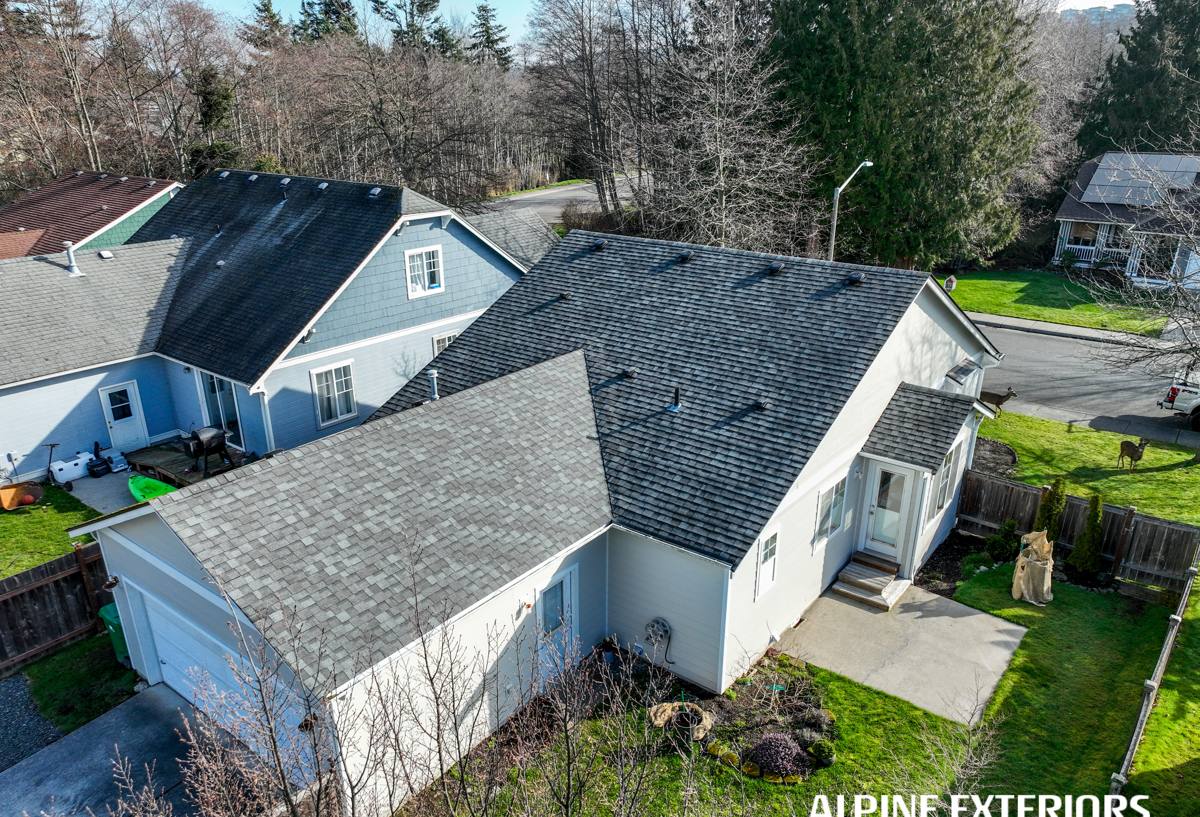
Salt Air, Driving Rain, and the Long Moss Season
Salt Air
Homes in and around Whatcom County pick up airborne salt and moisture that accelerates corrosion on fasteners, flashing, and any metal components in the wall assembly. Over years, that salt exposure also degrades paint films and finishes that weren't engineered to resist it, leading to chalking, fading, and eventually bare, absorbent wood or substrate exposed to the weather.
Driving Rain
Wind-driven rain doesn't just wet a wall — it pushes water sideways and upward, testing every joint, seam, and piece of trim. A siding system with weak seams, poor water-shedding detailing, or a finish that isn't fully sealed on all six sides is going to take on moisture here faster than in a calmer climate.
The Moss Season
Shaded lots, tree cover, and consistently damp conditions mean moss and algae aren't a seasonal nuisance around here — they're a near year-round presence on north-facing walls, under eaves, and anywhere airflow is limited. Materials that hold moisture at the surface give moss more time and more purchase to take hold, and once it's established it accelerates the moisture problem underneath it.
Why the Siding Product Matters More Here Than Elsewhere
In a mild, dry climate, a lot of siding products can get away with mediocre performance for years before problems show up. That margin doesn't exist in Whatcom County. Homes near Sudden Valley and Happy Valley are in a near-constant moisture cycle, so any weakness in a siding system — a seam that isn't fully sealed, a substrate that absorbs water, a finish that isn't UV- and salt-stable — shows up faster and costs more to fix later.
That's the reason we made a decision that shapes every siding job we do: we install James Hardie fiber cement siding, exclusively. We don't install vinyl, LP SmartSide, Cemplank, Allura, primed spruce, or bare cedar. That's not a marketing position — it's a standard we hold because of what we've seen these products do, and not do, in exactly this climate.
Why We Standardized on James Hardie
What the Alternatives Get Right — and Where They Fall Short Here
Vinyl siding is inexpensive and low-maintenance in mild, dry regions, but it's a petroleum-based product that expands and contracts with temperature swings, and in driving rain it relies heavily on lap and seam detailing to keep water out from behind the panels. LP SmartSide and other engineered wood products use a wood-strand core, which means the entire system depends on an unbroken factory finish and careful field caulking to keep moisture out of that core — if either fails, the wood-based substrate can swell and deteriorate, and that failure mode is exactly what our climate's rain and moss cycle tends to expose. Cedar and primed spruce are beautiful materials, but they're organic, absorbent, and require an ongoing maintenance commitment — re-staining, re-caulking, regular inspection — that most homeowners underestimate until moss and rot have already started.
Cemplank and Allura are also fiber cement products, and fiber cement as a category is the right general direction for this climate. Our reason for choosing Hardie specifically over other fiber cement brands comes down to their HZ5 product engineering for wet, marine-influenced climates, the factory-applied ColorPlus finish (baked on and cured under controlled conditions rather than field-painted), and a warranty structure we've found to be strong and genuinely transferable if you sell the home.
What James Hardie Brings to a Whatcom County Home
- Non-combustible fiber cement core — doesn't feed a fire the way wood-based sidings can
- Engineered specifically for damp, marine-influenced climates (HZ5 product line)
- Factory-baked ColorPlus finish resists the fading and chalking that field-applied paint struggles with under UV and salt exposure
- Dimensionally stable — doesn't swell, cup, or warp the way wood-based products can when repeatedly wetted
- Doesn't provide the organic food source that moss and algae feed on the way bare or painted wood can
- Strong, transferable warranty backed by a manufacturer with a long track record in siding
Correct installation matters as much as the product itself. Hardie's performance depends on proper clearances, fastening patterns, and flashing details — done wrong, even the best siding product can trap moisture. That's a big part of why the crew installing it matters as much as the brand on the box.
Beyond Siding: Roofing, Windows, and Decks
Siding is only one piece of how a Happy Valley home sheds water. We also work on roofing, windows, and decks, because a home's exterior only performs as a system — a tight, well-flashed roof and properly sealed windows take pressure off the siding, and a poorly maintained deck or an aging roof can send moisture into wall assemblies no matter how good the siding is.
When we look at a home, we're looking at how water moves across the whole exterior: roof to gutter, gutter to grade, window to wall plane, deck ledger to house framing. A siding-only fix on a house with a failing roof or leaking window flashing is a short-term patch, not a solution — so we flag those issues when we see them, even on a siding-focused job.
What a Local Crew Actually Changes
A lot of exterior problems in this region aren't about the material at all — they're about installation details that a crew unfamiliar with Whatcom County's weather patterns tends to get wrong: not enough clearance between siding and grade or hardscape, house wrap and flashing sequenced incorrectly, trim details that trap water instead of shedding it. Those mistakes might not show up for a year or two in a drier climate, but here, with our rain totals and moss season, they surface fast.
A crew that works this area regularly has already seen what driving rain and long wet seasons do to houses in Happy Valley and the surrounding Sudden Valley area. That experience shows up in the small decisions — how tight the flashing laps are, how much clearance is left at the base of the wall, where kick-out flashing gets added at roof-to-wall intersections — that determine whether a siding job holds up for thirty years or starts showing problems in five.
Cost Factors on a Happy Valley Siding Project
| Factor | Why It Matters Here |
|---|---|
| Home size and wall complexity | More corners, gables, and trim details mean more cutting, flashing, and labor time |
| Existing siding removal | Tear-off and disposal of old siding, especially if it's failing or has hidden moisture damage |
| Substrate condition | Water-damaged sheathing found during tear-off needs repair before new siding goes on |
| Siding profile and color | Lap width, shingle-style panels, and ColorPlus color selections vary in material cost |
| Trim and accessory work | Window and door trim, corner boards, and fascia detailing add scope beyond the flat wall area |
| Site access and shading | Tree cover, slope, and limited access around Lake Whatcom-area properties can affect labor time |
We walk every property and give a written estimate before any work starts — there's no way to responsibly price a siding job without seeing the actual condition of the walls first.
A Simple Maintenance Checklist for This Climate
Whatever siding is currently on your home, these habits matter in a climate like ours:
- Rinse siding annually, focusing on shaded north- and east-facing walls where moss establishes first
- Keep gutters clear so overflow doesn't run down the wall face during heavy rain
- Trim back vegetation and tree limbs that keep wall sections shaded and damp
- Inspect caulking around windows, doors, and trim penetrations each fall before the wet season
- Watch for soft spots, discoloration, or bubbling paint, which can signal moisture getting behind the siding
- Address small issues — a gap, a loose piece of trim, a failed seal — before winter rain finds them
What to Expect When You Reach Out
We start with a walk-through of your home, looking at the current siding condition, any moisture or moss patterns, and the roof, windows, and trim while we're there. From that we put together a written scope and estimate — no pressure, no scripted upsell. If James Hardie fiber cement is the right fit for your project, which for homes in this climate it almost always is, we'll walk you through the product lines, colors, and what correct installation involves so you know exactly what you're getting.
If you're in Happy Valley or anywhere around Sudden Valley and want an honest look at your home's exterior — siding, roofing, windows, or decks — reach out for a free, no-pressure estimate using the form below.