 Sudden Valley Siding
 South Hill's Exterior Sits Under a Lot of Pressure
Homes on South Hill deal with a combination of weather stress that's tougher on exterior materials than most homeowners realize. The elevation and exposure common to this part of Whatcom County mean siding, trim, and roofing take on salt-laden air, long stretches of driving rain off the water, and a moss season that can run most of the year in shaded or north-facing areas. None of these factors are dramatic on their own, but stacked together over years, they wear down the wrong materials fast.
Salt air is corrosive to fasteners and finishes, and it accelerates the breakdown of coatings that aren't built for coastal exposure. Driving rain — the kind that comes in sideways during a Pacific storm system rather than falling straight down — finds every gap in flashing, caulking, and lap joints that a calmer climate would never test. And moss doesn't just look bad; it holds moisture directly against a wall or roof surface for weeks at a time, which is exactly the condition that causes rot, delamination, and paint failure in lesser products.
We've built our whole approach around designing exteriors that hold up to this specific combination, not a generic "siding replacement" pitch. That starts with the material itself.
Why Some Common Siding Choices Struggle Here
Homeowners in this area often ask us about vinyl siding, LP SmartSide, or primed wood products, usually because they're familiar or came recommended by a national box-store estimate. We don't install any of them, and it's worth explaining why honestly rather than just saying no.
Vinyl Siding
Vinyl is inexpensive and low-maintenance in mild, dry climates, but it's a thin plastic product that expands and contracts with temperature swings and can crack or warp under UV exposure over time. In a marine climate with driving rain, water can work behind vinyl panels at seams and corners, and because vinyl isn't a moisture-managed system the way fiber cement is, trapped water has nowhere useful to go. It also can't be painted a dark color without risking heat-related warping, which limits design options on homes that want a richer palette.
LP SmartSide and Engineered Wood
Engineered wood products like LP SmartSide use treated strand board as a substrate. Treatment technology has improved, but it's still a wood-based product, and wood-based products are inherently more vulnerable to sustained moisture exposure than fiber cement. In a location where moss and damp shade are part of the yearly cycle, any breach in the factory coating or field-cut edge sealing becomes a slow entry point for rot. We've seen enough of this on other homes in wetter parts of Whatcom County to make it a standard we don't install.
Cedar and Primed Wood
Real cedar has genuine appeal, but it demands a maintenance schedule — re-staining or repainting every few years, careful caulk inspection, and vigilance about moss and mildew — that most homeowners underestimate when they choose it. Left unmaintained even one cycle too long in a damp climate, cedar siding can start absorbing moisture at a rate that's expensive to reverse.
Why We Install Only James Hardie Fiber Cement Siding
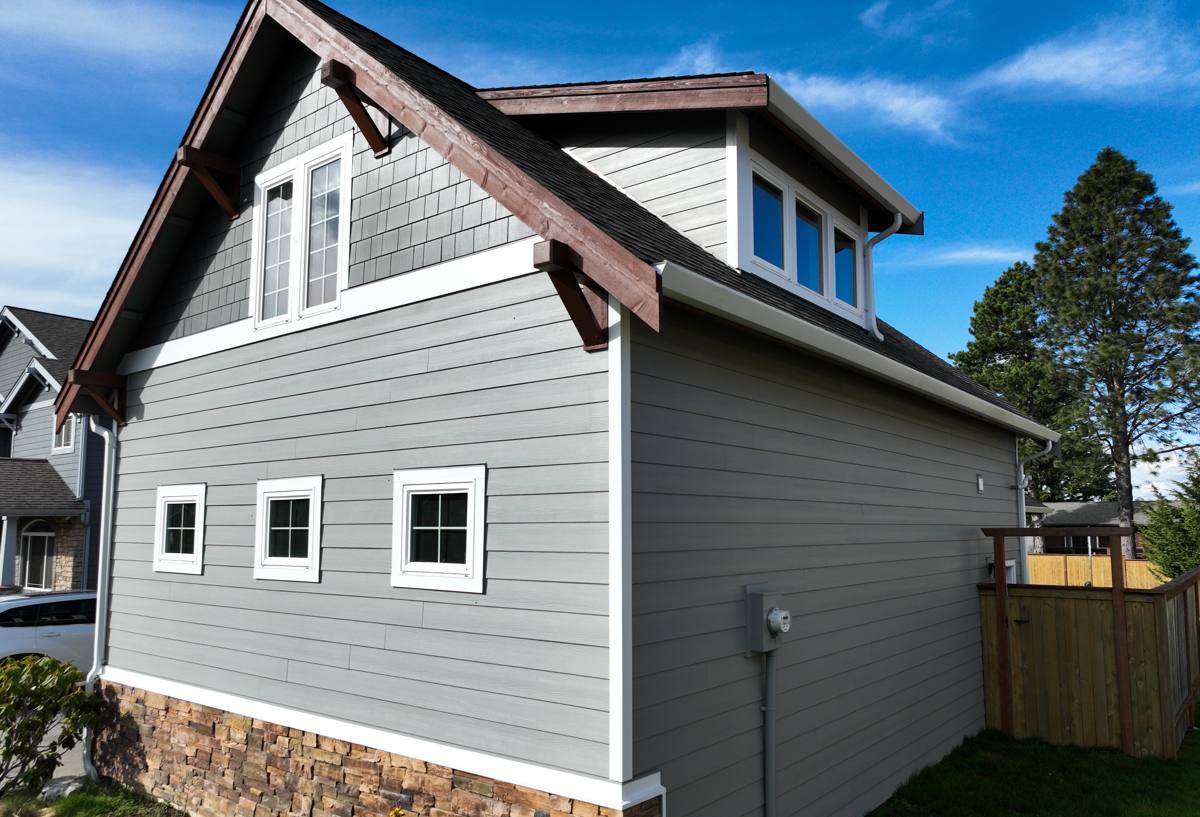
James Hardie siding is a cement-based composite, not wood and not plastic. That distinction matters directly for the conditions South Hill sees. Fiber cement doesn't rot, it's non-combustible, and it holds paint and factory finishes far longer than wood-based alternatives because the substrate itself isn't feeding moisture into the coating from underneath.
Hardie also engineers its products by climate zone under its HZ5 line, which is built specifically for regions with significant moisture exposure — freeze-thaw cycling, sustained damp, and coastal-influenced weather patterns like what this part of Washington experiences. That's a meaningfully different design philosophy than a one-size-fits-all siding product.
ColorPlus Factory Finish
Most Hardie siding we install uses the ColorPlus finish system — a baked-on, multi-coat finish applied under controlled factory conditions rather than painted on-site after installation. It resists fading and chipping better than field-applied paint, and it comes backed by its own finish warranty separate from the substrate warranty. For a climate with strong UV in summer and driving rain the rest of the year, a factory-cured finish holds up in ways site-applied paint often can't match long-term.
Warranty Backing
Hardie's warranty structure is transferable to a future homeowner, which matters both for your own peace of mind and for resale value if you sell the home down the road. It's one more reason we've standardized on this product rather than mixing in cheaper alternatives.
Side-by-Side Comparison
| Material | Moisture Resistance | Maintenance Needed | Typical Lifespan |
|---|---|---|---|
| Vinyl | Moderate — vulnerable at seams | Low, but limited repair options | 20-30 years |
| LP SmartSide / Engineered Wood | Moderate — depends on coating integrity | Periodic caulk/coating inspection | 25-30 years |
| Cedar / Primed Wood | Lower — absorbs moisture if unmaintained | High — restain/repaint every few years | 15-25 years with upkeep |
| James Hardie Fiber Cement | High — engineered for wet climates | Low — occasional wash, no repainting cycle with ColorPlus | 30-50+ years with proper install |
Installation Quality Matters as Much as the Material
Even the best siding product fails early if it's installed poorly, and this is where a lot of siding problems actually originate — not the material itself, but gaps in flashing, wrong fastener patterns, or caulking used as a substitute for proper water management. In a climate that pushes rain sideways into walls, the details around windows, corners, and butt joints are what determine whether a home stays dry for decades or develops hidden rot behind the siding within a few years.
Correct Hardie installation follows manufacturer specifications closely: proper clearance from grade and roof lines, correctly lapped and taped weather-resistive barriers underneath, flashing integrated at every penetration, and fastener spacing that keeps panels secure without over-driving nails that crack the board. We follow Hardie's published installation guidelines because that's what keeps the product warranty valid — and more importantly, it's what actually keeps water out.
- Weather-resistive barrier installed and lapped correctly before any siding goes up
- Flashing at every window, door, and roofline intersection — not caulk used as a shortcut
- Manufacturer-specified fastener type, spacing, and depth
- Proper clearance between siding and grade, decks, and roof surfaces to avoid wicking moisture
- Butt joints and corners detailed to shed water rather than trap it
- Final inspection of caulking and touch-up before the job is called complete
Beyond Siding: The Full Exterior Envelope
Siding doesn't work in isolation — it's one part of an exterior system that also includes the roof, windows, and any attached decks or covered outdoor spaces. We handle all four, which matters in a climate like this because problems in one area often show up as damage in another. A roof that's shedding water incorrectly at the eaves can soak the top course of siding for years before anyone notices. Old windows with failed seals let moisture into wall cavities right at the point where siding installers need a clean, dry surface to flash against.
When we're on-site for a siding project, we're looking at the whole envelope — roofing condition, window seals, and deck ledger connections — because catching a related issue early is a lot cheaper than discovering it after new siding is already up. If your roof or windows are due for attention, it's worth addressing them as part of the same conversation rather than as a separate project down the line.
Why a Local Crew Matters in This Area
Weather patterns in Whatcom County vary block to block depending on elevation, tree cover, and exposure to open water — a detail that matters more here than in a lot of parts of the country. A crew that works this region regularly understands which sides of a home in South Hill tend to hold moss longest, where driving rain hits hardest during a winter storm, and how local permitting and inspection processes actually work. That local knowledge shows up in better flashing decisions and more realistic maintenance guidance, not just faster scheduling.
When you're vetting a contractor for siding, roofing, window, or deck work in this area, a few basics are worth checking every time:
- Current Washington state contractor license and active insurance
- Manufacturer training or certification on the specific siding product being installed
- Willingness to walk you through the actual installation plan, not just a material sample
- Local references or a work history in the same climate conditions
- A clear, written warranty that spells out what's covered on both material and labor
- No pressure to sign same-day — a legitimate estimate holds up to a few days of thought
What to Expect From a Siding Project
Every home is different, but a well-run siding project generally follows a predictable sequence: an on-site evaluation of the existing siding and any moisture damage, a written estimate that spells out material and labor separately, removal of old siding down to the sheathing, correction of any rot or barrier issues found underneath, then installation of new Hardie siding to manufacturer spec, followed by a final walkthrough. Skipping the "correction" step — patching new siding over old moisture damage — is one of the most common shortcuts that leads to problems resurfacing within a few years.
Timelines depend on the size of the home and complexity of the trim work, and we'll give you a realistic window before work starts rather than an optimistic one that slips.
If your South Hill home is due for new siding, or you want a second opinion on a bid you already received, we're happy to take a look and put together a straightforward, no-pressure estimate — just fill out the form below.