 Sudden Valley Siding
 Exterior Work in Columbia, Built for the Climate That's Actually Here
Homes in the Columbia area near Sudden Valley sit in a stretch of Whatcom County where the weather doesn't do anyone any favors. You get long stretches of driving rain in the fall and winter, damp air that hangs around for weeks at a time, and a moss season that seems to start earlier every year and end later. Add in the salt-tinged air that moves through this part of the Pacific Northwest, and you've got a combination that's genuinely hard on the outside of a house. We work on homes throughout this area, and we've seen firsthand what holds up and what doesn't.
This page isn't a sales pitch dressed up as an article. It's a straightforward look at what Columbia homeowners are up against, how we approach siding, roofing, windows, and decks for this specific climate, and why we've made some deliberate choices about the materials we install — including the fact that we only install James Hardie fiber cement siding, and why.
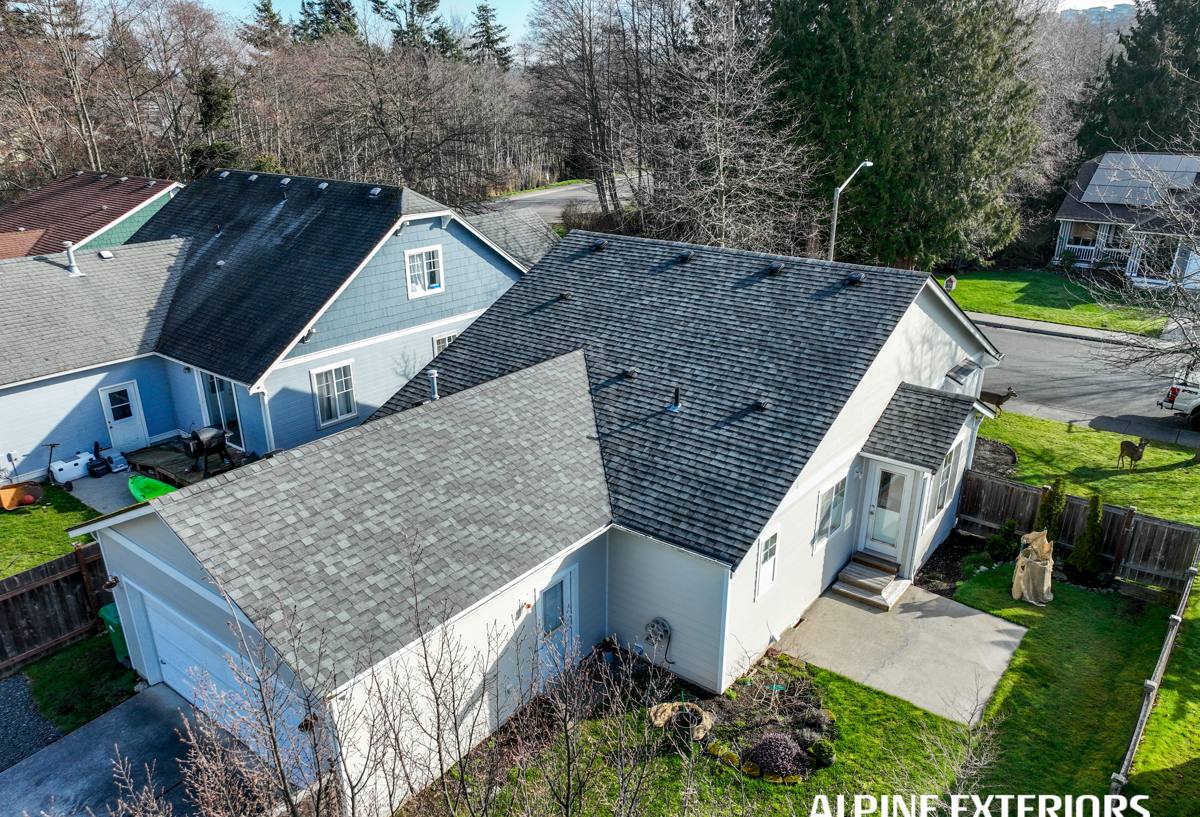
What the Columbia Climate Does to a House Over Time
Every exterior surface on your home is in a slow argument with the weather. In this part of Whatcom County, that argument has a few consistent themes:
Moisture That Doesn't Let Up
Rain here isn't just frequent — it's often driven sideways by wind off the water and the surrounding terrain, which pushes moisture into places a straight-down rain never would: under trim, behind loose caulk, into seams that were never quite sealed right the first time. Materials that swell, wick water, or trap moisture behind their surface are working against a losing hand in a climate like this.
A Long, Real Moss Season
Shaded lots, tree cover, and consistent dampness make this area prime territory for moss and algae growth on siding, roofing, and even decking. Moss isn't just cosmetic — where it takes hold on wood-based products, it holds moisture against the surface and accelerates rot underneath. Roofs and north-facing wall sections tend to get hit hardest.
Salt Air's Slow Corrosion
Being close enough to the water to catch salt-laden air adds another layer of wear, especially on fasteners, metal flashing, and any exterior finish that isn't formulated to resist it. It's a slower process than storm damage, but it's a steady one, and it shows up first in the details — rusting nail heads, fading finishes, soft spots where moisture and salt have worked together over years.
Temperature Swings, Freeze-Thaw Cycling
It doesn't get brutally cold here often, but the freeze-thaw cycles that do happen are hard on any material that absorbs water. Water that gets into a seam or a crack and then freezes expands and works that opening wider, year after year.
Why the Siding Material You Choose Matters More Here Than in a Mild Climate
In a drier climate, a homeowner can get away with more forgiving materials and looser installation tolerances. Columbia isn't that climate. The combination of sustained moisture, shade-driven moss growth, and salt exposure means the material on your walls needs to genuinely resist water absorption, hold a factory finish without chalking or peeling, and stay dimensionally stable through wet-dry cycles — not just look good on installation day.
This is the core reason we standardized on James Hardie fiber cement siding and stopped installing several other common products. It's not brand loyalty — it's a professional judgment call based on what we've watched happen to homes in this exact climate over years of doing this work.
Why We Don't Install Vinyl, LP SmartSide, or Untreated Wood Siding Here
- Vinyl siding is affordable and low-maintenance in a general sense, but it expands and contracts more than fiber cement with temperature swings, can warp or crack under impact, and its seams and J-channels give driving rain more opportunities to get behind the surface over time.
- LP SmartSide is an engineered wood product with real strengths, but it's still wood-based at its core — meaning it's more dependent on flawless caulking, flashing, and paint maintenance to keep moisture out. In a climate with this much sustained dampness, that maintenance margin gets thin fast.
- Cedar and primed spruce can look beautiful, but they demand the most ongoing attention of any siding option — refinishing, moisture monitoring, and vigilance against the exact rot and moss issues this climate specializes in producing.
None of these are "bad" products in every context. They're just products we've decided not to put our name behind in a climate this consistently wet, because we've seen the maintenance calls that follow a few years down the road.
James Hardie: What We Install Instead, and Why
James Hardie fiber cement is non-combustible, dimensionally stable, and doesn't absorb water the way wood-based or vinyl products can. It's manufactured with ColorPlus Technology, a factory-applied finish that's baked on and warranted against fading and peeling — which matters in an area where salt air and UV exposure both take a toll on paint over time. Hardie also engineers specific product lines (their HZ5 line, for instance) for climates with more moisture exposure, which lines up with what homes in this part of Whatcom County actually need.
It comes with a strong, transferable manufacturer warranty, which matters if you ever sell the home — a real selling point for buyers who know to ask about siding material and age.
None of that means Hardie siding is maintenance-free. It still needs to be installed to spec — correct clearances, proper flashing, sealed joints, and the right fastening pattern — or you lose a lot of what makes the product worth choosing in the first place. That installation quality is where a local, experienced crew earns its keep.
More Than Siding: Roofing, Windows, and Decks
Siding doesn't work in isolation — it's one piece of a home's exterior envelope, and in a climate like this, the pieces need to work together.
Roofing
Your roof takes the brunt of the driving rain and moss growth mentioned earlier. Proper roofing work here means attention to flashing, valleys, and ventilation — the details that determine whether moss gets a foothold and whether water actually sheds the way it's supposed to.
Windows
Old or poorly flashed windows are one of the most common points where water finds its way into a wall assembly. When we replace windows, we're paying close attention to how they integrate with the siding around them — a gap or a bad seal at a window opening can undermine even the best siding job.
Decks
Decks in this area face the same moisture and moss pressures as siding and roofing, plus direct foot traffic and standing water risk. Material choice, proper drainage, and ledger board flashing are the details that separate a deck that lasts from one that starts showing rot within a few seasons.
How We Approach a Columbia Project
- An honest, no-pressure walk-around of your home's exterior, looking at siding condition, trim, flashing, and any signs of moisture intrusion or moss buildup.
- A clear explanation of what we find — including what can wait and what shouldn't.
- A written estimate with product specifics, not vague line items.
- Installation done to manufacturer spec, with attention to the flashing and sealing details that matter most in this climate.
- A walkthrough at completion so you know what was done and why.
Comparing Siding Options for a Climate Like This
| Factor | James Hardie Fiber Cement | Vinyl | Wood / Engineered Wood |
|---|---|---|---|
| Moisture resistance | High — doesn't absorb water like wood | Moderate — seams can let water behind panels | Lower — dependent on finish and maintenance |
| Moss/algae resistance | Good with factory finish | Moderate | Lower — organic surface is more hospitable to growth |
| Finish durability | Factory-baked, warranted against fade/peel | Color molded in, can fade over time | Requires repainting/refinishing on a cycle |
| Fire resistance | Non-combustible | Combustible | Combustible |
| Typical maintenance | Low | Low to moderate | Higher — periodic refinishing needed |
What Drives Cost on a Project Like This
| Cost Factor | Why It Matters |
|---|---|
| Home size and wall complexity | More corners, dormers, and trim details mean more labor and material cuts |
| Current siding removal | Tear-off of old material, especially if there's hidden rot, adds time and disposal cost |
| Substrate repair | Any water damage or rot found underneath needs to be fixed before new siding goes on — this isn't optional |
| Product line and profile | Hardie offers different plank widths, textures, and colors, which affect material cost |
| Access and site conditions | Steep lots, tree cover, or limited access can affect labor time |
Vetting a Contractor for Work in This Area
Whatcom County has plenty of contractors, but not all of them are set up to do this kind of work well — or at all, in some cases. A few things worth checking before you hire anyone for siding, roofing, window, or deck work near Sudden Valley:
- Are they licensed and insured in Washington State, and will they show you proof without hesitation?
- Do they specify the exact product line and profile in writing, not just "Hardie siding" or "fiber cement"?
- Will they explain their flashing and moisture-management details, or just talk about the visible finish?
- Do they have a physical presence and history in this region, or are they a crew passing through from out of the area?
- Is the warranty — both manufacturer and workmanship — spelled out clearly, in writing?
A local crew that works in this climate year-round understands things a traveling crew simply won't pick up on — where moss tends to build up first on a given roof orientation, how much clearance to leave at grade given the rainfall here, which details tend to fail first on homes in this specific area. That local knowledge shows up in the quality of the work, not just the sales conversation.
Get a Straightforward Estimate
If you're weighing a siding, roofing, window, or deck project for a home in the Columbia area, we're happy to come take a look and give you an honest read on what your home actually needs — no pressure, no inflated scare tactics about damage that isn't there. Use the form below to request a free estimate.