 Sudden Valley Siding
 Ferndale's Roofs Work Harder Than People Realize
Ferndale sits close enough to the water and open farmland that roofs here take on a different kind of wear than roofs twenty miles inland. Salt-laden air off the Strait corrodes exposed metal faster than it would in a dry climate. Driving rain, pushed sideways by wind off the water, finds every weak seam and worn flashing point. And because temperatures rarely get cold enough or dry enough for long stretches, moss and algae get a running start every fall and rarely lose ground before spring. A roof replacement done right in this area has to plan for all three of those stresses at once, not just swap old shingles for new ones.
We work on roofs throughout Whatcom County, and the homes we see in and around Ferndale tend to show the same wear pattern: north-facing slopes with heavy moss growth, fasteners and flashing showing early corrosion, and valleys or low-slope sections where water sits a little too long after a storm. None of that is unusual for the area. It's just what the climate does to a roof over fifteen or twenty years, and it's exactly what a correct replacement needs to address.
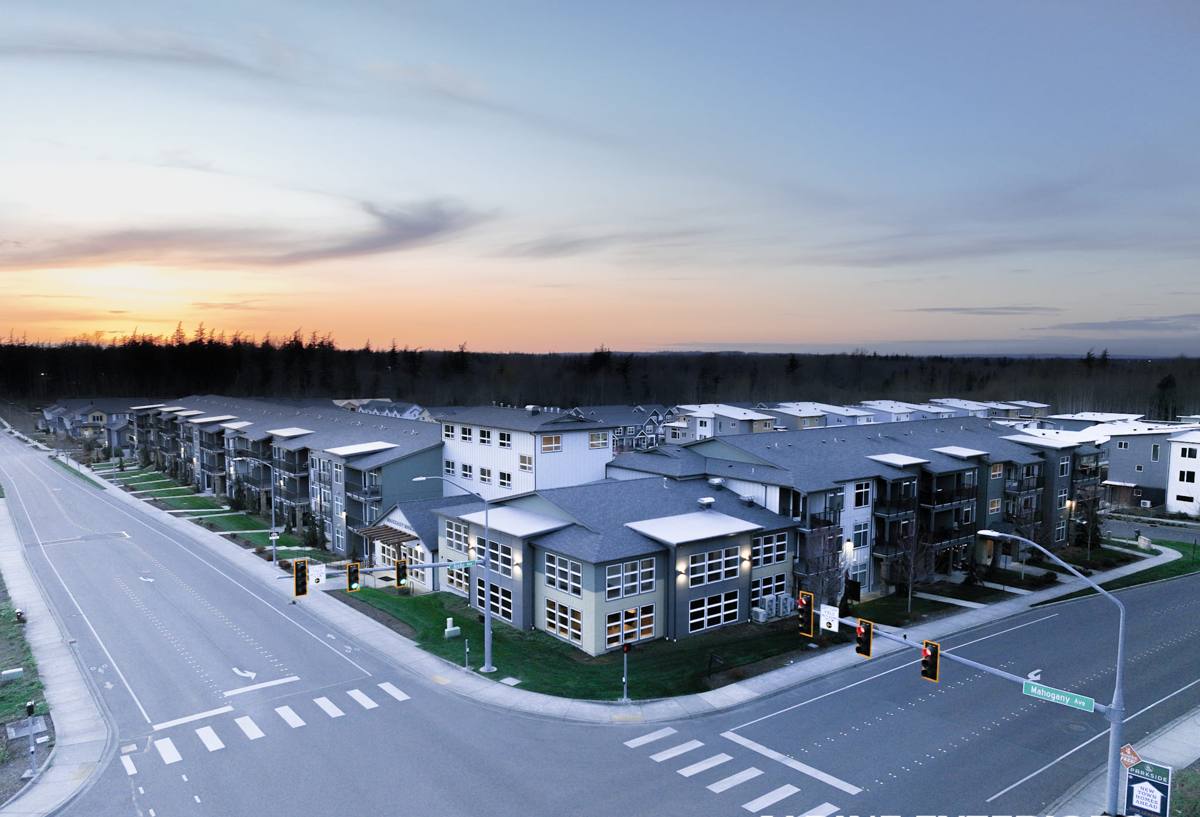
Signs a Ferndale Roof Needs Replacement, Not Another Patch
Patching has its place, but there's a point where repeated repairs stop making financial sense. Here's what tells us a roof is past that point:
- Granule loss heavy enough that you can see bare, shiny patches on asphalt shingles
- Moss that keeps returning within a season or two of cleaning, even after treatment
- Shingles that are cupping, curling, or cracking, especially on south- and west-facing slopes
- Soft spots in the decking that you can feel underfoot in the attic or from a ladder inspection
- Staining on interior ceilings or attic sheathing, even if no active leak is visible right now
- A roof that's already had two or more rounds of patch repairs in the last five years
- Flashing around chimneys, vents, or skylights that's visibly rusted, lifted, or resealed with caulk more than once
If a roof is showing two or more of these at once, we're usually looking at a replacement conversation rather than another repair. Underlayment and decking that have absorbed years of Whatcom County moisture don't recover with a patch — they need to come off.
What a Correct Roof Replacement Actually Involves
A roof replacement is more than laying new shingles over what's there. In a climate like this one, most of the work that determines how long a roof lasts happens before a single shingle goes down.
Tear-Off and Deck Inspection
We remove the existing roofing down to the deck. This is the only way to find soft, rotted, or delaminated sheathing that's been hiding under old shingles — a common find on older Ferndale homes where a previous roof was installed over an existing layer instead of torn off properly. Any compromised decking gets replaced before anything else happens.
Ice and Water Protection Where It Matters
Eaves, valleys, and any low-slope transitions get a self-adhering waterproof underlayment, not just standard felt. In an area that gets sustained, wind-driven rain, this layer is what keeps water out even if wind lifts a shingle edge or ice forms during a cold snap.
Ventilation
A roof that can't breathe traps moisture in the attic, which speeds up decking rot and feeds the exact algae and moss growth that's already a problem here. We check intake and exhaust ventilation as part of every replacement and correct it when it's undersized or blocked — this is one of the most commonly skipped steps in cheaper roof jobs.
Flashing, Not Just Shingles
Chimneys, skylights, sidewalls, and vent pipes all need new flashing, not resealed old flashing. Corroded or reused flashing is one of the top causes of "new roof, old leak" callbacks, and it's a shortcut we don't take.
Final Layer and Detail Work
Shingles or panels go down to manufacturer spec, with proper nailing patterns and exposure — details that matter more than they get credit for when a roof is going to face decades of coastal wind.
Material Options for a Ferndale Climate
There's no single "best" roofing material for every home — it depends on the roof's pitch, the home's style, and how much long-term maintenance the owner wants to take on. Here's how the common options stack up against the specific conditions Ferndale roofs deal with.
| Material | Moss/Algae Resistance | Wind & Driving Rain | Maintenance |
|---|---|---|---|
| Architectural asphalt shingle | Good with algae-resistant granules; still needs periodic cleaning | Strong when properly nailed and sealed | Low to moderate |
| Standing seam metal | Excellent — minimal surface for moss to grip | Excellent; handles wind-driven rain very well | Low |
| Cedar shake | Poor without diligent upkeep; retains moisture | Moderate; seams are more sensitive to wind-driven rain | High |
| Synthetic/composite shingle | Good; resists moisture absorption | Strong | Low |
We don't push cedar shake as a default recommendation in this area — not because it can't look good, but because it holds moisture longer than other materials and demands more frequent upkeep to keep moss and rot at bay, which is a real ongoing cost most homeowners don't want to sign up for. If a homeowner wants that look and understands the maintenance commitment, we'll install it correctly. But for most Ferndale roofs, an algae-resistant architectural shingle or a metal roof gives the best balance of performance and low upkeep for the money.
How Our Replacement Process Works
- On-site inspection. We walk the roof and attic, check decking condition, ventilation, and flashing, and take photos to document what we find.
- Written estimate. You get a clear scope of work and pricing before anything is scheduled — no verbal-only quotes.
- Material selection. We go over the options that fit your roof's pitch, your home's look, and your budget, including honest trade-offs for each.
- Scheduling around the weather. We plan tear-off in windows that minimize the home's exposure to open decking, which matters more here than in drier climates.
- Tear-off, deck repair, and installation. Full removal, decking inspection and replacement as needed, waterproofing, ventilation correction, and final roofing installed to spec.
- Final walkthrough. We review the completed roof with you, including flashing details and any ventilation changes made.
Moss, Algae, and Keeping a New Roof Looking New
Even a well-installed roof in this part of Whatcom County will see moss and algae growth eventually — it's a function of shade, moisture, and mild temperatures, not a sign of a bad roof. What changes with a correct installation is how much of a problem it becomes. Algae-resistant shingles, proper attic ventilation, and details like zinc or copper strips near the ridge on shaded slopes all slow growth significantly. We'll walk through which of these makes sense for your roof's exposure and tree cover rather than applying the same approach to every home.
Homeowners can help extend the life of a new roof between our visits by keeping gutters clear of debris, trimming back branches that keep a slope shaded and damp, and having moss growth addressed with a soft wash rather than pressure washing, which can strip granules and shorten shingle life.
What Affects the Cost of a Roof Replacement
| Factor | Why It Matters |
|---|---|
| Roof size and number of planes | More square footage and more valleys/hips mean more material and labor |
| Decking condition | Rotted or soft sheathing found during tear-off adds replacement cost |
| Material choice | Metal and composite typically cost more upfront than asphalt but need less upkeep |
| Roof pitch and access | Steep or hard-to-access roofs take longer and require more safety setup |
| Ventilation and flashing corrections | Fixing undersized ventilation or old flashing adds work but prevents early failure |
We don't publish flat per-square pricing because these factors genuinely change the number from one roof to the next — a straightforward gable roof with sound decking costs meaningfully less than a cut-up roof with rot to address. What we can promise is that the estimate we give reflects what we actually find on your roof, not a generic figure.
Why a Crew That Already Works Ferndale Homes Matters
A roofing crew that mostly works dry inland climates will build a roof to a different, less demanding standard than one that works Whatcom County's coastline and rainfall patterns every week. Knowing how far wind-driven rain travels up a valley, how much ventilation a shaded north slope actually needs, and which flashing details fail first in salt air isn't something you get from a manual — it comes from doing this work here, repeatedly, and seeing what holds up over years. That local experience shows up in the small decisions made on your roof, not just the visible finished product.
It also matters for accountability. A crew based in the area is easier to reach if a question comes up after the job, and they have a local reputation to stand behind rather than a one-time job to finish and move on from.
Before You Hire: A Quick Checklist
- Get a written, itemized estimate — not just a total price
- Confirm the contractor is licensed and insured in Washington State
- Ask specifically about decking inspection and ventilation as part of the scope, not just shingles
- Ask what underlayment and flashing materials are included, not just the visible roofing material
- Ask how many similar roofs they've done in Ferndale or the surrounding Whatcom County area
- Get manufacturer and workmanship warranty terms in writing before work begins
If your roof is showing wear, or you just want an honest read on how much life it has left, we're happy to take a look. The estimate is free, there's no pressure to move forward, and you'll get a straight answer about what your roof actually needs — use the form below to get started.