 Sudden Valley Siding
 Deck Replacement in Geneva: Built for a Wet Corner of Whatcom County
Geneva sits close enough to Lake Whatcom and the surrounding tree cover that its decks live a harder life than decks in drier parts of the state. Between the salt-tinged air moving in off the Sound, long stretches of driving rain through fall and winter, and a moss season that seems to start earlier every year, wood and composite decking alike take a beating here. If your deck has gone soft in spots, gone slick with algae no matter how often you scrub it, or just looks tired next to the rest of your home's exterior, a replacement done right for this climate will outlast a quick patch job by years.
We work on decks throughout Sudden Valley and the surrounding Whatcom County neighborhoods, including Geneva, so we've seen firsthand how this specific microclimate treats different decking materials over time. That local track record shapes how we spec and build every replacement.
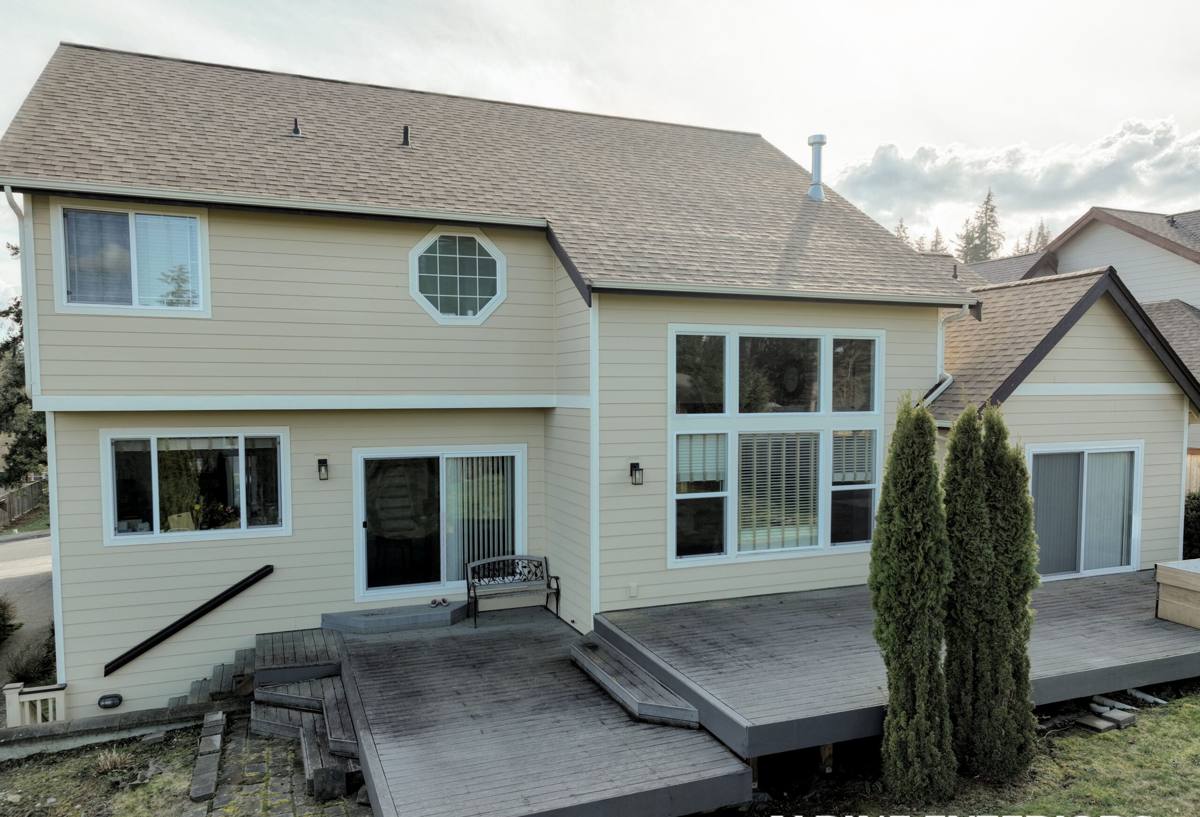
Why Geneva's Climate Is Hard on Decks
A few things stack up against decks in this part of Whatcom County, and they compound each other rather than acting alone.
Moisture That Doesn't Let Up
Long, steady rain seasons mean deck boards, joists, and ledger connections stay damp for weeks at a stretch. Wood that never fully dries out between storms is far more likely to rot from the inside before the surface ever looks bad. Fasteners and hardware that aren't rated for constant moisture exposure corrode faster than most homeowners expect.
Moss, Algae, and Shade
Tree cover and cooler, damp air create ideal conditions for moss and algae to colonize decking surfaces, especially on the north side of a house or under overhangs. Beyond being a slip hazard, moss holds moisture directly against the board surface, accelerating decay in wood and staining even moisture-resistant materials if it's left unaddressed.
Salt-Tinged Air
Proximity to the Sound means a steady low-level exposure to salt-laden air, which speeds up corrosion on fasteners, brackets, and any exposed metal hardware. Over years, this is often what fails first on an older deck, long before the decking boards themselves give out.
Signs Your Geneva Deck Needs Replacing, Not Just Repairing
- Soft, spongy spots in the decking boards, especially near the house or in shaded areas
- Persistent moss or algae growth that returns within weeks of cleaning
- Rust streaking from fasteners or visible corrosion on brackets and hangers
- Gaps, cupping, or splitting boards that have widened over the past year or two
- A ledger board connection to the house that looks separated, stained, or soft
- Railings or posts that flex or feel loose when you lean on them
- A substructure (joists, beams, posts) that shows rot when probed with a screwdriver
A deck that's failing at the substructure level is a safety issue, not just a cosmetic one. If you're seeing more than one or two of these signs, it's worth having someone look at the framing underneath, not just the surface boards.
What a Correct Deck Replacement Involves Here
Replacing a deck in a climate like this isn't just swapping old boards for new ones. The parts of the job that matter most are often the parts you won't see once it's finished.
Full Structural Assessment
Before we talk materials, we check the ledger board attachment, footings, posts, and joists. In a wet climate, framing failure is far more common than surface wear, and it's the piece that actually keeps a deck safe. We won't build a beautiful new surface on top of framing that's already compromised.
Proper Flashing and Ledger Detailing
The ledger board connection, where the deck attaches to the house, is the single most common failure point on wet-climate decks. Correct flashing here keeps water from working its way behind the siding and into the house framing. This is a detail that's easy to shortcut and expensive to get wrong.
Drainage Underneath
Standing water under a deck accelerates rot in the joists and posts and keeps the ground beneath perpetually damp, which feeds moss growth on the surface above. Grading and, where needed, a drainage system underneath the deck reduce that moisture load significantly.
Corrosion-Resistant Hardware
Given the salt exposure in this area, we use fasteners, brackets, and hangers rated for coastal or wet-climate use, not standard-grade hardware that will start showing rust within a couple of seasons.
Material Selection for Moss and Moisture Resistance
The decking surface itself matters less than most homeowners assume, compared to the structure underneath, but it still needs to be chosen deliberately for this climate. See the comparison below.
Decking Material Options for a Damp, Mossy Climate
| Material | Moisture Behavior | Moss/Algae Resistance | Maintenance |
|---|---|---|---|
| Pressure-treated wood | Resists rot with proper sealing, but needs consistent upkeep | Moderate — surface texture can hold moisture and moss | Annual cleaning and resealing recommended |
| Cedar | Naturally moisture- and insect-resistant, but softer surface wears faster in constant wet | Moderate to good with regular cleaning | Periodic staining/sealing to maintain resistance |
| Composite decking | Does not rot or absorb water into the board itself | Better resistance, though surface can still stain if moss is left to sit | Occasional washing; no sealing or staining needed |
| PVC/capped decking | Fully moisture-sealed surface | Best resistance to staining and growth | Low — periodic rinsing is usually enough |
There's no single "right" answer for every home. Wood decking, properly installed and maintained, can perform well here and gives a look some homeowners prefer. Composite and PVC options trade a higher upfront cost for significantly less ongoing maintenance, which matters a lot in a climate that punishes neglect. We'll walk through the honest trade-offs for your specific situation, budget, and how much upkeep you actually want to do, rather than pushing one product line.
Our Deck Replacement Process
- On-site assessment — We inspect the existing deck, ledger connection, and substructure to determine what's driving the failure and whether full replacement is actually needed.
- Honest scope and estimate — You get a clear, written breakdown of what's being replaced, what materials we're recommending and why, and what it costs. No pressure, no upsell games.
- Demolition and disposal — Old decking, framing, and hardware are removed and hauled off, with attention to protecting the surrounding landscaping and foundation area.
- Structural rebuild — Posts, footings, joists, and the ledger connection are rebuilt or repaired to current standards, with corrosion-resistant hardware and correct flashing throughout.
- Decking installation — Boards, railings, and stairs are installed to your chosen material's spacing and fastening specs, accounting for the drainage and expansion needs of this climate.
- Final walkthrough — We go over the finished deck with you, including basic care guidance specific to the material you chose.
Cost Factors for a Deck Replacement in Geneva
Every deck is different, but a few factors consistently drive cost more than homeowners expect:
- Substructure condition — if framing, footings, or the ledger connection need rebuilding, that's often a bigger cost driver than the decking surface itself
- Decking material — wood, composite, and PVC options span a wide price range, both upfront and over the life of the deck
- Deck size and layout — multiple levels, built-in stairs, and non-rectangular shapes add complexity
- Railing style — code-compliant railing systems vary widely in material and labor cost
- Site access — decks on slopes or with limited equipment access can add labor time
We'll give you a real number after seeing the deck in person, not a rough guess over the phone. Broadly, a straightforward replacement tends to run in the low-to-mid five figures, with material choice and structural repairs swinging that range meaningfully in either direction.
Why Hire a Crew That Already Works in This Area
A contractor who works Sudden Valley and Geneva regularly already knows how the local moisture patterns, tree cover, and salt air affect decking choices and structural details, before ever setting foot on your property. That means fewer surprises during the build, material recommendations grounded in what actually holds up here, and a crew that understands why the ledger flashing and drainage details matter as much as they do. It also means we're not learning the local climate at your expense.
Get a Free, No-Pressure Estimate
If your deck is showing signs of wear, moss buildup that won't quit, or you're just ready for something that will hold up to Whatcom County's wet seasons, we're happy to take a look and give you a straightforward assessment. Use the form below to request a free estimate for your Geneva deck replacement — no pressure, just an honest look at what your deck needs.