 Sudden Valley Siding
 Deck Building Built for Sehome's Climate
Sehome sits close enough to Bellingham Bay and the surrounding waterways that homes here deal with a specific combination of weather stresses: salt-tinged air moving in off the water, long stretches of driving rain through fall and winter, and a moss season that can run half the year on shaded or north-facing lots. A deck built without those three factors in mind will look fine for a season or two, then start showing problems that are expensive to reverse — soft spots in decking boards, corroded fasteners, slick surfaces, and ledger connections that trap moisture against the house.
We build and repair decks throughout the Sudden Valley and greater Whatcom County area, and Sehome's mix of older housing stock, mature tree cover, and proximity to the water means we approach these projects a little differently than we would on a dry, open, inland lot. This page covers what that actually means in practice — not generic deck-building advice, but what we specifically look at, plan for, and build in this neighborhood.
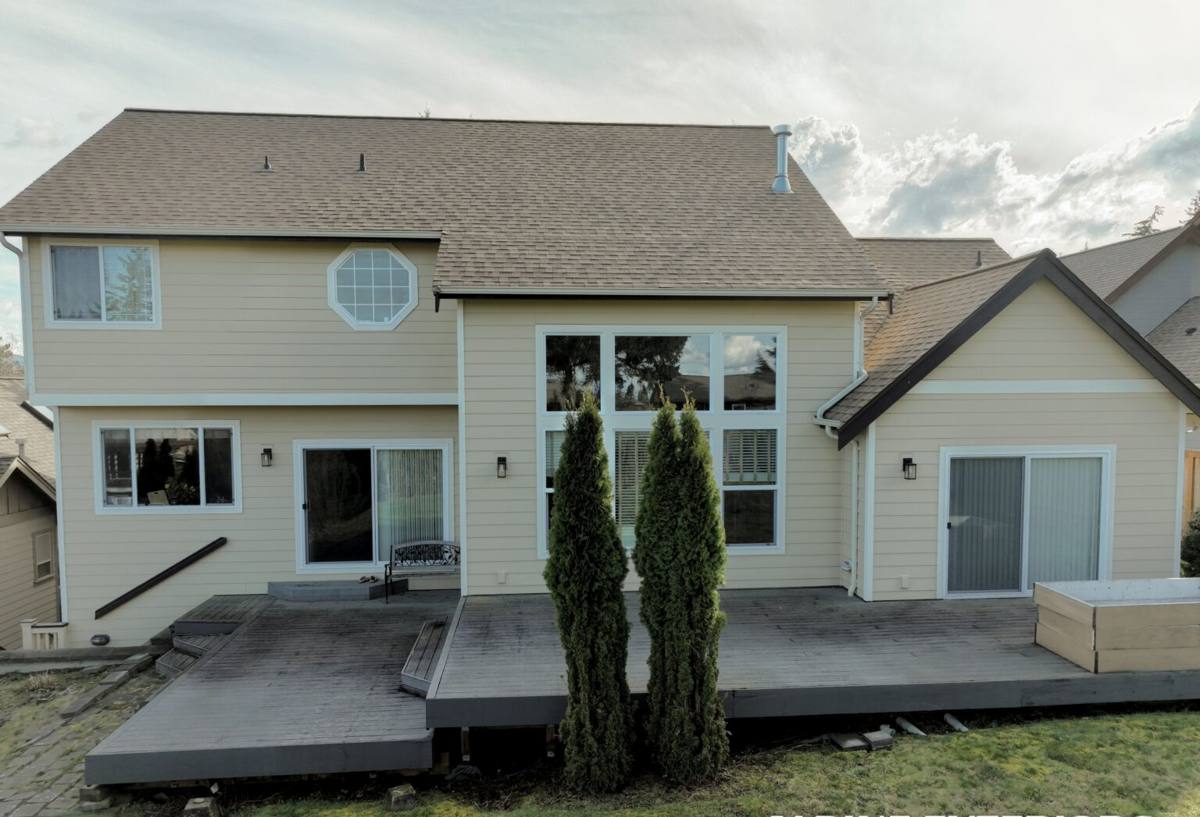
What Sehome's Environment Does to a Deck Over Time
Salt Air and Metal Hardware
Proximity to the bay means airborne salt finds its way onto every exposed surface, including your deck's fasteners, brackets, and connectors. Standard galvanized hardware can start corroding years before it should in a coastal-influenced environment like this. Corrosion at a joist hanger or a ledger bolt isn't cosmetic — it's a structural issue, and it's one of the most common failure points we find on older decks in this part of the county.
Driving Rain and Water Intrusion
Whatcom County rain doesn't just fall straight down — wind-driven rain gets pushed sideways into ledger connections, under railing posts, and into any gap where flashing was skipped or installed incorrectly. Over years, that moisture works its way into end grain and fastener holes, which is where rot actually starts on most decks, not on the open flat surfaces homeowners tend to worry about.
Moss, Shade, and Slip Risk
Sehome's tree cover is part of what makes the neighborhood attractive, but shaded, north-facing decks here can stay damp for days after a storm, which is exactly what moss needs to take hold. Beyond looking neglected, moss-covered decking is genuinely slick — it's a fall hazard on stairs and near entry points, and it accelerates surface wear on wood decking by holding moisture against the board.
What a Correctly Built Deck Includes Here
A deck that's going to hold up in this environment needs a handful of details done right from the start. These aren't upgrades — they're the baseline for building correctly in a coastal, high-rainfall climate.
- Stainless steel or coated corrosion-resistant fasteners and structural connectors, not standard-grade galvanized, at any point exposed to weather or salt air
- Proper ledger board flashing where the deck attaches to the house, with counter-flashing that directs water away from the wall assembly rather than behind it
- Correct joist spacing and blocking sized to the actual decking material and expected snow and foot-traffic loads for this region
- Post base connectors that keep wood posts off standing water rather than sitting directly on or in concrete
- Ventilation underneath the deck structure so airflow can dry out the framing between rain events
- A decking material and finish chosen with this property's shade and drainage pattern in mind, not just the homeowner's color preference
Decking Material Choices for a Shaded, Wet Lot
There's no single "best" decking material — the right choice depends on how much sun and shade your specific lot gets, how much upkeep you want to do, and your budget. Here's how the common options actually compare for a property like the ones we see in Sehome.
| Material | How it handles shade & moisture | Maintenance | Typical lifespan |
|---|---|---|---|
| Pressure-treated wood | Prone to moss and staining in shaded spots without regular cleaning | Annual cleaning, periodic re-staining/sealing | 15–20 years with upkeep |
| Cedar | Naturally rot-resistant but still needs sealing to resist moisture in shade | Sealing every 1–2 years | 15–25 years with upkeep |
| Composite decking | Resists rot and moss growth better, but can still get slick if algae builds up on the surface film | Periodic washing, no staining/sealing | 25–30+ years, manufacturer-dependent |
| PVC/capped composite | Best moisture resistance of common options; least affected by standing shade dampness | Occasional washing | 25–30+ years, manufacturer-dependent |
We'll walk you through these trade-offs honestly during an estimate rather than pushing whatever has the best margin. A composite or capped board often makes sense on a heavily shaded Sehome lot simply because it doesn't need periodic sealing to keep moisture out — but wood decking, properly maintained, is still a completely reasonable choice if you like the look and are willing to keep up with it.
Repair, Replacement, or New Build — How We Decide
Not every deck problem means starting over. When we look at an existing deck in Sehome, we're checking a specific set of things to figure out whether repair makes sense or whether the structure has reached the point where rebuilding is the more honest recommendation.
Signs a Repair Can Solve the Problem
Localized soft boards, surface moss and staining, a handful of corroded fasteners, or railing that's loosened but not rotted at the post base are all typically repairable without touching the whole structure.
Signs the Structure Needs a Full Rebuild
Soft or spongy framing (not just decking boards), rot at the ledger connection to the house, multiple failed post bases, or a deck that was never properly flashed to begin with are structural issues. Patching decking boards on top of a compromised frame just hides the problem — it doesn't fix it, and it can create a false sense of safety on a structure that's carrying real weight.
We'll tell you plainly which category your deck falls into, including when a repair is the right call even if a rebuild would be the bigger job for us.
Our Process for a Sehome Deck Project
- On-site assessment — we look at the existing structure (if there is one), sun/shade exposure, drainage patterns, and how the deck will tie into your home
- Honest scope and material discussion — repair vs. rebuild, decking material options, and what each choice actually costs to maintain over time, not just up front
- Permitting — deck projects of meaningful size or height typically require a permit; we handle that process rather than leaving it on the homeowner
- Build — framing, flashing, fastening, and decking installed to hold up against coastal rain and salt exposure, not just to pass a quick look
- Final walkthrough — we go over the finished deck with you, including basic maintenance guidance specific to your lot's sun and shade pattern
Why Local Experience in This Area Matters
A crew that mostly builds decks in dry, inland parts of the state isn't necessarily thinking about salt-air fastener corrosion or moss-related slip hazards, because those aren't the problems they see every day. Building decks regularly around Sudden Valley and the broader Whatcom County waterfront means we're used to designing for driving rain, shaded lots, and coastal air as the default condition, not an exception. That shows up in the hardware we spec, how we detail flashing at the house connection, and which decking materials we actually recommend for a given lot rather than a one-size-fits-all pitch.
It also means we're a known, reachable local business if a question comes up two or five years after the project is done — not a crew that pulled a permit, built, and moved on to the next county.
Basic Deck Maintenance for Sehome Homeowners
Whatever material you choose, a little seasonal attention goes a long way in this climate. A quick checklist worth keeping in mind:
- Clear leaves and debris from between boards before fall rains set in, especially on shaded decks
- Check and clean gutters and downspouts near the deck so water isn't dumping directly onto or under it
- Inspect fasteners and connectors annually for early signs of rust or corrosion, particularly on older, non-stainless hardware
- Wash off surface moss and algae before it builds up into a slip hazard, using a deck-safe cleaner rather than an aggressive pressure wash that can damage the wood grain
- Re-seal or re-stain wood decking on schedule rather than waiting until it visibly needs it
Let's Look at Your Deck Project
Whether you're planning a new deck, need an honest opinion on whether an existing one is repairable, or just want to understand your material options for a shaded Sehome lot, we're happy to come take a look. There's no pressure and no obligation — just a straightforward assessment from a crew that works in this climate every day. Fill out the form below to request a free estimate.