 Sudden Valley Siding
 Roof Repair Built for Deming's Wet, Wooded Climate
Deming sits in a part of Whatcom County where the trees grow close to the rooflines and the rain doesn't let up for months at a time. Homes here deal with a different set of roofing stresses than a house out in the open sun: heavy shade that keeps roof surfaces damp long after a storm passes, needle and leaf litter that piles up in valleys and gutters, and a steady drip of moisture that finds its way into any gap in the roofing system. Add in the driving rain that comes through the valley during winter storms, and even a roof that looked fine last summer can be hiding a slow leak by spring.
We repair roofs in Deming and the surrounding Whatcom County communities on a regular basis, and the patterns repeat. Moss establishes itself on north-facing slopes and shaded sections first. Flashing around chimneys, skylights, and roof-to-wall transitions works loose from repeated wet-dry cycling. Gutters clogged with organic debris back water up under the shingles. None of this is unusual for the area — it's just what this climate does to a roof over time, and it's exactly why a repair plan built around local conditions matters more than a generic checklist.
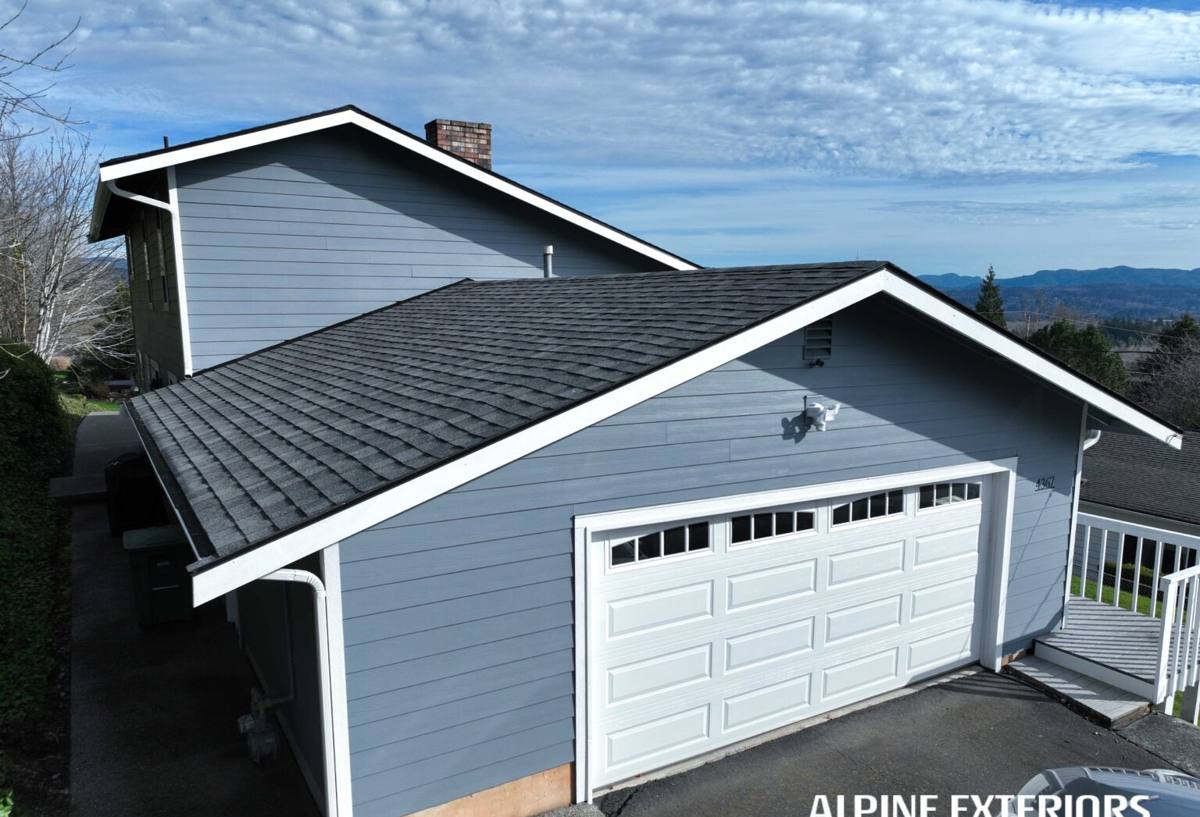
What Deming Homes Typically Need From a Roof Repair
Most of the repair calls we get in this area fall into a few consistent categories. Understanding which one you're dealing with helps set realistic expectations for scope and cost before a crew ever gets on the roof.
Moss and Organic Growth Damage
Moss doesn't just look bad — it holds moisture directly against the roofing material and, over years, lifts shingle edges as it grows. In heavily shaded sections common around Deming's tree-lined lots, moss can establish itself within a single wet season if it isn't kept in check. A repair in these areas usually means removing the growth carefully (not power-washing, which drives water under shingles and strips granules), replacing any shingles that have already been compromised, and treating the surface to slow regrowth.
Flashing and Penetration Leaks
Flashing is the metal that seals transitions — chimneys, vent pipes, skylights, and the line where a roof meets a wall or dormer. These are the most common leak points on any roof, and in a climate with this much sustained rainfall, a flashing seal that's marginal in a dry climate will fail outright here. Repair work often traces a ceiling stain back to a single piece of flashing that's cracked, rusted through, or was never sealed correctly to begin with.
Wind and Storm Damage
Driving rain in this valley usually comes with wind behind it. Wind doesn't just tear shingles off outright — more often it lifts an edge just enough to break the adhesive seal, and that shingle stays loose until the next storm finishes the job or water starts working its way underneath. After a wind event, a roof can look intact from the ground while still needing repair.
Gutter and Drainage Backups
When gutters fill with debris, water has nowhere to go but back up under the roof edge. This shows up as rot along fascia boards and the first few feet of roof deck near the eaves — a repair that's straightforward if caught early, and a deck-replacement job if it's ignored for a couple of seasons.
How We Diagnose a Roof Repair
A leak rarely shows up where the water actually enters. Water travels along the underside of the deck and framing before it drips somewhere visible, so an accurate diagnosis means getting on the roof, not just looking at the ceiling stain from inside.
- Full roof walk to check every penetration, valley, and transition, not just the area near the reported leak
- Inspection of flashing seals at chimneys, vents, and skylights for cracking, rust, or separation
- Check for lifted, cracked, or missing shingles, including edges that look sealed but have lost adhesion
- Assessment of moss and debris buildup, especially on shaded and north-facing slopes
- Gutter and drainage check, since backed-up water is one of the most common hidden causes of edge and deck rot
- Attic or interior check where accessible, to trace staining back to its actual entry point
We explain what we find in plain terms — what's causing the problem, what it takes to fix it correctly, and what it would cost to let it go another season. You make the call with real information, not a sales pitch.
What a Correct Repair Actually Involves
A roof repair that's done right addresses the cause, not just the symptom. Patching over a leak without finding why it started is a repeat visit waiting to happen. Depending on what we find, a proper repair might include:
- Removing and replacing damaged or missing shingles, matched as closely as possible to the existing roof
- Re-sealing or replacing flashing at chimneys, vents, skylights, and wall transitions
- Repairing or replacing sections of rotted roof deck before new roofing material goes down over them
- Clearing moss and treating the surface to reduce how quickly it returns
- Clearing and, where needed, repairing gutters and drip edge so water sheds the way it's supposed to
Skipping the deck repair to save time on a job like this is one of the more common shortcuts we see from past work — new shingles over a soft, water-damaged deck don't hold, and the leak comes back within a season or two. We don't install over a deck we haven't verified is sound.
Repair vs. Replacement: How to Tell Which One You Need
Not every leak means a new roof, and not every roof with a leak is worth repairing indefinitely. The honest answer usually comes down to age, extent of damage, and how many separate problem areas exist.
| Factor | Points Toward Repair | Points Toward Replacement |
|---|---|---|
| Roof age | Under 15-20 years, in line with material lifespan | Near or past the material's expected service life |
| Number of problem areas | One or two isolated spots | Multiple unrelated leaks across the roof |
| Shingle condition overall | Surrounding shingles still flexible and granule-intact | Widespread granule loss, curling, or brittleness |
| Deck condition | Deck is sound where exposed | Soft or rotted decking found in multiple areas |
| History of repairs | First or second repair on this roof | Repeated repairs to the same or nearby areas |
If your roof falls mostly in the left column, a targeted repair is the right call and the more cost-effective one. If it's leaning right, we'll tell you that directly rather than stacking repair after repair on a roof that's telling you it's done.
Why It Matters That We Already Work in Deming
Roofing conditions vary block to block in a wooded valley like this. A crew that already knows which sections of Deming sit under heavy tree cover, which lots hold moisture longer after a storm, and how the driving rain typically hits during winter systems can diagnose a problem faster and price a repair more accurately than a crew seeing the area for the first time. That familiarity also means we're not guessing at material availability or scheduling around access issues that come with wooded, sometimes hard-to-reach properties — we've already worked through those logistics on other jobs nearby.
It also means accountability. We're not a crew that shows up once for a storm-chasing repair and disappears. We work this part of Whatcom County regularly, and a repair we do this year needs to hold up when we're back doing work down the street next year.
Maintaining Your Roof Between Repairs
A few habits go a long way toward stretching the life of a repair in this climate:
- Clear gutters and downspouts at least twice a year, more often if you're under heavy tree cover
- Have moss addressed before it spreads across a full slope, not after
- Trim back branches that overhang the roof to reduce debris buildup and shade that keeps the surface damp
- Get a roof looked at after any significant windstorm, even if nothing looks obviously wrong from the ground
- Address small leaks as soon as they show up — a stain the size of a dinner plate is far cheaper to fix than the rot it becomes after a winter of being ignored
Get an Honest Look at Your Roof
If you're dealing with a leak, storm damage, or just want a straight answer on the condition of your roof before the next wet season sets in, we're glad to take a look. We'll tell you what we actually find — repair, monitor, or replace — with no pressure either way. Request a free estimate below and we'll get you scheduled.