 Sudden Valley Siding
 Roof Repair in Ferndale: What Local Homes Are Up Against
Ferndale roofs deal with a specific combination of stresses that inland homes don't see nearly as often. The mix of salt-tinged air off the water, long stretches of driving rain through fall and winter, and a moss season that can run most of the year all work on a roof at the same time, not one at a time. That combination is why a roof repair here needs to account for more than the visible leak or the missing shingle in front of you. It needs to account for what's happening underneath and around it.
We repair roofs throughout Whatcom County, and Ferndale comes with its own pattern of wear. Homes closer to the water tend to show faster corrosion on exposed metal fasteners and flashing. Homes tucked under mature trees deal with moss and debris buildup that traps moisture against the roof surface for weeks at a time. Most Ferndale roofs deal with some version of both. A repair that only addresses the symptom you can see from the ground usually doesn't hold up long against that combination.
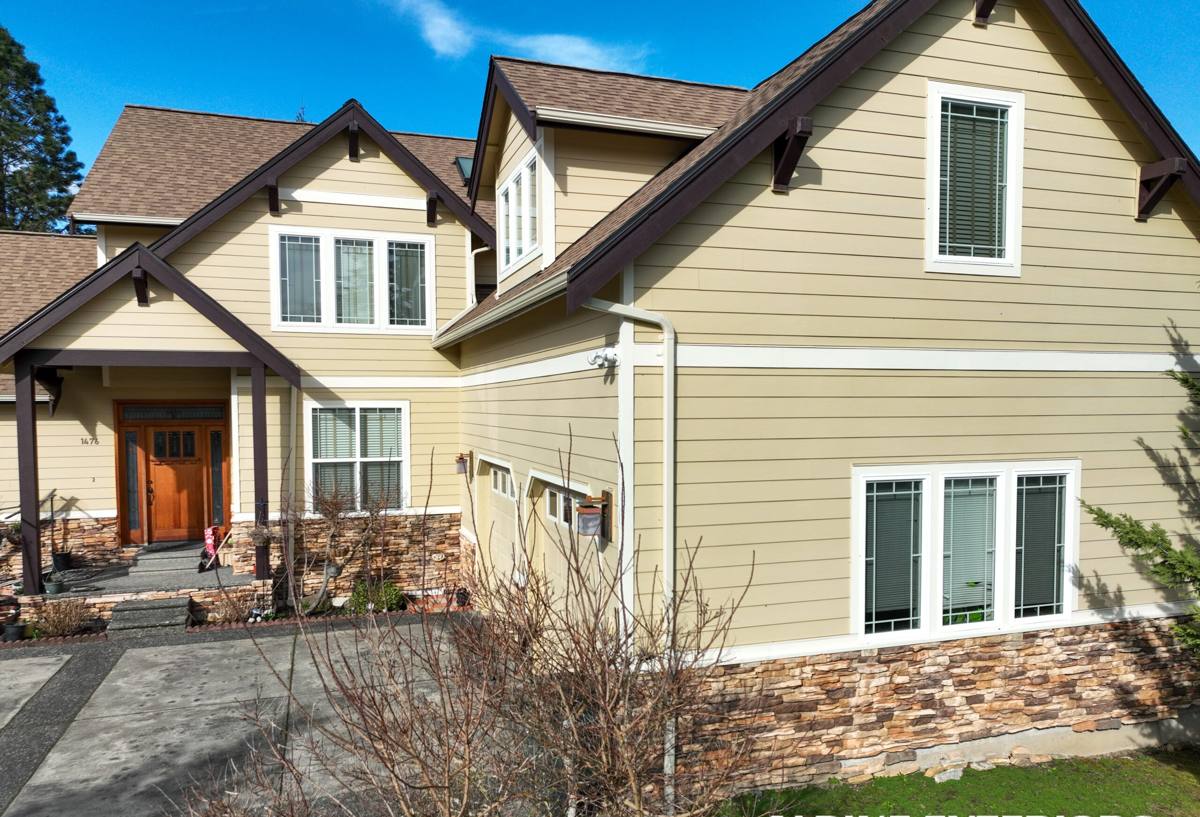
Signs Your Ferndale Roof Needs Repair, Not Replacement
Most roof problems start small and stay small if they're caught early. The trouble is that a lot of the early warning signs aren't obvious from a quick look at the roofline. Here's what we'd want you to watch for between inspections.
- Dark streaking or a greenish tint on shingles, especially on the north-facing or shaded slopes where moss gets a foothold first
- Granules collecting in gutters or at the base of downspouts, a sign the shingle surface is wearing thin
- Soft or spongy spots when walking the roof, which usually means the decking underneath has taken on moisture
- Water stains on interior ceilings or in the attic, even faint ones, especially after a stretch of heavy rain
- Lifted, cracked, or curling shingle edges, particularly after a windy stretch
- Rust streaks or visible corrosion around flashing, vents, or exposed fasteners
- Daylight visible through the roof deck when viewed from inside the attic
Any one of these on its own is usually a straightforward repair. Several showing up together, or showing up in the same area repeatedly, is worth a closer look before it turns into a bigger job.
How Salt Air, Driving Rain, and Moss Shorten Roof Life Here
Salt Air and Metal Fatigue
Salt in the air accelerates corrosion on anything metal on your roof — flashing, drip edge, nail heads, vent stacks, and gutter hardware. Corrosion doesn't announce itself the way a leak does. It works quietly at seams and fastener points until a small gap opens up, and that gap is exactly where water gets in. Roofs closer to open water or exposed to prevailing wind off the coast tend to show this wear years before roofs further inland.
Driving Rain and Wind-Driven Water
Whatcom County doesn't just get a lot of rain, it gets a lot of rain pushed sideways by wind off the water. That matters because wind-driven rain doesn't behave like rain falling straight down. It works up under shingle edges, through poorly sealed flashing, and into any gap that a calmer rain would never reach. A repair that would hold up fine in a dry climate can fail here specifically because it wasn't built to handle water coming in sideways.
Moss Season
Moss thrives in the shaded, damp conditions common on Ferndale roofs, especially on slopes that don't get much direct sun. Once moss establishes, it holds moisture against the shingle surface far longer than the shingle was designed for, and it can work its way under shingle tabs and lift them. Left alone through a full moss season, what started as a cosmetic issue turns into a genuine entry point for water.
What a Correct Roof Repair Actually Involves
A repair that's done right starts before anyone touches a shingle. Here's the sequence we follow, and why each step matters.
Diagnosis Before Demo
The visible damage is rarely the whole story. A stain on your ceiling might trace back to a flashing failure ten feet away, not the shingle directly above it. Water travels along the roof deck and rafters before it shows up inside, so we trace the path back to the actual entry point rather than patching where the stain happens to appear.
Checking the Decking, Not Just the Surface
If water has been getting in for a while, the plywood or OSB decking underneath may have softened or delaminated. Replacing shingles over compromised decking doesn't fix the problem, it just hides it again. Any repair we do includes a check of the decking in the affected area, and we replace what's actually damaged rather than assuming the surface layer is the whole issue.
Matching Materials and Technique to the Rest of the Roof
Shingles, underlayment, and flashing all vary by manufacturer and by age. A repair that uses mismatched materials or the wrong nailing pattern can create a new weak point even if it looks fine on day one. We match the repair to what's already on your roof wherever possible, and we're upfront with you when an exact match isn't available and what the next-best option looks like.
Flashing and Sealant Details
Most roof leaks trace back to flashing, not the shingle field. Chimneys, vent pipes, skylights, and valleys all rely on flashing that's installed correctly and sealed with the right materials for our climate. Given the corrosion pressure from salt air, we pay particular attention to fastener condition and flashing seams in any repair, since those are the spots most likely to fail again if they're not addressed properly the first time.
Common Roof Repair Issues and How We Approach Them
| Issue | What's Usually Happening | Our Repair Approach |
|---|---|---|
| Moss buildup on shaded slopes | Trapped moisture lifting shingle tabs, granule loss underneath | Careful removal, treatment to slow regrowth, replace any lifted or damaged shingles |
| Flashing leaks at chimneys or vents | Corroded or improperly sealed flashing letting wind-driven rain in | Remove and re-flash with corrosion-resistant materials, reseal properly |
| Soft spots in the roof deck | Sustained moisture exposure softening plywood or OSB | Cut out and replace affected decking before any new shingles go down |
| Curling or cracked shingles | Age, sun exposure, or wind stress on individual shingles | Spot-replace affected shingles matched to the existing roof where possible |
| Rusted fasteners near the coast | Salt air accelerating corrosion on exposed nail heads and hardware | Replace with corrosion-resistant fasteners rated for coastal exposure |
| Granule loss and thinning shingles | Normal wear accelerated by driving rain and UV exposure | Assess remaining shingle life honestly; repair now, plan ahead if replacement is closer than it looks |
Our Roof Repair Process
1. On-Site Inspection
We walk the roof and the attic where accessible, not just the section you're worried about. A full picture of the roof's condition tells us whether we're looking at an isolated repair or something that points to a broader issue.
2. Honest Scope and Estimate
You get a clear explanation of what we found, what we recommend, and why. If a repair is the right call, we say so. If the roof is close enough to the end of its service life that a repair would just be a short-term patch, we'll tell you that too, along with the reasoning behind it.
3. The Repair Itself
We work efficiently but don't skip steps to get there. That means checking decking condition, using materials suited to our climate, and paying close attention to flashing and seams, since those are the details that determine whether a repair lasts five years or fifteen.
4. Cleanup and Walkthrough
We clear debris, old materials, and stray fasteners from your property before we consider the job finished, and we walk you through what was done and what to keep an eye on going forward.
Repair vs. Replacement: Making the Right Call
Not every roof problem needs a full replacement, and not every roof problem should be patched indefinitely either. The honest answer depends on the age of your roof, how widespread the damage is, and how many previous repairs it's already had. Use this as a general guide, and ask us for a straight answer specific to your roof.
- One or two isolated issues on a roof under 15 years old: usually a straightforward repair
- Recurring leaks in the same general area despite past repairs: worth a deeper look at the underlying cause
- Widespread granule loss or curling across multiple slopes: a sign the shingles themselves are aging out
- Soft decking found in more than one location: often a signal that moisture has been an issue longer than it appeared from the surface
- Roof nearing or past its expected material lifespan with new damage appearing: replacement may cost less over time than continued repairs
Why a Crew That Already Works Ferndale Matters
Roof repair isn't one-size-fits-all, even within Whatcom County. A crew that mostly works dry-climate roofs will approach flashing and sealant differently than a crew that repairs roofs facing sideways rain and salt air on a regular basis. Knowing which slopes in this area collect moss first, which fastener types hold up against coastal corrosion, and how wind-driven rain actually behaves here changes the decisions made on your roof, not just the sales pitch beforehand.
We're a Whatcom County crew, and Ferndale is part of the area we work in regularly. That means we're not guessing at how the local climate affects your roof — we've seen the pattern of wear it causes and we build repairs to hold up against it specifically, not against generic weather assumptions.
Keeping a Repaired Roof in Good Shape
A repair holds up longer with a little basic upkeep in between. Keeping gutters clear so water isn't backing up under the roof edge, trimming back branches that shade a slope and encourage moss, and having the roof looked at after any major windstorm all reduce the chances of the same area needing attention again. None of this is complicated, but it's easy to skip, and skipping it is usually what turns a five-year repair into a two-year repair.
If you're dealing with a leak, missing shingles, moss buildup, or you just want an honest read on your roof's condition, we're happy to take a look. Reach out for a free, no-pressure estimate using the form below.