 Sudden Valley Siding
 Asphalt Shingle Roofing Built for Acme's Climate, Not a Catalog
Acme sits in the rural, wooded stretch of Whatcom County east of Sudden Valley and the Lake Whatcom area, and homes out here deal with a different mix of weather than a roof closer to open water might see, but the underlying pressures are the same ones that define roofing across this part of Washington: persistent moisture, wind-driven rain, and a moss season that runs far longer than most homeowners expect. A roof that isn't built with that combination in mind doesn't fail overnight. It fails slowly, in the places no one checks until there's a stain on a ceiling or a soft spot underfoot. We install and replace asphalt shingle roofs for homes in and around Acme, and this page walks through what that actually takes — not a generic pitch, but the specific things that matter for a roof out here.
Asphalt shingle roofing is still the right call for the large majority of homes in this area. It's a proven, well-understood system with a strong track record when it's installed correctly, and it gives homeowners a wide range of price points and appearances to choose from. The catch is that word "correctly." Asphalt shingles are forgiving enough that a poor install can look fine for a year or two before the shortcuts start showing up. Out here, with the amount of moisture this region sees, those shortcuts show up faster than they would somewhere drier.
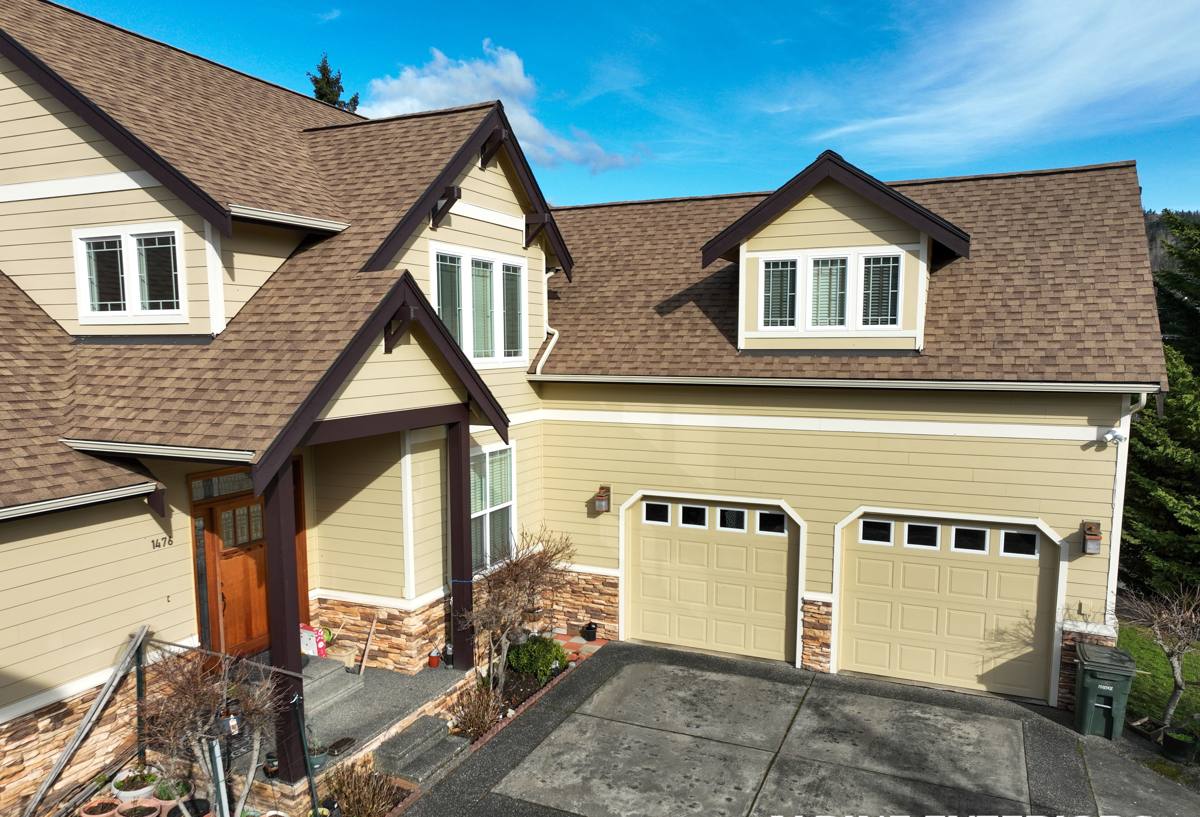
What Salt Air, Driving Rain, and a Long Moss Season Do to a Roof
Salt Air and Metal Corrosion
Whatcom County's proximity to Puget Sound means salt-laden air reaches well inland, and it's harder on unprotected metal than most homeowners realize. Flashing, drip edge, nail heads, and roof vents that aren't rated for coastal exposure corrode faster here than the same components would in a dry inland climate. Once flashing starts to pit or thin, it stops doing its one job — keeping water out of the seams where the roof plane meets a wall, chimney, or vent pipe — and that's where leaks actually start, almost never in the open field of the shingles themselves.
Driving Rain and Wind-Driven Water
Rain in this part of Washington doesn't always fall straight down. Storms moving through the region regularly push rain sideways under eaves, into valleys, and up under shingle tabs that aren't sealed tightly. A roof built for a drier or calmer climate can get away with lighter underlayment and looser flashing details. A roof built for Acme can't. Every transition point — valleys, roof-to-wall junctions, chimney bases, skylight curbs — needs to be treated as a place where water will actively try to get in, not just a spot that occasionally gets damp.
A Long Moss and Algae Season
Shade from surrounding trees, consistent humidity, and mild year-round temperatures add up to a moss and algae season that runs most of the year in this part of Whatcom County. North-facing slopes, valleys, and any section of roof that stays shaded longer than the rest are the first places it takes hold. Moss doesn't just look bad — it holds moisture directly against the shingle surface, works its way under tab edges as it grows, and gradually lifts granules loose, which shortens the life of the roof underneath it. A roof that isn't specified and maintained with moss in mind will show algae streaking and moss growth years before a comparable roof in a drier climate.
What a Correct Asphalt Shingle Roof Actually Involves
A roof replacement is made up of a lot of individual decisions, most of which a homeowner never sees once the job is done. The shingle brand on the invoice is the least important of them. What actually determines how long a roof lasts in this climate is everything underneath and around it.
Tear-Off and Deck Inspection
We remove the old roofing down to the deck rather than layering over it. That's the only way to actually see the wood underneath — soft spots, rot around old penetrations, or delamination that's invisible from above but compromises everything installed over it. Any damaged sheathing gets replaced before anything new goes down. Skipping this step to save time is one of the most common ways a re-roof fails early, and it's not something a homeowner can catch after the fact.
Underlayment and Ice-and-Water Barrier
Given how much wind-driven rain this area sees, we don't treat underlayment as a formality. Synthetic underlayment across the full deck, with self-adhering ice-and-water membrane at eaves, valleys, and any low-slope transition, gives the roof a real second layer of protection if wind ever drives water past the shingles themselves — which, in this climate, it eventually will on some section of most roofs.
Flashing at Every Transition
Step flashing at walls, properly formed valley flashing, and correctly sized drip edge at eaves and rakes are where a roof actually holds up or doesn't. We use flashing rated for this region's air and moisture exposure rather than the thinnest option that technically meets code, and every piece is integrated with the underlayment in the correct shingle-over-flashing sequence, not just caulked on afterward.
Ventilation That Actually Works
A shingle roof that can't breathe traps heat and moisture in the attic, which shortens shingle life from underneath and creates ideal conditions for condensation and mold on the roof deck. Balanced intake at the eaves and exhaust at the ridge, sized to the attic's actual volume, is part of a correct install — not an upgrade a homeowner has to ask for separately.
Shingle Selection for This Climate
We spec algae-resistant shingles as standard for roofs in this area, not as an upsell. Given how long moss and algae season runs here, a shingle without that protection starts showing streaking within a few years regardless of how well the rest of the roof is built.
Comparing Asphalt Shingle Options for a Home Like This
| Shingle Type | Moisture & Moss Resistance | Typical Lifespan Here | Best Fit |
|---|---|---|---|
| 3-tab shingles | Basic; no algae resistance unless specified | 15–20 years | Budget-driven projects, secondary structures |
| Standard architectural shingles | Good, with algae-resistant granules | 25–30 years | Most homes in this climate; solid value |
| Premium/designer architectural shingles | Best available in asphalt, heavier mat | 30+ years | Steeper rooflines, longer-term hold, appearance-focused projects |
The lifespan ranges above assume correct installation with proper flashing, underlayment, and ventilation. A premium shingle installed with weak flashing details will still fail early — the shingle tier matters less than most of what's listed in the section above it.
Our Process for a Roof Replacement in Acme
- On-site inspection of the existing roof, deck condition where visible, attic ventilation, and any known trouble spots the homeowner has noticed.
- A written estimate that spells out shingle tier, underlayment and ice-and-water coverage, flashing scope, and ventilation work — not a single lump-sum line.
- Scheduling that accounts for this region's weather patterns, with tear-off and dry-in sequenced to minimize the roof deck's exposure to open weather.
- Full tear-off, deck inspection and repair, underlayment, flashing, and shingle installation to the specifications discussed at estimate.
- A final walkthrough covering what was done, what the roof needs going forward, and what warranty coverage applies to materials and labor.
Signs a Roof in This Area Needs Attention
- Moss growth returning quickly after cleaning, especially on shaded or north-facing slopes
- Granule buildup collecting in gutters or at the base of downspouts
- Curling, cupping, or cracked shingle edges, particularly on older architectural shingles
- Rust staining or visible corrosion at flashing, vents, or valley metal
- Daylight visible through the roof deck from inside an unfinished attic
- Water staining on interior ceilings or upper walls after a heavy storm
- Soft, spongy spots underfoot when walking the roof for inspection or maintenance
Any one of these on its own isn't necessarily an emergency, but they're worth a real inspection rather than a guess, especially before another wet season sets in.
Maintenance That Extends a Roof's Life Here
An asphalt shingle roof in this climate isn't an install-it-and-forget-it system. Keeping gutters and valleys clear of needles and leaf debris prevents standing water from sitting against shingle edges. Periodic moss treatment on shaded slopes, done gently rather than with high-pressure washing that strips granules, keeps growth from establishing a foothold that lifts shingle tabs over time. And after any major windstorm, a quick visual check for lifted or missing shingles catches small problems before a following rain turns them into interior damage. None of this replaces a correctly built roof, but it meaningfully extends the life of one.
Why a Crew That Already Works Acme Matters
Roofing specifications aren't one-size-fits-all across Whatcom County. A crew that mostly works drier, more sheltered areas doesn't always default to the underlayment coverage, flashing details, or shingle grade that a moisture-heavy, tree-covered property in Acme actually needs — not out of carelessness, just because it isn't what they see day to day. Working this specific area regularly means we're not guessing at what holds up here. We've seen which details matter on rural, wooded lots in this part of the county, and we build to that standard as the baseline, not as an upgrade.
That local familiarity also shows up in smaller, practical ways — knowing what kind of access and staging a rural property typically requires, planning around this area's weather patterns rather than a generic seasonal calendar, and being available for a follow-up look if something comes up after the job is done.
Get a Straight Answer on Your Roof
If you're dealing with moss that keeps coming back, a roof that's getting close to the end of its expected life, or you just want an honest read on where things stand, we're glad to take a look. Reach out for a free, no-pressure estimate — we'll walk the roof, tell you what we actually see, and lay out what a correct job would involve for your home.