 Sudden Valley Siding
 Why Silver Beach Homes Wear Out Siding Faster
Silver Beach sits in a pocket of Whatcom County where the weather doesn't let up on a house. Homes here deal with a steady mix of salt-laden air, wind-driven rain that hits walls at an angle instead of falling straight down, and a moss season that can stretch for months every year. None of that is dramatic on any single day. It's the accumulation that gets homeowners — siding that looked fine in spring shows soft spots, streaking, or bubbling paint by the time fall rolls around again.
Most siding products are engineered and tested for a national average climate, not for a specific microclimate like this one. That mismatch is exactly why so many replacement calls we get in this area involve siding that's failing years — sometimes a full decade — before it should. The material wasn't necessarily bad. It just wasn't built for what Silver Beach throws at it.
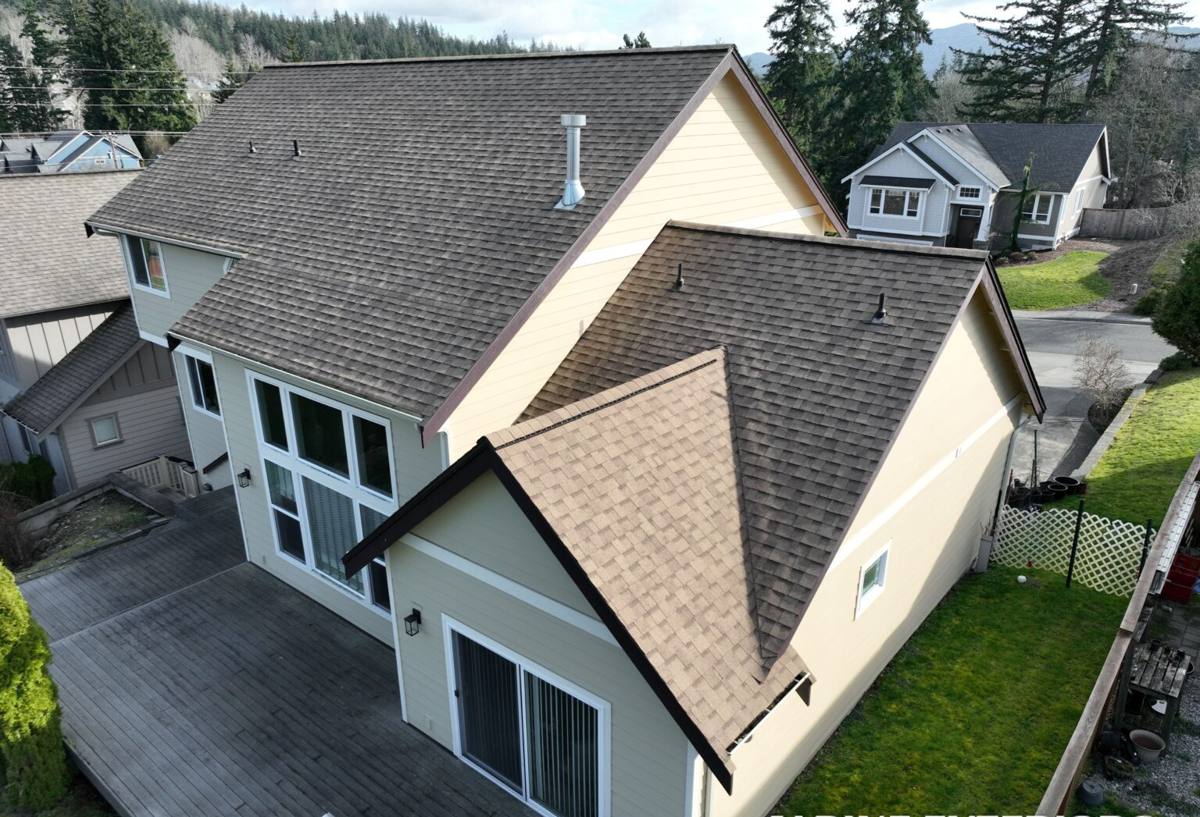
What "Correct" Siding Replacement Means Here
A proper siding replacement in this neighborhood isn't just swapping old boards for new ones. It's a system-level job that accounts for how water moves across and behind the wall, how moisture escapes once it gets in, and how the material itself handles repeated wet-dry cycling without breaking down.
Moisture Management Comes First
Before a single new board goes up, the water-resistive barrier and flashing details need to be right. Driving rain in this area doesn't just wet the surface — it gets pushed into laps, seams, and penetrations (hose bibs, light fixtures, vents) if those details aren't sealed and lapped correctly. We treat this step as non-negotiable, because siding installed over a compromised weather barrier will fail regardless of how good the siding itself is.
Material Choice Comes Second
Once the wall assembly is right, the siding material has to hold up to the specific stresses of this climate: moisture absorption, mold and moss growth on the surface, and finish durability under near-constant humidity. This is where a lot of siding choices go wrong — not because the installer did a bad job, but because the product itself wasn't suited to the exposure.
Why We Install Only James Hardie Fiber Cement
We've made a deliberate decision to install James Hardie fiber cement siding exclusively — not vinyl, not LP SmartSide, not Cemplank, not Allura, not primed spruce or cedar. That's not a marketing position; it's a practical one built on what actually holds up in this part of Whatcom County.
- Non-combustible material: Fiber cement doesn't feed a fire the way wood-based or engineered-wood products can.
- Moisture behavior: Fiber cement is engineered to resist the swelling, softening, and rot that wood-based siding is prone to under sustained damp conditions.
- Factory-applied ColorPlus finish: The finish is baked on at the factory under controlled conditions, which holds color and resists fading, chipping, and peeling far better than field-applied paint on other siding types.
- Climate-engineered product lines: Hardie builds specific HZ (HardieZone) formulations for different climate zones, so the product is matched to regional moisture and temperature patterns rather than a one-size-fits-all approach.
- Warranty structure: Hardie's warranty is transferable and backed by a large, established manufacturer — that matters when a product needs to perform for decades, not just look good on installation day.
Other products aren't without their merits — vinyl is inexpensive and low-maintenance in mild climates, wood has real aesthetic appeal, and engineered wood siding installs quickly. But in an environment with this much sustained moisture exposure, we've seen consistently that those trade-offs shift the maintenance and repair burden onto the homeowner faster than most people expect. We'd rather install one product correctly than offer five products and let the odds sort out which ones last.
Signs Silver Beach Homeowners Should Watch For
Because moss, mold, and moisture damage develop gradually, many homeowners don't realize siding has failed until the damage is significant. Here's what to check for, especially on north-facing and shaded walls where moss takes hold first:
- Soft or spongy spots when you press on the siding, especially near the bottom courses
- Paint that's bubbling, peeling, or chalking unevenly across the wall
- Persistent moss or black streaking that returns shortly after cleaning
- Visible gaps, warping, or buckling at seams and corners
- Rising utility bills that suggest the wall assembly is no longer keeping moisture and drafts out
- Interior signs — musty smell, discoloration, or peeling paint on inside walls that back up to exterior siding
Any one of these on its own might be minor. Two or three together usually means the siding and possibly the underlying sheathing need a real look, not just a patch.
Our Replacement Process
We keep the process straightforward and communicate at each stage, because homeowners deserve to know what's happening to their home and why.
1. On-Site Assessment
We walk the exterior, check problem areas, and look at what's happening behind the current siding where accessible — not just the surface condition.
2. Removal and Sheathing Check
Old siding comes off in sections so we can inspect the sheathing and framing underneath. This is often where hidden moisture damage from years of an underperforming siding system shows up, and it needs to be addressed before anything new goes on.
3. Weather Barrier and Flashing
We install or repair the water-resistive barrier and flashing at every penetration, window, and door — the details that determine whether the next 30 years of rain stay outside the wall.
4. James Hardie Installation to Spec
Hardie siding has specific installation requirements — fastener spacing, clearances, caulking practices — that directly affect the warranty and long-term performance. We install to those specifications, not shortcuts.
5. Final Walkthrough
We review the finished work with the homeowner and make sure everything meets the standard we'd want on our own home.
Cost Factors for This Area
Every home is different, but these are the variables that most affect the scope and cost of a Silver Beach siding replacement. We don't publish fixed prices because the range is genuinely wide — but knowing the drivers helps you understand what an estimate is actually pricing out.
| Factor | Why It Matters |
|---|---|
| Sheathing condition | Hidden moisture damage found during removal adds repair scope before new siding can go on |
| Home size and wall complexity | More corners, dormers, and trim details mean more labor and material cutting |
| Current siding type | Some materials (like certain wood products) are more labor-intensive to remove and dispose of |
| Siding profile and color | Hardie offers multiple plank widths, textures, and ColorPlus finishes at different price points |
| Access and site conditions | Slopes, landscaping, and limited access around the home affect staging and labor time |
| Trim and accessory work | Fascia, soffits, and trim replacement alongside siding adds scope but often makes sense to do together |
Why Hire a Crew That Already Works This Neighborhood
Siding installation isn't uniform across Whatcom County. A crew that mostly works drier, inland areas may not think twice about details that matter enormously here — like extra attention to flashing on walls exposed to prevailing wind-driven rain, or being deliberate about ventilation behind the siding to keep moss and mold from getting a foothold. A crew that regularly works Silver Beach and the greater Sudden Valley area already knows which walls take the worst weather exposure and adjusts the installation accordingly, rather than treating every wall identically.
That familiarity also shows up in smaller ways — recognizing early signs of moss-driven deterioration before they become sheathing damage, understanding how the lake-adjacent microclimate affects drying time between install stages, and simply having seen enough local homes to know what actually lasts here versus what looks good on install day and fails in year six.
What to Expect From an Estimate
A useful estimate isn't just a number — it should tell you what's actually happening with your current siding and why a particular scope of work is being recommended. When we walk a property, we're checking for the moisture and sheathing issues described above, not just measuring wall area.
If you're seeing early signs of wear on your home's siding, or you're simply due for a replacement and want it done right the first time, we're glad to come take a look. There's no pressure and no obligation — just a straightforward assessment of where your home stands and what a correct James Hardie replacement would involve. Reach out using the form below to schedule a free estimate.