 Sudden Valley Siding
 Windows Built for Alger's Weather
Alger sits in a stretch of Whatcom County where the weather doesn't do things halfway. Wind off the water carries salt that works into every gap and fastener. Rain doesn't fall so much as blow sideways for weeks at a time. And for a good chunk of the year, anything that isn't in direct sun grows a green film of moss and algae. Windows here take a beating that windows in drier parts of the state simply don't. A window that's a little loose, a little under-flashed, or sealed with the wrong caulk will show it within a year or two — soft trim, foggy glass, drafts you can feel with your hand held near the frame.
We install windows in and around Alger with that reality in mind, not as an afterthought. The product matters, but so does the flashing detail behind the trim, the sealant used at the sill, and whether the installer actually understands how water moves down a wall in a driving rain. That's the part of the job most homeowners never see and most quick-turnaround crews skip.
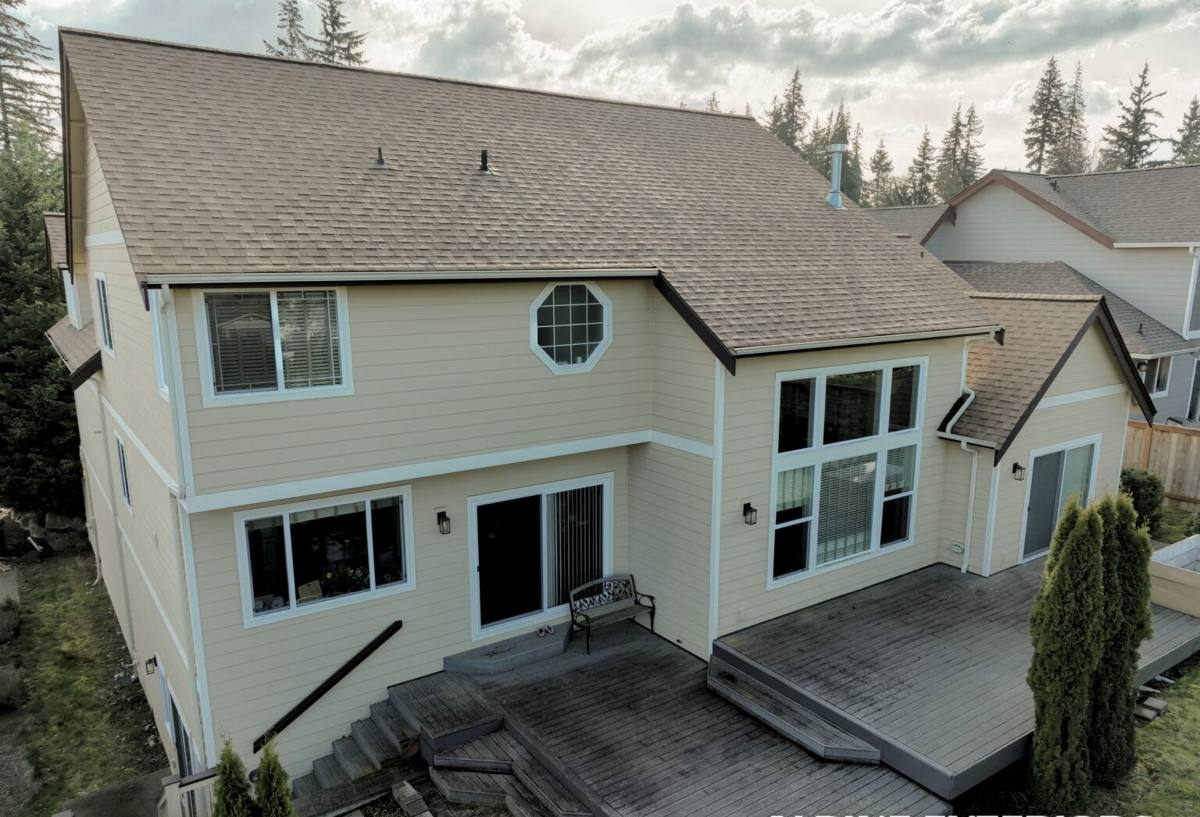
Signs Your Alger Home Needs New Windows — or a Redo
Moisture and Rot Signs
Soft or discolored wood at the sill or lower corners of a window is the most common warning sign we see. Paint that bubbles or peels only around the window opening — not the rest of the wall — usually means water is getting behind the trim rather than running off it. Left alone through a wet Whatcom County winter, that moisture works into the sheathing and framing, and what started as a window problem becomes a structural repair.
Drafts and Energy Loss
Older aluminum-frame and early-generation vinyl windows conduct cold straight through the frame. If a room is noticeably colder near the window in winter, or you can feel air movement along the edges of the sash, the seals or the frame itself have likely failed. This shows up as higher heating bills long before it shows up as visible damage.
Fogged or Failed Glass Seals
A cloudy or foggy look between the panes of a double-pane window means the gas fill has escaped and the seal has failed. It's a glass-unit problem, not a cleaning problem, and once it happens that unit needs to be replaced — full window replacement or a sash/glass swap, depending on the window.
What a Correct Window Installation Involves
A window installation is only as good as the parts nobody sees once the trim goes back on. In a climate that gets sustained, wind-driven rain, these details aren't optional extras — they're the difference between a window that lasts twenty-plus years and one that causes a rot repair in five.
- Sill pan flashing under every window, so any water that does get past the sash has somewhere to drain instead of soaking into the framing.
- Proper integration with the water-resistive barrier — flashing tape and building paper lapped in the correct shingle-style order so water sheds outward and down, not behind the wall assembly.
- Correct shimming and squaring so the sash operates smoothly and the weatherstripping seals evenly all the way around — an out-of-square window leaks air and water at the corners first.
- Backer rod and quality exterior sealant at the trim joints, sized and applied correctly rather than just caulked over gaps.
- Fasteners rated for the application, set at the manufacturer's spacing — under-fastened windows shift and start leaking within a few seasons.
Skip any one of these and the window itself can be a good product and still fail early. This is the step where the cost difference between a rushed installer and a careful one actually shows up.
Choosing the Right Window for This Climate
There's no single "best" window — the right choice depends on the home, the exposure, and the budget. But in a coastal, high-rain, moss-prone climate like Alger's, some trade-offs matter more than others.
| Frame Material | How It Handles This Climate | What to Watch For |
|---|---|---|
| Vinyl | Won't rot or rust; handles salt air well; good value | Quality varies widely — look at frame wall thickness and welded (not screwed) corners |
| Fiberglass | Very stable in wet, temperature-swinging conditions; strong long-term performance | Higher upfront cost than vinyl |
| Wood / Wood-clad | Classic look, good insulator | Exposed wood needs consistent upkeep in this rainfall — cladding helps but detailing at joints is critical |
| Aluminum | Strong and slim sightlines | Conducts cold and can pit or corrode faster near salt air unless properly finished |
Glass and Weatherstripping
For this area, we generally recommend dual-pane, low-E glass with argon gas fill as a baseline — it cuts heat loss and reduces condensation on cold, damp mornings, which is common here. Compression-style weatherstripping (rather than thin fin seals) holds up better against the wind pressure that comes with our storms.
Our Installation Process
- On-site assessment — we look at the existing window openings, check for hidden moisture or rot before quoting, and measure precisely.
- Product selection — we walk through frame material, glass package, and finish options based on the home's exposure and your budget, no upselling for its own sake.
- Removal and opening inspection — once old windows come out, we inspect the sheathing and framing underneath. If there's hidden rot, we address it before anything new goes in.
- Flashing and installation — sill pan, WRB integration, shimming, and fastening done to manufacturer spec, not shortcuts.
- Sealing and trim — exterior sealant, interior finish work, and a functional check on every window before we call it done.
- Walkthrough — we show you the finished work and go over basic care before we leave.
Why Hire a Crew That Already Works in Alger
A window installer who mostly works drier inland areas or newer subdivisions doesn't necessarily think about salt exposure, sustained wind-driven rain, or moss growth patterns the way a crew that works this specific stretch of Whatcom County does. We've seen how homes here age — where water tends to find its way in, which details actually hold up over a wet winter, and which corners cause callbacks two years later. That's not a marketing point, it's just what happens when you do this work in the same climate repeatedly instead of once in a while.
It also means we're not guessing at product recommendations. We know which frame materials and glass packages perform well here versus which ones look fine on a spec sheet but struggle in practice.
Cost Factors to Expect
Every home and project is different, so we don't quote sight-unseen — but these are the main variables that move the price up or down:
| Factor | Why It Matters |
|---|---|
| Frame material | Vinyl is generally the most budget-friendly; fiberglass and wood-clad cost more upfront |
| Window size and configuration | Larger units, bay/bow windows, and custom shapes cost more than standard single or double-hung sizes |
| Hidden repairs | If we find rot or moisture damage once old windows are out, repair before reinstallation adds cost |
| New construction vs. replacement | Retrofit into an existing opening is typically less invasive (and often less costly) than a full frame replacement |
| Number of windows | Doing a whole house at once generally costs less per window than doing them one or two at a time |
Broadly, homeowners in this area should expect a wide range depending on these factors — anywhere from a modest per-window cost for standard vinyl replacements to significantly more for larger, higher-end, or custom units. We'll give you a real number after we see the job, not a placeholder estimate.
Keeping Your New Windows Performing
A correctly installed window still needs a little upkeep in this climate to get its full lifespan out of it:
- Rinse salt residue and grime off frames and glass a couple of times a year, especially on wind-exposed sides of the house.
- Clear moss and debris from window sills and adjacent trim before it holds moisture against the wood or frame.
- Check exterior caulking annually for cracking or separation, particularly after a hard winter.
- Operate every window (open and close) periodically so tracks and weatherstripping don't seize or compress unevenly.
- Watch for condensation between panes — it's an early sign of seal failure and worth addressing before it spreads to other units installed at the same time.
Get a Free, No-Pressure Estimate
If you're dealing with drafty, foggy, or rot-prone windows in Alger, or you're planning ahead for a full replacement, we're happy to take a look and give you an honest read on what your home actually needs. Use the form below to request a free estimate — no pressure, no obligation.