 Sudden Valley Siding
 Yew Street Roofs Work Harder Than Most
Sudden Valley sits in the trees along Lake Whatcom, and homes on Yew Street get the mixed blessing that comes with it: a shaded, quiet setting that's also one of the tougher environments in Whatcom County for a roof to hold up in. Heavy tree canopy means shade that never fully dries out, needles and debris that collect in valleys, and a moss season that runs longer here than it does on more open, sun-exposed lots closer to Bellingham. Add in driving rain off the water and the salt-tinged air that moves through this part of the county, and you've got a roof that's dealing with more moisture-related stress, year-round, than a typical suburban install.
That's the context we bring to every new roof installation on Yew Street: not a generic tear-off-and-replace job, but one built around how this specific setting ages a roof.
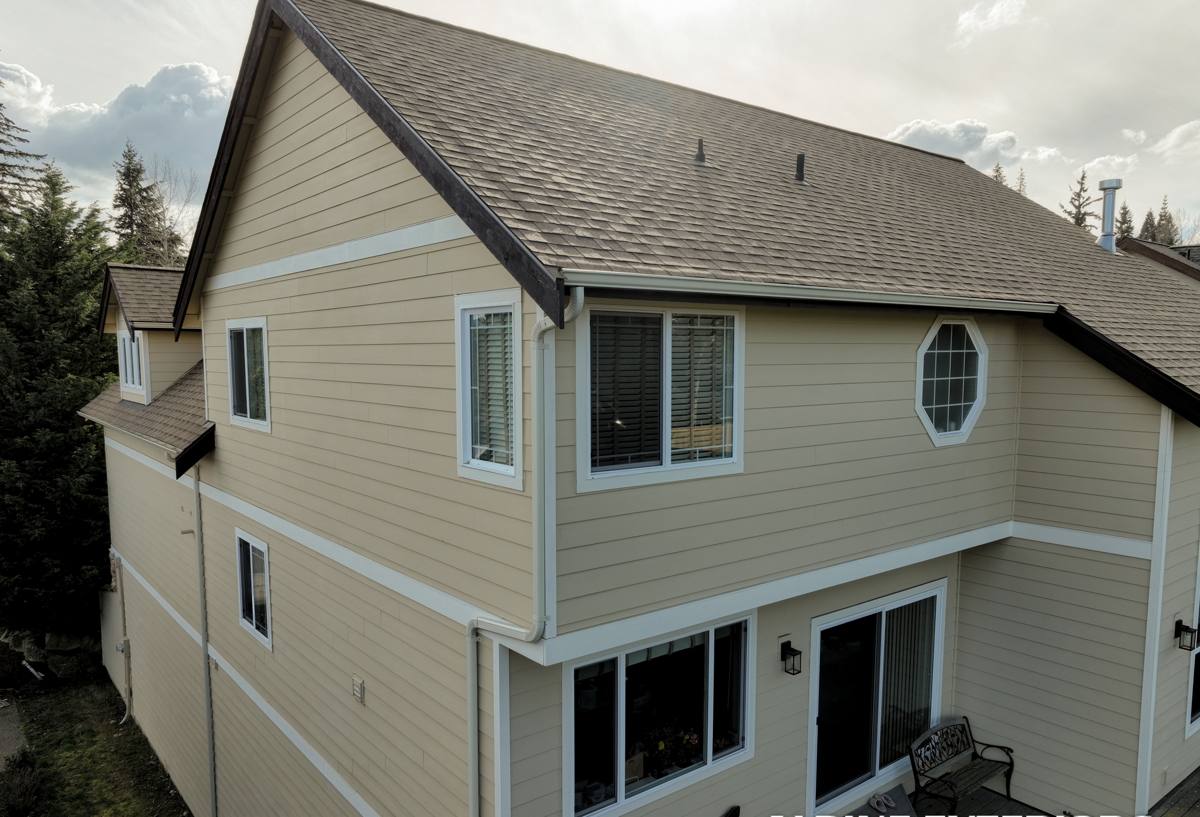
How Moss, Shade, and Moisture Shorten a Roof's Life
Moss doesn't just sit on top of a roof looking bad — it holds water against the shingle surface, works its way under tabs and laps, and keeps the deck below damper than it should ever be. On a shaded lot like the ones common in Sudden Valley, moss can establish itself within a year or two of a roof going unmaintained, and once it's rooted into the granule layer it accelerates wear far faster than plain weather exposure would on its own.
Driving rain adds a second problem: wind-driven moisture doesn't just run downhill off a roof, it gets pushed sideways and upward under laps, around penetrations, and into any flashing detail that was cut corners on. Combine that with the salt air moving up from the coast, which speeds up corrosion on fasteners, flashing, and any exposed metal, and you get a roof that needs better materials and tighter installation detailing than a dry-climate house would ever require.
What This Means in Practice
- Roofs on tree-covered Yew Street lots typically need moss treatment or removal more often than open-lot homes nearby
- Valleys, low-slope sections, and north-facing planes hold moisture longest and fail first
- Fastener and flashing corrosion shows up earlier here than in drier inland parts of the county
- Attic and roof ventilation matters more under heavy shade, since the sun never gets a full day to dry things out
Signs It's Time for a New Roof, Not Another Repair
Not every roof problem on Yew Street calls for full replacement — but there's a point where patching becomes false economy. We look for a few honest indicators before recommending a full install rather than a repair:
- Granule loss heavy enough that you can see bare asphalt in multiple spots, not just one worn patch
- Soft or spongy decking felt underfoot, which usually means water has already gotten past the shingle layer
- Moss or algae staining that keeps returning within a season of cleaning, even after treatment
- Shingles cupping, curling, or losing their seal, especially on south- or west-facing slopes
- Daylight visible through the attic roof deck, or water staining on attic sheathing
- A roof already past 20-25 years old (for asphalt) that's due for replacement on age alone, moss or no moss
If a roof is showing two or more of these at once, repair costs start adding up fast without meaningfully extending the roof's remaining life — that's usually the point where a full replacement is the more honest recommendation.
Choosing the Right Roofing System for a Shaded, Wet Lot
There's no single "best" roofing material for every house — the right choice depends on the tree cover, roof pitch, and how much long-term maintenance a homeowner wants to take on. Here's how the common options actually perform under Yew Street's conditions:
| Material | How It Handles Moss & Moisture | Maintenance Load | Honest Trade-Off |
|---|---|---|---|
| Architectural asphalt shingle | Good with algae-resistant granules; still needs periodic moss control under heavy shade | Low to moderate | Best value; shorter lifespan than metal in constant shade |
| Standing seam metal | Sheds moisture fast, very poor surface for moss to root into | Low | Higher upfront cost; requires correct fastener and underlayment detailing to avoid condensation issues |
| Cedar shake | Attractive but holds moisture readily; needs consistent upkeep to resist rot under tree cover | High | We're honest with clients that shaded, wet lots like these are the hardest setting for shake to hold up in long-term |
For most Yew Street homes, we steer clients toward algae-resistant architectural shingles or standing seam metal, simply because they hold up better against the specific combination of shade, moss, and driving rain this property type sees. Cedar shake can still be the right call for a homeowner who wants the look and is committed to the maintenance — we'll lay out that trade-off plainly rather than talk anyone out of a preference.
What a Correct Installation Actually Involves
Tear-Off and Deck Inspection
A full tear-off lets us see the actual condition of the roof deck — something no re-roof-over-existing-shingles approach can do. On shaded, moisture-prone lots, we routinely find soft or delaminated sheathing that wouldn't show from the attic side. Any compromised decking gets replaced before a single new shingle goes down; it's the one step that determines whether the rest of the job actually lasts.
Underlayment and Flashing
Given the driving rain this area sees, synthetic underlayment with ice-and-water shield at eaves, valleys, and penetrations isn't optional — it's the difference between a roof that sheds wind-driven moisture and one that lets it wick backward under the shingles. Flashing around chimneys, skylights, and wall intersections gets replaced, not reused, and fastened with corrosion-resistant materials given the salt air moving through the region.
Ventilation
Under heavy tree cover, a roof rarely gets a full day of direct sun to dry out trapped attic moisture on its own. Balanced intake and exhaust ventilation — soffit vents paired with ridge or roof vents — keeps that moisture moving instead of condensing against the underside of the deck, which is one of the most common causes of premature rot we see on shaded Whatcom County roofs.
Our Process, Start to Finish
- On-site inspection and honest assessment of whether repair or replacement is the right call
- Written estimate detailing material options, scope, and timeline before any work begins
- Full tear-off and deck inspection, with any rot or soft sheathing repaired and documented
- Installation of underlayment, ice-and-water protection, and new flashing at every penetration
- Shingle or metal installation per manufacturer specifications, including proper nailing patterns and exposure
- Ventilation check and correction where intake or exhaust airflow is inadequate
- Full site cleanup, including magnetic sweep for stray fasteners in yards and driveways
- Final walkthrough with the homeowner before we consider the job complete
What Drives the Cost of a New Roof on a Lot Like This
Costs for a full roof replacement vary widely based on size, pitch, and material — but a few factors specific to shaded, tree-covered lots tend to move the number more than homeowners expect:
| Factor | Why It Affects Cost |
|---|---|
| Roof pitch and complexity | Steeper slopes and multiple valleys take longer to tear off and flash correctly |
| Deck condition | Hidden moisture damage from shade and moss means some decking replacement is common, not rare |
| Material choice | Metal and premium shingle lines cost more upfront but reduce moss-related maintenance over time |
| Access and tree clearance | Overhanging limbs and tight driveway access can add setup and safety time |
| Ventilation upgrades | Adding proper intake/exhaust venting where none existed is worth the added cost long-term |
Why Hiring a Crew That Already Works Sudden Valley Matters
A roofing crew that hasn't worked in Sudden Valley before will often price and detail a job like it's a standard suburban re-roof — because on paper, it looks like one. The difference shows up later: undersized ventilation, underlayment that's adequate for a dry lot but not a shaded one, or flashing that wasn't upgraded to handle the corrosion this area's air causes. A crew that already knows Yew Street and the surrounding Lake Whatcom neighborhoods builds the moss, moisture, and salt-air factors into the estimate from the start, instead of discovering them as change orders halfway through the job.
Before You Hire, Ask
- Is the estimate itemized, showing material, labor, and any deck repair contingency separately?
- What underlayment and ice-and-water shield brands are being used, and where will they be installed?
- Will the deck be inspected and any repairs documented and priced before work begins, not discovered mid-tear-off?
- Does the crew carry current licensing and insurance, and will they provide proof without being asked twice?
- What does the workmanship warranty cover, separate from the manufacturer's material warranty?
- Will ventilation be assessed as part of the job, or only replaced like-for-like without evaluation?
Any contractor willing to walk through these points in plain language, before asking for a deposit, is worth taking seriously. One who rushes past them is worth a second opinion.
If your roof on Yew Street is showing its age or you're just not sure whether repair or replacement makes sense, we're glad to take a look. The estimate is free, there's no pressure attached, and you'll get a straight answer either way — just fill out the form below to get started.