 Sudden Valley Siding
 Siding That Has to Work in Geneva's Conditions, Not Just Look Good
Geneva sits in one of the wetter, greener corners of Whatcom County, tucked near Sudden Valley along the north shore of Lake Whatcom. The tree cover that makes the area beautiful also means homes here spend a good part of the year shaded, damp, and slow to dry out after a storm. Add in the marine air that rolls through this part of Washington and you get a combination that's genuinely hard on exterior building materials: constant low-level moisture, driving rain that hits siding sideways in winter storms, and a long moss and algae season that starts early and doesn't really let up until summer. Siding for a home in Geneva isn't a cosmetic decision — it's a durability decision first.
We install James Hardie fiber cement siding exclusively. That's not a marketing angle; it's a standard we hold because we've seen what this climate does to materials that weren't built for it, and we'd rather put one product on a home and get it right than juggle several and compromise on any of them.
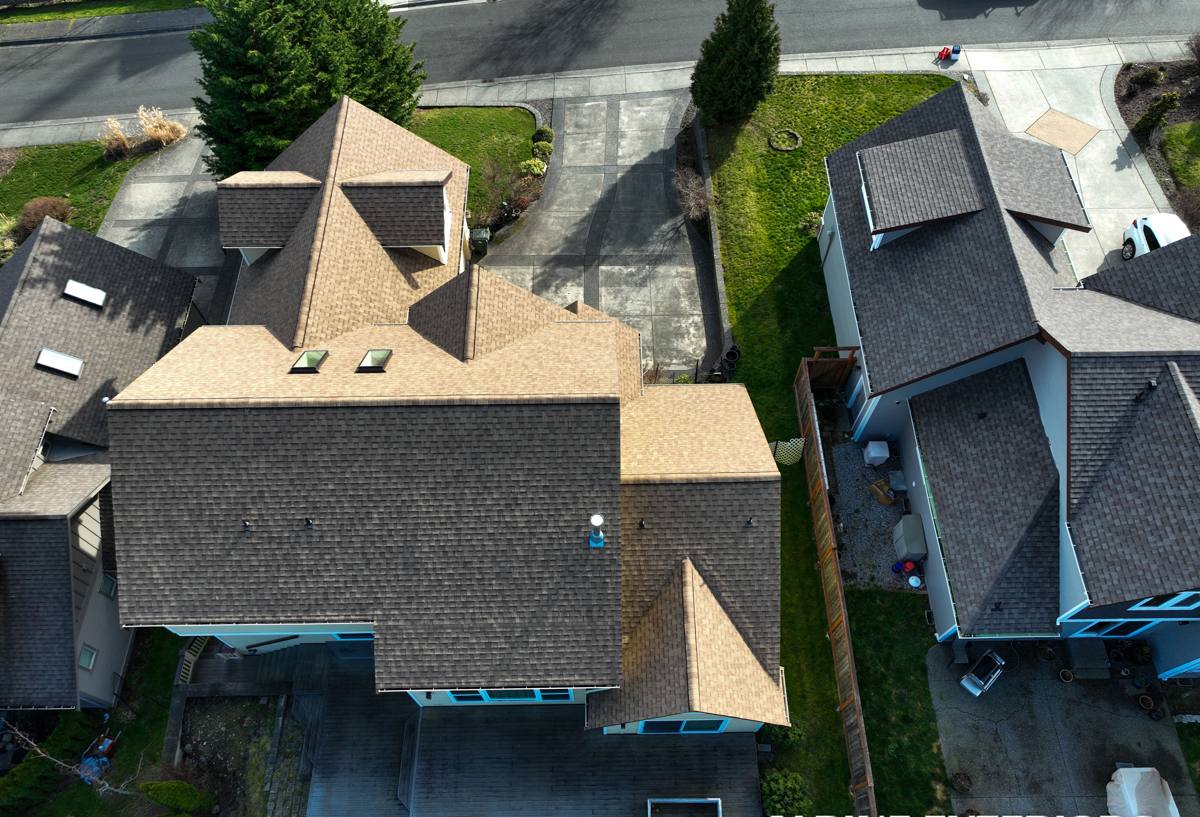
Why We Standardized on James Hardie for This Area
Non-Combustible, Moisture-Stable Core
James Hardie siding is fiber cement — sand, cement, and cellulose fibers, not wood pulp or foam. That matters in Geneva for two reasons. First, it doesn't rot the way wood-based products can when they stay damp for weeks at a time under tree canopy. Second, it's non-combustible, which is a real benefit anywhere near wildfire-prone dry seasons in the Pacific Northwest, even in a generally wet county like Whatcom.
Climate-Engineered Product Lines
James Hardie makes region-specific formulations (their HZ product lines) engineered for different climate zones — freeze-thaw cycles, humidity, and moisture exposure vary a lot across the country, and the product is adjusted accordingly. For Western Washington, that means a formulation built around sustained damp conditions rather than dry heat, which is exactly the stress Geneva and Sudden Valley homes actually face.
ColorPlus Factory Finish
Most of the siding we install uses Hardie's ColorPlus finish — a baked-on, factory-applied coating that's more UV- and moisture-resistant than a field-applied paint job. In a shaded, damp environment like this one, a factory finish holds its color and resists the streaking and mildew staining that field-painted siding tends to show first, especially on north-facing walls that rarely see direct sun.
What "Correct Installation" Actually Means Here
Fiber cement siding is only as good as the install behind it. A lot of the failures we get called out to inspect on older homes in this area aren't material failures — they're installation shortcuts that let water in behind a perfectly good product. For a Geneva home, correct installation means:
- Proper clearance between siding and grade, decks, and roof lines — Hardie's minimum clearances exist specifically to keep splash-back and ground moisture off the bottom edge of the board.
- Weather-resistant barrier and flashing installed and lapped correctly at every window, door, and penetration, so water sheds outward instead of tracking behind the siding.
- Correct fastener type, spacing, and depth — over-driven or under-driven nails are one of the most common causes of premature siding failure we find.
- Proper joint treatment and caulking at butt joints and trim, using products rated for the exposure, not just whatever's on the truck.
- Rainscreen or drainage plane detailing where the wall assembly calls for it, giving any moisture that does get behind the cladding a way to drain and dry.
Skip any one of these and you can end up with hidden rot behind siding that still looks fine from the curb. That's a slow, expensive problem, and it's exactly why installation quality matters as much as the product choice.
Reading the Signs: When Geneva Siding Is Losing the Fight
Because a lot of moisture damage happens behind the siding before it shows up on the surface, it helps to know what the early warning signs look like from the outside:
| What You See | What It Usually Means |
|---|---|
| Dark streaking or green film, especially on shaded/north walls | Moss and algae growth from prolonged dampness — cosmetic now, but a sign the wall stays wet longer than it should |
| Soft or spongy spots when pressed | Wood-based siding or trim absorbing moisture and beginning to rot |
| Paint peeling or bubbling in patches | Moisture trapped behind the finish, trying to escape outward |
| Visible gaps at butt joints or trim | Caulking has failed or was never adequate, giving water a direct path inward |
| Warping or bowing boards | Material has absorbed water and is beginning to fail structurally |
Any of these on a Geneva or Sudden Valley home is worth a look before it turns into a sheathing or framing repair. Catching it at the siding stage is a fraction of the cost of catching it after it reaches the wall structure.
Our Process for a Geneva Siding Project
1. On-Site Assessment
We walk the home, check the current siding and trim for moisture damage, and look at drainage, grade, roofline, and shading — all of which affect how a new siding system needs to be detailed on that specific house.
2. Removal and Substrate Check
Old siding comes off and we inspect the sheathing underneath. This is the point where hidden rot or old flashing mistakes get found and fixed before anything new goes up — covering over a damaged substrate is how problems get buried, not solved.
3. Weather Barrier and Flashing
A new weather-resistant barrier goes on with correctly lapped flashing at every window, door, and penetration. Given how much horizontal, wind-driven rain this area gets in winter storms, this step gets extra attention rather than being treated as routine.
4. Hardie Installation
Siding, trim, and corners go on to Hardie's fastening and clearance specs, with joints and penetrations sealed properly. Where the wall assembly calls for a drainage gap, we detail for it rather than skip it to save time.
5. Finish and Walkthrough
Caulking, touch-up, and a final walkthrough so you know exactly what was done and what the maintenance expectations are going forward.
Material Comparison for This Climate
We only install James Hardie, but homeowners deserve to understand why we made that call rather than just take our word for it. Here's how the common options stack up against the specific conditions Geneva and Sudden Valley homes deal with:
| Material | Moisture Behavior in This Climate | Long-Term Maintenance |
|---|---|---|
| James Hardie fiber cement | Stable in sustained damp conditions; doesn't swell or rot | Occasional wash-down; ColorPlus finish resists fading and staining |
| Vinyl siding | Doesn't rot, but can warp, gap at seams, and trap moisture behind it with no way to dry | Low, but gaps and seam failures often go unnoticed until water damage shows behind it |
| Primed spruce / cedar | Absorbs moisture readily; shaded, damp walls are the worst-case scenario for wood siding | Repainting and caulk maintenance on a recurring cycle, more often under tree cover |
| LP SmartSide (engineered wood) | Better than raw wood but still wood-based; edges and cut ends are moisture-sensitive if not sealed correctly | Field-applied finishes need more frequent upkeep than a factory-baked finish |
None of these are "bad" products in every setting — they're just not what we'd choose to put on a home that sits in shade half the year and takes on-and-off rain most months. That's a professional judgment call we've made and stand behind, not a knock on every home that has one of these products already.
Why Hiring a Crew That Already Works This Area Matters
Fiber cement siding is a forgiving product when it's installed correctly, and an unforgiving one when it's not — the mistakes tend to hide behind the wall until they've had years to do damage. A crew that regularly works Geneva and the greater Sudden Valley area already knows the practical realities: how shaded lots dry out (or don't), where wind-driven rain tends to hit hardest, and how the local drainage and grading patterns around Lake Whatcom properties affect where water ends up. That local pattern recognition is the difference between a generic install and one that's actually detailed for the house it's going on.
It also means faster, more accurate estimates — less guesswork about site conditions — and a crew who'll be around locally if you ever have a question about the work down the road.
What Ongoing Maintenance Looks Like
Correctly installed Hardie siding is low-maintenance, not no-maintenance. In a climate like this, a simple annual routine keeps it performing the way it's designed to:
- Rinse siding annually, more often on shaded or north-facing walls where moss and algae build up fastest.
- Keep gutters clear so overflow doesn't run down the siding face repeatedly.
- Trim back vegetation and tree limbs that keep walls shaded and slow to dry.
- Inspect caulking at joints and trim every year or two and re-caulk as needed — this is the cheapest maintenance step and the one most likely to get skipped.
- Address any paint chips or finish damage promptly so bare substrate isn't left exposed to weather.
None of this is heavy work, but skipping it is how a well-installed siding job ages faster than it should.
Ready to Talk About Your Geneva Home?
If you're weighing a siding replacement or just want a straight answer on what your current siding is telling you, we're happy to take a look. Fill out the form below for a free, no-pressure estimate — we'll walk the house, tell you what we see, and give you an honest read on what it needs.