 Sudden Valley Siding
 Siding Installation Built for Geneva's Microclimate
Geneva sits along the edge of Sudden Valley in Whatcom County, close enough to Lake Whatcom and the broader Puget Sound weather system that homes here take a different kind of beating than siding twenty miles inland. It isn't one dramatic storm that does the damage — it's the steady combination of moist air, shaded tree cover, and months of low sun angle that never quite lets exterior surfaces dry out. Siding installed without that reality in mind tends to look tired within a decade, regardless of what the product label promised.
We install siding for homes in Geneva and the rest of Sudden Valley on a regular basis, and the installation details that matter here are consistent: drainage behind the cladding, tight but correct flashing at every penetration, and a material that can sit in damp conditions without softening, swelling, or feeding mold. Get those three things right and a siding job holds up. Skip any one of them and you're looking at repairs long before the material itself would have failed.
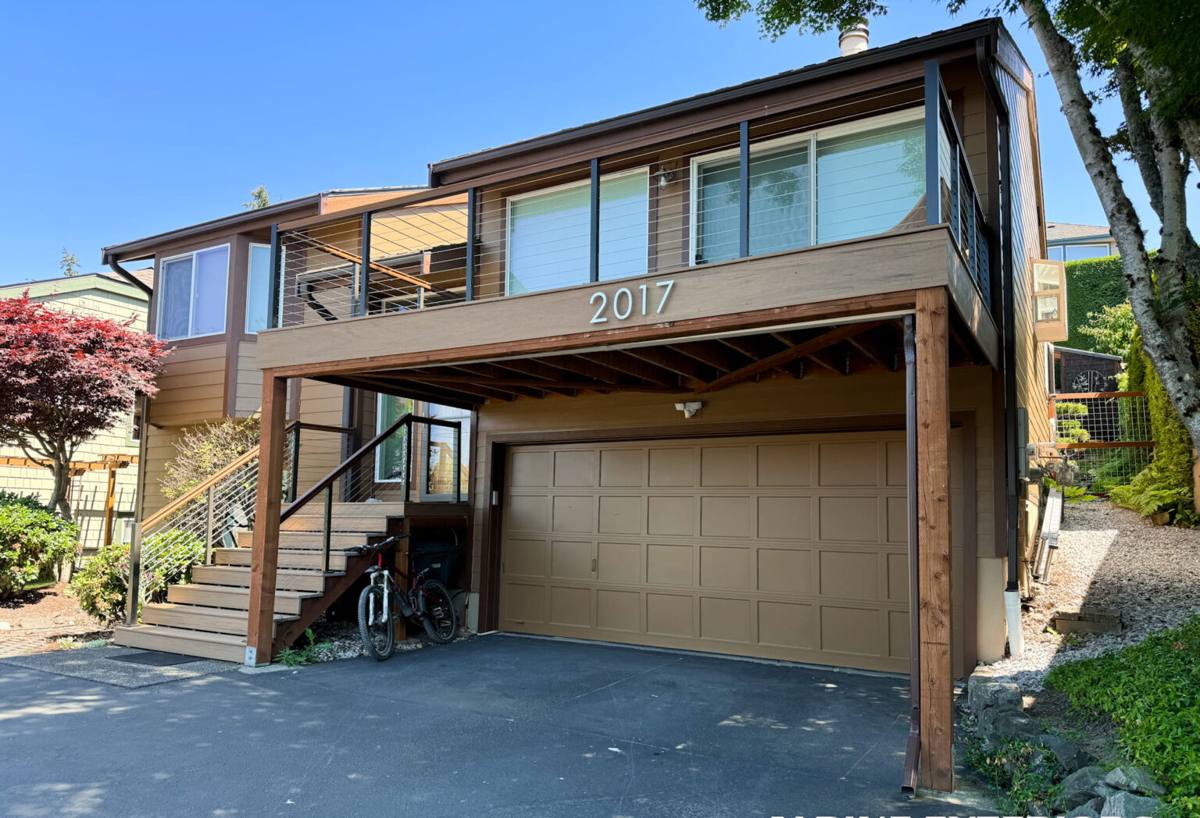
What Salt Air, Driving Rain, and Moss Season Do to Siding
Three regional conditions show up again and again on Geneva homes we've evaluated:
Salt Air
Whatcom County's proximity to Puget Sound means a steady low-level presence of salt-laden moisture in the air, even well inland from the immediate shoreline. Over years, that salt exposure accelerates corrosion on fasteners, flashing, and any metal trim that wasn't specified for coastal-adjacent use. Siding that looks fine can still be failing at the hardware level.
Driving Rain
Storms here don't just fall straight down — wind-driven rain gets pushed sideways into wall assemblies, seeking any gap around windows, doors, and siding laps. A siding job that isn't detailed for wind-driven rain will eventually let water behind the cladding, where it does the most damage because nobody sees it happening.
Moss Season
The long, mild, damp stretch of fall through spring in Sudden Valley is effectively a months-long moss and algae season, especially on siding that stays shaded by mature trees — common throughout Geneva's wooded lots. Moss holds moisture against the siding surface far longer than open air ever would, which is exactly the condition that causes rot in wood-based products and paint failure on anything with a factory finish not engineered for it.
Why We Install Only James Hardie Fiber Cement Here
We made a deliberate decision to install James Hardie fiber cement siding exclusively — not vinyl, not LP SmartSide, not primed spruce or cedar, not other fiber cement brands. That's not a marketing position; it's a response to what we consistently see happen to other materials in Whatcom County's climate.
Wood-based siding products, even engineered ones, rely on a wood-strand core protected by a resin-saturated surface. That surface does its job as long as it stays fully intact, but any cut edge, fastener puncture, or minor impact creates a path for moisture into the wood core — and in a climate with this much sustained dampness and moss cover, that moisture doesn't get a chance to dry out between rain events. Vinyl siding sheds water well but has no real structural rigidity of its own, relies heavily on correct installation to avoid buckling in temperature swings, and can't be painted a genuinely different color without voiding warranties on many product lines.
James Hardie fiber cement is cement, sand, and cellulose fiber — it has no organic wood content for moisture to feed on, and it's non-combustible, which matters given the wildfire smoke and rural-adjacent conditions much of Whatcom County has seen in recent summers. Hardie's ColorPlus factory finish is baked on and warranted separately from the substrate, so it holds color and resists the fading and chalking that shaded, damp-climate homes are prone to. Their HZ5 product line specifically is engineered for climates with freeze-thaw cycling and sustained moisture exposure — the exact combination Geneva sees.
What Correct Installation Actually Involves
The siding material is only half the equation. Fiber cement installed poorly will fail regardless of brand, and a lot of the failures we get called out to inspect trace back to installation shortcuts rather than the product itself. A correct James Hardie installation on a Geneva home includes:
- A weather-resistant barrier installed continuously behind the siding, lapped correctly at every seam so water sheds down and out, never inward
- Rainscreen or drainage gap furring where conditions call for it, so any moisture that does get behind the cladding has somewhere to drain and air-dry rather than sitting against the wall
- Flashing at every window, door, deck ledger, and roof-to-wall intersection — installed in the correct shingle-lap order, not caulked over as a substitute for proper lapping
- Correct fastener type, spacing, and penetration depth per James Hardie's published fastening schedule, using corrosion-resistant fasteners appropriate for a salt-air-adjacent climate
- Proper clearance at the bottom of the siding from grade, decks, patios, and roof lines, so splashback and ponding water don't sit against the cut edge of the material
- Factory-cut edges used wherever possible, with any field cuts back-primed or sealed per manufacturer spec before installation
None of this is exotic — it's the manufacturer's own installation instructions followed completely rather than partially. The difference in outcome between a fully-correct install and one that skips two or three of these steps often doesn't show up for several years, which is part of why it's so easy for a rushed job to look fine at the walkthrough and fail quietly later.
Our Installation Process
1. On-Site Assessment
We walk the home in person, looking specifically at drainage paths, tree shading, existing moisture damage, and how the current siding has held up — that tells us a lot about what the new installation needs to account for on that particular lot.
2. Tear-Off and Sheathing Check
Old siding comes off and we inspect the sheathing underneath before anything new goes up. Damaged or soft sheathing gets addressed before installation continues — covering it over with new siding just hides a problem that will resurface.
3. Weather Barrier and Drainage Plane
We install the water-resistant barrier and drainage components correctly lapped, top to bottom, before a single piece of Hardie siding goes on. This step is invisible once the job is finished, which is exactly why it's the step worth asking your contractor about directly.
4. Flashing at Every Penetration
Windows, doors, and any other wall penetration get flashed individually and correctly, not bridged with sealant as a shortcut.
5. James Hardie Installation to Spec
Siding is installed per James Hardie's fastening and clearance requirements, keeping the manufacturer's product warranty valid and giving the home the performance the material is actually engineered to deliver.
6. Final Walkthrough
We review the completed work with the homeowner, including the maintenance basics for the specific Hardie product installed and what to watch for given the home's sun and shade exposure.
Comparing Siding Materials for a Geneva Home
| Material | Behavior in Sustained Moisture | Moss/Algae Resistance | Long-Term Color Retention |
|---|---|---|---|
| James Hardie Fiber Cement | No organic core; doesn't swell or rot from damp exposure | Factory finish resists staining better than raw wood-based products | ColorPlus finish separately warranted against fading |
| Engineered Wood (LP SmartSide-type) | Resin-treated but vulnerable at cuts, fasteners, and damage points | Moisture retention at compromised points feeds moss and rot | Paint film can degrade faster in shaded, damp exposure |
| Vinyl | Doesn't absorb water but can warp or buckle with poor installation | Sheds surface moisture but seams can trap grime and moss | Cannot be repainted without risking warranty; fades over time |
| Primed Wood/Cedar | Absorbs moisture readily; needs consistent repainting to stay protected | High — untreated or lightly treated wood is a moss magnet in shade | Requires repainting on a recurring cycle |
What Affects the Cost of a Siding Installation
Every Geneva home is different, so we always price a job after walking the property rather than off a phone estimate. That said, the same handful of factors drive most of the cost variation we see:
| Factor | Why It Matters |
|---|---|
| Home size and wall complexity | More corners, gables, and dormers mean more cuts, more flashing detail, and more labor time |
| Condition of existing sheathing | Rot or moisture damage found during tear-off adds repair scope before new siding can go on |
| James Hardie product line and profile | Lap siding, shingle-style panels, and board-and-batten carry different material and labor costs |
| Site access | Wooded, sloped, or tight-access lots common in Sudden Valley can affect staging and labor time |
| Trim, fascia, and accessory work | Coordinating trim replacement or repair alongside siding avoids mismatched materials later |
Signs a Geneva Home May Need New Siding
Because a lot of siding failure happens behind the surface, it helps to know the visible warning signs before they become structural ones:
- Persistent moss or algae growth that returns quickly after cleaning, especially on shaded walls
- Soft or spongy spots when pressing on the siding, particularly near the bottom courses or under windows
- Paint or finish that's peeling, bubbling, or chalking heavily in patches rather than evenly
- Visible gaps, warping, or buckling in siding panels or laps
- Water stains or discoloration on interior walls near exterior corners, windows, or doors
- Cracked or crumbling caulk lines at trim and window edges that haven't been maintained
Any one of these on its own might be minor. Several together, especially on a home that's had the same siding for fifteen-plus years, usually means it's worth a professional look before deciding whether repair or full replacement makes more sense.
Why a Crew That Already Works Geneva Matters
Siding installation isn't just about following a manufacturer's manual in the abstract — it's about applying that manual correctly to the conditions of a specific lot. A crew that regularly works Sudden Valley and Geneva already understands how tree cover affects drying time on a given wall, how wind-driven rain tends to hit certain exposures harder than others, and which detailing choices have held up on homes in this specific area over time. That local pattern recognition is the difference between a generic installation and one that's actually tuned to what a Geneva home will face for the next thirty-plus years.
It also matters for warranty support. James Hardie's product warranties are tied to correct installation, and having a contractor familiar with both the product and the regional inspection process makes any future warranty conversation far more straightforward than starting from scratch with a crew that's never worked the area.
Caring for Your Siding After Installation
James Hardie fiber cement is low-maintenance compared to wood-based alternatives, but "low-maintenance" isn't "no-maintenance" in a climate like this one. A yearly rinse to knock off accumulated moss and grime, prompt attention to any caulking that starts to crack at trim lines, and keeping vegetation trimmed back from direct contact with the siding will keep a correctly installed system performing the way it's designed to for decades.
If you're weighing a siding project for a Geneva home, we're glad to walk the property, look at what your current siding is telling you, and put together a straightforward, no-pressure estimate — just fill out the form below to get started.