 Sudden Valley Siding
 Composite Decking in Edgemoor: A Deck Built for the Marine Layer
Edgemoor sits close enough to the water that homes here deal with a different set of conditions than decks built further inland in Whatcom County. Salt-laden air off the bay, long stretches of driving rain, and a moss season that seems to start earlier and end later every year all work on exposed wood and hardware. If you're weighing composite decking for a home in Edgemoor, the decision isn't just about looks or maintenance — it's about picking a system that actually holds up to this specific microclimate.
This page covers what Edgemoor homes need from a composite deck, what a correctly built one involves, and how we approach the job when we're working in this neighborhood specifically.
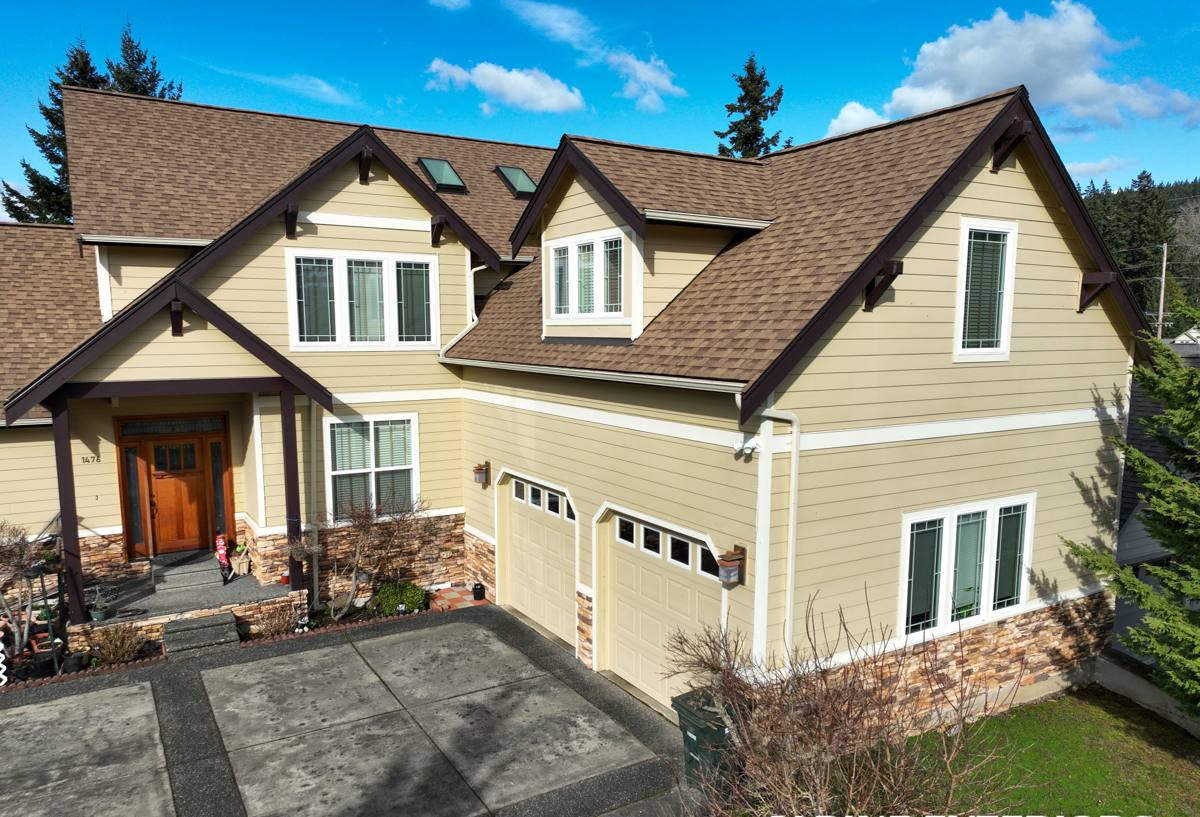
What Edgemoor's Climate Actually Does to a Deck
A lot of decking marketing talks about weather in general terms. On the ground in Edgemoor, three things matter more than most:
Salt air and metal fasteners
Proximity to the water means airborne salt settles on everything, including deck hardware. Standard fasteners and connectors corrode faster here than they would twenty miles inland. This doesn't affect the composite boards themselves much, but it has a direct effect on the screws, joist hangers, and structural connectors underneath — which is where a lot of premature deck failures actually start.
Driving rain and end-grain exposure
Wind-driven rain off the water doesn't just fall on a deck's surface — it gets pushed sideways into board ends, fascia joints, and stair stringers. Any decking material with exposed, unprotected end grain will take on moisture here faster than the spec sheet suggests.
Moss and organic growth
Shade from mature trees, combined with a long wet season, gives moss and algae plenty of time to establish themselves on any surface that stays damp. On a deck, that means the boards themselves, but also the substructure underneath if airflow is poor.
Why Composite Makes Sense for This Environment
Composite decking isn't automatically the right answer for every home — but for the conditions described above, it solves real, specific problems that wood struggles with in this location.
| Factor | Wood Decking | Composite Decking |
|---|---|---|
| Moisture absorption | Absorbs and releases moisture, leading to swelling, cupping, and checking over time | Minimal absorption, especially with capped boards; dimensionally stable through wet/dry cycles |
| Moss and algae resistance | Porous surface gives organic growth something to root into | Smoother, less porous surface is easier to keep clean and doesn't hold growth as readily |
| Salt air exposure | Board itself is unaffected, but fasteners and finish wear faster | Board is unaffected; fastener corrosion is still a factor and must be planned for regardless of decking material |
| Maintenance routine | Annual or biannual cleaning, sealing, and spot repairs | Periodic washing; no sealing or staining required |
| Upfront cost | Lower material cost | Higher material cost, offset by lower long-term upkeep |
None of this means wood is a bad choice everywhere — it just means that in a wet, salt-exposed, moss-prone spot like Edgemoor, composite removes several of the maintenance burdens that wood decks in this area tend to accumulate.
What a Correct Composite Deck Installation Involves
Composite boards are forgiving compared to wood, but a deck is still only as good as what's underneath it. Most problems we see on composite decks trace back to substructure and detailing, not the boards themselves.
Framing and joist protection
Joists should be wrapped with joist tape before boards go down. In a climate this wet, skipping this step is one of the most common ways a deck's substructure starts rotting from the inside while the surface still looks fine.
Fastener and hardware selection
Given the salt air here, we use corrosion-resistant structural hardware and fasteners rated for coastal or wet-marine exposure, not just standard exterior-grade parts. This is a small cost difference upfront and a significant difference in how long the connections last.
Drainage and airflow underneath
Low-clearance decks or decks built close to grade need real attention to drainage and ventilation underneath. Without it, moisture and shade combine to create exactly the kind of damp, dark environment moss and mildew prefer — even if the composite boards on top stay clean.
Board spacing and end treatment
Proper gapping between boards allows water to shed rather than pool, and cut ends need to be treated according to the manufacturer's requirements to avoid moisture wicking into exposed edges, which matters more here given how much wind-driven rain the neighborhood gets.
Choosing the Right Composite Board for Edgemoor Conditions
Not all composite decking is built the same way, and the differences matter more in a wet coastal-adjacent neighborhood than they would in a dry climate.
Capped vs. uncapped composite
Capped composite boards have a protective outer shell bonded to the core, which resists moisture penetration and staining significantly better than uncapped boards. Given how much rain and organic debris Edgemoor sees through fall and winter, we generally recommend capped boards for homes here — the added upfront cost is usually worth it over the life of the deck.
Color and heat considerations
Darker composite colors show pollen, moss residue, and organic staining less over time in a wet, tree-shaded environment, but they also absorb more heat on the rare sunny day. Lighter colors show streaking and mildew spotting more visibly and may need cleaning more often in a shaded, damp lot.
Grain pattern and slip resistance
A deeper wood-grain texture helps with slip resistance when boards are wet, which is a real consideration given how often deck surfaces here stay damp for days at a time, not just during active rain.
Cost Factors for an Edgemoor Composite Deck
Every deck is different, but these are the factors that most often move the price on a composite deck project in this area.
| Cost Factor | Why It Matters |
|---|---|
| Board tier (capped vs. uncapped) | Capped boards cost more per square foot but hold up better to Edgemoor's wet, shaded conditions |
| Substructure condition | Existing framing that's water-damaged or under-ventilated may need rebuilding before new decking goes down |
| Hardware and fastener spec | Corrosion-resistant, marine-grade hardware costs more than standard exterior fasteners but is worth it this close to the water |
| Deck height and railing requirements | Elevated decks and code-required railing systems add material and labor beyond a simple ground-level deck |
| Stairs and multiple levels | Each stair run and transition adds framing, fastening, and board-cutting time |
| Permitting | Whatcom County permit requirements depend on deck size, height, and attachment to the structure |
Our Process From Estimate to Finished Deck
1. On-site walkthrough
We look at the existing structure (if there is one), grading, drainage, sun and shade exposure, and how close the deck sits to the water-facing side of the property. This tells us what substructure work, if any, is needed before decking goes down.
2. Board and hardware recommendation
We'll walk you through capped vs. uncapped options, color trade-offs for a shaded lot, and the hardware spec we'd use given the salt air exposure — with honest reasoning, not a sales pitch toward the most expensive option.
3. Framing and substructure work
Any rot, inadequate ventilation, or undersized framing gets addressed first. Joist tape and corrosion-resistant fasteners go in as standard practice, not an upsell.
4. Decking installation
Boards are installed with proper spacing, hidden or exposed fastening per your preference, and correct end treatment at all cuts and terminations.
5. Final walkthrough
We check railing, stair stringers, and fastening before calling the job finished, and go over basic care so you know what to expect through the first wet season.
Living With a Composite Deck in a Wet, Mossy Climate
Composite decking cuts down on maintenance significantly compared to wood, but "low maintenance" doesn't mean "no maintenance" — especially in a spot that gets this much moss pressure.
- Sweep leaves, needles, and organic debris off the deck regularly through fall — trapped debris holds moisture against the board surface
- Wash the deck once or twice a year with a soft-bristle brush and a composite-safe cleaner to prevent moss and mildew from establishing
- Check the gaps between boards periodically and clear out any buildup that's blocking drainage
- Inspect visible fasteners and hardware yearly for early signs of corrosion, especially connections closest to the water-facing side of the house
- Confirm underneath ventilation isn't blocked by stored items, plants, or debris that trap moisture against the substructure
Why a Crew That Already Works Edgemoor Matters
A composite deck built to a generic spec will hold up fine in a dry inland climate and still underperform here. Knowing which fastener grade actually earns its keep against salt air, which board tier is worth the extra cost given how much rain this neighborhood gets, and how to detail ventilation under a shaded, damp lot isn't something you get from a manufacturer's install manual alone — it comes from building decks in this exact kind of weather, repeatedly, in Whatcom County.
That's the difference between a deck that looks right on installation day and one that's still tight, dry, and moss-free five winters from now.
If you're considering composite decking for a home in Edgemoor, we're happy to walk the site, talk through board and hardware options honestly, and give you a straightforward estimate — no pressure, no upsell. Use the form below to get started.