 Sudden Valley Siding
 Custom Windows Built for Cordata's Weather
Cordata sits in a part of Whatcom County where the weather doesn't ask permission — long stretches of driving rain, salt-tinged air moving in off the Sound, and a moss season that seems to stretch a little further every year. Windows here don't fail because they're old. They fail because water, wind, and organic growth found a seam, a gap, or a worn-out sash and slowly worked their way in. Custom window work in this neighborhood means designing and installing windows that are matched to the house they're going into and the climate that house sits in, not just ordering whatever size is in stock.
"Custom" doesn't have to mean exotic shapes or a big budget. Most of the custom window work we do in Cordata is about getting exact measurements, the right frame material, and correct flashing details for a specific wall assembly — things a one-size-fits-all replacement window can't always deliver.
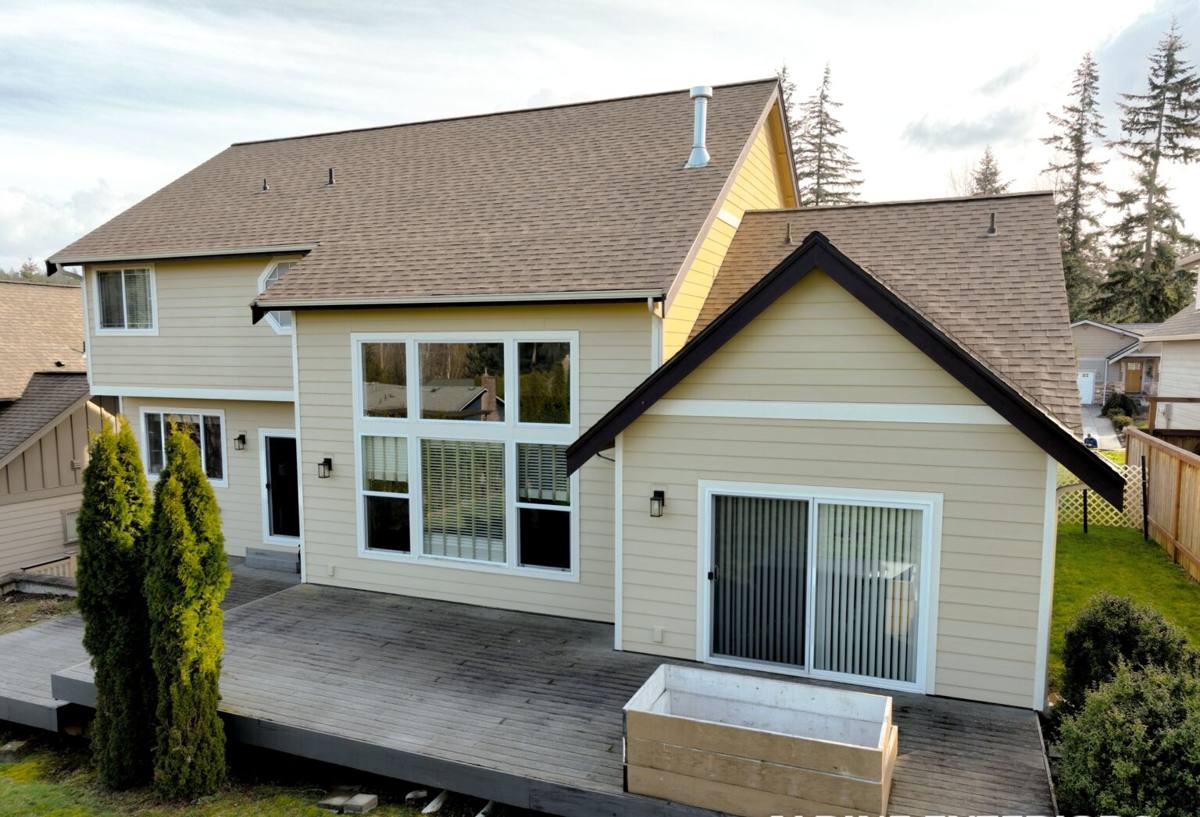
What "Custom" Actually Means for a Window Job
There's a lot of marketing noise around the word "custom" in the window trade. Stripped down, it covers three things:
- Exact sizing — built or ordered to the true rough opening on your house, not a nearest-standard-size substitute that requires packing out the frame with shims and trim.
- Configuration — matching sightlines, grid patterns, operating style (casement, double-hung, sliding, awning), and glass makeup to how the room is actually used.
- Detailing for the wall — flashing, sill pan, and sealant choices that fit your specific siding type and wall assembly, since a house with fiber cement siding needs different treatment at the window opening than one with lap siding or stucco.
Skipping any of these three is how you end up with a window that looks fine for a year or two and then starts showing water staining at the corners or fogging between panes.
Why Whatcom County Weather Raises the Stakes
Driving Rain
Rain that falls straight down is easy to shed. Rain that's being pushed sideways by wind off the water is a different problem — it finds horizontal seams, worn weatherstripping, and any spot where the sill pan wasn't sloped correctly. In a wind-driven rain event, a window with a marginal installation will leak long before the glass unit itself fails.
Salt Air
Salt in the air accelerates corrosion on hardware, fasteners, and unprotected metal components. It's a slower problem than a leak, but it shows up as pitted locks, stiff cranks on casement windows, and hardware that seizes up years before it should.
Moss and Sustained Moisture
Whatcom County's long wet season means anything that holds standing moisture against wood — sills, trim, cladding — becomes a growth surface for moss and mildew over time. On windows specifically, that shows up most on north-facing units and anywhere water can pool instead of draining away.
None of these are exotic problems. They're the ordinary cost of living in a marine climate, and they're exactly why the installation details matter as much as the window unit itself.
Signs a Cordata Home Needs Window Attention
- Visible water staining or soft wood at the interior or exterior sill
- Fogging or a milky haze between the panes of a double- or triple-pane unit — a sign the seal has failed
- Windows that are noticeably harder to open, close, or lock than they used to be
- Drafts you can feel near the frame even when the window is fully latched
- Visible gaps between the window frame and the siding or trim
- Paint that's peeling or bubbling specifically around the window opening, not the wall generally
- Moss or dark streaking building up on the sill or lower frame
One or two of these might just mean a caulk touch-up. Several at once, especially combined with a draft or fogging, usually means the window itself or its installation has reached the end of its useful life.
How We Approach a Custom Window Job
1. On-Site Assessment
We start by looking at the actual condition of each opening — not just the glass, but the framing, sill, and how water has been behaving around that window historically. Staining and soft spots tell us more than the window itself usually does.
2. Measuring and Product Selection
Every opening gets measured individually. Houses settle unevenly over the years, so it's common for openings that look identical to be slightly different in actual dimension. We match frame material, glass package, and operating style to the room and the exposure — a window facing the prevailing wind and rain gets treated differently than a sheltered one.
3. Removal and Opening Prep
Old windows come out carefully so we can inspect the rough opening, sill, and surrounding framing for hidden rot or moisture damage before anything new goes in. This step gets skipped by installers in a hurry — it shouldn't be, because covering up a damaged sill with a new window just buries the problem.
4. Flashing and Sealing
This is the step that determines whether the window will actually keep water out for the long haul. That means a properly sloped sill pan, correctly lapped flashing tape, and sealant applied in the right places — not everywhere, since over-sealing can trap moisture just as easily as under-sealing lets it in.
5. Install, Adjust, and Test
Once set, every window gets shimmed level and plumb, fastened per the manufacturer's specification, insulated around the frame, and operated through its full range to confirm smooth function before we finish trim work.
6. Walkthrough
We walk the finished openings with you, inside and out, so you can see the work and ask questions before we consider the job done.
Frame Material Comparison
| Material | Behavior in Wet, Salt-Air Climate | Maintenance |
|---|---|---|
| Vinyl | Doesn't corrode or rot; performs well against moisture when installed correctly | Low — occasional cleaning |
| Fiberglass | Very stable dimensionally, resists moisture and salt exposure well | Low |
| Wood (clad exterior) | Good insulating properties; exterior cladding protects the wood from direct weather exposure | Moderate — interior wood may need periodic attention |
| Aluminum | Prone to corrosion over time in salt-air exposure unless properly finished and maintained | Moderate to high in this climate |
We'll walk through these trade-offs against your budget and the specific exposure of each opening on your house — a sheltered window under an eave doesn't need the same spec as one that takes wind-driven rain head-on.
Glass and Performance Options
Beyond frame material, the glass package affects comfort and condensation control, which matters in a climate with our humidity and temperature swings. Double-pane with low-E coating is the standard baseline for this region; triple-pane adds further insulating value for rooms with heavy exposure or where sound reduction matters. Argon or krypton gas fill between panes improves insulating performance but only holds value if the seal itself is sound — which loops back to why installation quality matters as much as the glass spec on the label.
Cost Factors to Expect
We don't publish blanket pricing because every opening and every house is different, but the main factors that move the number are consistent:
- Number of openings and their sizes
- Frame material selected
- Glass package (double vs. triple pane, coatings, gas fill)
- Condition of the existing opening — sound framing costs less to work with than an opening with hidden rot
- Operating style — fixed and single-operating windows are generally simpler than complex casement or specialty shapes
- Trim and interior finish work needed to match existing woodwork
A free on-site estimate is the only reliable way to get real numbers, because opening condition alone can shift a job significantly once we're actually into the wall.
Why Local Experience in Cordata Matters
A crew that regularly works this part of Whatcom County has already seen how houses in this area age against the specific weather pattern here — where moss tends to build up first, which orientations take the worst of the driving rain, and how older housing stock in the region was originally flashed and sealed. That background means fewer surprises once an opening is actually cut open, and it means the flashing and sealing details are chosen for how the weather actually behaves here, not a generic installation manual written for a drier climate. It also means we're a known, reachable local business if a question comes up on a window years after installation — not a crew that worked one job in the neighborhood and moved on.
Get a Free, No-Pressure Estimate
If you're seeing drafts, fogging, sticking sashes, or water staining around your windows in Cordata, it's worth having someone look before those problems spread into the surrounding wall framing. Fill out the form below for a free, no-obligation estimate — we'll assess your windows on-site and give you straight answers about what's actually needed.