 Sudden Valley Siding
 Storms Hit Alger Roofs From More Than One Direction
Homes around Alger and Sudden Valley don't just deal with wind. They deal with wind coming off open water, driving rain that finds every weak seam, and a moss season that can run eight months out of the year in the shade of the surrounding evergreens. A roof here rarely fails from one dramatic event. It's usually a combination — a windstorm lifts a few shingle tabs, rain gets underneath before anyone notices, and moss holds that moisture against the roof deck long enough to start rot. By the time a leak shows up inside the house, the damage has often been building for months.
That layered pattern is why storm damage repair in this part of Whatcom County needs to be diagnosed differently than it would in a drier climate. A repair that only patches the visible tear and ignores the moss line six feet away is a repair that fails again next winter.
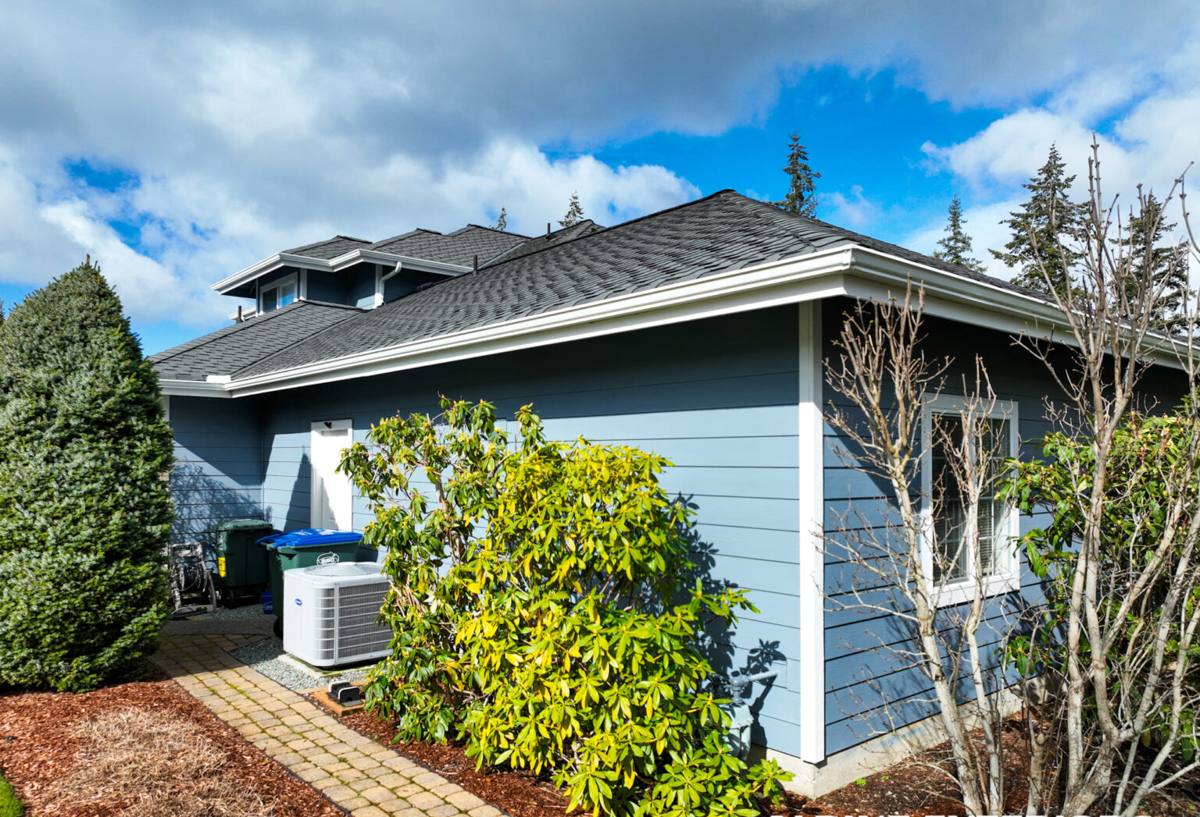
What Storm Damage Actually Looks Like Here
Wind and gust damage
Sudden Valley and the Lake Whatcom corridor funnel wind in ways that surprise a lot of homeowners — gusts can hit one slope of a roof much harder than the others depending on how the property sits relative to the lake and the tree line. Wind damage shows up as lifted or missing shingle tabs, creased shingles that have lost their seal, and nails that have backed out enough to let wind get underneath the next course.
Moss-driven moisture damage
Moss doesn't puncture a roof, but it does something arguably worse over time: it holds water against the shingle surface and the deck long after the rain has stopped. In heavily shaded lots near the water and tree line, that moisture cycle softens shingles, degrades granule adhesion, and can lead to soft decking underneath — especially at valleys and north-facing slopes that never fully dry out between storms.
Impact and debris damage
Falling branches and wind-thrown debris are common after the region's fall and winter storm systems. Impact damage can range from an obvious puncture to a bruised spot that only shows up as a soft indentation when someone walks the roof or presses on it from underneath.
Why Waiting Costs More Than the Repair Itself
A storm-damaged roof rarely gets worse at a steady pace — it gets worse in steps, and each step is triggered by the next rain event. A lifted shingle that's fine for a few dry weeks becomes a leak path the first time driving rain hits it sideways. Salt-laden air near the water can also accelerate corrosion on exposed fasteners and metal flashing once a seal is broken, which is a slower but real cost of delay.
The practical risk isn't just the roof — it's what's underneath it. Deck rot, insulation damage, and interior drywall or ceiling damage all cost more to fix than the roof repair that would have prevented them. Catching storm damage early is almost always the cheaper path.
What a Correct Storm Repair Actually Involves
A storm repair done right is more than swapping out the shingles that are obviously torn. Here's what we check on every storm call in the Alger and Sudden Valley area:
- The full slope where damage was reported, not just the exact spot pointed out — wind damage often extends past what's visible from the ground
- Adjacent slopes and valleys, since wind and moss damage frequently show up in more than one place after the same storm
- The roof deck itself, by feel and by sight, for soft spots or delamination — especially in shaded, moss-prone areas
- Flashing around any penetrations near the damaged section — chimneys, vents, skylights — since flashing failure is a leading cause of storm-related leaks
- Fastener condition, especially on homes closer to the water where salt air speeds up corrosion
- Gutter and drainage function nearby, since backed-up water can turn a minor shingle issue into a real leak
If the deck underneath is soft or rotted, patching over it with new shingles is a short-term fix that hides a bigger problem. We'll tell you plainly if that's what we find, rather than just covering it up.
Our Process, Start to Finish
- Initial call. We ask what you're seeing — a leak, missing shingles, debris on the ground — and get a sense of urgency before we ever step on the roof.
- On-site inspection. We walk the roof (weather permitting) and check from the attic side where possible, looking at the full picture, not just the reported spot.
- Honest assessment. You get a plain-English explanation of what's damaged, what's contributing to it (moss, flashing, age), and what your realistic options are.
- Written estimate. Scope and cost in writing before any work starts, including what's a repair versus what would need to wait for a larger project.
- Repair work. Matching materials where possible, proper underlayment and flashing detail at the repair site, and a cleanup of any debris.
- Follow-up. We tell you what to watch for afterward and when it's worth a moss treatment or gutter cleaning to protect the repair.
Repair or Replace? Weighing the Real Factors
Not every storm-damaged roof needs full replacement, but some do. These are the factors that actually drive that decision:
| Factor | Leans Toward Repair | Leans Toward Replacement |
|---|---|---|
| Roof age | Under roughly 12-15 years | Near or past expected shingle lifespan |
| Extent of damage | Isolated to one section | Spread across multiple slopes |
| Deck condition | Solid, no soft spots | Soft decking or rot found during inspection |
| Moss history | Recently treated, minimal buildup | Long-term moss growth with granule loss |
| Shingle match availability | Existing product still available | Discontinued or badly weathered, poor color match |
We'll walk you through where your roof lands on this table honestly — including telling you when a repair is the right call even if a replacement would be more profitable for us.
Materials and Why We Use Them
For storm repairs, we match the existing roofing material whenever a reasonable match is available, since mixing shingle types or generations can create its own leak points at the transitions. Where we do have a choice — flashing metal, underlayment, fasteners — we lean toward materials built for this region's moisture exposure: corrosion-resistant fasteners given the salt air near the water, and self-adhering underlayment at valleys and penetrations where moss and standing moisture cause the most repeat problems. It costs a little more up front than the minimum-code option, but it's cheaper than repairing the same spot twice.
Documenting Damage for Insurance
If your storm damage may be covered by homeowner's insurance, documentation matters. We photograph the damage and the surrounding area before we touch anything, and we provide a written scope of the repair that most adjusters accept as supporting documentation. We're not able to guarantee what any specific insurer will approve — that's between you and your policy — but we can make sure the physical evidence and paperwork on our end are solid.
Why a Crew That Already Works Alger Matters
A roofer who works Sudden Valley and Alger regularly already knows which slopes in this area tend to hold moss, how the wind off the lake tends to load a roof compared to a more sheltered lot, and what kind of flashing details actually hold up through a Whatcom County winter. That's not a marketing point — it changes what we look for during an inspection and how fast we can get eyes on your roof after a storm, since we're not driving in cold from another part of the county for every call.
It also means we're still around after the repair. If a patch needs a second look after the next big storm, you're calling a crew that already has the history on your roof, not starting over with someone new.
A Simple Checklist for After the Next Storm
- Walk the perimeter of the house and look for shingle pieces or granules in the yard or gutters
- Check the attic (if accessible) for new water stains, damp insulation, or daylight showing through the deck
- Look for debris resting directly on the roof rather than clearing it yourself if it's large or the roof is steep
- Note any new or worsening moss patches, especially on north-facing or shaded slopes
- Call for an inspection before the next rain event if you see any of the above — don't wait for a visible leak
If you're dealing with storm damage on a home in Alger or anywhere around Sudden Valley, we're glad to come take an honest look. The estimate is free, there's no pressure to act on it immediately, and you'll get a plain explanation of what we find and what it would take to fix it right.