 Sudden Valley Siding
 Building Decks for Geneva's Particular Climate
Geneva sits close enough to Lake Whatcom and the surrounding tree cover that a deck here takes a different kind of beating than one on a dry, open lot across town. You've got moisture coming from multiple directions: driving rain off the water, heavy shade from mature evergreens that keeps surfaces damp long after a storm passes, and a moss season that can stretch from late fall through spring. A deck built without those specifics in mind will look fine for a year or two, then start showing the classic symptoms — soft spots near the ledger board, green film on the walking surface, fasteners bleeding rust, railings that wobble because a post base never had a real drainage path.
None of that is inevitable. It's a function of how the deck was framed, flashed, and fastened, and what decking material was chosen for a shaded, damp lot versus a sunny one. We build decks in Geneva and the rest of Sudden Valley the way the site actually behaves, not the way a generic spec sheet assumes it will.
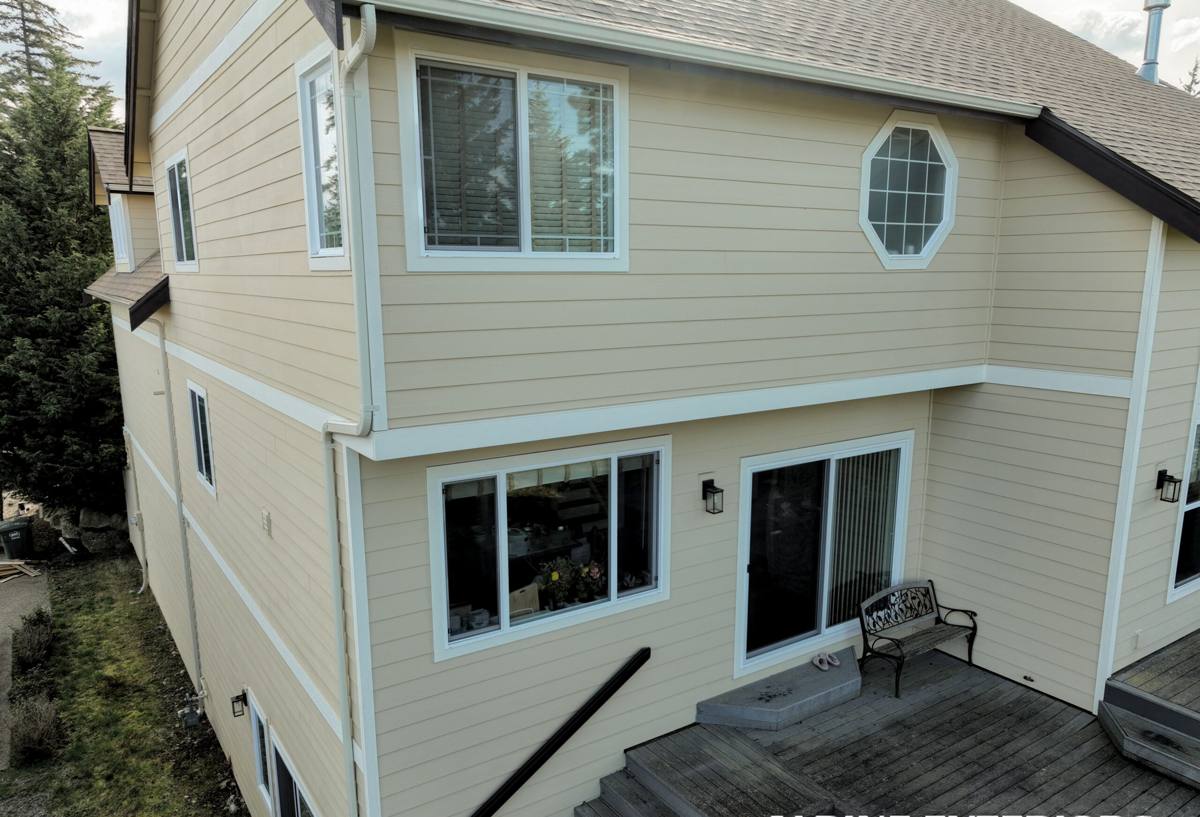
What Correct Deck Construction Looks Like Here
Ledger Attachment and Flashing
The ledger board — where the deck ties into the house — is the single most common failure point on decks in wet climates, and it's almost always a flashing problem rather than a lumber problem. Water gets behind the ledger, the house's sheathing stays wet, and rot sets in where you can't see it until the deck starts to sag. We flash the ledger with a code-compliant metal flashing and self-adhering membrane, not caulk alone, and we make sure there's a gap or flashing detail that lets any water that does get behind the board drain back out instead of pooling.
Footings and Post Bases
Whatcom County's frost depth and the clay-heavy soil common in this area both affect how deep and how wide footings need to be. We size footings to code, not to the minimum a shortcut crew might guess at, and we set posts on bases that hold the wood up off the concrete so it isn't sitting in a puddle every time it rains — which, in this region, is often.
Fasteners and Hardware
Salt air off the lake and general Pacific Northwest humidity accelerate corrosion on cheap fasteners. We use hot-dip galvanized or stainless structural hardware and coated deck screws rated for ground contact and marine-grade exposure. It costs more up front than mild steel; it doesn't leave rust streaks bleeding down your decking boards in three years.
Choosing the Right Decking Material for a Shaded, Damp Lot
Material choice matters more in Geneva's tree-shaded, moisture-heavy microclimate than it would on an open, sunny lot. Here's how the common options actually perform under those conditions:
| Material | Moss & mildew resistance | Maintenance | Typical lifespan here |
|---|---|---|---|
| Pressure-treated wood | Needs regular cleaning and sealing to resist growth in shade | Annual wash, re-seal every 1-2 years | 10-15 years with upkeep |
| Cedar | Naturally more rot-resistant, still grows moss in deep shade without care | Periodic cleaning and oiling to hold color and resist moisture | 15-20 years with upkeep |
| Composite decking | Good resistance; still needs washing to keep pores from holding moss spores | Occasional wash, no sealing or staining | 25-30 years |
| PVC decking | Best resistance to moisture retention; sheds moss more easily than wood-based products | Low — wash as needed | 25-30+ years |
We're honest with clients about the trade-offs. Wood costs less to install and can be a great choice on a sunnier part of a Geneva lot, but it demands real upkeep in a shaded, damp setting or it will host moss within a season or two. Composite and PVC cost more up front but remove most of the maintenance burden that this specific climate creates — that's a decision about your time and budget, not about one product being "bad." We'll walk through what your particular yard's sun and shade pattern means for that choice before you commit.
Substructure and Moisture Management
What's underneath the decking matters as much as the decking itself, especially on a lot with heavy tree cover and slow-draining ground. Joist tape over the top of each joist keeps standing water from soaking into the wood through screw penetrations — a small detail that prevents a lot of hidden rot. Proper spacing between boards lets air move and water shed instead of pooling on the surface. On lower decks or ground-level platforms, we grade and, where needed, add gravel or drainage beneath the structure so water isn't sitting against the framing after every rain event.
If your deck sits under a lot of canopy, we'll also talk about gaps between decking boards and airflow underneath — both matter more here than they would on an open, breezy lot, because shaded, still air is exactly what moss and mildew need to take hold.
Design Considerations Specific to Geneva Properties
Lots in this part of Sudden Valley tend to have some combination of slope, tree cover, and proximity to the lake, which shapes what a deck should actually do for the house:
- Sloped lots often call for a multi-level deck or a taller substructure with proper cross-bracing rather than a single flat platform
- Heavy tree cover means factoring in root systems near footing locations and planning for leaf and needle buildup in the design (wider gaps, accessible drainage)
- Lake-facing exposure means driving rain hits railings and fascia boards harder than on a sheltered side of the house — those details need the same attention as the main structural framing
- Limited sun exposure on north-facing or heavily wooded lots pushes us toward lower-maintenance materials or a maintenance plan the homeowner is actually willing to keep up with
None of this is guesswork on our end — it's a walk-through of your actual lot before we draw up a design, so the deck we build matches the site instead of a generic template.
Our Process for a Geneva Deck Project
The process is straightforward, but each step exists for a reason:
- Site visit and assessment — we look at sun exposure, drainage, slope, tree cover, and how the deck will tie into the house
- Design and material discussion — honest trade-offs on wood versus composite versus PVC based on your specific site and budget, not a one-size pitch
- Permit and code review — footing depth, railing height, and attachment details handled correctly for Whatcom County requirements
- Framing and flashing — ledger flashing, joist tape, and galvanized or stainless hardware installed to the standard described above
- Decking, railing, and finish work — board spacing set for drainage and airflow, railings and stairs built to code
- Final walkthrough — we go over the finished deck with you and explain any maintenance the material you chose will need
Keeping a Geneva Deck Looking Good Through Moss Season
Whatever material you choose, a few habits go a long way in this climate:
- Sweep debris — leaves, needles, seed pods — off the surface regularly rather than letting it sit and hold moisture
- Wash the deck at least once a year, more often in heavily shaded spots, using a deck-safe cleaner rather than a pressure washer alone (which can gouge softwoods)
- Re-seal or re-stain wood decking on the schedule the product calls for — skipping a cycle in this climate shows up fast
- Keep gutters and downspouts near the deck clear so runoff isn't dumping directly onto the structure
- Trim back overhanging branches where possible to cut down on shade and debris
Why a Crew That Already Works Geneva Matters
A contractor who mainly builds decks on dry, open lots elsewhere in the county will make different default choices than one who's used to Geneva's shade, slope, and lake-driven weather. We already know what Sudden Valley's soil and rain patterns do to a footing, what a wooded lot near the lake does to a wood deck's finish, and which hardware actually holds up here instead of streaking rust by the second winter. That's not a sales pitch — it's the difference between a deck that needs real attention in year three and one that's still solid a decade in.
If you're planning a new deck or replacing one that's showing its age, we're happy to walk your Geneva property, look at your sun and shade pattern, and talk through what actually makes sense for your lot and budget. Use the form below to request a free, no-pressure estimate.