 Sudden Valley Siding
 Siding Installation Built for South Hill's Exposure
South Hill is one of the higher, more exposed sections of the Sudden Valley community, and homes up here deal with a different mix of weather than lots tucked down closer to Lake Whatcom. Wind-driven rain reaches these elevations harder, salt-tinged marine air drifts in off the Sound and settles into the tree cover, and the same shade and humidity that make this part of Whatcom County beautiful also keep siding damp longer than it should ever stay. We install and replace siding on South Hill homes regularly, and the standards we build to here come directly from what we find on tear-offs, not from a sales brochure.
On siding specifically, we install James Hardie fiber cement and nothing else. That's a professional standard, not a supplier relationship, and it's rooted in years of seeing which materials actually hold up to this exposure and which ones quietly fail from the inside out.
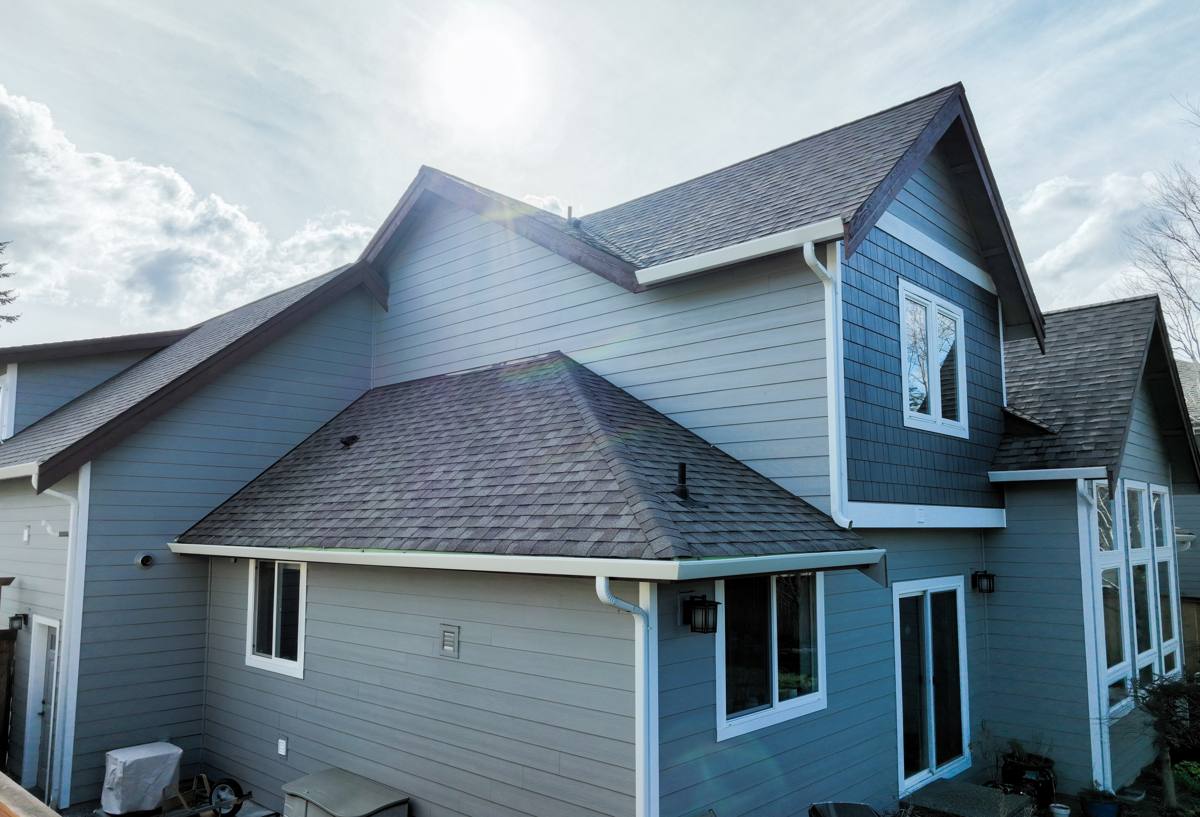
What South Hill's Climate Does to Siding Over Time
Wind-Driven Rain at Elevation
Homes higher up on South Hill catch wind and rain differently than homes closer to the lakeshore. Elevation and exposure mean water gets pushed sideways into laps, seams, and trim joints with more force, and it finds any gap in the weather barrier faster than a light, straight-down rain would. Siding that depends on paint film or caulking alone to keep water out, rather than a properly lapped drainage plane behind it, tends to show it first at these upper elevations.
Salt-Tinged Air Off the Sound
Whatcom County sits close enough to Puget Sound and Bellingham Bay that homes at elevation on South Hill pick up salt-laced marine air on top of the humidity already coming off Lake Whatcom below. That combination accelerates corrosion on exposed fasteners and trim hardware, and it degrades finishes that weren't formulated to resist it. It's a slow process, but a constant one, and it shows up first on whichever materials and fastener choices weren't built for it.
A Long Moss Season
Shade from the surrounding tree canopy, steady humidity, and mild temperatures add up to a moss and mildew season that runs most of the year on this part of the hill. Roofs usually show it first, but porous or moisture-retentive siding picks it up too, especially on north-facing walls and anywhere debris collects against the siding. Homes with more canopy overhead tend to need more attention, simply because those walls never fully dry out between wet spells.
What a Correct Siding Installation Actually Involves
The material is only half of a siding job. The other half is the installation detail that determines whether that material actually performs the way it's engineered to for the next several decades. On a South Hill home, we treat these details as non-negotiable, not optional upgrades:
Weather-Resistive Barrier and Flashing
Every wall gets a properly lapped weather-resistive barrier behind the siding, installed shingle-fashion so water is directed out and down rather than trapped behind the cladding. Flashing goes in at every window head, door, roof-to-wall intersection, and any horizontal transition where water collects, the exact points where wind-driven rain at this elevation tends to find weak spots first.
Fastening, Clearance, and Panel Gapping
Fiber cement siding has to be fastened at the spacing and depth James Hardie specifies; over-driven or under-driven fasteners both cause problems over time. Panels need correct clearance from grade, roofing, and decking so the bottom edge never sits in standing water, and butt joints need the gap Hardie specifies so the material can move slightly with temperature and moisture without stressing the caulk joint.
Why We Install Only James Hardie Fiber Cement on South Hill Homes
We used to offer a wider range of siding products. We narrowed that down after seeing, repeatedly, which materials held up on shaded, moisture-heavy properties like the ones throughout Sudden Valley and which ones didn't, including on South Hill's more exposed lots.
- Non-combustible core: fiber cement doesn't feed a fire the way wood-based siding can, which matters in a wooded community surrounded by forest and can also factor into insurance underwriting.
- Factory-applied ColorPlus finish: color is baked on under controlled factory conditions rather than brushed on in the field, and it resists fading, chalking, and moisture intrusion far longer than site-applied paint on walls that stay damp longer than average.
- Climate-engineered HZ formulation: Hardie's HZ5 product line is built for regions with heavy moisture exposure and freeze-thaw cycling, which fits this part of Whatcom County's conditions well.
- Dimensional stability: fiber cement doesn't swell, cup, or warp the way engineered wood products can after repeated wetting cycles that never fully resolve on a shaded wall.
- Strong transferable warranty: backed by one of the more substantial warranty structures in the industry, provided installation follows Hardie's published specifications.
We won't install LP SmartSide, vinyl siding, Cemplank, Allura, primed spruce, or cedar. Each has a legitimate place in the market and plenty of homeowners elsewhere are satisfied with them. But for the specific combination of elevation, wind-driven rain, and a long wet season that a South Hill lot deals with, we've made a professional call to stand behind one system completely rather than offer a cheaper option that quietly shifts long-term maintenance risk back onto the homeowner.
Our Siding Installation Process
Every South Hill project follows the same sequence, whether it's a full re-side or a single elevation:
- On-site assessment: we walk the exterior, check the condition of the existing siding and sheathing, and note elevation-specific exposure, which walls take the most wind-driven rain, which stay shaded longest, where moss and moisture have already gained a foothold.
- Tear-off and sheathing check: old siding comes off and we inspect the sheathing underneath for rot or moisture damage before anything new goes up. Any compromised sheathing gets replaced, not covered over.
- Weather barrier and flashing installation: a new weather-resistive barrier goes on lapped correctly, with flashing integrated at every window, door, and roof-to-wall transition before any siding panel is installed.
- Hardie panel installation to specification: panels are fastened, gapped, and cleared from grade and roofing per James Hardie's published installation requirements, not a generalized siding install, but the specific fastening schedule this product calls for.
- Trim, caulking, and finish work: trim goes in, caulking is applied only where Hardie specifies it, and every joint gets a final check before we call the job complete.
- Cleanup and walkthrough: the site is cleaned of debris and old material, and we walk the finished job with the homeowner before we consider it done.
Common Problems We Find on South Hill Tear-Offs
Because South Hill sits at a different elevation and exposure than the rest of Sudden Valley, tear-offs up here tend to reveal a fairly consistent set of issues:
- Moisture trapped behind old siding where the weather barrier was missing, poorly lapped, or never integrated with the flashing at all
- Moss and mildew staining on the surface masking soft or rotted sheathing underneath, especially on north-facing walls
- Fastener corrosion and stained siding faces from salt-tinged air working on hardware that wasn't rated for it
- Caulk used as a substitute for proper flashing at window heads and trim transitions, which fails long before the siding itself does
- Gaps and cupping in wood-based or engineered wood siding where repeated wetting cycles never fully dried out between rain events
Siding Options Compared for This Climate
| Material | Moisture Behavior | Moss/Mildew Resistance | Maintenance Burden |
|---|---|---|---|
| James Hardie fiber cement | Dimensionally stable; doesn't swell or cup with repeated wetting | Factory ColorPlus finish resists staining and mildew growth | Low, occasional rinse, no repainting cycle |
| Vinyl siding | Doesn't absorb water but can gap and warp under thermal movement | Can trap moisture and mildew behind panels at seams | Low upfront, but color fades and panels can't be spot-repainted |
| Primed spruce or cedar | Absorbs and releases moisture readily; prone to swelling and cupping | Prone to moss and mildew growth without frequent treatment | High, regular repainting and sealing on a fixed cycle |
| LP SmartSide (engineered wood) | More moisture-sensitive at cut edges and panel seams than fiber cement | Requires diligent edge sealing to resist moisture-driven growth | Moderate, edge maintenance is critical to warranty coverage |
This isn't a claim that every alternative fails on every home. It's why, for the specific demands of a South Hill lot, we've standardized on one material rather than offer several and let exposure sort out which ones hold up.
Why Local Experience on South Hill Matters
A crew that already works Sudden Valley knows things about this specific area that don't show up in a general siding estimate: which elevations on South Hill take the hardest wind-driven rain, which lots hold moss longest into the season, and what the community's design and access norms look like on a typical project. That local knowledge shows up in small decisions, where extra flashing attention pays off, which walls need a closer look at tear-off, that a crew unfamiliar with the area is more likely to miss on the first pass.
Keeping New Siding Looking Right After Installation
Correctly installed Hardie siding is low-maintenance, not no-maintenance. A short annual routine keeps it performing the way it's designed to:
- Rinse siding once or twice a year to clear moss spores, pollen, and general grime before they take hold, especially on shaded, north-facing walls
- Keep landscaping and tree limbs trimmed back from direct contact with siding to reduce shade, debris, and moisture retention against the wall
- Check gutters and downspouts each fall so overflow doesn't run down the siding face or pool at the base of a wall
- Walk the exterior after major wind or rain events and note any caulk joints or trim pieces that look disturbed
- Touch up paint only where physical damage occurs; factory ColorPlus finish shouldn't need routine repainting
If you're planning a siding replacement or new installation on a South Hill home, we're happy to walk the property, talk through what your specific elevation and exposure call for, and put together a free, no-pressure estimate.