 Sudden Valley Siding
 Composite Decking for Alger Homes: Built for the Weather We Actually Get
Alger sits in the kind of Whatcom County microclimate that punishes decks faster than most homeowners expect. You get driving rain off and on for most of the year, damp ground that rarely dries out completely, tree cover that keeps shaded sections of a deck wet long after the sun comes back out, and a moss season that can stretch from fall through spring. Add in the salt-tinged air that reaches inland from the Sound on a west wind, and you've got a combination that finds every weak point in a deck's design within a few seasons. Composite decking handles that combination better than most materials, but only when it's specified and installed correctly for these conditions. A lot of the decks we get called out to repair weren't built wrong on purpose — they were built to a generic spec that didn't account for what this area actually does to a structure.
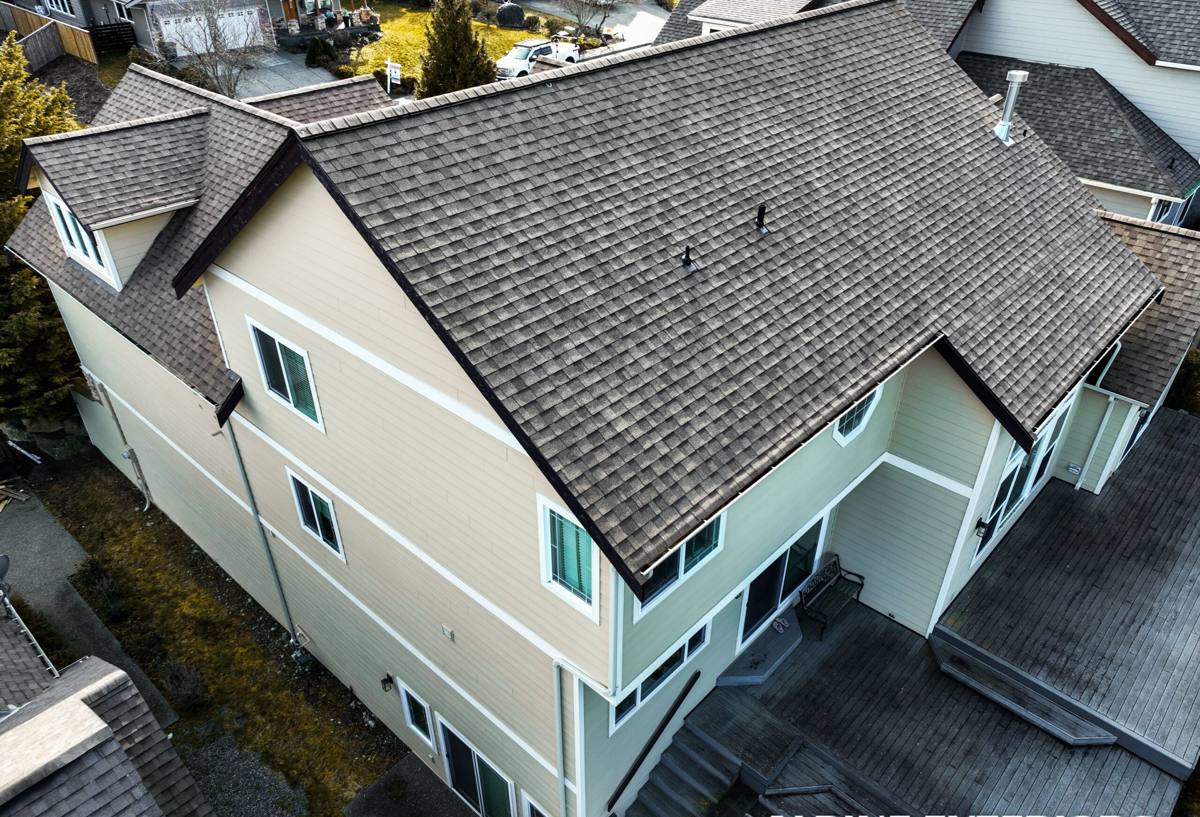
What Alger Properties Need From a Deck
Every deck we build or replace in this area gets evaluated against the same local realities before we talk about board color or railing style:
- Ground and foundation moisture — many lots here hold water at or near grade for weeks at a time, which affects footing depth and post protection.
- Shade and tree canopy — north-facing and tree-shaded sections dry slower and grow moss faster than open, sun-exposed areas of the same deck.
- Wind-driven rain — horizontal rain gets under ledger boards and behind fascia if flashing isn't detailed correctly, which is the single most common cause of hidden rot we find.
- Salt-influenced air — accelerates corrosion on unprotected fasteners, brackets, and railing hardware over time.
- Freeze-thaw cycling — not extreme here, but frequent enough that trapped moisture in framing or under boards causes slow structural damage.
None of these are dealbreakers for composite decking. They're just the checklist we work from so the deck performs the way it's supposed to instead of becoming a maintenance headache in year three.
Where Moss Becomes a Real Problem
Moss on a composite deck is almost always a drainage and airflow issue, not a defect in the boards themselves. Low spots, boards run too tight against siding or a hot tub, and understructures with no ventilation all hold moisture at the surface and in the gaps between boards long enough for moss and algae to take hold. We address this at the framing and layout stage — board spacing, deck height above grade, and gap placement relative to shaded areas — rather than leaving it as something you have to power-wash away every spring.
Composite vs. Other Decking Materials for This Climate
Homeowners in Alger usually compare three options: pressure-treated wood, composite, and PVC. Here's how they actually perform under our specific rain-and-moss conditions, not in a generic climate.
| Material | Moisture Behavior Here | Moss/Algae Resistance | Maintenance Burden |
|---|---|---|---|
| Pressure-treated wood | Absorbs water, swells and checks with repeated wet-dry cycles | Low — porous surface holds spores well | Annual sealing/staining recommended |
| Capped composite | Non-absorbent surface layer; core is protected from moisture intrusion | High — smooth cap sheds moisture and resists staining | Periodic cleaning, no sealing or staining |
| Uncapped composite | Can absorb moisture at the surface over time in wet climates | Moderate — more prone to surface staining than capped boards | More frequent cleaning; shorter practical lifespan here |
| PVC | Fully moisture-resistant, no organic wood content | High | Low, but higher material cost and different appearance/feel |
Our standard for Alger installations is capped composite boards as the default recommendation. The capped surface is what actually resists the moss and staining problem this climate creates — an uncapped board can look identical off the truck but behave very differently after two wet winters. We'll walk you through where PVC or a different composite tier makes sense for your specific project and budget, but we don't sell uncapped composite as a like-for-like substitute in areas with this much sustained moisture exposure. That's a maintenance and longevity trade-off, not a knock on any manufacturer.
What a Correct Composite Deck Installation Actually Involves
Composite boards get most of the attention, but the substructure is what determines whether the deck lasts. A correct install in this climate includes:
Framing and Substructure
- Joist spacing tightened to the composite manufacturer's spec (often 12" or 16" on center, and tighter for angled or picture-frame layouts) — composite flexes differently than wood and needs closer support.
- Ledger board flashing that actually sheds water away from the house rim joist, not just a bead of caulk.
- Joist tape or an equivalent moisture barrier on top of framing members, since trapped water under boards is what causes rot in the structure even when the decking surface looks fine.
- Post bases and hardware rated for ground contact and corrosion resistance, given the salt-influenced air and persistent ground moisture in this area.
Fastening and Surface Detail
- Hidden fastener systems where the product supports them, which also reduces the small gaps where moss and debris collect around exposed screw heads.
- Consistent board gapping for drainage and expansion — composite moves with temperature more than people expect, and gapping it wrong causes buckling or unsightly gaps later.
- Stainless or coated fasteners throughout, not mixed hardware that corrodes at different rates.
Skipping any of this doesn't show up on day one. It shows up as soft spots, board movement, or moss colonizing low areas two or three winters later — which is when it's expensive to fix instead of built in correctly from the start.
How Our Process Works
- On-site assessment — we look at drainage, sun exposure, existing structure (if it's a replacement), and how the deck ties into the house.
- Design and material selection — board tier, railing system, and layout based on your budget and how the space actually gets used.
- Permitting — we handle the permit application and inspection scheduling with the county so you don't have to chase it down.
- Demolition and framing — old structure removed if applicable, new substructure built to the spec above.
- Decking, railing, and finish work — boards installed, railings set, fascia and trim finished.
- Final walkthrough — we go over the finished deck with you and explain any care specific to your board choice and site conditions.
Cost Factors for a Composite Deck in This Area
We don't quote firm numbers without seeing the site, but these are the variables that actually move the price on an Alger project:
| Factor | Why It Matters Here |
|---|---|
| Deck size and shape | Angled or multi-level layouts need more framing and cutting, especially with tighter joist spacing for composite. |
| Board tier (capped vs. uncapped, PVC) | Capped and PVC cost more up front but carry lower long-term maintenance in a wet, moss-prone climate. |
| Substructure condition | Ground moisture and past water damage sometimes mean more framing repair or upgraded footings than expected. |
| Height above grade and railing requirements | Taller decks or those near grade changes may need code-required guardrails, adding material and labor. |
| Demolition and disposal | Replacing an old wood deck adds tear-off and haul-away costs before the new build starts. |
| Site access | Tree cover, slope, or limited equipment access around the home can add labor time. |
Maintaining a Composite Deck in a Moss-Prone, Salt-Air Climate
Composite decking is low-maintenance compared to wood, but "low-maintenance" doesn't mean "no maintenance" in this part of Whatcom County. A short seasonal routine keeps a correctly built deck looking and performing the way it should for decades:
- Sweep debris out of board gaps and stair treads regularly, especially under tree cover where leaf litter and needles collect moisture.
- Clean the surface with a soft brush and mild soap-and-water solution once or twice a year, more often on shaded sections prone to algae.
- Rinse salt residue off railings and hardware periodically if the deck faces open exposure to the wind.
- Check that gutters and downspouts near the deck aren't dumping extra water onto the surface or substructure.
- Inspect fasteners, post bases, and ledger flashing every year or two for early signs of corrosion or water intrusion.
- Keep planters and furniture feet from sitting directly on the surface for months at a time, which traps moisture underneath.
Why It Matters to Hire a Crew That Already Works Alger
A deck built to a generic national spec can still pass inspection and look fine the day it's finished. What separates a deck that holds up here from one that doesn't is whether the builder actually accounts for this area's rain patterns, ground moisture, shade, and moss cycle in the framing and drainage decisions — not just the visible board choice. A crew that regularly works in and around Sudden Valley and the surrounding Whatcom County communities has already seen which layouts drain well on shaded lots, which fastening details hold up against the salt air, and where the county's permitting and inspection process tends to slow projects down if it's not handled correctly the first time. That local familiarity shows up as fewer surprises during the build and a deck that's still performing well well past the first few wet winters.
Ready for an Honest Look at Your Deck Project?
If you're planning a new composite deck or replacing one that's showing its age, we're glad to come take a look and give you a straightforward assessment of what your site needs. There's no pressure and no obligation — just a free estimate based on what will actually hold up on your property. Fill out the form below to get started.