 Sudden Valley Siding
 Edgemoor's Bluff-Top Setting Is Hard on Exterior Siding
Edgemoor sits up on the bluff overlooking Bellingham Bay, and that setting is exactly why siding fails faster there than it does a few miles inland. Homes on elevated, exposed lots take the brunt of weather moving in off the water, while the mature tree cover on many of the neighborhood's older, established lots keeps north- and east-facing walls shaded and damp for long stretches of the year. Add in Whatcom County's marine climate — mild temperatures but a wet season that can run from October well into spring — and you get a combination of stresses that most siding materials just aren't built to handle indefinitely.
Salt Air and Slow Corrosion
Homes close to Bellingham Bay deal with airborne salt that settles on exterior surfaces, works into seams and fasteners, and accelerates the breakdown of paint films, caulk, and softer sidings over time. It's a slow process, which is exactly why it gets overlooked — by the time a homeowner notices chalking paint, soft spots, or corroding fasteners, the damage has usually been building for years.
Driving, Wind-Driven Rain
Storms coming off the water don't just fall straight down — wind pushes rain sideways into wall assemblies, especially on bluff-exposed elevations with little windbreak. Siding and flashing details that would be fine in a sheltered inland yard get tested hard here, and any gap, poorly lapped joint, or missing flashing becomes a path for water to get behind the cladding.
Moss, Shade, and a Long Wet Season
Whatcom County's wet season is long, and Edgemoor's tree canopy keeps a lot of siding in shade that never fully dries out between rains. That's the recipe for moss and algae growth, which holds moisture against the siding surface and, on materials that aren't dimensionally stable, contributes to swelling, cupping, and paint failure.
Why We Only Install James Hardie Fiber Cement in This Climate
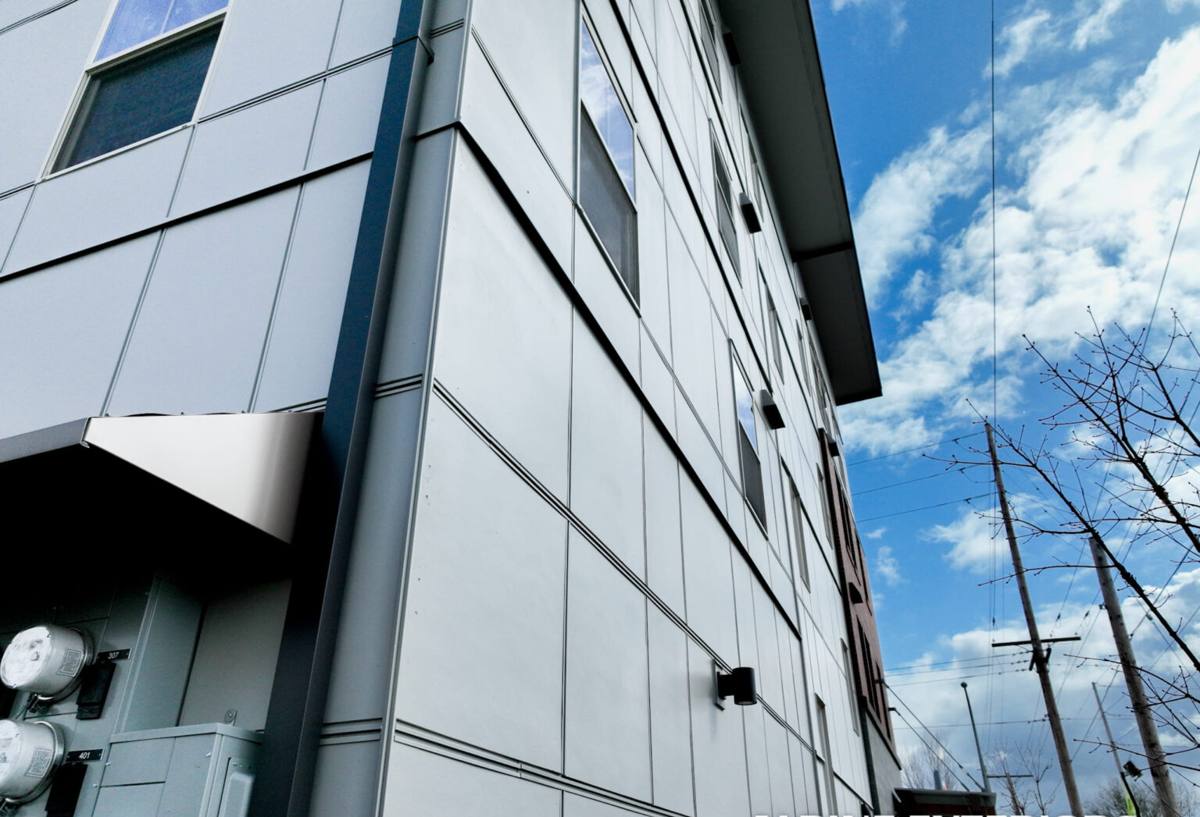
We standardized on James Hardie fiber cement siding because it's engineered specifically for climates like this one. It's non-combustible, dimensionally stable, and manufactured in HardieZone HZ5 formulations meant for regions with sustained moisture exposure — which describes Edgemoor and the rest of Whatcom County well. Unlike wood or engineered wood products, fiber cement doesn't swell, rot, or feed the moss and mildew that thrive in shaded, damp conditions. And because Hardie's ColorPlus finish is baked on at the factory rather than applied on-site, it holds up to salt-laden air and UV exposure far longer than field-applied paint, which is one of the first things to fail on a bayfront home.
We don't install LP SmartSide, vinyl, Cemplank, Allura, or unfinished wood siding, and we're upfront about why: each of those products has a real trade-off — moisture sensitivity, warranty structure, appearance limitations, or maintenance burden — that we don't think holds up well against this specific climate over the long run. Hardie isn't the cheapest option on the shelf, but it's the one we're willing to put our name behind here.
What a Correct Fiber Cement Installation Actually Involves
Fiber cement is only as good as the installation behind it. A huge share of the siding failures we get called out to inspect aren't a materials problem — they're a workmanship problem. In a climate that drives rain sideways and keeps walls damp for months at a time, the details matter more than they would somewhere drier.
Water Management Behind the Siding
Correct installation starts with the weather-resistive barrier and flashing, not the siding itself. Every window, door, and penetration needs properly lapped flashing so water sheds outward instead of tracking behind the cladding. On exposed, bluff-facing walls, we'll often recommend a rainscreen gap behind the siding — a small drainage space that lets any moisture that does get past the outer layer drain and dry instead of sitting against the wall assembly.
Fastening, Clearances, and Fit
Hardie publishes specific fastening schedules and clearance requirements for a reason — nail placement, board overlap, and gaps at trim and butt joints all affect how the assembly handles moisture and movement. Ground clearance and clearance from roof lines and decks also matter more here, where standing moisture and splash-back are common through a long wet season.
Sealing and Finish Work
Cut ends and joints need to be sealed and, where required, field-touched with matching paint before installation continues — an exposed, unsealed cut edge is a direct entry point for moisture and one of the most common shortcuts we see on rushed jobs.
Choosing the Right Hardie Product and Color for a Bay-Facing Home
Hardie's lap, panel, and shingle product lines all perform well in this climate, but the right choice depends on the home's exposure and architectural style. Lap siding is the most common fit for traditional Edgemoor homes; panel systems suit more modern designs; and shingle profiles can replicate a cedar look without the maintenance burden of real wood. Color matters too — darker ColorPlus finishes hold up well against UV and salt exposure, but on the most exposed bluff elevations we'll talk through how sun and salt exposure interact with specific color choices so there are no surprises five or ten years down the road.
Fiber Cement vs. Other Siding Options in This Climate
| Material | Salt Air Resistance | Moisture/Moss Resistance | Ongoing Maintenance |
|---|---|---|---|
| James Hardie Fiber Cement | Strong — factory finish resists chalking and fading | Strong — won't swell or rot | Low — periodic rinsing, no repainting on typical cycles |
| Vinyl | Moderate — can become brittle and discolor over time | Moderate — doesn't rot but traps moisture behind loose panels | Low, but limited repair options if damaged |
| Cedar/Wood | Weak — finish breaks down faster near salt air | Weak — prone to rot and moss without diligent upkeep | High — regular refinishing and moisture monitoring |
| Engineered Wood (e.g. LP SmartSide) | Moderate — dependent on finish integrity at cut edges and seams | Moderate — more moisture-sensitive than fiber cement if seals fail | Moderate — finish and seam maintenance matters more over time |
How We Approach a Fiber Cement Project in Edgemoor
- Walk the home and assess exposure — which elevations take direct weather off the bay, which stay shaded and damp, and where past moisture problems may already exist.
- Inspect the existing wall assembly once old siding is off — checking sheathing, weather barrier, and flashing before anything new goes up.
- Repair or replace any compromised flashing, sheathing, or barrier material before installation begins.
- Add a rainscreen drainage gap on exposed elevations where the added moisture management is worth it.
- Install Hardie siding to manufacturer fastening and clearance specifications, with special attention to joints, trim, and penetrations.
- Seal and finish all cut edges and joints before they're closed up or covered.
- Final walk-through with the homeowner to review the work and go over basic care going forward.
Why Hiring a Crew That Already Works This Neighborhood Matters
Whatcom County's microclimates vary more than people expect. A home a short distance inland at Sudden Valley, tucked near the lake and surrounded by trees, deals with a different moisture pattern than a bluff-top home in Edgemoor catching wind and salt spray directly off Bellingham Bay. A crew that only works one type of site tends to apply the same details everywhere, whether they fit or not. We work across this range of conditions regularly, which means we're not guessing about where a rainscreen gap earns its cost, where flashing needs extra attention, or which elevations are going to see the worst of the moss and moisture over time. That local pattern-recognition is worth more than it sounds like on paper — it's the difference between a siding job that looks right on installation day and one that's still performing correctly in fifteen years.
What Affects the Cost of a Fiber Cement Project Here
| Cost Factor | Why It Matters in This Climate |
|---|---|
| Condition of existing wall assembly | Hidden moisture damage behind old siding is common on shaded or exposed walls and must be repaired before new siding goes on |
| Whether a rainscreen is added | Adds material and labor but pays off on the most weather-exposed elevations |
| Home height and access | Bluff and multi-story homes often require additional staging or equipment |
| Trim and architectural detail | More corners, windows, and transitions mean more flashing and cut-edge sealing work |
| Product line and finish choice | Lap, panel, and shingle profiles and ColorPlus color options carry different material costs |
We don't quote a project without seeing the home first — the condition of what's behind the existing siding is usually the single biggest factor in the final number, and it's not something we can estimate accurately from photos or a phone call.
A Maintenance Checklist for Edgemoor Homeowners
- Rinse siding once or twice a year to remove salt residue, especially on bay-facing elevations.
- Check caulking around windows, doors, and trim joints annually and re-seal if it's cracking or pulling away.
- Watch shaded, tree-covered walls for early moss or algae growth and address it before it spreads.
- After major storms, do a visual check for displaced trim, damaged flashing, or gaps that weren't there before.
- Keep gutters and downspouts clear so roof runoff isn't dumping extra water onto siding below.
- Trim back vegetation that's keeping any wall section shaded and damp longer than necessary.
If you're weighing a siding replacement on an Edgemoor home, we're happy to walk the property, take a look at what's happening behind the current siding, and put together a straightforward, no-pressure estimate — just fill out the form below to get started.