 Sudden Valley Siding
 Building a Deck That Actually Holds Up in South Hill
A deck in South Hill has to do more than look good for a summer barbecue. It sits outside year-round in a Whatcom County climate that swings between long stretches of driving rain, heavy morning dew off Lake Whatcom, and a moss season that can run from October clear through April. We've built and repaired enough decks in and around Sudden Valley to know that the decks which last aren't the ones with the fanciest railing — they're the ones where the structure underneath was built for this specific climate, not a generic one.
This page covers what a deck actually needs to survive here, what a correct build looks like from the ground up, and how we run the job from first look to final walk-through.
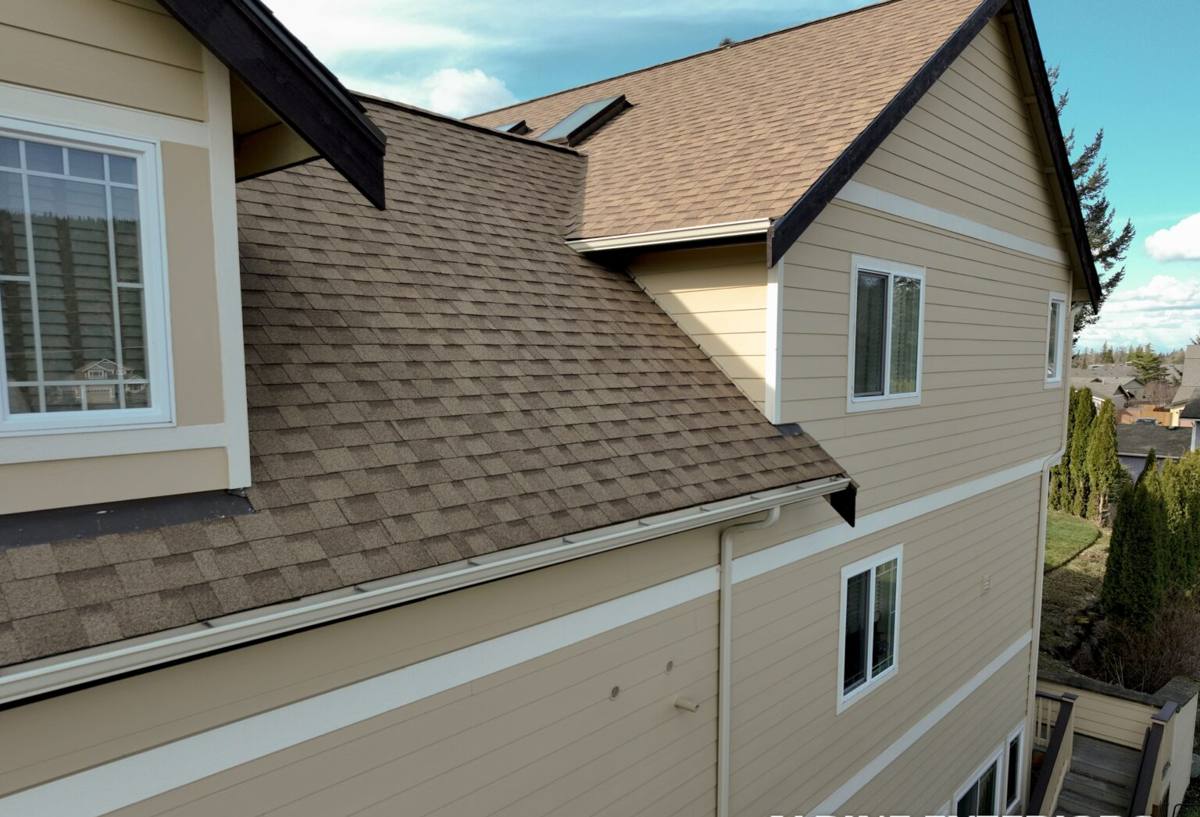
What South Hill's Climate Actually Does to a Deck
Moisture That Doesn't Let Up
Sudden Valley sits in a part of Whatcom County that gets a steady diet of Pacific moisture — soft, driving rain more often than heavy downpours, which means wood and fasteners stay damp for days at a time rather than getting one hard soak and drying out. That kind of sustained dampness is what actually rots ledger boards and rusts hardware, not a single storm.
Shade, Tree Cover, and Moss
Many South Hill lots carry mature tree cover and sit close enough to the lake and surrounding evergreens that decks get limited direct sun on at least part of their footprint. Shaded, north-facing, or tree-covered sections of a deck dry out slowest, and that's exactly where moss, algae, and mildew take hold first. A deck built without that in mind will show green, slick boards in the shaded corners years before the sunny half shows any wear.
Salt and Marine Air
Whatcom County's proximity to Puget Sound and Bellingham Bay puts a mild but real marine-air element into the local climate — enough moisture-laden, slightly corrosive air moving through the region to accelerate rust on lower-grade fasteners and connectors over time. It's a slower process than at oceanfront properties, but it adds up over a 15- or 20-year deck life.
Decking Material Options for This Climate
There's no single "right" decking material — there's a right material for a given budget, sun exposure, and how much upkeep the homeowner actually wants to do. Here's how the common options compare under South Hill conditions specifically.
| Material | Moisture/Rot Resistance | Moss & Algae Resistance | Maintenance | Typical Lifespan |
|---|---|---|---|---|
| Pressure-treated fir/hem-fir | Good if sealed regularly | Low — needs cleaning | Annual cleaning + re-seal every 2-3 years | 10-15 years |
| Western red cedar | Naturally decay-resistant | Moderate — still needs cleaning in shade | Cleaning + oil/stain every 1-2 years | 15-20 years |
| Standard composite | Excellent | Moderate — surface texture matters | Periodic washing, no sealing | 20-25 years |
| Capped composite / PVC | Excellent | Best — smooth cap sheds spores | Occasional washing | 25-30 years |
Composite and capped composite cost more up front, but on shaded South Hill lots that stay damp for months, the reduced maintenance often makes the most sense. Cedar remains a strong choice for homeowners who want a real-wood look and are willing to stay on top of an oiling schedule. Pressure-treated framing underneath any of these decking types is standard practice regardless of what the surface material is.
The Structural Details That Matter Most Here
The decking surface is what people notice. The framing, flashing, and fasteners underneath are what determine whether the deck is still safe in fifteen years. In a climate like ours, a few details separate a deck that lasts from one that doesn't:
- Ledger board flashing that actually sheds water away from the house rim joist, not just a bead of caulk
- A code-compliant water-resistive barrier and proper flashing tape at every ledger and post connection
- Stainless steel or hot-dip galvanized fasteners and structural connectors rated for ground contact and exterior exposure
- Joist tape or a comparable moisture barrier on the tops of joists and beams before decking goes down
- Footings sized and set to local frost depth and soil conditions, not a one-size-fits-all minimum
- Adequate airflow underneath the deck so the framing can actually dry between rain events
Skipping any one of these doesn't show up on day one. It shows up in year six or seven, when a homeowner discovers a soft ledger board or a rusted-out joist hanger under decking that still looks fine on top.
Footings and Terrain in Sudden Valley
Sudden Valley's lots vary quite a bit — some are relatively level, others slope toward the lake or have grade changes across the yard. Sloped or uneven ground changes how footings need to be laid out and how tall posts need to be braced, and it's one of the first things we assess on a site visit rather than assuming a flat-lot footing plan will work. Soil that stays consistently damp from tree cover or poor drainage also affects how deep and how footings should be poured. None of this is unusual for the area, but it does mean a generic deck quote based on square footage alone can miss what a specific South Hill lot actually needs.
Railings and Hardware for a Wet, Shaded Climate
Railings take as much weather exposure as decking, sometimes more, since they don't dry from underneath. Wood railings need the same oiling schedule as wood decking to avoid graying and checking. Metal or cable railing systems hold up well here as long as the hardware is rated for exterior, coastal-influenced conditions — a standard interior-grade bracket or bolt will show surface rust within a season or two in this climate. We spec fasteners and connectors the same way throughout the whole structure: rated for wet, marine-influenced exposure, not just "exterior" in the generic sense.
How We Approach a South Hill Deck Project
1. Site Visit and Assessment
We walk the actual lot — sun exposure, tree cover, slope, drainage, and how the deck will tie into the house — before talking materials or price. What works on an open, sunny lot elsewhere in Whatcom County isn't automatically right for a shaded South Hill yard near the lake.
2. Design and Material Selection
We walk through decking, railing, and structural material options against the homeowner's budget and appetite for maintenance, with the climate factors above built into the recommendation rather than treated as an afterthought.
3. Permitting
Deck projects above certain heights or attached to the house typically require a building permit through the local jurisdiction. We handle that process as part of the job so the homeowner isn't stuck navigating it alone.
4. Construction
Footings, framing, flashing, decking, and railing — built in that order, with the moisture-management details from above treated as non-negotiable steps, not upgrades.
5. Final Walk-Through
We go over the finished deck with the homeowner, including basic care — what to clean, how often, and what to watch for as the seasons change.
What Deck Ownership Actually Looks Like Here
Every deck in this climate needs some seasonal attention — the material only changes how much. A realistic maintenance rhythm for a South Hill deck looks like this:
- Clear leaves, needles, and debris from between boards regularly through fall, especially under tree cover
- Wash the deck surface at least once a year to remove early moss and algae growth before it takes hold
- Check and clean gaps around posts and railings where debris traps moisture
- Inspect fasteners and connectors annually for rust or looseness, particularly on wood decks
- Re-seal or re-oil wood decking and railings on the schedule the material calls for — don't wait until it looks gray
- Confirm under-deck ventilation isn't blocked by stored items, plants, or debris buildup
None of this is dramatic, but skipping it is exactly how a deck that should last twenty years starts needing structural repairs at year eight.
Why Hire a Crew That Already Works in South Hill
A contractor who's built decks around Sudden Valley already knows which lots hold moisture, which slopes need extra footing work, and how much shade a given street tends to get — none of which shows up on a set of house plans. That local familiarity means fewer surprises mid-project and a deck spec'd correctly the first time, rather than a generic build that gets "adjusted" for the climate after problems show up. It also means someone who'll actually be around the area for warranty follow-up, not a crew that drove in from out of the county for one job.
If you're planning a new deck or replacing one that's showing its age, we're happy to come take a look and talk through what makes sense for your specific lot. There's a free, no-pressure estimate form below — reach out and we'll set up a time to walk the site with you.