 Sudden Valley Siding
 Happy Valley Decks Take a Different Kind of Beating
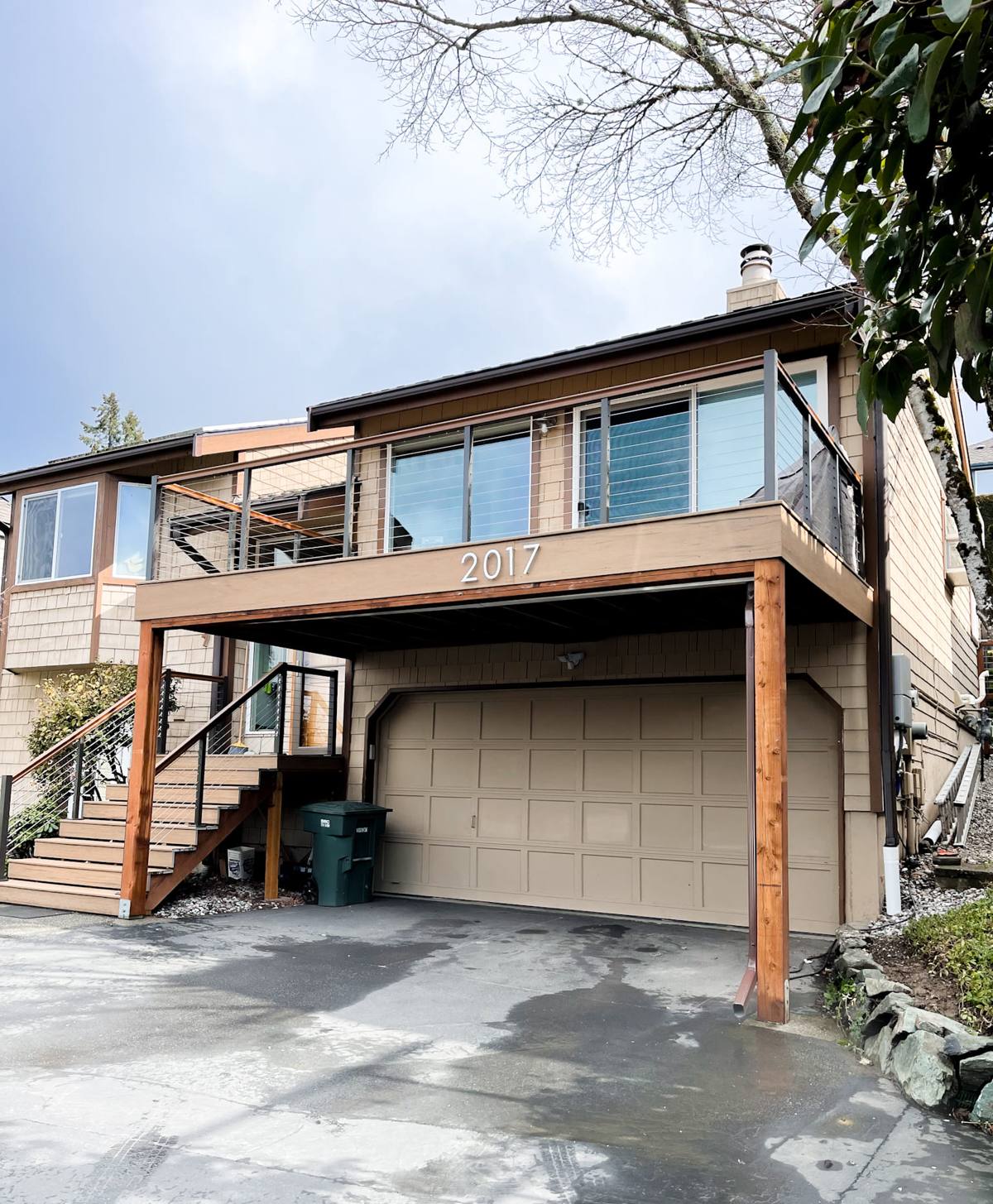
Happy Valley sits inside the broader Sudden Valley community in Whatcom County, close enough to the water and the marine air pattern that moves through this part of Washington that decks here age on a different timeline than the same structure would inland. The combination of near-constant fall and winter rain, salt-tinged air drifting in off the water, and long stretches of shade from mature trees means moisture sits on deck surfaces and in deck framing longer than most manufacturers' warranties assume. Add a moss season that can run six months or more, and you get decks that look fine from the porch door but are quietly failing underneath.
We replace decks in this specific area regularly, which matters more than it sounds like it should. A deck built to a generic national spec — the kind you'd get from a crew that mostly frames decks in a dry climate — tends to fail here in specific, predictable places: the ledger connection, the joist hangers, the post bases, and anywhere two pieces of wood sit face to face and trap water. A deck built for Happy Valley's actual conditions is a different job, not just a different material choice.
Why Most Deck Failures Start at the Ledger Board
The ledger board is the framing member that bolts the deck to the house — usually right at the band joist behind your siding or trim. It's the single most common point of failure in this region, and it's also the point most homeowners never inspect because it's hidden. If the ledger flashing wasn't installed correctly, or wasn't installed at all, water works its way behind the siding and into the house framing every time it rains. In a climate that sees driving rain for months at a stretch, a bad ledger connection isn't a someday problem — it's usually already causing damage by the time anyone notices soft decking or staining.
Because we work as a siding contractor first, this is where we pay the closest attention. A deck replacement is also, by necessity, a review of the wall assembly it's attached to — the flashing, the house wrap, the siding cut line. A crew that only builds decks and never touches siding can miss this connection entirely, or treat it as an afterthought. We treat it as the most important part of the job.
What Correct Ledger Flashing Involves
A proper ledger installation isolates the wood-to-wood connection from standing water and directs any moisture that does get in back out and away from the house. That means self-adhered flashing membrane behind the ledger, a metal drip flashing over the top edge, and a gap or capillary break between the ledger and the siding rather than tight, trapped contact. None of this is visible once the deck boards go down, which is exactly why it has to be done right the first time.
Choosing a Decking Material for This Climate
There's no single "best" decking material — there's a best material for your budget, your maintenance tolerance, and how much shade and moisture your specific deck sits in. Here's how the common options actually perform in Whatcom County conditions:
| Material | Moisture Behavior | Maintenance | Typical Lifespan Here |
|---|---|---|---|
| Pressure-treated lumber | Absorbs and releases moisture; prone to cupping and checking if not sealed | Re-stain/seal every 2–3 years | 15–20 years with upkeep |
| Cedar | Naturally rot-resistant but still moves with moisture; grays and grows moss without upkeep | Regular cleaning and periodic sealing | 15–25 years with upkeep |
| Composite decking | Doesn't absorb water into the board itself; performance depends on core type and drainage underneath | Periodic cleaning to keep moss/algae off | 25–30+ years, warranty-backed |
| PVC/capped polymer | Fully moisture-resistant surface; least affected by standing water or shade | Lowest maintenance of the group | 25–30+ years, warranty-backed |
In a heavily shaded, moss-prone yard, we lean homeowners toward composite or capped polymer boards simply because wood in constant shade needs more upkeep than most people are realistic about giving it. That said, plenty of Happy Valley homeowners want the look and feel of real wood and are willing to maintain it — that's a legitimate choice too, as long as the substructure underneath is built to handle the climate regardless of what's on top.
What a Correct Deck Replacement Involves
The Substructure
The framing underneath is what actually determines how long a deck lasts — the decking boards are just the surface. That means checking footing depth and condition (frost heave and soil movement are real concerns on sloped Whatcom County lots), sizing joists correctly for the span and load, and using structural screws or approved connectors rather than relying on nails alone at critical connections.
Fasteners and Hardware
Everything below the decking surface should be rated for ground contact and exterior exposure — hot-dip galvanized or stainless hardware, not standard zinc-coated fasteners that will rust and weaken within a few wet seasons. We also run joist tape over the top of joists before decking goes down, which keeps water from sitting in the fastener holes and rotting the joist from the inside out — a failure mode that's common and completely preventable.
Railings and Code Compliance
Any deck replacement that touches railings, guards, or stair structure needs to meet current building code for height, baluster spacing, and load rating — not just match what was there before. Older decks in this area were often built to codes that have since changed, so a straight rebuild to the original spec can actually fail inspection.
Signs Your Deck Needs Replacement, Not Just Repair
Not every tired-looking deck needs a full teardown — but these are the signs that point to replacement rather than patching:
- Soft or spongy spots in the decking that give slightly underfoot
- Rust streaks bleeding out from screws, nails, or joist hangers
- Staining, gaps, or a dark line where the deck meets the house at the ledger board
- Railing posts that wobble or flex when pushed
- Rot or crumbling wood at post bases or where framing meets concrete footings
- Moss or algae that returns heavily within weeks of cleaning, suggesting the wood underneath is staying wet
- Visible daylight or gaps between framing members that weren't there originally
If you're only seeing one or two of these and the framing is sound, a repair may genuinely be the right call — we'll tell you that if it's true. Deck replacement makes sense when the framing itself is compromised, since patching decking boards on top of failing structure just hides the problem for another season.
Our Process for a Happy Valley Deck Replacement
- On-site evaluation. We look at the ledger connection, framing, footings, and existing decking condition — not just the surface — and tell you honestly whether you need a replacement or a repair.
- Material and design walkthrough. We go over decking material options, railing style, and any layout changes against your budget and how much upkeep you actually want to do long-term.
- Permit and code check. We confirm what Whatcom County requires for your specific project before work starts, so there are no surprises at inspection.
- Tear-off and structural rebuild. Old decking, and framing that doesn't meet current standards, comes out. Footings, ledger flashing, joists, and hardware are addressed as a system, not patched around.
- Decking, railing, and finish work. Boards, railings, stairs, and any trim or fascia are installed to spec, with attention to drainage and airflow underneath.
- Final walkthrough. We review the finished deck with you, including what maintenance, if any, the material you chose will need going forward.
Permits and Local Considerations
Most deck replacements of any real size in Whatcom County require a permit, particularly when the work involves structural framing, footings, or railings above a certain height — and that's true whether the deck is a straightforward rebuild or a redesign. Because Happy Valley sits within Sudden Valley, some properties also fall under community or association guidelines in addition to county requirements. We handle the permit process as part of the job rather than leaving it to the homeowner to sort out, and we won't build a deck to a spec that won't pass inspection.
What Deck Replacement Costs — and What Drives the Price
Deck replacement costs vary widely based on size, material, and how much of the structure needs rebuilding versus just resurfacing. Rather than quote a number that won't match your specific deck, here's what actually moves the price:
| Cost Factor | Why It Matters |
|---|---|
| Deck size and layout complexity | Multiple levels, angles, or curves take more labor and material than a simple rectangle |
| Decking material | Composite and PVC cost more upfront than wood but need far less maintenance over time |
| Substructure condition | Rotted framing, undersized footings, or a bad ledger connection add rebuild scope beyond the visible decking |
| Railing type | Cable, glass, and composite rail systems cost more than standard wood or metal baluster railing |
| Height and access | Elevated decks, stairs, and difficult site access add labor time |
| Tear-off and disposal | Removing and hauling away old decking and framing is part of the job, not an extra |
We give a firm, itemized estimate after we've actually looked at your deck — not a phone-quote guess — because the substructure condition alone can change the scope significantly once we open things up.
Why Hiring a Crew That Already Works Happy Valley Matters
A deck replacement isn't just a carpentry project — it's an exterior building envelope project, since it ties directly into your siding, trim, and the wall assembly behind them. Crews that don't do exterior work day in and day out can build a deck that looks right and still leaves the ledger connection vulnerable, because that's not the part of the job they're used to scrutinizing. We already know how salt air, prolonged rain, and shade-driven moss affect wood and hardware in this specific area, because we deal with it on siding jobs throughout Sudden Valley and the rest of Whatcom County. That local, repeated exposure to how this climate actually treats exterior materials is what shapes the decisions we make on your deck — from flashing details to material recommendations — rather than defaulting to a generic spec that assumes a drier climate.
If your deck is showing its age, or you're just not sure whether it needs a rebuild or a repair, we're happy to take a look and give you a straight answer. Request a free, no-pressure estimate using the form below and we'll set up a time to come out and evaluate your deck in person.