 Sudden Valley Siding
 Building a Deck That Actually Holds Up in Edgemoor
A deck in Edgemoor doesn't fail the way it would in a dry climate. It fails quietly, from the inside out — a ledger board that's been trapping water behind the siding for two winters, joists that look fine on top but are soft where they meet the beam, fasteners bleeding rust through boards that were installed with the wrong screws. By the time any of that shows up as a visible problem, the fix is usually bigger than it needed to be. Building or repairing a deck here means designing around moisture from day one, not just picking attractive boards and hoping for the best.
We work on custom decks in the Edgemoor area regularly, and the pattern is consistent: the decks that last are the ones where the structure, the flashing, and the fastener choices were treated as seriously as the decking material itself. Whatcom County's combination of salt-laden air, driving rain that hits siding and railings at an angle rather than straight down, and a moss season that can run from fall through spring puts real, sustained stress on anything built outdoors. A deck built for a drier region simply won't hold up the same way here.
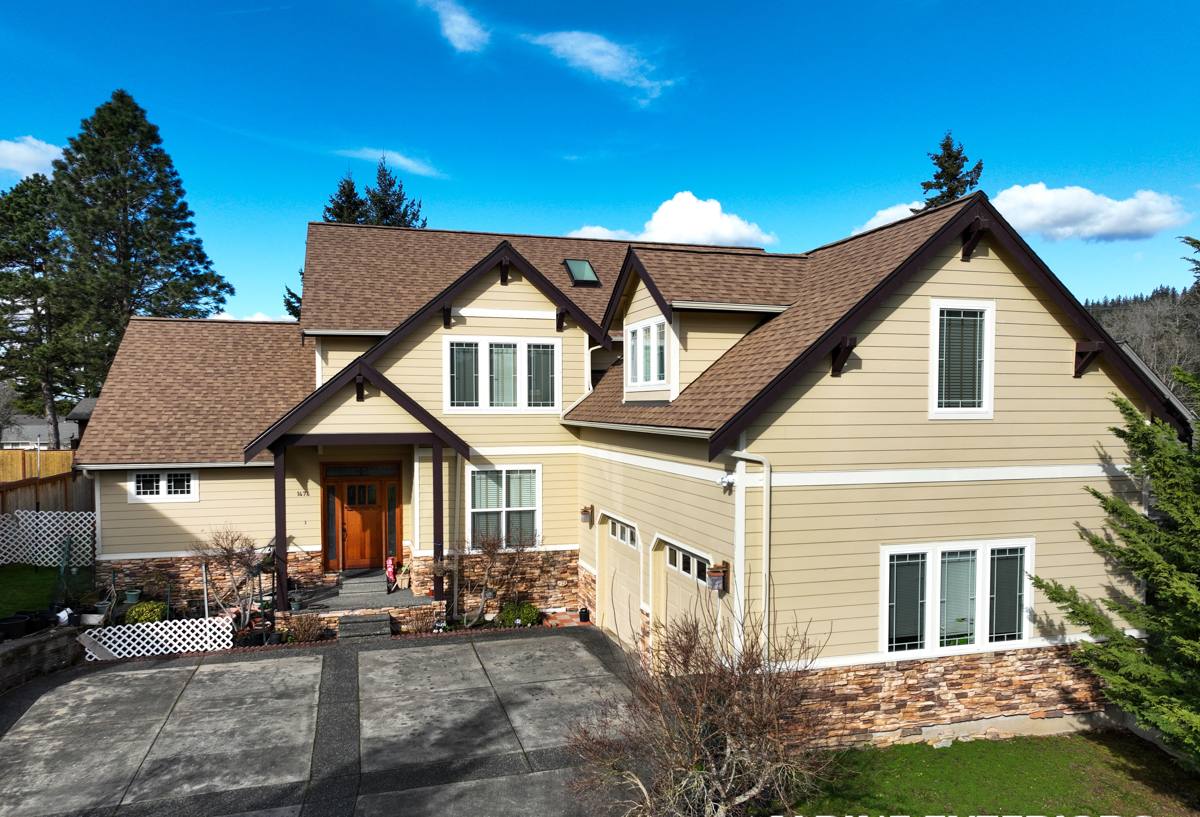
What Salt Air, Driving Rain, and Moss Actually Do
Each of these factors attacks a deck differently, and understanding the mechanism helps explain why certain details matter more here than they would elsewhere.
Salt Air
Airborne salt accelerates corrosion on any exposed metal — fasteners, brackets, railing hardware. Standard coated screws and nails that would last for years inland can start showing rust streaks and weakening within a couple of seasons this close to the water. This is why fastener grade isn't a minor spec line; it's one of the biggest factors in how long a deck's structural connections stay sound.
Driving Rain
Rain that comes in sideways doesn't just fall on the deck surface — it gets pushed into every seam, gap, and joint it can find: where the ledger meets the house, around post bases, under rail caps, and between decking boards. A deck built with flat, standard flashing details designed for vertical rainfall will let water in around these edges over time. Details that shed water regardless of wind direction matter more here than they do in calmer climates.
Moss and Sustained Dampness
Whatcom County's long wet season means deck surfaces, especially ones with poor airflow underneath or heavy tree shade, stay damp for extended stretches. Moss and algae take hold in that dampness, and beyond being a slip hazard, they hold moisture against the wood or composite surface longer than open air would. Decks with tight board spacing, low clearance to grade, or minimal ventilation underneath are the ones that develop moss problems fastest.
Decking Material Options for This Climate
There's no single "best" decking material — the right choice depends on budget, how much maintenance the homeowner wants to take on, and how exposed the deck is to rain and shade. Here's how the common options actually perform under Edgemoor conditions.
| Material | Moisture Behavior | Maintenance | Typical Lifespan Here |
|---|---|---|---|
| Pressure-treated wood | Resists rot when sealed regularly; absorbs water if coating is neglected | Annual cleaning and re-sealing recommended | 15–20 years with upkeep |
| Cedar | Naturally rot-resistant but softer surface; still needs sealing | Cleaning plus periodic sealing/staining | 15–20 years with upkeep |
| Composite decking | Doesn't absorb water into the board itself; surface can still stay damp and grow moss without airflow | Periodic washing; no sealing or staining | 25+ years, varies by product warranty |
| PVC/cellular decking | Fully moisture-resistant board material; same airflow and cleaning needs as composite | Periodic washing | 25+ years, varies by product warranty |
Composite and PVC decking cost more up front but remove the sealing-and-staining cycle that pressure-treated and cedar decks need to stay ahead of this climate. That said, no decking material is maintenance-free here — even composite boards need periodic washing to keep moss and algae from taking hold, and the substructure underneath any decking material needs the same moisture protection regardless of what's on top.
Framing and Structural Details That Matter Here
The visible decking gets all the attention, but the framing underneath is what determines whether a deck is actually safe and long-lasting. In a climate like this, a few structural details separate a deck that lasts decades from one that needs early repair:
- Ledger board attachment and flashing — where the deck ties into the house is the single most common point of hidden water damage. Proper flashing, installed in the right sequence with the house's existing water-resistive barrier, keeps water from getting behind the siding.
- Joist protection — joist tape or a comparable moisture barrier on top of each joist keeps rain from soaking into end grain and fastener holes, which is where rot typically starts first.
- Post base connections — posts set directly in contact with wet soil or concrete without a proper standoff base will wick moisture up into the post over time.
- Ventilation and clearance under the deck — low clearance to grade traps humid air underneath and slows drying after every rain, which speeds up both rot and moss growth.
- Beam and footing sizing — correctly sized for the actual load and span, not just built to "look" adequate, which matters for both safety and long-term sag resistance.
Fasteners and Hardware: Why the Grade Matters
This is one of the most overlooked details on a deck build, and it's the one most directly affected by salt air. Structural hardware — joist hangers, post bases, ledger bolts — should be rated for exterior, corrosion-resistant use, and in coastal-influenced air, that rating matters more than it would further inland. Using standard interior-grade fasteners or mismatched metals (which can cause galvanic corrosion where two different metal types touch) is a common shortcut that shows up years later as rust stains, loosened connections, or hardware that fails structurally well before the decking itself shows any wear. We spec fastener and hardware grade based on the actual exposure of the deck, not just the cheapest option that fits the hole.
Our Process, From First Look to Finished Deck
- On-site assessment — we look at sun and shade exposure, drainage around the site, existing structure if it's a replacement or repair, and how the deck will tie into the house.
- Design and material selection — we walk through decking material trade-offs, layout, railing style, and any code-required elements like guard height or stair details based on the deck's height off grade.
- Permitting — Whatcom County and local jurisdictions typically require a permit for decks above a certain height or attached to the structure; we handle that process rather than leaving it to the homeowner.
- Demolition or site prep — for replacements, this includes checking the ledger and framing behind the old deck for hidden damage before anything new goes up.
- Framing and flashing — the structural work described above, done in the right sequence so water management isn't an afterthought.
- Decking, railing, and finish work — installed to the manufacturer's spacing and fastening specs for the chosen material.
- Final walkthrough — we go over the finished deck and what maintenance it actually needs, honestly, based on the material chosen.
Maintenance Checklist for Edgemoor Deck Owners
Whatever material a deck is built from, a little seasonal attention goes a long way in this climate. Homeowners who stay ahead of these basics get significantly more years out of their deck before major repairs are needed.
- Clear leaves, needles, and debris from between boards and along the deck perimeter before wet season sets in — trapped debris holds moisture against the surface.
- Wash the deck surface at least once a year to remove moss and algae before it gets a foothold, more often in heavily shaded areas.
- Check and re-seal or re-stain wood decking on the manufacturer's recommended schedule — don't wait until the wood looks visibly gray or worn.
- Inspect the ledger board area and any spots where the deck meets the house for staining, soft wood, or gaps in flashing or caulking.
- Look at fasteners and visible hardware once a year for rust streaking, which is an early sign of corrosion that's worth addressing before it spreads.
- Keep vegetation trimmed back from under and around the deck to maintain airflow and reduce shaded, damp conditions.
Why a Crew That Already Works This Neighborhood Matters
Deck-building fundamentals don't change from region to region, but the details that determine whether a deck lasts 10 years or 30 do change with the climate it's built in. A crew that regularly works decks in Edgemoor and the broader Sudden Valley area already knows which framing and flashing details are worth the extra time here, which fastener grades hold up against the salt air, and which decking materials handle this area's shade and moisture patterns without turning into a moss problem within a couple of seasons. That's not something you get from a general contractor who builds one deck a year in a completely different climate — it comes from repetition, in this specific place.
If you're planning a new custom deck, replacing one that's showing its age, or just want an honest read on whether your current deck's framing is holding up, we're happy to take a look. We offer free, no-pressure estimates — fill out the form below and we'll set up a time to come take a look at your property.