 Sudden Valley Siding
 Edgemoor's Waterfront Exposure Is Different From an Inland Sudden Valley Lot
Edgemoor sits close to the water, and that changes what siding has to survive out here compared to a home tucked back in the trees near Lake Whatcom. Waterfront and near-waterfront properties in this part of Whatcom County take a steadier dose of salt-laden air, more direct wind-driven rain off the bay, and the same long, damp moss season that hits every property in this corner of Washington. None of that is exotic — it's just consistent, and consistent is what wears siding out. A product or installation detail that's "good enough" on a sheltered inland wall can fail years earlier on an exposed Edgemoor elevation facing the water.
Salt air is corrosive to exposed metal fasteners and trim, and it accelerates the breakdown of finishes that aren't built to handle it. Driving rain finds every gap in flashing, caulking, and lap coverage, and it doesn't take much of a gap before water is behind the siding instead of running off it. And moss and algae growth — which thrives in this region's mild, wet winters — holds moisture against a wall surface for months at a stretch, which is exactly the condition that rots wood-based products and delaminates poorly made composites. Any siding installation in Edgemoor needs to be planned around those three realities from the start, not patched around them later.
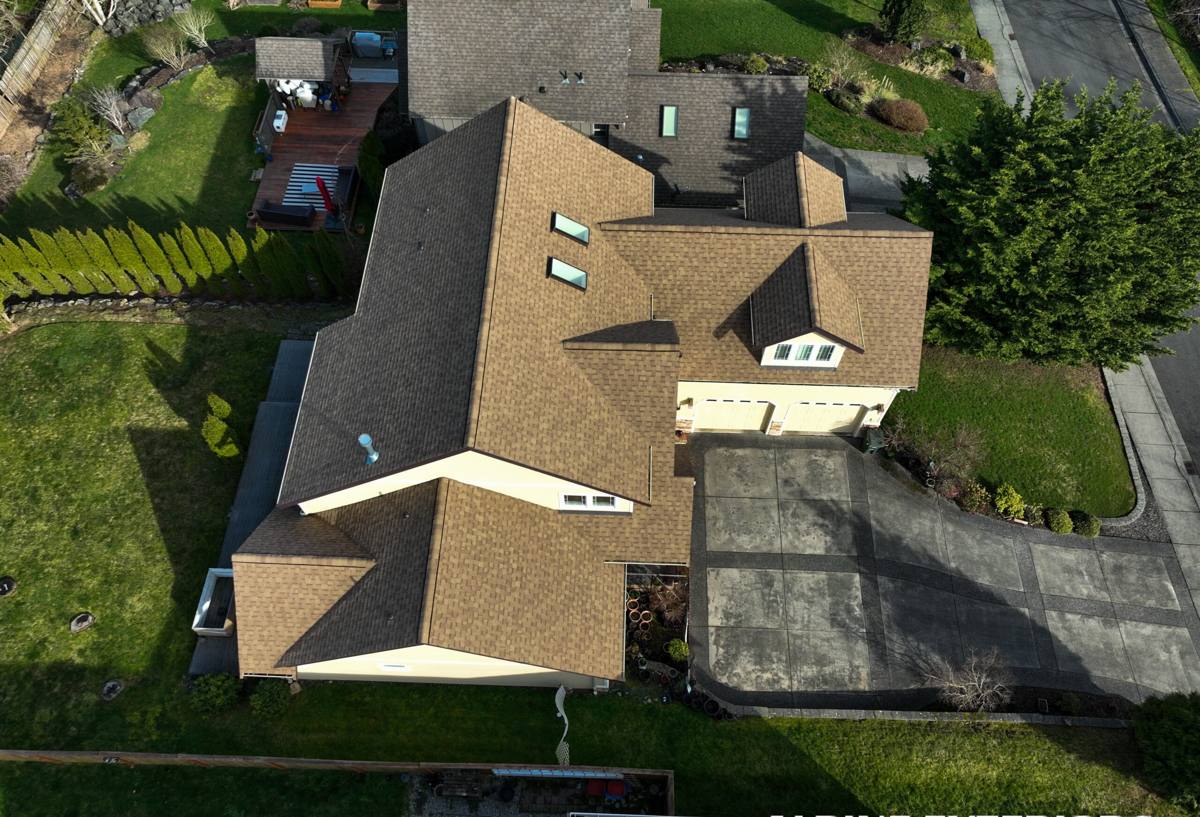
What a Correct Siding Installation Actually Involves
Siding is a system, not just a finish surface. The visible boards get all the attention, but the parts nobody sees — the weather-resistive barrier, the flashing, the fastening pattern, the clearances — are what actually determine whether a home stays dry for the next 30-plus years or starts showing rot and staining in five.
The layers that matter
- Weather-resistive barrier: a continuous, properly lapped house wrap or building paper installed shingle-style so water sheds down and out, never behind the layer beneath it.
- Flashing at every penetration: windows, doors, hose bibs, light fixtures, deck ledgers, and roof-to-wall intersections all need site-formed or manufactured flashing that directs water back out, not into the wall cavity.
- Correct fastening: the right fastener type, length, and spacing for the substrate and the product, driven flush without overdriving — overdriven fasteners crack fiber cement and compromise the seal on any siding product.
- Proper clearances: siding held up off decks, patios, and grade, and separated from roof lines, so it never sits in standing water or gets buried under mulch or debris.
- Caulking discipline: sealant only where the manufacturer specifies it — not as a substitute for correct flashing, which is a common shortcut that fails within a few years.
Skip or rush any one of these and the siding on top can look perfect for a season or two before the underlying problem shows up as staining, soft trim, or interior moisture. This is why we treat installation sequencing as seriously as product selection.
Why We Only Install James Hardie Fiber Cement
We install James Hardie fiber cement siding exclusively. We don't install vinyl, LP SmartSide, cedar, primed spruce, or other fiber cement brands like Cemplank or Allura. That's not a marketing position — it's a standard we settled on after weighing how each of those products actually performs against the conditions a place like Edgemoor throws at a wall for decades, not just the first few years.
| Material | How it holds up here | Why it's not our standard |
|---|---|---|
| Vinyl | Light, inexpensive, low maintenance in mild climates | Softens and warps in heat, becomes brittle and prone to wind/impact damage in cold, and offers no real fire resistance |
| Cedar / primed spruce | Attractive, traditional look | Wood is organically food for moisture and rot; in a moss-prone, salt-air, high-rainfall area it demands frequent repainting and vigilant maintenance to avoid decay |
| LP SmartSide | Engineered wood strand product, easier to install than fiber cement | Still a wood-based substrate — edge swelling and moisture sensitivity are real risks if any installation detail is imperfect over time |
| Other fiber cement (Cemplank, Allura) | Similar core material to Hardie | We standardized on one product line so our crews, fasteners, and warranty process stay consistent and dialed in — not a knock on the material itself |
| James Hardie fiber cement | Non-combustible, engineered for Pacific Northwest moisture cycles, factory-baked ColorPlus finish | Our standard — proven long-term performance when installed to spec |
Fiber cement's core advantage in this climate is that it isn't organic. It doesn't feed rot, it doesn't provide anything for moss to root into the way wood grain can, and it holds its shape and finish through repeated wet-dry cycling far better than wood or engineered wood products. James Hardie's ColorPlus finish is also baked on and warranted against fading and peeling in a way field-applied paint simply can't match, which matters when your home is going to see decades of gray Whatcom County winters.
Choosing the Right Hardie Line and Finish for an Edgemoor Home
James Hardie makes climate-specific product lines, and for a coastal or near-coastal Washington property we're typically speccing their HZ5 line, engineered for wetter, harsher climate zones rather than the HZ10 line built for drier, hotter regions. That distinction affects the moisture management built into the product itself, and it's one reason a generic national supplier quote can miss the mark for a home this close to the water.
Beyond the base plank or panel choice, homeowners generally decide between a few directions:
- Lap siding — the classic horizontal board look, available in several exposure widths and smooth or cedar-grain textures.
- Shingle-style panels — for homes going for a more textured, traditional coastal look without actual wood shingles.
- Board-and-batten or panel systems — for a more modern or mixed-material elevation.
- ColorPlus factory finish vs. field-primed for site painting — ColorPlus locks in a warranted finish and saves you a repaint cycle; site painting can be right for very specific custom color matches, but it shifts long-term maintenance back onto the homeowner.
For most Edgemoor projects we lean toward ColorPlus finishes specifically because of the salt air — a factory-cured finish resists the fading and chalking that field-applied paint shows first on a wall facing open water.
Our Installation Process, Step by Step
- On-site assessment: we walk the exterior, check existing wall condition, look for signs of trapped moisture, and note anything unusual about the home's exposure to wind, rain, and sun.
- Tear-off and substrate inspection: old siding comes off and we inspect the sheathing underneath for soft spots or existing rot before anything new goes up — this is the point where hidden problems get caught, not hidden behind new siding.
- Repairs as needed: any damaged sheathing or framing gets addressed before the weather barrier goes on. Installing new siding over a compromised substrate just delays and hides a bigger problem.
- Weather-resistive barrier installation: installed continuous and correctly lapped, with attention to every seam and penetration.
- Flashing: windows, doors, and all penetrations flashed per manufacturer and code requirements before siding starts.
- Siding installation: James Hardie planks or panels installed per manufacturer fastening specs, with correct exposure, clearances, and joint treatment.
- Trim and detail work: corners, trim boards, and transitions finished to shed water rather than trap it.
- Final walkthrough: we review the finished job with the homeowner and confirm everything matches what was scoped.
Signs an Edgemoor Home May Need New Siding Now
- Visible moss or algae streaking that keeps returning shortly after cleaning
- Soft, spongy, or bubbling sections when pressed gently by hand
- Paint that's peeling or bubbling in patches rather than fading evenly
- Warping, buckling, or gaps opening up between boards
- Staining or discoloration near seams, corners, or window trim
- Rising energy bills with no other clear explanation, which can point to a compromised weather barrier
- Visible rot, especially near the bottom courses close to grade or decks
Any one of these on its own might be minor. Several together, especially on a water-facing elevation, usually mean the siding system is no longer doing its job and repairs are just delaying a full replacement.
What Siding Installation Costs Depend On
| Factor | Why it moves the price |
|---|---|
| Home size and elevation complexity | More square footage and more corners, dormers, and trim details mean more labor and material |
| Existing wall condition | Sheathing or framing repairs found during tear-off add scope beyond the base siding job |
| Siding profile and finish | Lap width, texture, and ColorPlus color selection affect material cost |
| Access and site conditions | Steep lots, limited staging area, or difficult equipment access near the water can add time |
| Trim and detail scope | Window and door trim, corner treatments, and accent elements add labor beyond flat wall area |
We don't quote broad numbers on a page like this because every Edgemoor home is a different shape with different underlying conditions — an accurate number only comes from actually looking at the house. What we can tell you honestly: fiber cement installed correctly costs more up front than vinyl, but the gap narrows significantly once you account for repainting cycles and repair costs a wood-based or vinyl product tends to accumulate over the same 20-to-30-year span.
Why Local Experience in This Area Actually Matters
A crew that regularly works waterfront and near-waterfront Whatcom County properties knows to plan for wind-driven rain from the water side differently than an inland wall, knows how aggressively moss establishes itself on north- and shade-facing elevations here, and has already seen what happens when flashing details get rushed on a home exposed to salt air. That's knowledge that shows up in the small decisions on a job — where extra flashing attention goes, which elevations get prioritized, how fastening is adjusted for the substrate — not in anything a homeowner would necessarily think to ask about up front. Hiring a contractor unfamiliar with this specific stretch of coastline means paying to relearn lessons on your home that a locally experienced crew already knows going in.
Caring for Hardie Siding After Installation
One of the practical advantages of fiber cement in this climate is how little it asks of you afterward. A rinse with a garden hose once or twice a year keeps salt residue and early moss growth from building up, and a gentle wash removes most surface grime without pressure-washing, which can force water behind laps if used too aggressively. Because the ColorPlus finish is factory-applied, you're not on a repainting schedule the way you would be with cedar or field-painted wood products — the finish is warranted to hold its color and integrity for years without homeowner upkeep beyond basic cleaning. Keep an eye on caulked joints and trim intersections during your regular home checks, since those are the spots where any siding system will show wear first if it's going to.
If you're weighing a siding replacement for a home in Edgemoor or elsewhere around Sudden Valley, we're happy to take a look and walk you through what we'd actually recommend for your specific walls and exposure. Reach out for a free, no-pressure estimate using the form below.