 Sudden Valley Siding
 Building a Deck That Actually Holds Up in Edgemoor
Edgemoor sits close enough to the water that salt-laden air is part of daily life, and it shares the same wet, gray stretch of the calendar as the rest of Whatcom County. A deck built here isn't just outdoor furniture — it's a structure that spends eight or nine months a year fighting moisture, wind-driven rain, and the slow green creep of moss and algae. Decks that were built to a generic spec, or built fast by a crew passing through, tend to show it early: soft spots near the ledger board, corroded fasteners, boards that cup or split, and railings that loosen before their time.
We build decks in this area with that reality in mind from the first framing member to the last coat of finish. That means specific choices around fasteners, ledger flashing, decking material, and drainage that a homeowner in a drier inland climate might never need to think about.
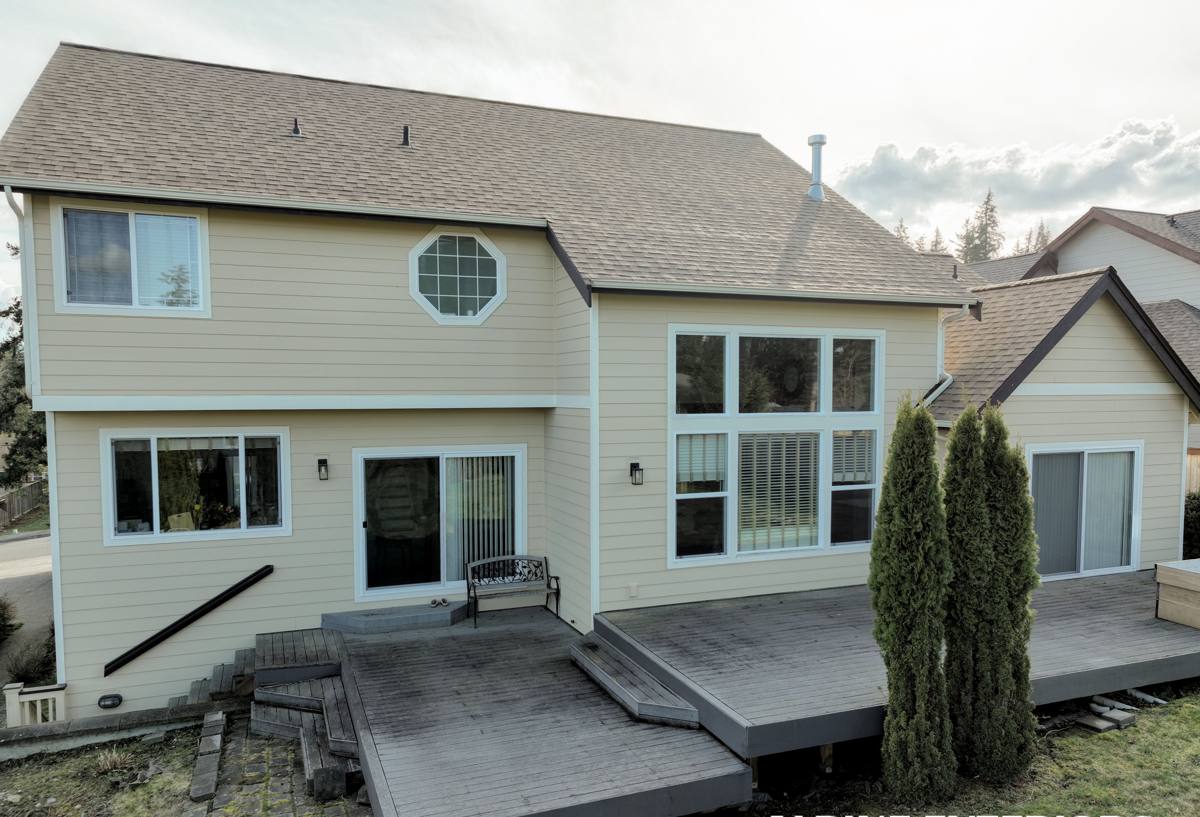
What Sudden Valley and Edgemoor Homes Need From a Deck
Two things define deck performance here: how well water is shed away from the structure, and how well the materials resist corrosion and organic growth. Get those two right and a deck will look and perform well for decades. Get them wrong and you're looking at repairs inside five to eight years, sometimes sooner on north-facing or shaded decks that never fully dry out between storms.
Salt Air and Metal Fatigue
Proximity to Bellingham Bay means airborne salt settles on exposed metal — nails, screws, joist hangers, railing brackets — and accelerates corrosion compared to homes further inland. Standard electro-galvanized fasteners are not enough this close to the water. We spec stainless steel or heavy hot-dip galvanized hardware rated for coastal exposure on every connection point, not just the ones that show.
Driving Rain and Water Intrusion
Whatcom County storms often come in sideways off the water, which means rain doesn't just fall on a deck surface — it drives into seams, under railings, and behind ledger boards attached to the house. Where the deck meets the home is the single most common failure point we see on older decks in this area, because that's where water gets trapped against wood framing with nowhere to go.
Moss Season
The long wet season means moss and algae get a real foothold on any deck surface that doesn't drain or dry quickly. Beyond looking bad, moss holds moisture against the decking material and makes surfaces genuinely slippery — a real fall hazard on stairs and transitions, not just a cosmetic issue.
What a Correctly Built Deck Involves
Ledger Attachment and Flashing
The ledger board — the piece that bolts the deck to the house — needs proper flashing that directs water away from the house framing rather than trapping it behind the ledger. This is invisible once the deck is finished, which is exactly why it's the step most likely to get shortcut. We flash every ledger connection to shed water outward, and we won't attach a ledger to siding without cutting back to sound sheathing first.
Footings and Framing for Wet Ground
Whatcom County soil holds water longer than sandier climates, and footings need to be sized and set below frost depth with proper drainage around them. We use pressure-treated framing rated for ground contact where it matters and keep joists coated or capped to slow rot at the cut ends, which is where untreated wood fails first.
Decking Material Selection
The decking surface itself takes the brunt of the climate — sun when it shows up, rain most of the year, and moss in between. Material choice here is a genuine trade-off between upfront cost, appearance, and long-term maintenance, and it's worth walking through honestly rather than defaulting to whatever's cheapest that week.
| Material | Moisture Behavior | Moss/Algae Resistance | Maintenance |
|---|---|---|---|
| Pressure-treated pine | Absorbs and releases water; prone to cupping if not sealed | Low — needs regular cleaning | Annual sealing/staining |
| Western red cedar | Naturally moisture-resistant, ages gracefully if maintained | Moderate — natural oils help but wear off | Periodic sealing to hold color and resistance |
| Composite decking | Doesn't absorb water or rot | Higher, but surface film can still grow moss if never cleaned | Occasional washing, no sealing |
| PVC/cellular decking | Fully water-resistant, no wood fiber to feed rot | High | Lowest — mainly periodic rinsing |
None of these are automatically "the right answer" — a cedar deck with a covered porch overhead behaves very differently than the same cedar in full weather exposure. Part of our estimate process is looking at your specific site — sun exposure, tree cover, proximity to the water — before recommending a material rather than selling a default.
Our Deck Building Process
Site Assessment
We walk the site and look at drainage patterns, existing grade, sun and shade exposure, and how close the build is to salt air or standing moisture. This shapes footing placement, material recommendations, and where extra flashing or drainage detail is worth the added cost.
Design and Permitting
Whatcom County and local jurisdictions require permits for most deck construction, particularly anything attached to the house or built above a certain height. We handle the permit submission and design to code rather than treating it as optional paperwork — an unpermitted deck can become a real problem at resale.
Framing and Structural Work
This is where the climate-specific decisions get made: ledger flashing, fastener grade, footing depth, and joist spacing sized for your decking material and expected load. It's also the stage that's completely covered once decking goes down, which is exactly why it matters most.
Decking, Railing, and Finish
Surface installation, railings, stairs, and any finish coating happen last. We install with gapping appropriate to the material and the wet climate here — too tight and boards can't shed water and dry, too loose and the deck feels unfinished.
Final Walkthrough
We go through the finished deck together, cover basic care for the specific material installed, and answer questions about seasonal maintenance before we consider the job done.
Why It Matters That the Crew Already Works This Area
A deck built to a generic national spec will often pass inspection and look fine on day one. The difference shows up in year three or four, when a crew unfamiliar with this specific stretch of coastline didn't account for how much salt air actually degrades standard hardware, or how long moisture sits against a north-facing ledger board in a Whatcom County winter. A crew that regularly builds and repairs decks in Sudden Valley and Edgemoor has already seen what fails here and adjusts for it as a default, not an upsell.
That also means faster, more accurate estimates — we're not guessing at soil conditions, typical wind exposure, or permitting requirements for the area, because we've already worked through them on other projects nearby.
Maintaining a Deck Through Moss Season
Even a well-built deck needs some seasonal attention in this climate. A short annual routine prevents most of the problems we get called out to fix on older decks.
- Sweep debris and standing leaves off the deck surface before fall rains set in — trapped organic matter feeds moss and holds moisture against the boards.
- Clean visible moss or algae buildup with a deck-safe cleaner rather than a pressure washer alone, which can damage wood fibers or composite surface layers.
- Check railings and stair connections annually for looseness — the first sign of fastener corrosion is usually movement, not visible rust.
- Inspect where the deck meets the house for staining, soft wood, or gaps in flashing — this is the most common place water intrusion starts.
- Reseal wood decking on the manufacturer's recommended schedule; don't wait for visible graying to reapply protection.
- Keep gutters and downspouts near the deck clear so runoff isn't dumping extra water directly onto or under the structure.
Repair or Replace?
Not every aging deck needs a full rebuild. If the framing and footings are sound and the damage is limited to surface boards or railings, targeted repair can extend the life of a structurally solid deck for a fraction of replacement cost. But if the ledger connection has been compromised by trapped moisture, or footings have shifted, patching the visible surface just delays a bigger problem. Part of an honest estimate is telling you which situation you're actually in before we recommend a scope of work.
Get a Straightforward Estimate
If you're planning a new deck in Edgemoor or Sudden Valley, or dealing with an older deck that's showing its age, we're happy to take a look and give you a clear, no-pressure estimate based on your actual site — not a generic quote. Fill out the form below and we'll follow up to schedule a time.