 Sudden Valley Siding
 Why Edgemoor Homes Need Windows Built for This Climate
Homes in and around Edgemoor sit close enough to the water and the weather patterns that roll off it that window performance here isn't just about looks or energy bills — it's about keeping moisture out of the wall assembly year after year. Whatcom County's marine climate means long stretches of low-intensity rain, wind-driven storms that push water sideways into window openings, and a near-constant film of moisture and salt air that settles on glass, frames, and trim. Add in a moss season that can run half the year on shaded north- and west-facing walls, and you've got conditions that punish any window installed without real attention to flashing, drainage, and material choice.
This isn't a page about windows in general. It's about what a correct custom window job looks like specifically for this neighborhood, in this county, given the weather it actually gets — not the weather a national window brand's brochure assumes.
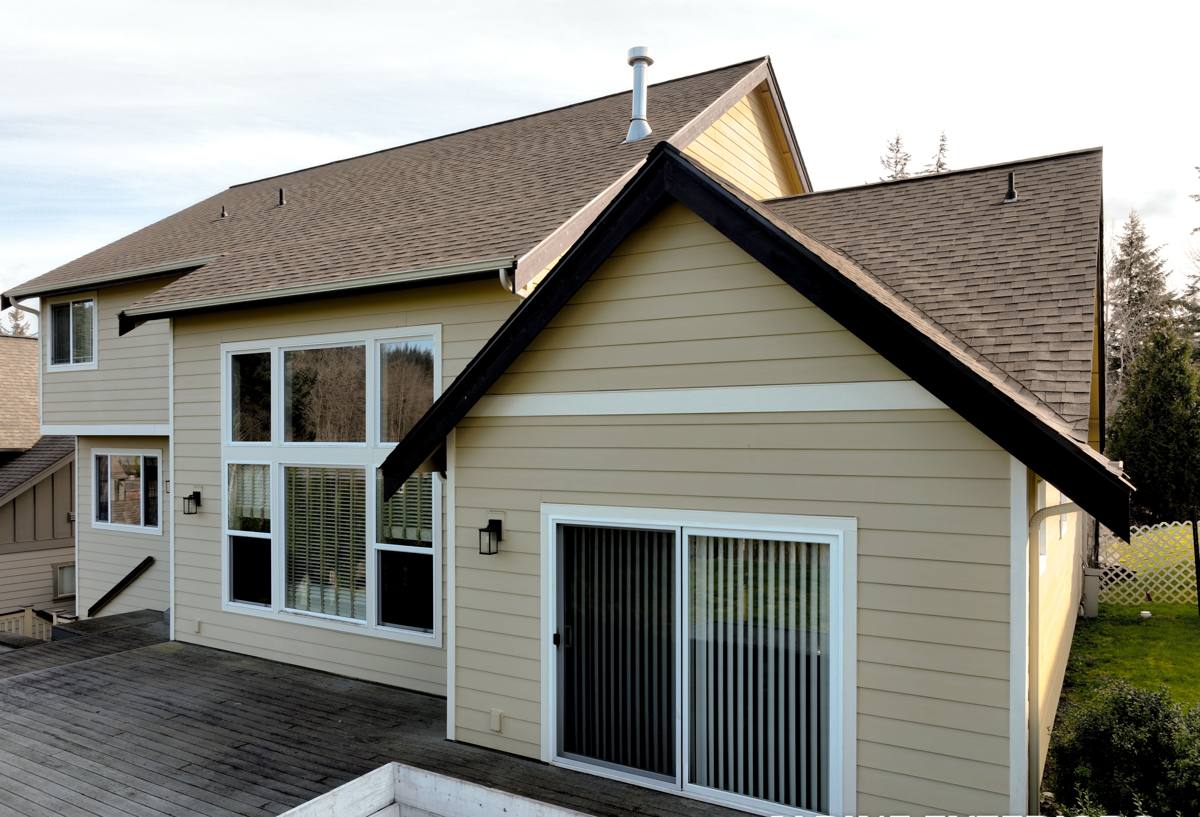
What "Custom Windows" Actually Means for This Area
"Custom" doesn't have to mean exotic shapes or premium upgrades, though we do those too. Most of the custom work we do in Edgemoor falls into a few practical categories:
- Non-standard openings — older homes and additions often have rough openings that don't match any stock size, especially on houses built or remodeled before modern window sizing became standardized.
- Full-frame replacement — when the existing frame, sill, or surrounding sheathing has taken on water damage, a simple insert replacement isn't enough; the opening needs to be rebuilt correctly.
- Matching sightlines — on additions or partial replacements, matching sash proportions and trim reveal to the existing house so new windows don't look bolted on.
- Specialty units — bay, bow, picture, and casement combinations sized to a specific wall, not a catalog opening.
The common thread is that a custom window job is only as good as the opening it goes into. In a climate that drives water at walls sideways, that opening has to be built to shed water outward and downward, every time, regardless of what brand of window sits inside it.
Insert vs. Full-Frame Replacement
Insert replacement (installing a new window into the existing frame) is faster and less disruptive, and it's the right call when the existing frame and surrounding wall are still sound. But on many older Whatcom County homes we find soft sill material, failed flashing, or trim that's been absorbing water for years without showing obvious signs indoors. In those cases, insert replacement just seals the problem behind a new window instead of fixing it. We tell homeowners honestly which situation they're in before we quote the job — not after the contract is signed.
Material and Glass Choices for Salt Air and Driving Rain
Every frame material handles this climate differently. None of them are wrong choices across the board — the right one depends on the wall's exposure, the home's style, and how much upkeep you want to take on.
| Frame Material | How It Handles Salt Air & Moisture | Maintenance |
|---|---|---|
| Vinyl | Won't corrode or rot; performs well in coastal exposure | Low — occasional cleaning |
| Fiberglass | Very stable in moisture and temperature swings, resists warping | Low — occasional cleaning |
| Wood (clad or unclad) | Excellent appearance but vulnerable at joints and sills if finish fails | Higher — regular finish inspection/repaint |
| Aluminum | Durable but prone to condensation and corrosion near salt air without thermal breaks | Moderate — watch for pitting and seal wear |
For homes with direct water-facing exposure, we generally steer customers toward vinyl or fiberglass frames with reinforced corners and a continuous weep system, simply because they hold up with the least ongoing maintenance in salty, wet conditions. Wood-frame windows can still be the right call for a period-correct look, but we're upfront that they require a maintenance commitment this climate will test.
Glass Packages
Double-pane, low-E, argon-filled glass is the practical standard here — it cuts heat loss and reduces condensation on cold, humid mornings, which is common on shaded Edgemoor lots. Triple-pane adds cost and weight without a strong payoff for most single-family homes in this climate; we'll spec it if noise reduction or an unusually exposed elevation calls for it, but we don't upsell it by default.
Signs Your Current Windows Are Ready for Replacement
Coastal moisture damage doesn't always show up where you'd expect. A quick walk around your home can tell you a lot:
- Soft or spongy wood at the sill or lower corners of the frame, inside or out
- Persistent fogging or a visible haze between panes (seal failure)
- Paint or caulk that's cracked, peeling, or missing at the trim-to-siding joint
- Drafts or a noticeable temperature drop near the window on windy days
- Moss or dark streaking building up on the sill or below the window, a sign water is sitting rather than draining
- Difficulty opening, closing, or locking — frames can swell or shift as moisture gets in
- Visible daylight or gaps around the frame from outside
Any one of these is worth a look. Several together usually mean the opening itself, not just the window unit, needs attention.
How Our Installation Process Works
1. On-Site Assessment
We measure the actual openings, check the condition of the framing and sill, and look at wall exposure — which direction it faces, how much wind-driven rain it takes, whether moss growth suggests a persistent moisture pattern. This tells us whether insert or full-frame replacement is the right approach.
2. Removal and Opening Prep
Old units come out carefully so we can inspect the sheathing and framing underneath. Any soft or damaged wood gets addressed before anything new goes in — installing a new window over a compromised opening just hides the problem.
3. Flashing and Drainage
This is where most of the long-term performance of a window installation is actually decided. We use a sill pan and layered flashing sequence so that any water that gets past the window sash drains back out, not into the wall cavity. In driving rain, this detail matters more than the window brand.
4. Installation and Sealing
The window is set plumb, level, and square, shimmed and fastened per manufacturer spec, then insulated and sealed with the right materials at the right layers — house wrap, flashing tape, and exterior sealant working together rather than sealant alone trying to do the whole job.
5. Trim and Finish
Exterior trim is finished and sealed to shed water away from joints, since trim-to-siding transitions are one of the most common points where we find hidden moss and moisture damage on older homes.
Moss, Trim, and Flashing — The Detail Most Installers Skip
Whatcom County's moss season isn't just a roofing issue. On shaded elevations, moss and algae can establish on window sills, trim, and the top of exterior casing, holding moisture against wood and paint far longer than open sun-exposed walls ever would. A window installed without a sloped sill, proper kerf, or adequate drip cap gives moss a flat, damp surface to take hold on — and once it does, it accelerates finish failure and wood decay underneath.
We build sills with slope and drip detailing specifically so water and debris don't sit against the frame, and we make sure trim profiles don't create the flat ledges moss favors. It's a small design choice that makes a real difference on a shaded Edgemoor lot over five or ten years.
Energy Performance in a Marine Climate
Whatcom County doesn't see extreme heat, so cooling load is rarely the deciding factor in glass selection here. What matters more is limiting heat loss through the long, wet, overcast season and controlling condensation on interior glass, which is common when warm indoor air meets cold glass on damp mornings. A properly sealed, low-E double-pane window with a warm-edge spacer addresses both without over-specifying for a climate that doesn't need it.
Cost Factors to Expect
| Factor | Effect on Project Cost |
|---|---|
| Insert vs. full-frame replacement | Full-frame costs more but is necessary if framing is damaged |
| Frame material (vinyl, fiberglass, wood) | Vinyl typically lowest, wood typically highest |
| Custom or non-standard sizing | Increases cost over stock sizes due to manufacturing lead time |
| Number of openings and access | More units and difficult access add labor time |
| Trim and siding repair needed | Adds cost if existing moisture damage is found during removal |
We give a written estimate after seeing the actual openings — not a phone-quote number that changes once we're on site.
Why Hiring a Crew That Already Works Edgemoor Matters
A window that's technically installed correctly on paper can still fail early if it's flashed and sealed the way you'd do it in a drier inland climate. Crews who work this specific stretch of Whatcom County regularly know which elevations take the worst wind-driven rain, where moss tends to build fastest, and how the local building department expects flashing and weatherization details to be handled. That local pattern recognition is hard to replicate from a crew that mostly works elsewhere and treats every job the same way.
We're not asking you to take our word for the details that matter — ask any contractor how they flash a sill, what drainage plane they use behind the trim, and how they handle an opening with soft framing. The answers tell you a lot about whether they've actually dealt with this climate before.
If your windows are drafty, fogged, hard to operate, or just original to a home that's due for an upgrade, we're happy to take a look and give you a straightforward, no-pressure estimate — no obligation, just an honest read on what your home actually needs. Use the form below to get started.