 Sudden Valley Siding
 Why Edgemoor Decks Wear Out Faster Than the Manufacturer's Warranty Suggests
Every deck material sold today comes with a warranty that assumes something close to ideal conditions. Edgemoor doesn't offer ideal conditions. Homes in this part of Whatcom County deal with a marine-influenced climate that layers three separate stresses on outdoor structures: salt-laden air moving in off nearby water, long stretches of driving rain, and a moss season that can run half the year in shaded yards. Individually, any one of those is manageable. Together, they shorten the useful life of a deck that wasn't built or maintained with this specific climate in mind.
Salt air accelerates corrosion in fasteners, joist hangers, and any exposed metal hardware. Once a nail or screw starts rusting, it swells slightly, which cracks the wood fibers around it and gives water a new path inward. Driving rain, especially when it comes in at an angle during Pacific storms, gets pushed under flashing and around ledger boards that weren't detailed correctly the first time. And moss doesn't just look bad on a deck surface — its root structure holds moisture against the wood or composite cap far longer than open air would, which is exactly the condition that breeds rot underneath and algae staining on top.
A deck that's failing in Edgemoor usually isn't failing because the homeowner did anything wrong. It's failing because it was built to a generic spec instead of a Whatcom County one.
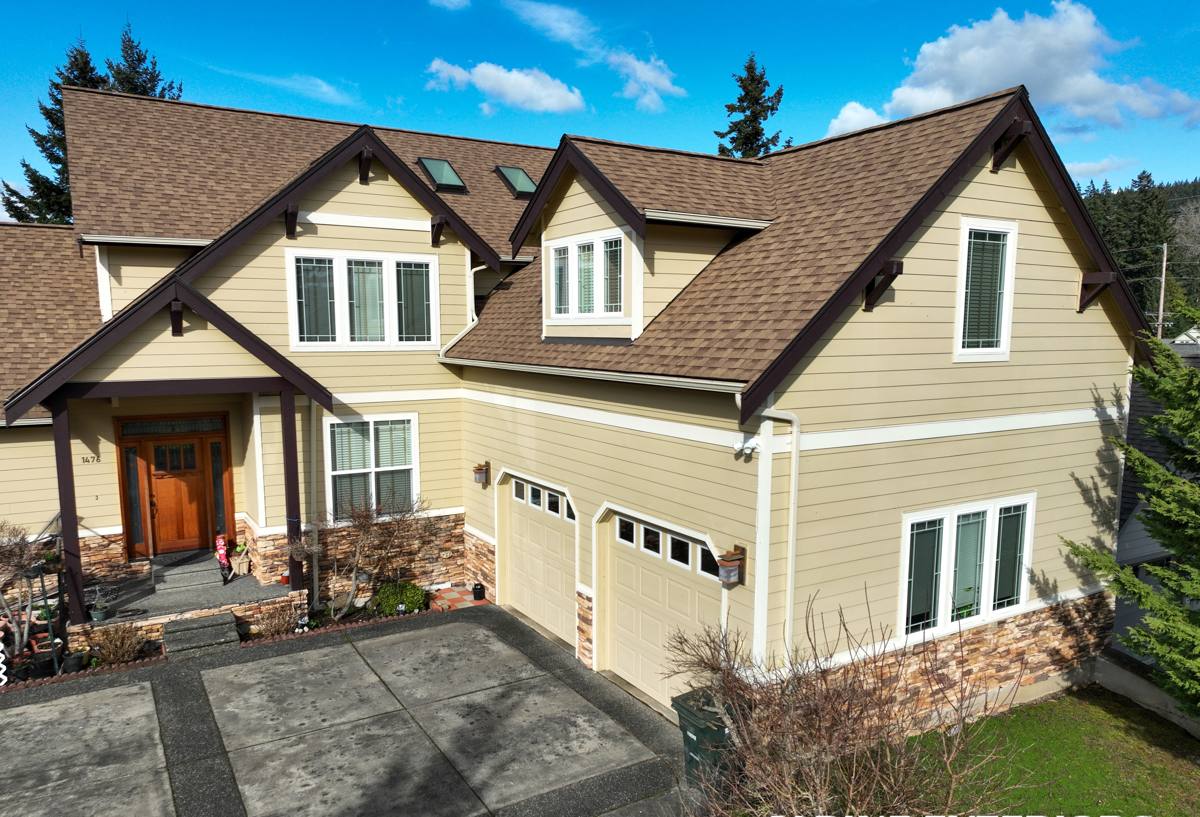
Signs a Deck Needs Replacement, Not Another Repair
We get a lot of calls asking for a repair that turns into a replacement conversation once we're actually under the structure. Repairs make sense when the problem is isolated — a few damaged boards, a loose railing post, a section of decking that took direct sun damage. Replacement becomes the honest recommendation when the problems are structural or spread across the whole deck.
- Soft, spongy spots in the decking surface, especially near the house or in shaded corners
- Rust streaking or crumbling metal at joist hangers, ledger bolts, or post bases
- A ledger board separating from the house, or flashing that's clearly missing or failed
- Persistent moss or black algae that comes back within weeks of cleaning
- Wobble or give in the railing system when leaned on
- Visible rot in support posts, especially at the point where they meet the ground or a footing
- A deck older than 20 years built with untreated fasteners or no proper flashing detail
If you're seeing two or more of these, a repair is usually a short-term patch on a longer-term problem. We'll always tell you honestly which situation you're in.
What a Correct Deck Replacement Involves in This Climate
Ledger and Flashing Detail
The ledger board — where the deck attaches to the house — is the single most common failure point we find on older Edgemoor decks. In a climate with this much driving rain, the ledger needs proper flashing that directs water away from the house sheathing, not just a bead of caulk and a bolt pattern. We treat this connection as the most important part of the entire structure, because a failure here doesn't just damage the deck, it can damage the house behind it.
Framing and Fasteners
We frame with corrosion-resistant, code-rated hardware and fasteners rated for outdoor and coastal-influenced exposure. Given the salt air in this area, we don't cut corners on hardware grade just to save a small amount on materials — it's the part of the job nobody sees again once decking goes down, and it's the part most likely to cause a failure if it's undersized.
Footings and Post Bases
Ground contact is where moisture and moss problems concentrate. We set post bases above grade on proper footings so posts aren't sitting in standing water or buried moss and debris, which is a common shortcut on older decks that leads to base rot years before the rest of the structure shows wear.
Decking Surface and Drainage
Board spacing, gapping, and the slope of the frame all affect how fast a deck sheds water. We build in the drainage detail up front rather than relying on the decking material alone to solve moisture problems.
Choosing a Decking Material That Fits Whatcom County Weather
There's no single "best" decking material — there's a best material for your budget, your maintenance appetite, and how much moss and moisture exposure your specific yard gets. Here's how the common options actually perform in this climate.
| Material | Moisture & Moss Behavior | Maintenance | Typical Lifespan Here |
|---|---|---|---|
| Pressure-treated wood | Absorbs moisture; needs sealing to resist moss staining | Annual cleaning and re-sealing recommended | 10-15 years with upkeep |
| Cedar | Naturally moisture-resistant but softens without maintenance | Periodic staining/sealing | 15-20 years with upkeep |
| Capped composite | Sheds moisture well; can still surface-stain with heavy moss/algae buildup | Periodic washing, no sealing needed | 25-30 years |
| PVC decking | No wood fiber to absorb moisture; best resistance to rot and moss staining | Occasional washing | 25-30+ years |
We install wood, capped composite, and PVC depending on what a homeowner wants — our role is to explain the real maintenance trade-offs honestly, not to steer everyone toward the highest-margin product. A well-built wood deck that gets seasonal attention can outperform a poorly detailed composite deck, and vice versa.
Our Deck Replacement Process
- On-site assessment — we get under and around the existing deck to check framing, ledger condition, and footings, not just the visible decking surface.
- Honest scope discussion — we tell you what actually needs to be replaced versus what could be repaired, and why.
- Material and layout selection — we walk through decking options against your budget and how much moss/shade exposure your yard actually gets.
- Demolition — full removal of the old structure down to sound framing or ground, with debris hauled off, not left in the yard.
- Rebuild — new footings as needed, corrosion-resistant framing hardware, corrected ledger flashing, and proper drainage slope.
- Decking and railing installation — installed to manufacturer spec so warranties stay intact.
- Final walkthrough — we go over basic maintenance expectations for your specific material so you know what upkeep actually looks like here.
Permits and Code Considerations
Deck replacements involving structural changes, height above a certain threshold, or attachment to the house typically require a permit and inspection in Whatcom County. Guardrail height, baluster spacing, and stair rise/run all have code minimums that get checked. We handle the permitting conversation as part of the project rather than leaving homeowners to figure out county requirements on their own, and we don't cut structural corners to avoid an inspection.
What Drives the Cost of a Deck Replacement
Every deck is different, so we give real numbers on-site rather than a number that doesn't match your project. In general, cost is driven by a handful of factors:
| Factor | Why It Matters |
|---|---|
| Deck size and footprint | More square footage means more framing, decking, and labor hours |
| Decking material | Wood, capped composite, and PVC carry different material costs and lifespans |
| Height and structure | Multi-level decks or decks requiring taller support posts need more engineering and framing |
| Ledger and flashing condition | Correcting a poorly detailed ledger connection to the house adds labor but prevents future water damage |
| Railing style | Cable, glass, and custom railing systems cost more than standard baluster railing |
| Access and site conditions | Slope, existing landscaping, and how the yard is accessed affect demolition and material staging |
Rather than quoting a rough range that doesn't reflect your actual deck, we prefer to walk the site and give you a firm, itemized number.
Why Hiring a Crew That Already Works in Edgemoor Matters
Deck construction isn't regional in theory, but it is in practice. A crew that mostly works drier inland climates tends to under-detail flashing, under-spec hardware, and skip drainage planning because those shortcuts don't fail as fast somewhere with less rain and less moss pressure. A crew that works Edgemoor and the rest of Sudden Valley regularly has already seen what fails here and builds accordingly from the first footing. That local pattern recognition — knowing which fastener grade holds up, which ledger detail actually sheds water, which decking material handles a shaded, moss-prone yard — is the difference between a deck that needs attention again in eight years and one that doesn't.
We also know what local permitting expects, what the terrain and drainage patterns around Sudden Valley homes tend to look like, and how to sequence a project around this area's wetter months so a rebuild isn't sitting exposed to weeks of rain mid-project.
Get an Honest Look at Your Deck
If your deck is showing soft spots, rust, persistent moss, or just age, we're happy to come take an honest look and tell you straight whether you're looking at a repair or a full replacement. Reach out below for a free, no-pressure estimate — no obligation, no upsell, just a clear picture of what your deck actually needs.