 Sudden Valley Siding
 Why Edgemoor Siding Takes a Different Kind of Beating
Edgemoor sits close enough to the water that homes here deal with a combination most inland Whatcom County properties don't: salt-laden air, wind-driven rain that hits walls at an angle instead of falling straight down, and a shaded, damp microclimate that keeps moss and algae growing for most of the year. Any one of those on its own is manageable. Together, they shorten the life of siding that isn't built or installed to handle them, and they turn small, ignorable problems into repair jobs faster than most homeowners expect.
We work siding repair calls in Edgemoor and the surrounding Sudden Valley area regularly enough to know the failure patterns are consistent: corner boards and butt joints that were caulked instead of properly flashed, lower courses that wick moisture from splashback, and shaded north- and west-facing walls where moss holds water against the surface long after the rest of the house has dried out. Understanding those patterns is most of what separates a repair that actually lasts from one that fails again in a year or two.
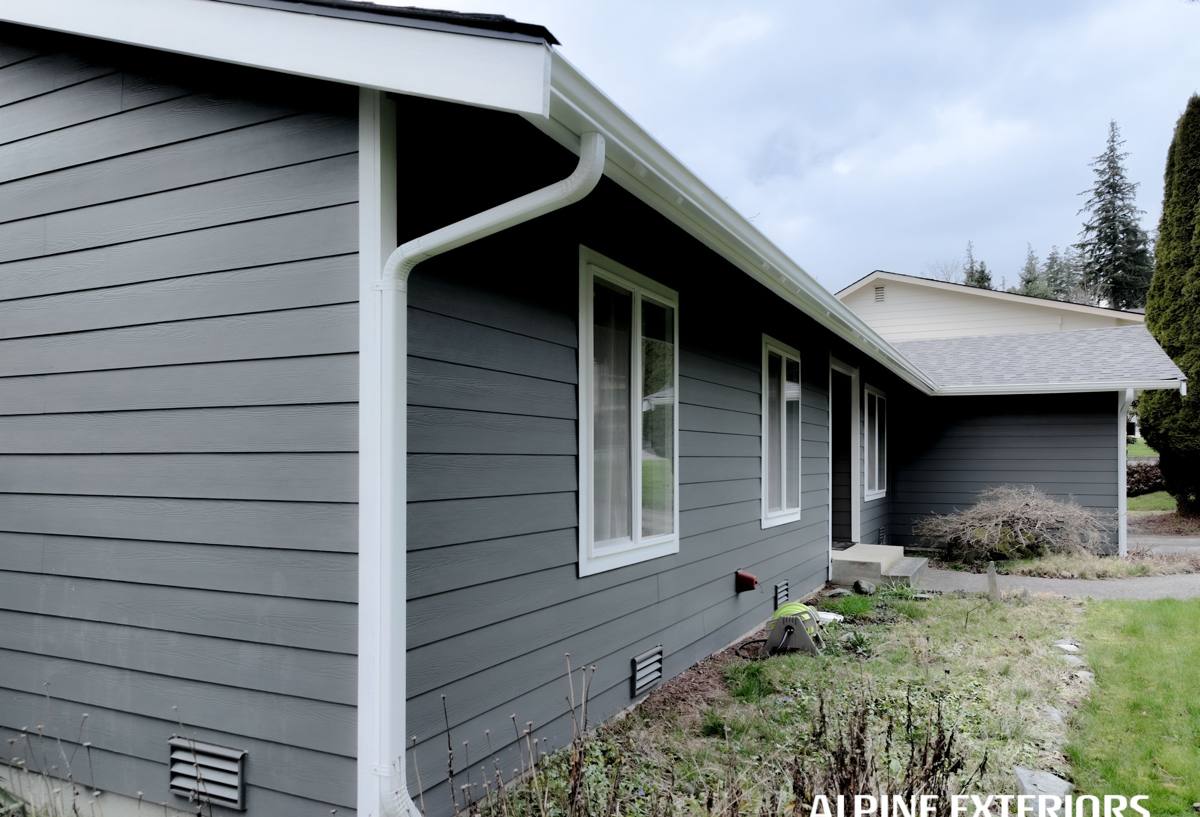
What Salt Air and Driving Rain Actually Do to Siding
Salt air isn't just a coastal curiosity — it's a slow chemical process. Airborne salt settles on exterior surfaces and accelerates the breakdown of fasteners, caulk, and paint finishes, especially where those materials were already marginal. Driving rain compounds the problem by forcing water sideways and upward into laps, seams, and butt joints that were only ever designed to shed water moving straight down.
On wood-based or engineered wood siding, that combination shows up as swelling, delamination at the edges, and soft spots that spread once moisture gets behind the surface layer. On poorly installed fiber cement, it shows up as caulk failure at joints and moisture staining where boards weren't gapped or flashed correctly. The material matters, but installation quality is just as often the real culprit — a lot of what we're called out to repair in this area isn't a bad product, it's a product installed without accounting for the exposure the wall actually faces.
Why Moss Season Makes It Worse
Whatcom County's long wet season means moss and algae get months of uninterrupted growing conditions on shaded walls, especially where tree canopy blocks sun and airflow. Moss doesn't just look bad — it holds moisture directly against the siding surface, keeps that surface wet far longer than open-air drying would allow, and creates the exact conditions that rot wood substrates and stain or degrade weaker finishes. A wall that gets full sun dries out between storms. A shaded wall under moss often doesn't dry out at all until summer.
Signs an Edgemoor Home Needs Siding Repair
Most siding failures give warning signs well before they become structural. Catching them early is the difference between a targeted repair and a full wall tear-off.
- Soft or spongy spots when you press on siding near the bottom courses or around windows
- Visible gaps opening up at butt joints, corners, or trim intersections
- Peeling, bubbling, or chalky paint that keeps failing in the same spots after repainting
- Dark staining or streaking that doesn't wash off, especially on shaded walls
- Persistent moss or algae growth that comes back within weeks of cleaning
- Warping, cupping, or visible waviness along a wall plane
- Higher heating bills or noticeable drafts near exterior walls
- Caulk that's cracked, shrunk, or pulled away from joints
Any one of these on its own might just need monitoring. Two or more together, especially on the same wall, usually means moisture has already gotten past the surface and is doing damage you can't see yet.
What a Correct Siding Repair Actually Involves
A lot of "siding repair" in this region is really just caulk and paint over a problem that's still active underneath. That buys a season, sometimes two, before the same spot fails again — often worse, because the underlying rot or moisture intrusion kept working the whole time.
A repair done right starts with finding out why the failure happened, not just patching where it shows. That means pulling back enough siding to inspect the water-resistive barrier and flashing underneath, checking for rot in the sheathing, and confirming whether the damage is isolated or has spread along a course. Only after that inspection does it make sense to talk about what gets replaced and how.
Steps in a Proper Repair
- Inspect the affected area and remove enough surrounding material to see the full extent of damage
- Check the house wrap, flashing, and sheathing underneath for moisture or rot
- Address the actual water intrusion point — not just the visible symptom
- Replace damaged boards and trim with matching material, properly gapped and fastened
- Re-flash and re-seal joints correctly, rather than relying on caulk alone
- Match the finish so the repair blends with the rest of the wall
Skipping step two is the most common shortcut we see, and it's the one that guarantees the repair won't hold.
Repair or Replace? How We Make That Call
Not every damaged section needs a full re-side, and not every "small" repair should stay small. The right call depends on how much of the wall is affected, what's underneath it, and how old the existing siding already is.
| Factor | Repair usually makes sense | Replacement usually makes sense |
|---|---|---|
| Extent of damage | Isolated to one section or a few boards | Spread across multiple walls or courses |
| Sheathing condition | Dry, structurally sound underneath | Soft, rotted, or water-stained sheathing found |
| Age of existing siding | Under 10–15 years, otherwise in good shape | Original siding already near or past its service life |
| Material match | Matching boards/finish are still available | Discontinued product, visible mismatch unavoidable |
| Root cause | Single, fixable intrusion point | Systemic issue — poor original installation, wrong product for exposure |
We'll tell you honestly which side of that table your home falls on. If a targeted repair will hold, that's what we recommend — there's no reason to push a full re-side on a homeowner who doesn't need one.
Why We Repair Exclusively With James Hardie Fiber Cement
When we do replace sections during a repair, we use James Hardie fiber cement — nothing else. We don't install vinyl, LP SmartSide, Cemplank, Allura, primed spruce, or cedar, and in an exposure like Edgemoor's that's not a brand preference, it's a practical one. Fiber cement doesn't swell, delaminate, or rot the way wood-based products can when they take on repeated moisture. It's non-combustible, which matters given the wildfire-season air quality and ember concerns the whole region has seen more of in recent years. And Hardie's ColorPlus factory finish is baked on and warrantied against fading and peeling in a way field-applied paint simply isn't.
That matters specifically for repairs, because a patched section using a different, softer material will age differently than the rest of the wall — meaning you're back to another repair sooner, in the same spot. Matching new Hardie boards into an existing Hardie wall keeps the repair invisible and keeps the whole wall aging at the same rate. Hardie's HZ5 product line in particular is engineered for climates with exactly this kind of moisture exposure, which is one of the reasons we standardized on it rather than offering a mix of materials.
Our Process for an Edgemoor Repair Call
Every repair starts with a real inspection, not a quote written from the driveway. We look at the damaged area, check surrounding sections for early signs of the same issue, and get a look at what's happening behind the siding wherever we can. From there:
- We explain what we found in plain terms — what's causing it, not just what it looks like
- We give you an honest repair-vs-replace recommendation, with the reasoning behind it
- We provide a clear scope and price before any work starts, no surprise add-ons mid-job
- We fix the actual water intrusion source, not just the visible board
- We match materials and finish so the repair doesn't stand out
We don't upsell a full re-side when a repair will do the job, and we won't quietly patch over a problem that's going to come back. Both of those cost you more in the long run, and neither one is how we want to be known in this area.
Keeping Moss and Algae From Undoing the Repair
A repair is only as good as what happens to the wall afterward. In a shaded, damp Edgemoor lot, moss and algae will come back if nothing changes about the conditions that let them grow in the first place. A few habits go a long way: keep gutters clear so water isn't sheeting down the wall face, trim back vegetation that's holding moisture and blocking airflow along a wall, and rinse visibly mossy sections before growth gets thick enough to hold water long-term. None of that replaces a proper repair, but it buys the repaired section — and the rest of the wall — more years before anything needs attention again.
Why It Matters That We Already Work in Edgemoor
A repair crew that's worked this specific stretch of Whatcom County knows which walls take the worst of the wind-driven rain, which lots hold shade and moisture longest, and what a failed original installation typically looks like once it's opened up. That's not something you get from a general contractor swinging through once. It shows up in faster, more accurate diagnosis, fewer surprises once a wall is opened up, and repairs that account for the exposure your specific home actually faces — not a generic assumption about Pacific Northwest weather.
If you're seeing soft spots, staining, persistent moss, or failing caulk on your siding, it's worth getting a second set of eyes on it before it spreads. We offer free, no-pressure estimates for Edgemoor and Sudden Valley homeowners — an honest look at what's going on, what it'll take to fix it right, and no obligation to move forward. The form below is the easiest way to get started.