 Sudden Valley Siding
 Windows in Yew Street Take a Different Kind of Beating
Yew Street sits inside the broader Sudden Valley community in Whatcom County, and like the rest of the area, homes here deal with a specific combination of weather that's harder on windows than most people realize. It's not one dramatic event that wears out a window — it's the steady grind of moisture-laden air, wind-driven rain that hits glass and trim at an angle instead of straight down, and long stretches of gray, damp months where surfaces rarely get a chance to fully dry out. Add in the salt-tinged air that drifts in off the water and settles on hardware, sealants, and exposed wood, and you've got conditions that shorten the working life of a window system faster than a drier inland climate would.
None of that means every window in Yew Street is failing. It means that when a window does fail here, the causes are usually climate-driven rather than random, and a replacement job that doesn't account for that climate is just buying a few years before the same problems come back.
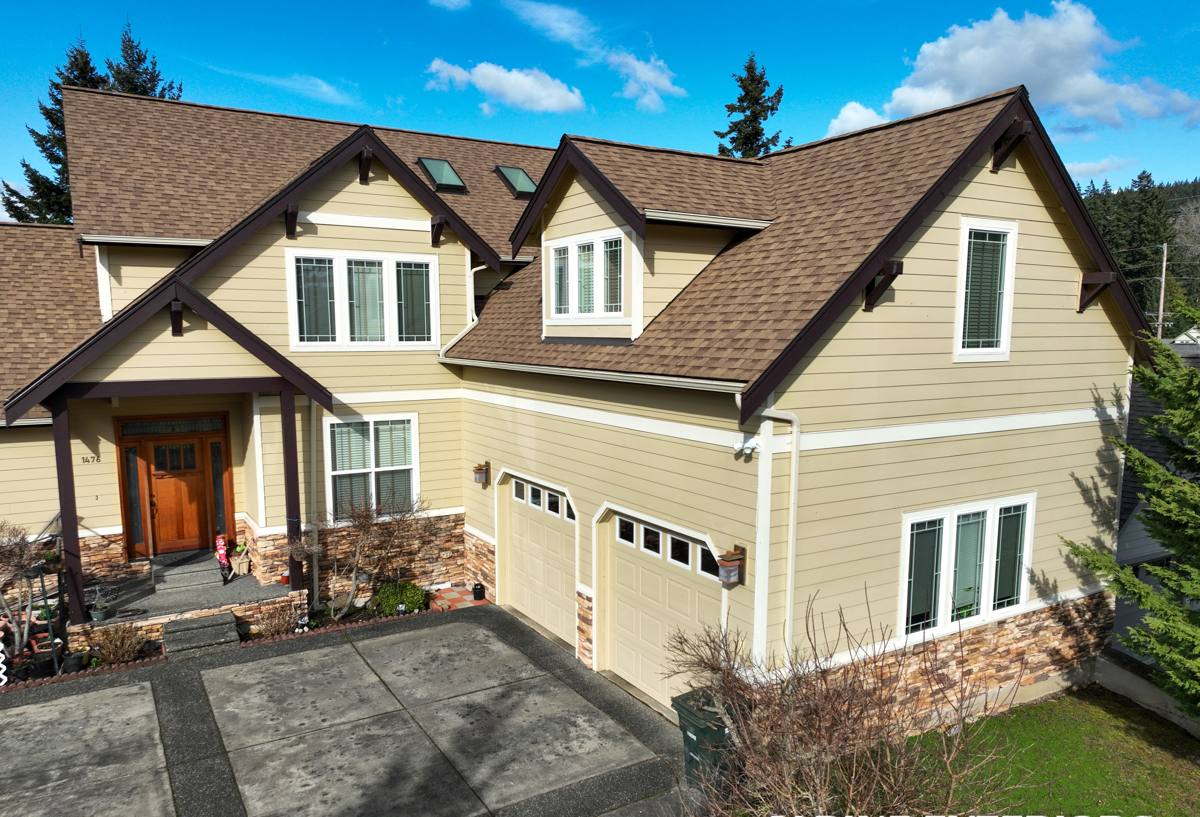
How to Tell a Window Is Actually Done, Not Just Dirty
Homeowners often assume a drafty or foggy window just needs new weatherstripping or a good cleaning. Sometimes that's true. But in this climate, several symptoms point to something deeper — moisture that's gotten into the frame, sash, or wall assembly and started doing damage that caulk and weatherstripping can't fix.
- Fogging or a visible haze between the panes of a double-pane window — the seal has failed and the gas fill is gone
- Soft or spongy wood at the sill or lower frame corners when you press on it
- Paint that keeps bubbling or peeling in the same spot no matter how often it's redone
- A persistent musty smell near the window, especially after a stretch of rain
- Visible moss or dark streaking on the exterior trim or the wall directly below the window
- Windows that are noticeably harder to open, close, or lock than they used to be
- Drafts you can feel with your hand even when the window is latched shut
- Interior condensation that shows up on cold mornings and doesn't go away once the house warms up
Any one of these on its own might not mean much. Two or three together, especially around the same window, usually means moisture has been getting past the seal for a while.
What a Correct Window Replacement Actually Involves
Swapping a window sounds simple — pull the old one, drop in the new one — but the part that determines whether the job lasts happens at the edges, not in the middle of the glass. Most window failures we see in this area trace back to flashing and sealing details that were rushed or skipped, not to the window unit itself.
Removal and Inspection
Once the old window is out, the opening gets inspected before anything new goes in. This is the point where hidden water damage — soft sheathing, rotted framing, compromised house wrap — actually gets found. Installing a new window over a damaged opening just hides a problem that will keep spreading behind the wall.
Flashing and Weatherproofing
This is the step that matters most in a wet, wind-driven climate. Proper flashing directs water that gets past the exterior cladding back out and away from the framing, using a shingled, overlapping sequence — sill pan first, then side flashing, then head flashing — so water always has somewhere to go besides into the wall. Skipping or shortcutting this sequence is the single most common cause of window-related rot we see on older installations in this area.
Insulation and Air Sealing
The gap between the new window frame and the rough opening needs to be filled with the right material — not stuffed with excess fiberglass, which can hold moisture, but sealed with a low-expansion foam or backer rod and sealant designed for window perimeters. This controls both drafts and condensation risk.
Setting, Shimming, and Fastening
The window has to be shimmed level, plumb, and square before it's fastened, or the sash won't operate correctly and the seals won't compress evenly — both of which shorten the window's working life regardless of how good the unit itself is.
Interior and Exterior Finish Work
Trim, caulking, and paint or stain get finished out to match the surrounding siding and interior casing, with attention to keeping exterior caulk joints intact where they matter for weather resistance.
Choosing Windows That Actually Hold Up Here
Frame material and glass package both affect how a window performs against salt air, constant damp, and moss growth. There's no single "best" window for every home, but some choices carry lower long-term maintenance burden in this specific climate.
| Frame Material | Moisture Behavior | Maintenance | Typical Trade-Off |
|---|---|---|---|
| Vinyl | Won't rot; unaffected by damp air | Low — occasional cleaning | Limited color/finish options, can look less premium on higher-end homes |
| Fiberglass | Very stable, minimal expansion/contraction, holds paint well | Low to moderate | Higher upfront cost than vinyl |
| Wood (clad exterior) | Good if the exterior cladding stays intact; vulnerable if it's breached | Higher — exterior clad needs periodic inspection | Best interior appearance, but installation quality matters more here than with any other material |
| Aluminum | Conducts cold and can condense/sweat in damp climates | Low | We generally steer homeowners away from bare aluminum frames for this reason, not because the metal itself is bad, but because condensation risk is high in a climate this humid |
On glass, a dual-pane unit with a low-E coating and argon fill is the practical standard for this area — it manages heat loss in a cool, wet climate and cuts down on interior condensation. Triple-pane is available and does perform better thermally, but for most homes here the added cost doesn't pencil out against a good dual-pane unit unless the window faces relentless wind and weather exposure.
Our Process, Start to Finish
- On-site assessment — we look at every window being considered, not just the ones you've flagged, since problems in this climate often show up on one side of the house before another.
- Honest recommendation — some windows genuinely just need re-caulking or hardware repair. We'll tell you when that's the case instead of pushing a full replacement.
- Written estimate — clear pricing by window, material, and any framing repair we expect to find, so there aren't surprise add-ons mid-project.
- Scheduling around weather — we plan install windows to avoid opening up walls during heavy rain stretches whenever possible.
- Removal, inspection, and any needed repair — framing or sheathing repair happens before the new window goes in, not after.
- Install with full flashing sequence — sill pan, side flashing, head flashing, air sealing, and proper shimming.
- Finish work — trim, caulking, and touch-up to match the existing exterior.
- Walkthrough — we check operation, locks, and seals with you before we consider the job done.
What Affects the Cost
Every home is different, but the main cost drivers on a Yew Street window replacement tend to be the same handful of factors.
| Factor | Why It Matters |
|---|---|
| Frame material | Vinyl is generally the most affordable; fiberglass and clad-wood cost more upfront |
| Number of windows | Per-window cost typically drops with volume since setup and crew time are shared |
| Hidden framing damage | Rot found once the old window is out adds material and labor to repair before the new unit goes in |
| Window size and configuration | Large picture windows, bays, and custom shapes cost more than standard operable sizes |
| Access | Second-story or hard-to-reach windows take more time and sometimes equipment |
| Trim and siding match | Matching existing exterior finish, especially on older homes, can add labor |
We'd rather give you a realistic range up front, including what we expect for likely framing repair based on the age and condition of your siding, than quote a bare minimum and adjust later.
Why It Matters That We Already Work This Area
A crew that's done window work throughout Sudden Valley knows what to expect before the old window even comes off the wall. We know which framing and siding types tend to trap moisture in this specific microclimate, what flashing details actually hold up against driving rain coming off the water, and how moss and algae growth patterns here tend to signal deeper trim or sheathing issues rather than just a cosmetic problem. That local pattern recognition means fewer surprises mid-project and a better read on what a given home actually needs versus a generic install approach that ignores the climate it's going into.
It also means we're not guessing at permitting or code requirements specific to Whatcom County — we handle that as a normal part of the job, not an afterthought.
Timing Your Project Around the Season
Window replacement can technically happen year-round, but scheduling matters more here than in a dry climate. Opening up a wall during a heavy rain stretch, even for a few hours, increases the risk of water getting into framing before the new window and flashing are in place. We watch the forecast and plan install days accordingly, and on multi-window projects we sequence the work so no opening sits exposed longer than necessary. Late spring through early fall tends to offer the most predictable weather windows for larger jobs, but a single window or two can usually be scheduled around a clear day at almost any time of year.
Get a Straight Answer on Your Windows
If you're not sure whether a window needs replacing, needs repair, or is actually fine, that's exactly what an estimate visit is for. We'll walk your home, tell you what we see, and give you a clear, no-pressure estimate for what it would take to get it right — no obligation either way. Use the form below to get started.