 Sudden Valley Siding
 Storm Damage in Ferndale Isn't Like Storm Damage Everywhere Else
Ferndale sits close enough to the water that roofs here take a different kind of beating than roofs twenty miles inland. It's not usually the dramatic hailstorm or the once-a-decade windstorm that does the most damage. It's the steady, unglamorous combination of salt-laden air off the Strait, wind-driven rain that comes in sideways instead of straight down, and a moss season that can run eight or nine months out of the year. Individually, none of that sounds like an emergency. Together, over a few winters, it's exactly how a sound roof turns into one with soft decking, lifted shingles, and water stains creeping across a ceiling.
When we talk about "storm damage roof repair" in Ferndale, we're talking about both ends of that spectrum: the acute damage from a specific windstorm or heavy rain event, and the cumulative damage that a storm exposes but didn't actually cause on its own. A good repair addresses whichever one you're actually dealing with — and a good contractor tells you honestly which one it is.
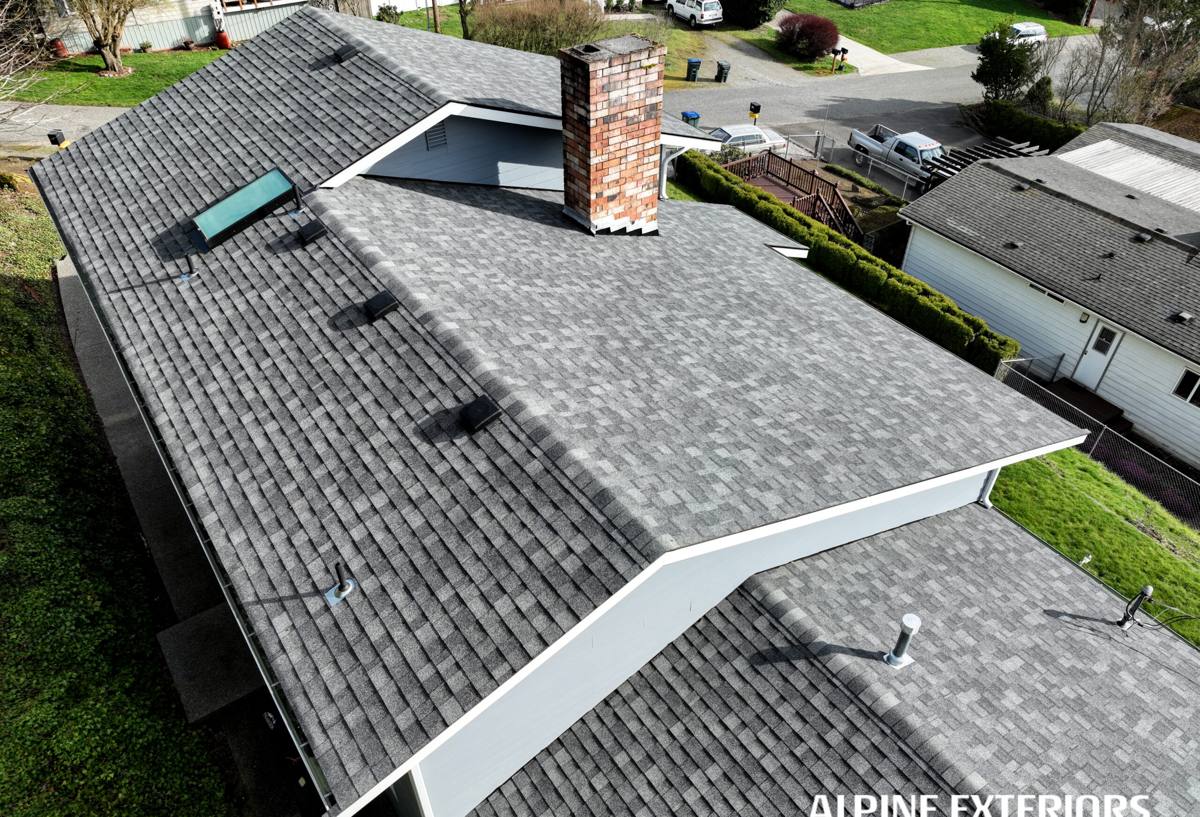
What Actually Counts as Storm Damage
Homeowners often assume storm damage means missing shingles you can see from the driveway. Sometimes that's true. More often, the damage is less obvious and shows up in a few recognizable patterns:
- Wind lift and creasing — shingles that were lifted by gusts and re-seated crooked, or creased at the tab line so the seal is broken even though the shingle is still nailed down.
- Granule loss — driving rain and wind strip the protective granule layer off shingles, usually showing up as bare, darker patches or granules collecting in gutters.
- Flashing separation — around chimneys, skylights, and roof-to-wall transitions, where wind and rain pressure work metal flashing loose over time.
- Debris impact — branch strikes or wind-thrown debris that punctures, cracks, or dents roofing material and sometimes gutters.
- Water intrusion without visible exterior damage — the roof looks fine from the ground, but wind-driven rain found a gap at a vent boot, ridge cap, or valley and it's showing up as a stain inside.
A proper storm inspection checks for all five, not just the ones visible from the ground. That last category — leaks with no obvious exterior sign — is the one that catches Ferndale homeowners off guard most often, because it's the one that keeps getting worse quietly until it's a ceiling repair instead of a roof repair.
Salt Air, Rain, and Moss: The Three Things Working Against a Ferndale Roof
Salt Air
Proximity to the water means airborne salt settles on roofing materials and metal components year-round. It accelerates corrosion on exposed fasteners, flashing, and gutter hardware faster than the same materials would wear a few miles inland. When storm winds pick up, that salt gets driven into seams and laps that would otherwise stay dry, which is part of why storm damage here often shows up first at flashing and fastener points rather than in the field of the roof.
Driving Rain
Whatcom County storms rarely deliver rain straight down. Wind pushes it sideways and up under laps, tab edges, and anywhere a shingle isn't sealed tight. A roof that would shed a heavy vertical downpour without issue can still take on water during a wind-driven event, especially at valleys, low-slope sections, and anywhere the underlayment has aged past its useful life.
Moss Season
Cool, damp conditions for most of the year mean moss and algae growth is close to a year-round concern rather than a seasonal one. Moss holds moisture against the roof surface, works into shingle laps, and lifts tabs as it grows — which means a roof going into a storm with active moss growth is already compromised before the wind and rain even arrive. Storm damage tends to concentrate at exactly those weak points.
None of these three factors is dramatic on its own. What they do is lower the threshold at which a normal Whatcom County storm turns into an actual repair call.
What a Correct Storm Damage Repair Involves
A repair that's done right starts with figuring out how far the damage actually extends — not just patching the spot that's visibly leaking. That means:
- Confirming the source. Water tracks sideways under roofing before it shows up on a ceiling, so the visible stain and the actual entry point are often several feet apart.
- Checking the decking. If water has been getting in for more than one storm cycle, the plywood or OSB decking underneath may be soft or delaminating. Repairing shingles over compromised decking doesn't hold.
- Assessing the underlayment. Underlayment is the actual waterproofing layer; shingles are the first line of defense but not the only one. Damaged or aged underlayment near the repair area usually needs to be addressed, not just the shingles on top of it.
- Matching materials correctly. Patch repairs should use compatible shingle profile, weight, and where possible matching or close-matching color and lot, so the repair doesn't stand out and doesn't create a weak transition seam.
- Re-sealing flashing and penetrations. Any repair near a chimney, vent, or valley should include inspecting and, if needed, resealing or replacing the flashing — not just the shingles around it.
Skipping any of these steps is how a "repaired" roof leaks again in the next storm, in the same spot or a new one nearby.
Our Process: Inspection Through Finished Repair
1. Inspection
We start with a full roof walk, not just a look at the area you called about. Storm damage in Ferndale rarely stays confined to one spot — if wind lifted shingles near the ridge, it's worth checking valleys and flashing too, since they took the same storm.
2. Documentation
We document what we find with photos and specific notes on location and extent, in a format that's usable whether you're paying out of pocket or filing an insurance claim.
3. Straight Answer on Scope
We tell you plainly whether this is a targeted repair, a larger repair, or something that's genuinely pointing toward replacement — and why. We're not incentivized to oversell a repair into a full roof, and we're not going to underscope a repair that's going to fail again in six months either.
4. The Repair Itself
Work is done to match existing materials as closely as possible, with attention to the decking, underlayment, and flashing — not just the top layer. Debris is cleared and the work area is cleaned up before we leave.
5. Follow-Up Check
For anything involving decking repair or significant flashing work, we recommend a follow-up look after the next real rain event, just to confirm the repair is holding under actual weather rather than assuming it from a dry-day inspection.
Repair vs. Replace: What Actually Drives the Decision
Storm damage doesn't automatically mean replacement, and it doesn't automatically mean a cheap patch is enough either. The honest answer depends on a handful of factors:
| Factor | Leans Toward Repair | Leans Toward Replacement |
|---|---|---|
| Roof age | Under 12–15 years, in otherwise good condition | Near or past expected lifespan for the material |
| Extent of damage | Localized to one section or slope | Spread across multiple slopes or the whole roof |
| Decking condition | Solid, no soft spots found | Soft, delaminated, or repeated water staining |
| Prior repair history | First or second repair on this roof | Third-plus repair in recent years, same general areas |
| Moss/algae condition | Minimal, recently treated | Heavy, longstanding growth across large areas |
These are guidelines, not hard rules — a 20-year-old roof with one isolated wind-lift spot can still be a legitimate repair. A 6-year-old roof with widespread granule loss from a bad manufacturing batch can, in rare cases, point toward replacement sooner than the age alone would suggest. This is exactly why the inspection matters more than the calendar.
Working With Insurance on a Storm Claim
Most homeowner policies cover sudden storm damage — wind, impact, wind-driven rain intrusion — but they generally don't cover damage attributed to gradual wear, deferred maintenance, or long-term moss buildup. That distinction matters for how a claim gets evaluated, and it's part of why honest documentation at the inspection stage counts for something. We provide the photos and written scope of damage; you and your adjuster handle the claim decision. We don't inflate scope to chase a bigger payout, and we don't downplay real damage to make a quick sale — the paperwork should reflect what's actually there, because that's what holds up if there's ever a follow-up inspection.
What to Have Ready Before an Adjuster Visit
- Date and rough timeline of the storm event and when you first noticed the issue
- Our inspection photos and written findings
- Any interior evidence — ceiling stains, attic moisture, dates first observed
- Prior roof maintenance or repair records, if you have them
Why Hiring a Crew That Already Works Ferndale Matters
Roofing crews that mostly work inland or in drier parts of the county sometimes treat every repair the same way, regardless of exposure. A crew that regularly works Ferndale roofs knows to check flashing and fasteners for salt-related wear even when that's not the reported complaint, knows which valleys and low-slope sections tend to hold moisture longest in this climate, and doesn't need to be told that a roof here can need moss treatment twice a year instead of once. That familiarity shows up in fewer callbacks — not because the work is fundamentally different, but because the inspection catches the things that are specific to this area before they turn into the next repair call.
It also matters for response time. Storm damage that's actively letting water into a house doesn't wait for a convenient week, and a contractor already working in and around Ferndale can typically get eyes on the roof faster than one dispatching from farther away.
Roof Storm-Readiness Checklist
Between storms, a few basic checks can catch small issues before the next windstorm turns them into leaks:
- Look for visible moss buildup along ridges, valleys, and north-facing slopes
- Check gutters and downspouts for granule buildup or blockage after heavy rain
- From the ground, scan for shingles that look lifted, curled, or a different shade than the rest of the roof
- Check attic spaces for damp insulation, staining, or musty odor after a storm
- Note any new ceiling stains and their approximate location relative to the roof above
- Have flashing around chimneys and skylights checked every couple of years, sooner after a significant wind event
None of this replaces a professional inspection, but catching one of these early is often the difference between a small repair and a much larger one.
Get a Straight Look at Your Roof
If a recent storm has you wondering whether your roof took damage — or if you've just noticed a stain, a lifted shingle, or heavier moss than usual — it's worth getting an honest inspection before the next system rolls through. We'll give you a clear, no-pressure estimate and tell you plainly what we find, whether that's a small repair or something bigger. Use the form below to request your free estimate.