 Sudden Valley Siding
 Windows in the Acme Area Take a Different Kind of Beating
Homes around Acme and the broader Sudden Valley area sit in a stretch of Whatcom County where the weather doesn't let up for long. Driving rain off the water, heavy tree cover that keeps everything shaded and damp, and a moss season that can stretch from fall through spring all put steady pressure on a window's weakest points: the frame corners, the seal around the glass, and the flashing that ties the window into the wall. Salt-laden coastal air adds another layer of wear, slowly working on metal hardware, fasteners, and unprotected wood trim. None of this is dramatic on its own, but over years it's what separates a window that still operates smoothly from one that's swollen shut, fogged between the panes, or leaking into the wall cavity.
A window that was installed correctly the first time shrugs most of this off. A window that was installed with shortcuts — no back-dam flashing, caulk used in place of proper sealant staging, shims left untrimmed inside the jamb — tends to show it within a few wet seasons, not decades. That's the gap we're trying to close on every job in this area.
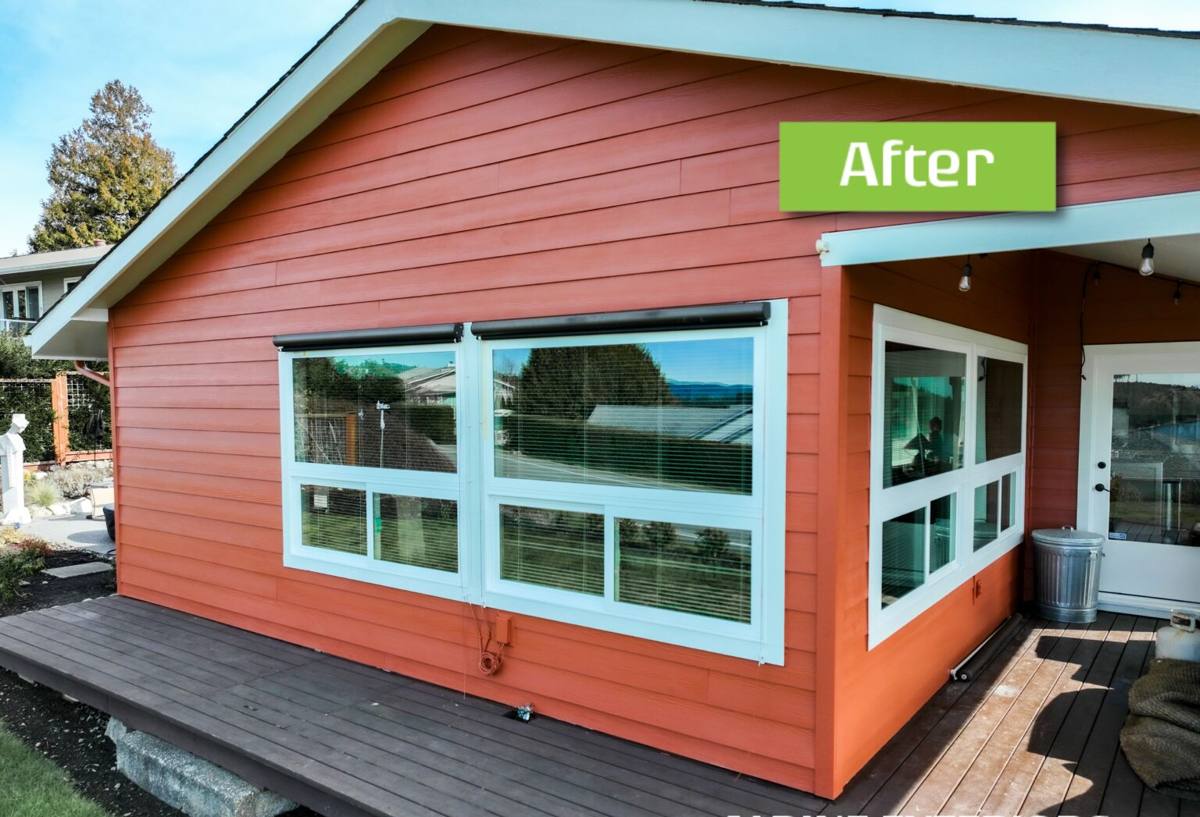
What Actually Fails First on Local Homes
Before we talk about installation, it helps to know what we're up against. On service calls around Sudden Valley and Acme, the same handful of problems show up over and over:
- Moss and organic buildup packed into the sill track, holding moisture against the frame long after the rain stops
- Condensation trapped between panes — a sign the seal on an insulated glass unit has failed
- Soft or discolored trim and casing where water has been wicking behind the exterior finish
- Windows that stick, drag, or won't latch fully because the frame has swelled or racked slightly out of square
- Visible daylight or a draft at the corners where old caulk has shrunk and cracked
Any one of these is worth a look. Two or three together usually means the window and its flashing need to come out, not just be recaulked.
What Correct Window Installation Involves
It Starts Before the Old Window Comes Out
We check the rough opening for square, level, and — critically in this climate — for hidden rot in the sill or king studs before anything gets removed. If the wall behind the old window has been taking on water, that gets addressed first. Installing a new window into a wet or rotted opening just hides the problem for a season or two.
Flashing Is the Part That Actually Keeps Water Out
The window unit itself sheds most water on its own. What stops the rest — the wind-driven rain that gets pushed sideways and up under trim — is the flashing sequence: a sloped sill pan or back-dam at the bottom, house wrap integrated in the correct shingle-lap order, and head flashing that directs water back out over the siding below. Skipping or shortcutting this step is the single most common cause of the hidden leaks we find behind older siding in this area.
Fastening, Shimming, and Sealing
The window gets shimmed square and plumb at every fastening point, not just tacked in at the corners, so it won't rack or bind over time as the house settles. Sealant goes where it needs to manage water, not everywhere — over-sealing can actually trap moisture inside the wall assembly instead of letting it drain. Interior air-sealing (low-expansion foam or backer rod, not just caulk) finishes the job and cuts drafts.
A Quick Reference: Signs of a Rushed Installation
| What You See | What It Usually Means |
|---|---|
| Caulk smeared heavily around the exterior trim | Sealant is being used to cover a flashing gap instead of proper flashing |
| Window doesn't sit flush with the wall plane | Shimming was skipped or done unevenly |
| Interior trim has a visible gap or soft spot after a few years | No interior air-seal, allowing moisture into the wall cavity |
| Window operates stiffly within a year of install | Frame installed slightly out of square |
How We Handle a Window Installation Job
- Walkthrough and assessment. We look at each window from both sides — glass, hardware, frame condition, and what's happening in the wall behind the trim — and tell you honestly which windows need full replacement versus repair.
- Measure and order. We measure the actual rough openings, not just the existing sash, since older Whatcom County homes often have openings that have shifted slightly out of square over the years.
- Remove and inspect. Old windows come out carefully so we can check the sill and framing underneath before anything new goes in.
- Repair the opening if needed. Any soft wood or compromised sheathing gets addressed before the new window goes in — never installed over.
- Install with full flashing sequence. Sill pan, house wrap integration, head flashing, shim, fasten, seal — in that order.
- Interior and exterior finish work. Trim, caulking lines, and interior air-sealing completed to match the rest of the home.
- Final operation check. Every sash opens, closes, and locks the way it should before we call the job done.
Choosing the Right Window for This Climate
Material choice matters more here than in a dry inland climate, because whatever you choose is going to spend months a year wet or damp. There's no single "right" answer for every home — it depends on your siding, your budget, and how much upkeep you want to take on.
| Frame Material | How It Holds Up Locally | Trade-Off |
|---|---|---|
| Vinyl | Handles moisture and salt air well, low maintenance | Limited color/paint options, can look less premium on higher-end homes |
| Fiberglass | Very stable in wet, temperature-swinging conditions; strong seal life | Higher upfront cost than vinyl |
| Wood-clad | Good look, solid performance if the cladding and seals stay intact | More maintenance-sensitive; a compromised seal lets moisture reach the wood core |
| Aluminum | Strong and slim-profile, but conducts cold and can corrode faster near salt air without proper coating | Prone to condensation on the frame itself in this climate |
For most homes around Acme, we lean toward vinyl or fiberglass for straightforward moisture and maintenance reasons — not because other materials are bad, but because they hold up with the least upkeep in a climate that's wet more often than it's dry. If you want a wood-look interior with lower-maintenance exterior performance, wood-clad or vinyl-composite options can split the difference; we'll walk through what fits your home and budget honestly rather than push whatever's easiest to install.
What Drives the Cost
Every home is different, so we won't quote a number without seeing the job, but the main cost factors on a typical Sudden Valley or Acme-area window job are:
- Number of windows and whether they're a standard size or custom-order
- Condition of the existing rough opening — a clean swap costs less than one requiring framing or sheathing repair
- Frame material selected (vinyl typically costs less than fiberglass or wood-clad)
- Access and height, particularly on second-story or steep-roof sections common on hillside lots in this area
- Trim and siding work needed to finish the exterior cleanly after the swap
Broadly, straightforward vinyl replacements run at the lower end of the range, while larger fiberglass or wood-clad units with opening repairs run higher. We'll give you an itemized number after the walkthrough, not a ballpark that changes once we're on site.
Why It Matters That We Already Work in Acme
A crew that regularly works this part of Whatcom County already knows what the local exposure does to a window over time — which sides of a house take the worst driving rain, how fast moss builds up in a shaded sill track, and where salt-influenced air tends to accelerate hardware wear. That's not something you can fully account for from a spec sheet. It shapes small decisions on every job: how much slope to build into a sill pan, which sealant holds up best in sustained damp conditions, and where extra flashing overlap is worth the few extra minutes.
It also means straightforward logistics — knowing typical lot access, working around the tree cover and drainage patterns common to the area, and being available for a follow-up check without a long drive if something needs adjusting after the first heavy rain of the season.
After Installation: Keeping Windows Performing
A correctly installed window still needs basic upkeep in this climate. A little attention twice a year goes a long way:
- Clear moss and debris from sill tracks and weep holes before they pack down and hold water
- Check exterior caulk lines each fall for shrinkage or cracking before the wet season sets in
- Operate every window through its full range a few times a year so hardware doesn't seize
- Watch for condensation between panes — it means a seal has failed and the glass unit, not the whole window, may need replacing
- Keep gutters and downspouts clear so roof runoff isn't sheeting down across upper window trim
Permits and Practical Notes
Window replacement in Whatcom County is generally straightforward, but structural changes — resizing an opening, adding a window where there wasn't one, or work tied to a larger remodel — can trigger permit requirements. We'll tell you upfront if your project needs one and handle the paperwork rather than leaving you to sort it out.
If you're weighing whether to replace a few problem windows now or wait and do the whole house at once, we'll give you a straight answer based on what we see, not a push toward the bigger job. Sometimes two or three windows are genuinely the priority; the rest can wait.
If you're dealing with a drafty, foggy, or hard-to-operate window in the Acme area, we're happy to take a look and give you a straightforward, no-pressure estimate — just fill out the form below.