 Sudden Valley Siding
 Storm Damage Roof Repair for Yew Street Homes
When wind and heavy rain move through the Sudden Valley area, roofs along Yew Street take a beating that isn't always obvious from the ground. A gust that pulls loose a few shingles, a branch that skips off the ridge, or weeks of standing moisture working into a seam can all leave a roof weaker than it looks. We work storm damage repairs in this neighborhood specifically because the fixes here need to account for local conditions, not just generic roofing practice.
This page covers what storm damage repair actually involves for homes in and around Yew Street, what our process looks like, and why the details matter more here than they might in a drier, calmer climate.
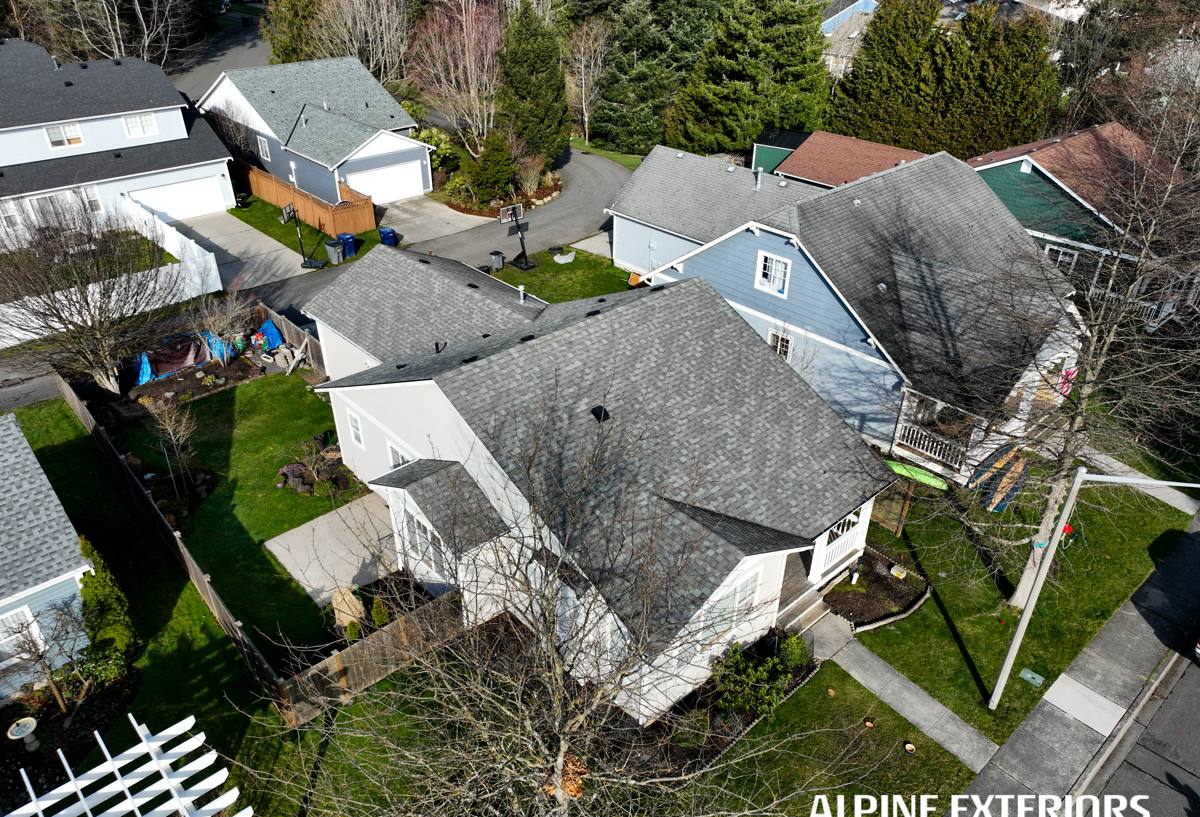
Why Whatcom County's Climate Is Hard on Roofs
Sudden Valley sits in a part of Whatcom County that sees a long, wet season, persistent moisture in the air, and enough tree cover to keep roofs shaded and slow to dry. That combination creates three specific problems for roofs that a storm damage repair has to address, not just patch over.
Salt Air and Metal Fatigue
Marine-influenced air moving through the region carries fine salt content that accelerates corrosion on exposed metal — flashing, fasteners, gutter hardware, and any roof vents. A storm doesn't cause this corrosion, but it exposes it: a nail that's already rusting through will fail under wind load a lot sooner than a sound one. Any real repair should check nearby metal, not just replace what obviously broke.
Driving Rain and Wind-Driven Water
Storms here don't just drop water straight down — wind pushes rain sideways and up under shingle edges, ridge caps, and flashing laps. That's how a roof can look intact from the street after a storm but still be actively leaking into the attic. Repairs that only address the visibly damaged shingles and skip the underlayment and flashing checks miss where the real water intrusion usually starts.
A Long Moss Season
Shade, moisture, and mild temperatures add up to a moss season that runs most of the year in this part of Whatcom County. Moss holds water against the roof surface, works into shingle tabs, and lifts edges — which means a roof that's already carrying moss growth is more vulnerable to storm damage than a clean one, and storm repairs on a mossy roof need to deal with both problems at once or the fix won't hold.
What Storm Damage Actually Looks Like on a Sudden Valley Roof
Homeowners on Yew Street usually notice one of a few signs after a storm, and it's worth knowing which ones mean "call someone now" versus "keep an eye on it."
- Shingles missing, curled, or creased — especially near the ridge or roof edges where wind load is highest
- Granules collecting in gutters or at downspout outlets, which signals accelerated shingle wear
- Flashing pulled away from chimneys, skylights, or wall intersections
- Water stains or new discoloration on interior ceilings, especially after a specific storm date
- Sagging or soft spots when walked on a walkable roof section
- Debris punctures — small holes or dents from branches or wind-carried material
- Moss or organic buildup at seams that wasn't there before the storm loosened material around it
Not every one of these needs emergency service, but every one of them is worth a real inspection. Small issues left through another wet season tend to become interior water damage, which costs a lot more to fix than the roof itself.
What a Correct Repair Involves
Storm damage repair isn't just swapping out broken shingles. A repair that's built for this climate covers a few layers most homeowners don't see once the job is finished.
Inspection Before Anything Gets Replaced
We start on the roof, not just the visible damage. That means checking the underlayment condition around the damaged area, the state of nearby flashing and fasteners, and whether moss or debris contributed to the failure. A repair that skips this step often ends up being redone within a year or two, because it treated the symptom instead of the cause.
Matching Materials, Not Just Covering the Gap
Shingle color and profile drift over the years a roof ages, so a patch repair should use the closest reasonable match and be laid with correct exposure and nailing pattern — not just tacked over the hole. For flashing, we replace with materials suited to this area's salt-air exposure rather than the cheapest available stock, since standard-grade fasteners and thin flashing corrode faster here than in a dry inland climate.
Sealing and Water Path Correction
Wind-driven rain finds the path of least resistance, so part of a proper repair is re-establishing correct lap and overlap at every seam near the damage — not just sealing the obvious gap. Sealant has a place, but it's a backup to correct shingle and flashing overlap, never a substitute for it.
Cleanup That Prevents the Next Problem
If moss or debris contributed to the original failure, we clear it from the repair area and, where it makes sense, treat nearby moss growth so the new work isn't undermined by the same conditions within a season.
Our Process on a Yew Street Storm Repair
- Initial contact and scheduling — we get a description of the damage and timeline, and prioritize active leaks.
- On-site inspection — ground and roof-level assessment, including areas adjacent to the visible damage.
- Written scope and honest estimate — what needs repair now, what's worth watching, and what the cost range looks like, explained in plain terms.
- Insurance documentation, if applicable — photos and a damage summary that homeowners can use for a claim, without us overstating or understating the scope.
- Repair work — matched materials, correct flashing and underlayment attention, not just shingle replacement.
- Final walkthrough — we show the homeowner what was done and why, and flag anything else worth monitoring.
Repair vs. Replacement: What Actually Drives the Decision
Not every storm-damaged roof needs full replacement, and not every roof is worth another round of patch repairs. Here's how we weigh it.
| Factor | Leans Toward Repair | Leans Toward Replacement |
|---|---|---|
| Extent of damage | Localized to one section or slope | Spread across multiple slopes or the whole roof |
| Roof age | Roof is under roughly two-thirds of its expected service life | Roof is already near or past typical lifespan for its material |
| Underlayment condition | Intact and dry beneath the damaged shingles | Saturated, degraded, or showing rot in the decking |
| Moss/organic history | Minor, recently treated or cleaned | Long-term buildup with visible shingle degradation underneath |
| Prior repair history | First significant repair on this roof | Multiple past patch jobs in different areas |
| Budget timing | Repair buys reasonable additional service life | Repair cost approaches a meaningful fraction of full replacement |
We'll always tell you honestly which side of that table your roof falls on. A repair that's really a stopgap before replacement is still sometimes the right call — for example, to get through a wet season before a planned project — but you should know that going in.
Insurance and Documentation Notes
Storm-related roof claims are common in this region, and insurers generally want clear before-and-after documentation tied to a specific weather event. We photograph damage in place before any repair work starts, note the likely cause, and provide a written scope that separates storm-caused damage from pre-existing wear — which matters, because most policies don't cover damage from age, neglect, or moss buildup that predates the storm. Being upfront about that distinction protects the homeowner from a denied or reduced claim down the line.
Post-Storm Roof Checklist for Yew Street Homeowners
After any significant wind or rain event, a quick check can catch problems before they become interior damage. From the ground, with binoculars if needed:
- Scan for missing, lifted, or visibly out-of-place shingles
- Check gutters for granule buildup or shingle fragments
- Look at flashing lines around chimneys, vents, and skylights for gaps
- Check attic spaces (if accessible) for new water staining or damp insulation
- Note any large branches down near the roofline, even if they didn't hit the house
- Walk the yard for storm debris that might indicate roof-level impact
If you see two or more of these, it's worth getting an inspection before the next storm rather than after.
Why a Crew That Already Works This Neighborhood Matters
Roofing crews who work Sudden Valley regularly get a practical advantage: they've already seen how the local tree cover, moisture patterns, and terrain affect roofs in this specific area, rather than applying general storm-repair habits from a drier or more exposed region. That shows up in small but real ways — knowing which flashing grade actually holds up under this area's marine-influenced air, recognizing moss patterns that predict where future problems will start, and understanding how Whatcom County's rain patterns tend to hit certain roof orientations harder than others. It also means a shorter response time for homeowners on Yew Street when a storm rolls through and multiple roofs in the area need attention at once.
Materials and Warranty Considerations
For repairs in this climate, we lean toward materials and fastener grades built to handle sustained moisture and marine-influenced air, even when a lower-cost option is available. That's a maintenance and longevity call, not a brand endorsement — cheaper flashing and standard fasteners can work fine in drier regions, but they tend to corrode and fail faster under Whatcom County's rain and salt-air exposure, which just means the same repair gets redone sooner. We'll always explain the trade-offs on materials so you can decide what fits your budget and timeline, rather than assuming one option is automatically right for your situation.
Get a Straightforward Estimate
If your roof took damage in a recent storm, or you just want a second opinion before winter weather sets in, we're happy to take a look. The estimate is free, there's no pressure to move forward, and you'll get a clear, honest read on what your roof actually needs — use the form below to get started.