 Sudden Valley Siding
 Roofing Built for Bellingham's Weather, Not Just Any Weather
A roof replacement in Bellingham has to answer to a different set of conditions than a roof going on a house in Spokane or even Seattle. Between the marine air coming off Bellingham Bay, the near-constant drizzle and driving rain off the Pacific, and the shade cover that keeps large parts of Whatcom County damp for months at a time, a roof here is under a slow, steady kind of stress most of the year. It's rarely dramatic — no hailstorms, no extreme heat cycling — but it's relentless. That's exactly the kind of wear that separates a roof that lasts 25-plus years from one that starts failing at year twelve.
For homeowners in Sudden Valley and the surrounding Bellingham area, that means the right roof replacement isn't just about swapping old shingles for new ones. It's about choosing materials and installation details that specifically hold up to salt-laden moisture, sustained wet-dry cycling, and moss growth on shaded, north-facing slopes. We've built our process around those realities because we work in this climate every week, not as a one-off job.
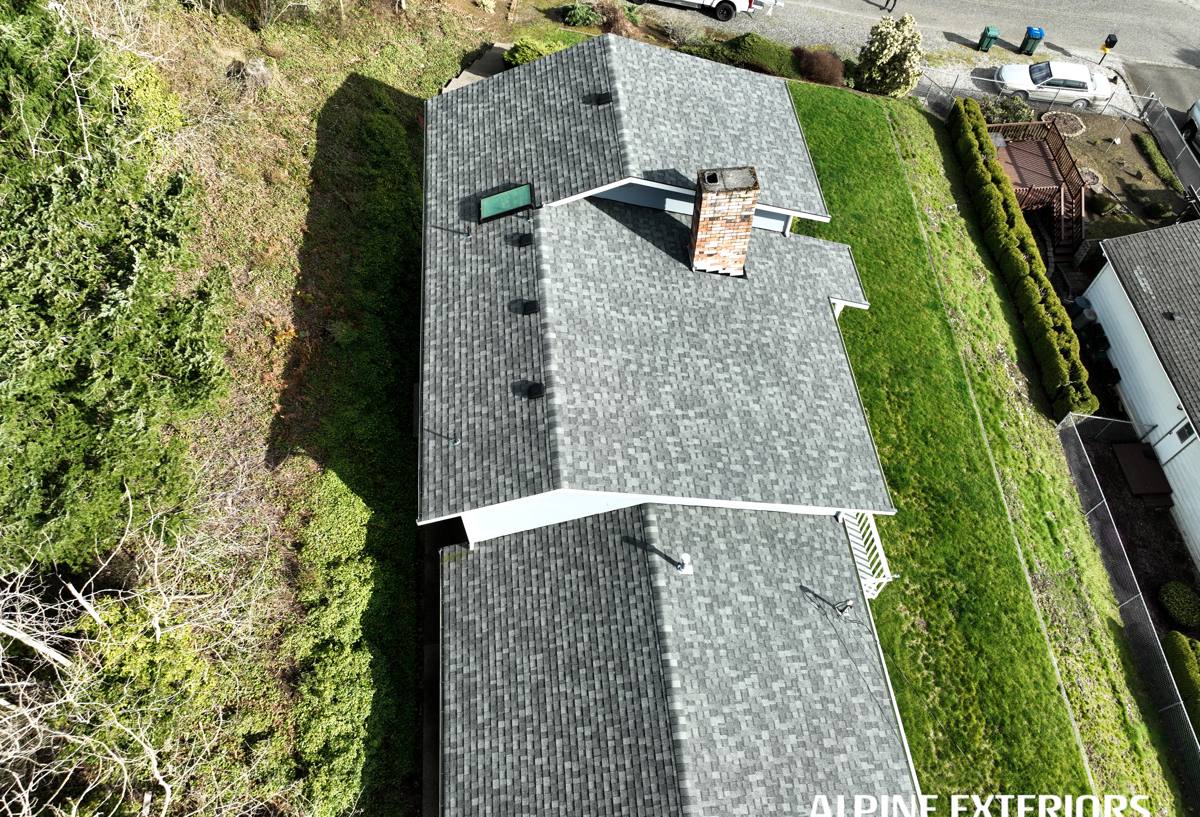
What Salt Air, Rain, and Moss Actually Do to a Roof
It helps to understand the mechanisms at work, because they drive nearly every decision in a proper roof replacement here.
Salt Air and Metal Fatigue
Homes closer to the water pick up airborne salt that settles on flashing, fasteners, and any exposed metal. Over years, that accelerates corrosion on lower-grade metal components — nail heads, drip edge, vent flashing — long before the shingles themselves wear out. A roof can look fine from the ground while its metal detailing is quietly failing underneath.
Driving Rain and Wind-Driven Water
Whatcom County storms don't just drop rain straight down — wind pushes it sideways and up under laps, edges, and penetrations. A roof system that relies on gravity alone to shed water isn't enough here. Underlayment quality, ice-and-water shield placement at vulnerable points, and proper flashing laps matter more in this climate than in drier parts of the state.
Moss, Shade, and Moisture Retention
Sudden Valley's tree cover is a big part of its appeal, but shaded, north-facing roof slopes stay damp far longer after a storm than sun-exposed ones. That constant moisture is exactly what moss needs to take hold. Once moss establishes itself, it lifts shingle edges, holds water against the roof deck, and can shorten the life of an otherwise sound roof by years.
Signs a Bellingham-Area Roof Needs Replacement, Not Another Repair
Not every roof problem calls for a full replacement, and we'll tell you honestly when a repair is the smarter move. But there's a point where patching stops making financial sense. Watch for:
- Granule loss heavy enough that you're finding grit in gutters and downspouts every season
- Shingles that are curling, cupping, or cracking, especially on south- and west-facing slopes
- Moss or algae staining that keeps returning within a year of cleaning
- Soft spots or sagging when walked on, which usually means deck damage underneath
- Daylight visible through the roof deck from inside the attic
- Multiple active leaks, or leaks in new locations after previous repairs
- A roof approaching or past 20 years old with visible wear, even without active leaks
If you're seeing two or more of these, it's worth getting an honest look before another wet season adds to the damage.
Choosing the Right System for This Climate
There isn't one "best" roofing material for every home — the right choice depends on your roof's pitch, shade exposure, budget, and how long you plan to stay in the home. Here's how the common options stack up for a Bellingham-area replacement.
| Material | Typical Lifespan Here | Moss/Moisture Resistance | Cost Position |
|---|---|---|---|
| Architectural asphalt shingle | 25–30 years | Good with proper ventilation and zinc/copper strips | Moderate — most common choice |
| 3-tab asphalt shingle | 15–20 years | Fair; more prone to moss lift on shaded slopes | Lower upfront cost |
| Standing seam metal | 40–50+ years | Excellent; sheds water and resists moss growth | Higher upfront, lower lifetime cost |
| Composite/synthetic shake | 30–40 years | Good; consistent, low water absorption | Higher than architectural shingle |
Architectural (dimensional) asphalt shingles are the most common replacement choice in Sudden Valley and Bellingham for good reason — they balance cost, durability, and moss resistance well when installed with the right underlayment and ventilation. Metal roofing is worth serious consideration on heavily shaded lots or homes where long-term, low-maintenance performance matters more than upfront cost.
What a Correct Roof Replacement Actually Includes
The materials matter, but the installation details are what determine whether a roof performs for 25 years or fails early. A roof replacement done right in this climate includes:
Full Tear-Off and Deck Inspection
We don't recommend overlaying new shingles on old ones. A full tear-off lets us inspect the roof deck for rot, soft spots, or damage that's often hidden under multiple shingle layers — common on older Whatcom County homes that have been re-roofed once or twice already.
Underlayment and Ice-and-Water Shield
Given how much wind-driven rain this region sees, we use synthetic underlayment across the full roof and self-adhering ice-and-water membrane at eaves, valleys, and around penetrations — the spots most vulnerable to wind-driven water intrusion.
Flashing Details
New step flashing at walls, properly lapped valley flashing, and corrosion-resistant materials at chimneys and vents. This is where a lot of leaks actually originate, not in the field of the shingles themselves.
Ventilation
Balanced intake and exhaust ventilation keeps the attic dry and temperature-stable, which reduces condensation on the underside of the deck and helps shingles last their full rated life. Poor ventilation is one of the more common — and least visible — reasons roofs underperform here.
Moss and Algae Prevention
On shaded slopes, we install zinc or copper strips near the ridge, which release trace metal ions with every rain and inhibit moss and algae growth over the life of the roof — a small addition that pays off significantly in a climate like this one.
Our Roof Replacement Process
- On-site inspection and estimate: We walk the roof, check the attic, and give you a straight assessment — repair, or replace, with honest reasoning either way.
- Material selection: We go over the options that fit your roof's exposure, budget, and how long you plan to own the home.
- Scheduling around weather: We plan installation windows to avoid working a full tear-off into an incoming rain system whenever possible.
- Tear-off and deck repair: Old roofing comes off, the deck gets inspected, and any damaged sheathing is replaced before anything new goes down.
- Underlayment, flashing, and shingle installation: Installed in the sequence and overlap pattern the manufacturer specifies — not shortcuts.
- Final walkthrough: We review the finished roof with you, including ventilation, flashing points, and any moss-prevention details installed.
Cost Factors Homeowners Should Understand
Every roof is different, so we don't quote sight-unseen prices, but the main factors that move a Bellingham-area roof replacement estimate up or down are:
| Factor | Why It Matters |
|---|---|
| Roof size and pitch | Steeper roofs take longer, need more safety setup, and use more material |
| Number of layers being removed | Tear-off labor increases with each existing layer |
| Deck condition | Rotted or soft sheathing found during tear-off adds replacement cost |
| Material choice | Asphalt, metal, and composite carry different material and labor costs |
| Roof complexity | Valleys, dormers, skylights, and chimneys all add flashing labor |
| Access | Tree cover and limited driveway access, common in Sudden Valley, can affect staging and disposal logistics |
We'll walk through which of these apply to your home specifically during the estimate, so the number you get reflects your roof — not a generic average.
Why Hiring a Crew That Already Works Bellingham Matters
Roofing crews that mostly work drier inland climates tend to build habits that don't translate well here — lighter underlayment specs, less attention to ventilation, or skipping moss-prevention details because they've never had to deal with them. A crew that works Whatcom County regularly knows which slopes in a neighborhood like Sudden Valley hold moisture longest, which flashing details actually hold up against sideways rain off the bay, and how to sequence a tear-off around a weather window instead of hoping for the best.
That local experience also shows up in smaller ways — knowing realistic timelines around this area's weather patterns, understanding permit requirements for Whatcom County and the City of Bellingham, and standing behind the work because we're not driving in from out of the area.
Maintaining a New Roof in This Climate
A well-installed roof still benefits from some upkeep, especially here. A short list worth keeping to:
- Clear gutters and downspouts at least twice a year — clogged gutters back water up under the roof edge
- Trim back overhanging branches to reduce shade, debris buildup, and moss pressure on affected slopes
- Have moss or algae growth addressed early rather than left to spread
- Check attic ventilation isn't blocked by insulation or storage
- Schedule a visual roof check after any major windstorm
None of this is intensive, but skipping it is one of the more common ways a good roof underperforms its expected lifespan in a wet climate like this one.
Get a Straight Answer on Your Roof
If your roof is showing wear, or you just want an honest read on how much life it has left, we're glad to take a look. We'll walk the roof, check the attic, and give you a clear, no-pressure estimate — whether that means a repair, a full replacement, or simply confirming you're fine for now. Reach out using the form below to get started.