 Sudden Valley Siding
 Fairhaven's Roof Repair Needs Are Different From Inland Whatcom County
Fairhaven sits close to the water, and that changes what a roof has to survive year after year. Homes just a mile or two inland deal with rain and wind like everywhere else in Whatcom County, but Fairhaven roofs also take on salt-laden air off the bay, near-constant damp shade under mature trees, and one of the longer moss seasons in the region. None of that is dramatic on its own. What it does is quietly shorten the life of fasteners, flashing, and shingles that would otherwise hold up fine, and it lets small problems turn into leaks faster than homeowners expect.
We work on roofs across Whatcom County, but Fairhaven's older housing stock, tight lots, and coastal exposure mean repairs here need a slightly different eye than a repair out in a newer inland subdivision. This page is about what that actually looks like — what wears out first, what a correct repair involves, and how we handle it.
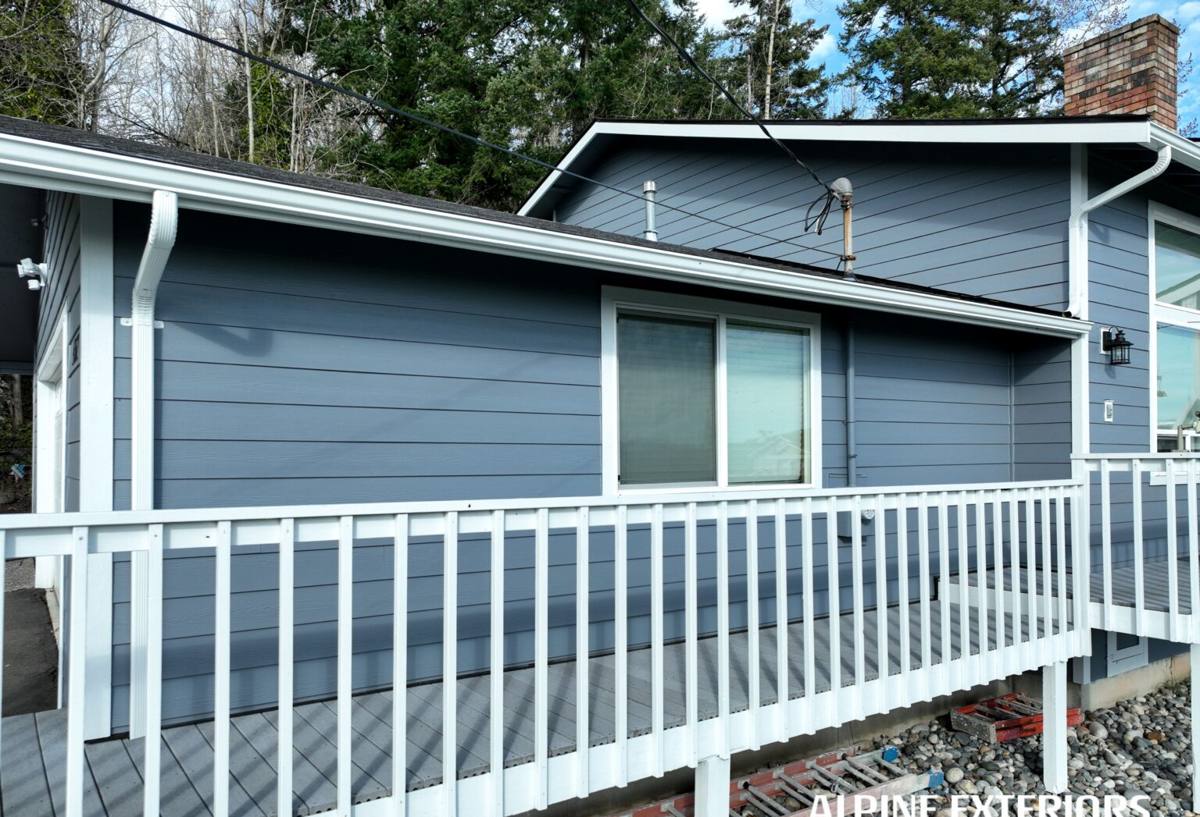
What Salt Air, Rain, and Moss Actually Do to a Roof
Salt Air and Metal Fatigue
Salt in the air accelerates corrosion on anything metal — flashing, drip edge, nail heads, gutter hardware, and vent stacks. A fastener that would last decades inland can start rusting and losing grip years sooner this close to the bay. Rusted flashing doesn't always show up as a visible problem until water is already getting behind it, which is why we check metal condition closely on every repair call in this area, not just the shingles or shakes on top.
Driving Rain and Wind-Driven Water
Whatcom County storms often come with enough wind to push rain sideways and up under roof edges, rather than just straight down. That kind of driving rain finds weak points that a calm, straight-down rain never would — lifted shingle tabs, undersized flashing laps, gaps at wall-to-roof transitions. A repair that only addresses the spot where water is showing up inside the house, without checking how it got in from an upslope angle, tends to fail again in the next storm.
Moss, Shade, and Slow Rot
Fairhaven's tree cover and coastal humidity add up to a long moss season — moss and algae can establish and keep growing for most of the year in shaded, north-facing sections of a roof. Moss holds moisture against the roofing material, lifts shingle edges as it grows, and channels water sideways instead of letting it run off. Left alone, it doesn't just look bad — it accelerates the exact kind of rot and granule loss that leads to a full section needing replacement instead of a simple patch.
Common Roof Repair Calls We See in Fairhaven
- Flashing failures around chimneys, skylights, and roof-to-wall intersections where corrosion or a poor original install lets water track behind the siding.
- Moss-damaged shingles on shaded slopes, especially north- and east-facing roof planes under tree cover.
- Wind-lifted or cracked shingles after a storm, sometimes with no visible interior leak yet.
- Clogged or corroded gutters and downspouts that back water up under the roof edge instead of carrying it away.
- Nail pops and fastener corrosion that loosen shingles over time without an obvious trigger event.
- Localized rot in the roof deck found once a slow leak has been going on longer than the homeowner realized.
What a Correct Roof Repair Involves
A roof repair done right isn't just replacing the shingles that look damaged. It means tracing the water's actual path, because roof leaks routinely show up inside the house several feet away from where the water is actually entering. A proper repair addresses:
- The entry point — often flashing, a fastener, or a lapped seam, not just the shingle surface
- The path the water traveled once it got past the roofing material
- Any deck or sheathing damage caused by moisture sitting there before the leak was noticed
- The condition of surrounding material, so the repair doesn't leave a new weak spot right next to the old one
- Proper tie-in with underlayment and existing shingle courses, so the repair sheds water the same way the original roof was designed to
Because we're a siding and exterior contractor as well as doing roof repair, we also pay close attention to the roof-to-wall transitions where roofing and siding meet — a common weak point that's easy to overlook if a repair only looks at the roof deck in isolation.
Factors That Affect Roof Repair Cost
| Factor | Why It Matters |
|---|---|
| Size and location of the damaged area | A small, accessible patch costs far less than a repair spanning a valley, chimney, or multiple courses |
| Roof pitch and access | Steep or high roofs take longer and require more safety setup, which affects labor time |
| Extent of hidden water damage | If the deck or sheathing is soft or rotted, that has to be addressed before new roofing goes back on |
| Moss or algae removal needed | Treating and clearing growth adds time but prevents the repair from failing again quickly |
| Material match | Matching existing shingle color, style, or shake profile on an older roof can take more sourcing effort than a straightforward reroof section |
| Flashing scope | Full flashing replacement at a chimney or wall intersection costs more than a shingle-only patch, but skipping it often means calling us back sooner |
Roof Repair vs. Full Replacement
Not every damaged roof needs to come off. But a repair only makes sense if the roof underneath it is fundamentally sound. Here's the general line we use when we're on-site giving an honest read:
| Signal | Repair Usually Makes Sense | Replacement Should Be Considered |
|---|---|---|
| Age of roofing material | Roof is well within its expected service life | Roof is near or past the end of its expected lifespan |
| Extent of damage | Damage is isolated to one area or a few spots | Damage or wear is spread across multiple roof planes |
| Deck condition | Sheathing underneath is solid | Widespread rot or soft decking found during inspection |
| Leak history | First leak, or a known isolated cause | Repeated leaks in different spots over time |
| Moss/algae history | Growth is recent and hasn't damaged material yet | Long-term moss growth has already degraded shingles or shakes |
If we're standing on a roof and the honest answer is that replacement is the better long-term value, we'll say so. We'd rather tell a Fairhaven homeowner that up front than sell a repair that's likely to fail again within a season or two.
Our Roof Repair Process
- On-site inspection. We look at the roof itself, the attic or interior ceiling near any reported leak, flashing points, and gutter condition — not just the spot the homeowner flagged.
- Honest diagnosis. We explain what's actually causing the problem, in plain terms, including whether it's a contained repair or a sign of a bigger issue coming.
- Clear estimate. You get a written scope and price before any work starts — no surprise add-ons once we're on the roof.
- The repair itself. Matching materials where possible, proper flashing and underlayment detail at the repair edges, and moss treatment where growth contributed to the damage.
- Cleanup and check. Debris cleared, gutters checked for blockages from the repair area, and a final look to confirm the fix ties in cleanly with the surrounding roof.
Signs Your Fairhaven Home Needs Roof Repair Now
- Water stains on a ceiling or upper wall, especially after a heavy rain
- Visible moss or dark streaking concentrated on shaded roof sections
- Shingles that look lifted, cracked, or missing after a windstorm
- Granules collecting in gutters or at downspout outlets
- Daylight visible through the roof deck from inside the attic
- Gutters overflowing or pulling away from the fascia
- A musty smell in an upper room or attic that wasn't there before
Any one of these is worth a look before the next storm rolls through. Driving rain has a way of finding the one weak spot in a roof that's been fine for years, and it rarely picks a convenient time to do it.
Our Standard for Materials and Workmanship
We use roofing materials and flashing rated for coastal and marine-influenced exposure rather than defaulting to whatever is cheapest to source, because the salt air here genuinely shortens the service life of undersized or mismatched components. That means corrosion-resistant fasteners and flashing metal, proper underlayment at vulnerable points like valleys and roof-to-wall transitions, and moss-resistant treatment where a roof's shade and orientation make regrowth likely. It costs a little more up front than a bare-minimum patch, but it's the standard that holds up against what this stretch of Whatcom County actually throws at a roof.
Why a Local Fairhaven Crew Makes a Difference
A roof repair crew that regularly works Fairhaven and the surrounding Whatcom County coastline already knows what to check for before they climb up — where moss tends to establish first, which flashing details fail early in salt air, and how the area's older homes were typically built. That familiarity means a faster, more accurate diagnosis and fewer surprises once the work is underway. It also means we're not far away if a repair needs a follow-up check after the next big storm.
If you're dealing with a leak, storm damage, or a roof that's showing its age near Fairhaven, we're happy to take a look and give you a straight answer about what it actually needs. Reach out for a free, no-pressure estimate using the form below.