 Sudden Valley Siding
 Why Silver Beach Calls for a Different Approach to Board & Batten
Silver Beach sits along Lake Whatcom, just down the shoreline from Sudden Valley, and that setting changes how siding performs. Homes here sit low against the water, often shaded by mature conifers, and catch a mix of lake humidity and the salt-tinged marine air that moves inland off the Salish Sea corridor. That combination keeps wall surfaces damp longer than they would stay in a drier, more open part of Whatcom County, and it's harder on fasteners, finishes, and seams than most homeowners expect.
Board and batten is a great fit for the look a lot of Silver Beach homeowners want — clean vertical lines, a farmhouse or modern-cabin feel that suits a lake setting — but the profile itself has more joints and more shadow lines than plain lap siding. Every batten strip is a place water can either shed cleanly or get held against the wall. Done right, board and batten holds up beautifully here. Done with shortcuts, it's one of the faster profiles to show trouble.
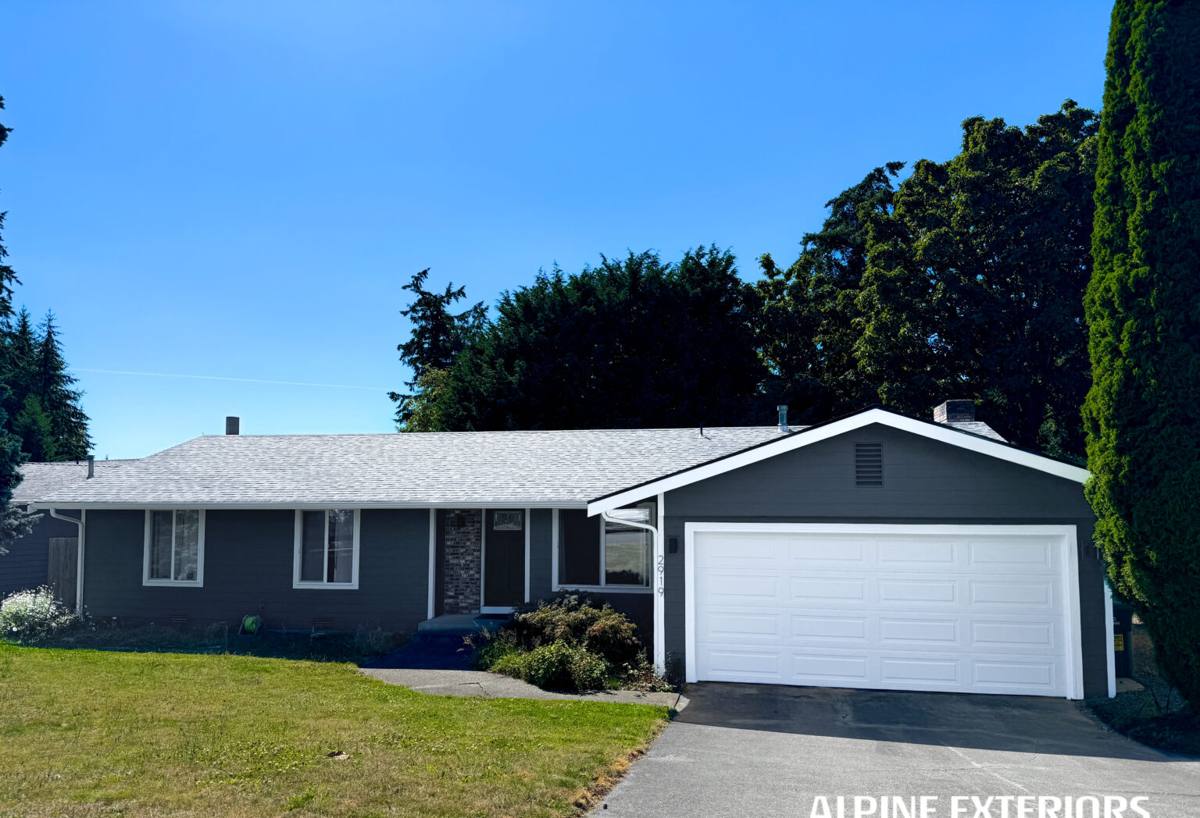
What This Climate Does to a Vertical Siding Profile Over Time
Whatcom County doesn't get brutal winters, but it gets a long, grey, wet stretch of the year, and Silver Beach's tree cover and lake proximity stretch that dampness out even further. A few specific things show up on vertical siding here that a homeowner inland wouldn't deal with as often:
- Moss and algae staining on north- and shade-facing walls, especially where batten strips create a narrow ledge that holds moisture and organic debris.
- Butt-joint failure on wood-based boards, where seasonal swelling and shrinking opens gaps that sealant alone can't keep closed year after year.
- Fastener corrosion where lower-grade nails or staples were used, accelerated by the salt-laden moisture that reaches this part of the lake basin.
- Paint failure and fading on sun-exposed, lake-facing walls, where standard field-applied paint breaks down faster than a factory finish.
None of this means board and batten is a bad choice for Silver Beach. It means the material and the installation both have to be matched to what this specific stretch of lakefront actually deals with, not to a generic siding spec.
Why We Install James Hardie Board & Batten — Not Vinyl, Not Engineered Wood
We only install James Hardie fiber cement siding. We don't install vinyl board and batten, LP SmartSide, or primed spruce and cedar board and batten, and that's a deliberate standard, not an oversight.
Vinyl board and batten panels are inexpensive and easy to install, and for a drier climate they can be a reasonable option. On a shaded, lake-adjacent lot like the ones common in Silver Beach, though, vinyl's weak points show up faster: the material expands and contracts more than fiber cement, seams can loosen over time, and prolonged damp conditions plus UV exposure tend to leave it looking chalky and faded well before a homeowner expects to be looking at a replacement.
Wood-based board and batten — cedar or primed engineered wood — gives you a genuine, warm look, and we understand the appeal. The trade-off is maintenance. Wood swells and moves with moisture, cut ends and butt joints need diligent sealing and re-sealing, and in a shaded, humid microclimate like this one, that upkeep schedule gets tighter, not looser. Skip a repaint cycle or two and moisture intrusion at the joints becomes a real risk.
James Hardie's fiber cement is engineered specifically for wet, marine-influenced climates through its HZ10 product line, which is what the Pacific Northwest calls for. It won't rot, it's non-combustible, and it carries a factory-applied ColorPlus finish that's baked on rather than field-painted, which holds color and resists the fading and chalking that shaded, damp walls are hardest on. It's backed by a strong transferable warranty that assumes correct installation — which is exactly where the next section matters.
Where Hardie Board & Batten Options Fit
Hardie offers more than one way to get the board and batten look, and picking the right one for a given wall matters:
| Option | How It's Built | Best Fit |
|---|---|---|
| HardiePanel vertical siding + battens | Large-format fiber cement panel with separate trim battens fastened over the seams | Full walls, larger elevations, classic board-and-batten look |
| Individual board + batten strips | Narrower fiber cement boards installed with a gap, then covered with battens | Accent walls, gables, mixed-material facades |
| Artisan Series accents | Higher-detail fiber cement trim and siding for a more refined, dimensional look | Entry features, feature walls where detail shows up close |
What a Correct Board & Batten Installation Actually Involves
Board and batten fails less often because of the material and more often because of how it was hung. On a Silver Beach home, a handful of details matter more than they would on a drier inland lot.
Weather-Resistive Barrier and Drainage Plane
A code-compliant weather-resistive barrier goes on before any siding, but on a shaded, moisture-heavy wall we treat a drainage gap behind the siding as standard practice, not an upgrade. That gap gives incidental moisture a path to escape instead of sitting against the sheathing.
Batten Layout and Spacing
Batten spacing has to be planned around the wall's actual dimensions, not just eyeballed, so seams land where the substrate can support them and reveals stay consistent across the whole elevation. Sloppy layout is one of the most common cosmetic complaints we see on other contractors' board and batten work.
Fastening to Manufacturer Spec
James Hardie publishes exact fastener type, spacing, and penetration requirements for board and batten assemblies, and those specs are what the warranty is built on. Corrosion-resistant fasteners driven at the correct pattern are non-negotiable on a lake-adjacent, salt-influenced site like this one.
Flashing, Trim, and Penetrations
Every window, vent, and light fixture that interrupts a board and batten wall needs proper flashing and sealant detailing. On a home surrounded by trees and shade, water that gets behind trim at a penetration doesn't dry out quickly — it's the single most common source of hidden rot we find on older siding jobs in this area.
Our Process for a Silver Beach Board & Batten Project
- On-site assessment. We look at sun exposure, tree cover, existing moisture damage, and how water currently moves off the roof and around the wall before recommending anything.
- Removal and substrate check. Old siding comes off, and we inspect sheathing for rot or soft spots before anything new goes up — this is where hidden moisture problems usually surface.
- Barrier, drainage plane, and layout. Weather-resistive barrier goes on, drainage gap is set, and batten layout is planned to the wall's actual measurements.
- Installation to Hardie specification. Boards and battens go up with the fastener type, spacing, and clearances James Hardie requires to keep the warranty intact.
- Trim, caulk, and final inspection. Every joint, corner, and penetration gets checked before we call the job finished, and we walk it with the homeowner.
Keeping Board & Batten Looking Right Through Moss Season
Even correctly installed Hardie siding benefits from a little seasonal attention on a shaded, lake-adjacent lot. A short annual routine goes a long way:
- Rinse shaded and north-facing walls once a year to knock back early moss and algae before it takes hold.
- Keep overhanging branches trimmed back so walls get more air movement and sunlight.
- Check gutters and downspouts before the wet season so runoff isn't sheeting down the siding face.
- Look at caulk lines around windows, trim, and penetrations once a year and have any cracked sealant redone promptly.
- Avoid pressure washing directly into seams or battens — a garden hose and soft brush are enough for Hardie's factory finish.
Cost Factors for Board & Batten in Silver Beach
There's no honest flat price for board and batten siding without seeing the home, but the factors that move the number are consistent:
| Factor | Why It Matters |
|---|---|
| Tear-off vs. new construction | Removing and disposing of existing siding, plus any substrate repair, adds labor and material cost |
| Wall height and stories | Lake lots with steep grades or multi-story elevations need more staging and access work |
| Trim and batten density | Tighter batten spacing and more architectural detail mean more material and labor per square foot |
| Existing moisture damage | Rotted sheathing or framing found during tear-off has to be repaired before new siding goes on |
| Site access | Tree cover, slope, and tight lake-lot driveways can add time for material staging and equipment |
Why Hiring a Crew That Already Works This Neighborhood Matters
Silver Beach and Sudden Valley aren't generic Whatcom County lots — the shade patterns, lake humidity, and community expectations here are specific enough that experience actually shows up in the finished product. A crew that's already worked this shoreline knows which walls need extra drainage detailing before they ever pull a tape measure, understands the kind of exterior guidelines that come with many Sudden Valley properties, and isn't guessing at how a given elevation will hold up through a wet Whatcom County winter. That familiarity shows up less in the sales pitch and more in the callbacks you don't get five years later.
If you're weighing board and batten for a home in Silver Beach or elsewhere around Sudden Valley, we're happy to take a look and talk through what your specific walls need. The estimate is free, there's no pressure, and you'll get a straight answer about what a correct job costs and involves.