 Sudden Valley Siding
 Siding Built for Life on Lake Whatcom
Sudden Valley sits right on the shore of Lake Whatcom, and that location shapes everything about how siding performs here. Homes are tucked into tree cover, close to the water, and exposed to a lot more standing moisture in the air than a house a few miles inland in Bellingham. Add in Whatcom County's driving winter rain and the marine-influenced air that moves through the region off Puget Sound, and you have a set of conditions that punishes the wrong siding choice fast. We install siding in Sudden Valley regularly, and we've seen what holds up here and what doesn't.
This page is about one thing: siding installation for Lake Whatcom homes, done with a product and a process suited to this specific microclimate, not a generic coastal or PNW description.
What Lake Whatcom's Climate Actually Does to Siding
Shade and Standing Moisture
Many Sudden Valley lots are wooded, with mature trees shading large portions of the home's exterior for much of the day. That shade keeps siding wet longer after rain, since sun and wind aren't reaching the wall to dry it out. Siding that absorbs moisture, or that relies on a paint film to keep water out, stays damp longer here than it would on an open lot — and that's exactly the condition that breeds problems.
Long Moss and Algae Season
The combination of shade, lake humidity, and mild winters gives moss and algae a long growing window on and around Sudden Valley homes — not just on roofs, but on north-facing and shaded siding surfaces too. Moss holds moisture against the wall and can work into any gap, seam, or soft spot in the siding material. Over years, siding that isn't dimensionally stable and properly finished will show it first in these shaded zones.
Driving Rain and Wind Off the Lake
Weather moving across the lake can drive rain into walls at an angle, not just straight down. That means water testing every horizontal lap, every seam, every penetration around windows and trim — not just the field of the wall. Flashing details and lap installation matter more here than on a home in a drier, more sheltered spot.
Regional Marine Air
Whatcom County sits close enough to Puget Sound that homes throughout the region deal with persistently moist, salt-tinged air working into painted and unpainted wood surfaces over time. It's a slower factor than the lake-driven moisture and moss, but it adds to the same basic problem: anything that depends on a surface coating to stay watertight has more to fight here than in a dry inland climate.
Why We Only Install James Hardie Fiber Cement Here
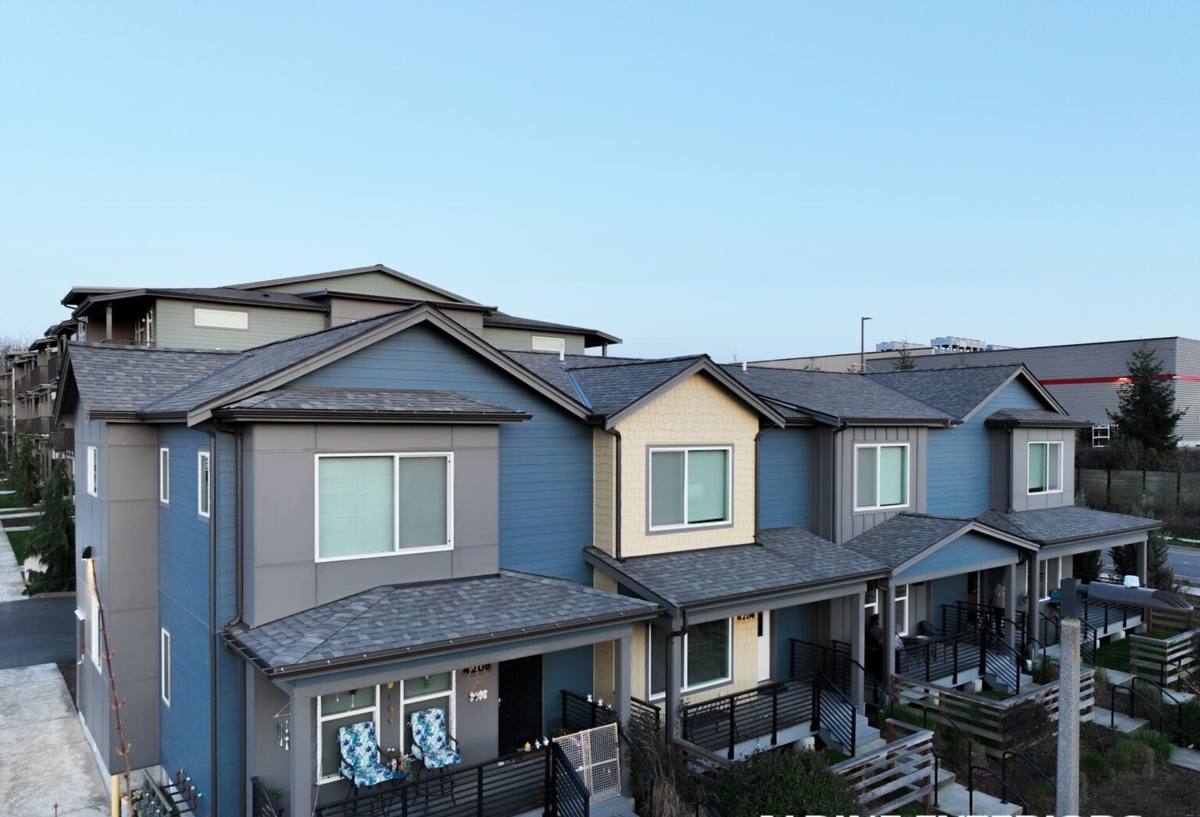
We standardized on James Hardie fiber cement for every siding job we do, including Sudden Valley, and the Lake Whatcom climate is a big part of why. Fiber cement doesn't rot, and it isn't a food source for the moss and algae that thrive in shaded, humid conditions here. It's also dimensionally stable — it doesn't swell, cup, or warp the way wood-based products can when they stay damp for extended periods, which matters directly on the shaded, slow-to-dry walls common around the lake.
James Hardie's ColorPlus factory finish is baked on under controlled conditions, not brushed on in the field, and it's backed by its own finish warranty. That matters in a spot like Sudden Valley where field-applied paint has to fight moisture and shade to cure and bond properly — a factory finish sidesteps that fight entirely. We're not going to pretend every siding product is interchangeable and it's just a matter of preference; the material choice is the single biggest factor in how a home holds up here over 20-plus years, and Hardie is what we're willing to put our name on.
What a Correct Siding Installation Involves
The material only performs as well as the installation behind it. On a Lake Whatcom home, we pay particular attention to:
- Weather-resistive barrier installed continuously, with proper laps and no gaps, since this is the home's real backup line of defense against driving rain
- Flashing at every window, door, and roof-to-wall transition — the spots where wind-driven rain finds a way in first
- Correct fastening per James Hardie's published fastener schedule for the specific product line and exposure
- Proper lap and gap spacing to allow the panels to do their job without trapping moisture behind them
- Rainscreen or drainage gap detailing on shaded, slow-to-dry elevations where standing moisture is the biggest long-term risk
- Clearance from grade, decks, and landscaping so siding isn't sitting in a damp microclimate created by nearby plantings or soil buildup
- Caulking and sealant only where James Hardie's install specs call for it — not as a substitute for correct flashing
Skipping any one of these doesn't show up right away. It shows up in three, five, or ten years, usually first on the shaded north or lake-facing walls where moisture lingers longest — and by then it's a repair job, not a maintenance item.
Local Crew Advantage: Why Lake Whatcom Experience Matters
A crew that's worked in Sudden Valley before already knows which elevations on a lake lot take the worst of the moss and moisture, how tree cover on a given street affects drying time, and how driving rain off the lake tends to hit a home differently than it would a few miles into town. That's not something you can fully account for from a general specification sheet — it comes from having actually installed and later serviced siding on homes in this exact setting.
It also matters for scheduling and site logistics. Sudden Valley's wooded, lake-adjacent lots often have tighter access, more overhead tree cover to manage, and drainage considerations that a crew unfamiliar with the neighborhood might not plan for ahead of time.
Our Installation Process
- On-site assessment — we walk the home, check the existing siding and sheathing condition, note shaded and high-exposure elevations, and identify any moisture or moss issues already present
- Product and color selection — matching the right James Hardie line and ColorPlus finish to the home's exposure and your preferences
- Written estimate — clear scope, product specification, and price before any work begins
- Tear-off and substrate check — removing old siding and inspecting the sheathing underneath for hidden rot or moisture damage before anything new goes up
- Weather barrier and flashing installation — the part of the job that determines how the home performs in driving rain, done to spec, not shortcut
- Hardie panel and trim installation — installed per manufacturer fastening and clearance requirements
- Final walkthrough — reviewing the finished work with you before we consider the job done
Cost Factors for Lake Whatcom Siding Projects
Every home is different, but these are the factors that most commonly move the price on a Sudden Valley siding installation:
| Factor | Why It Matters Here |
|---|---|
| Home size and wall complexity | More corners, gables, and trim details mean more labor and material |
| Existing siding removal | Tear-off scope depends on what's currently installed and its condition |
| Substrate condition | Lake-adjacent homes with shaded walls sometimes have hidden moisture damage that needs repair before new siding goes on |
| Access and site conditions | Tree cover, slope, and tighter lake-lot access can affect staging and labor time |
| Product line and trim package | HZ5 vs. standard lines, plus trim board and batten details, affect material cost |
| Color and finish selection | Standard vs. premium ColorPlus finish options |
We don't publish a flat per-square-foot number because it genuinely varies by these factors — but we'll walk your home and give you a specific written number, not a vague range.
Maintenance for Lake Whatcom Homeowners
James Hardie siding installed correctly is low-maintenance, but "low" isn't "zero," especially in a shaded, moss-prone setting like Sudden Valley. A simple annual routine goes a long way:
- Rinse siding gently once or twice a year, focusing on shaded and lake-facing elevations where moss and grime build up fastest
- Keep gutters clear so water isn't overflowing down the wall face
- Trim back vegetation and tree limbs that keep siding shaded and damp longer than necessary
- Check caulking at trim joints and penetrations periodically and have any gaps addressed before winter rains set in
- Have any impact damage or cracked panels repaired promptly rather than left exposed to moisture
Get a Free Estimate for Your Sudden Valley Home
If you're planning a siding project on Lake Whatcom, we're happy to come take a look, walk the specific conditions on your lot, and give you a straightforward, no-pressure estimate for James Hardie fiber cement installation. Use the form below to get started.